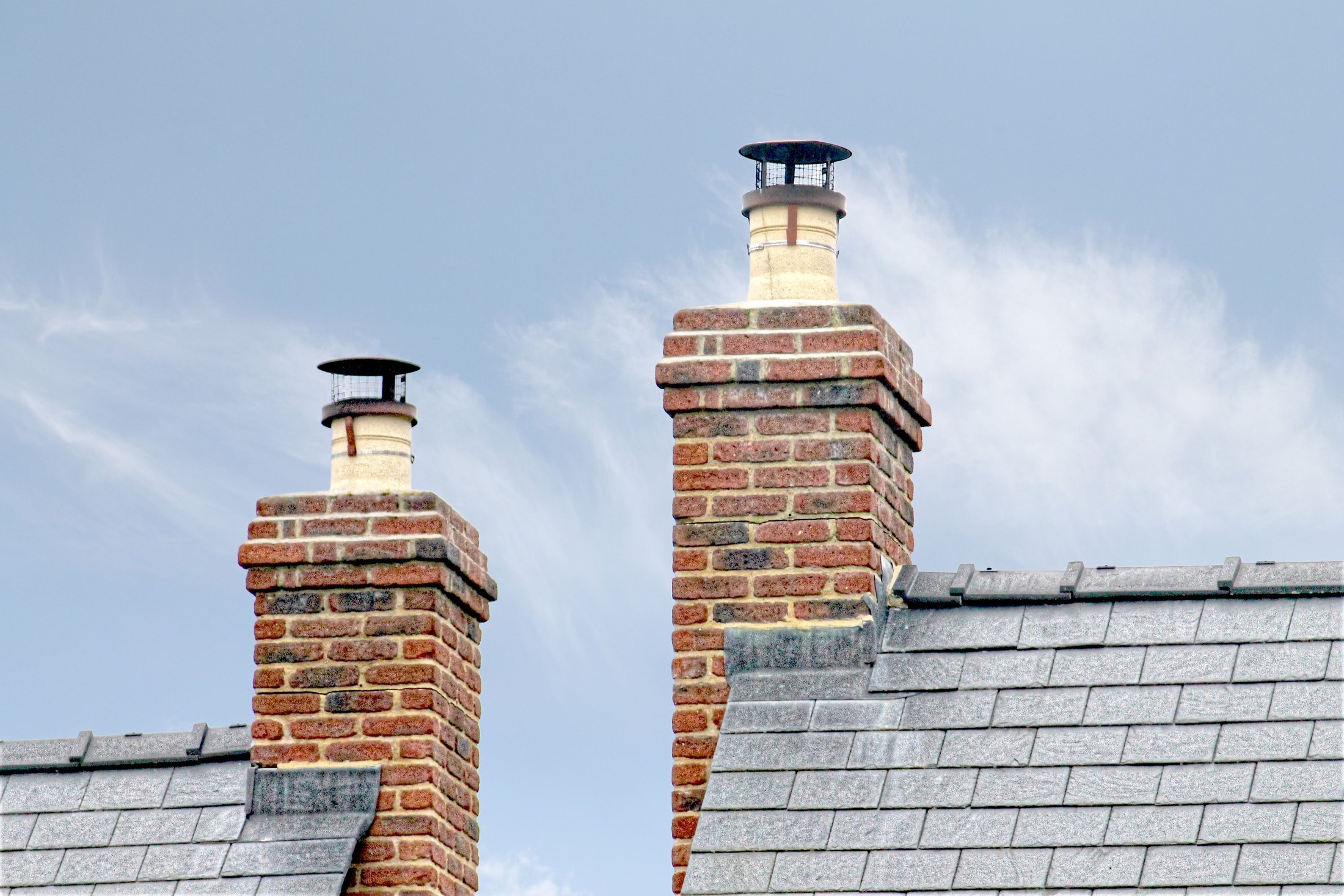
Roofing in Walhampton and Portmore
Slate and clay tile repairs, leadwork, valley and parapet gutters, flat roofs and re-covering, priced in writing and itemised line by line.
The site visit is free and so is the written itemised quote. Thomas Hannen prices every job himself.
Two questions decide almost every roof job on this side of the Lymington river: what the covering actually is, and who owns it. Old slate and clay in a conservation area inside the national park is a different job from a modern tiled roof, and a good share of the homes at Walhampton and Portmore are flats where the roof is the freeholder's.
The calls from Walhampton, Portmore and the Boldre lanes tend to be a slipped slate after a south westerly, a stain spreading from a chimney breast, or a valley or parapet gutter that somebody patched with mastic and which has started again.
We get on the roof where it is safe to, use a ladder or a tower where it is not, put our head in the loft and photograph everything. Then you get a written price and a straight answer on repair against re-cover. The survey and the itemised quote are free.
The work
Nail sickness looks like a finished roof
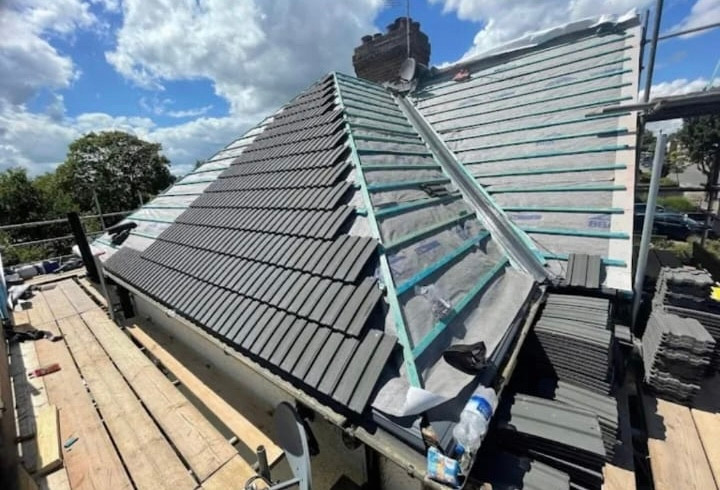
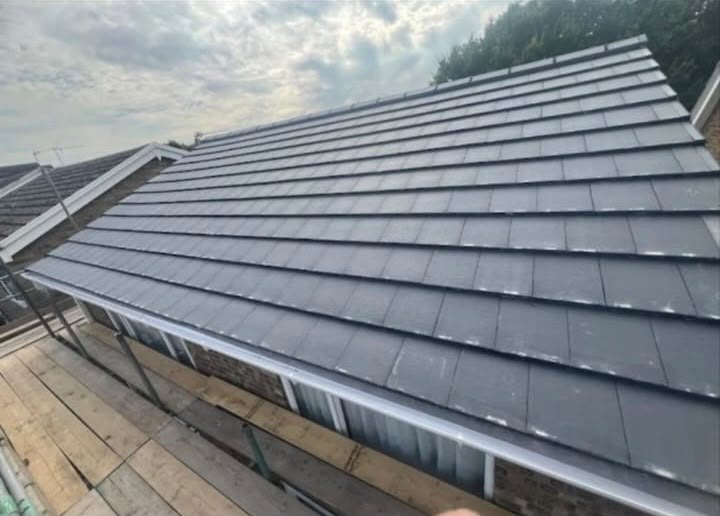
Slate repairs and nail sickness. The commonest job on the older houses, and 26.9% of the stock here predates 1919. Natural slate outlives its fixings by decades, so when slates start sliding out one at a time in no particular pattern the slate is fine and the nails have rusted through. A few can be hooked back with tingles. A slope shedding them all over needs the whole covering stripping and re-hanging on new battens with non-ferrous nails. We say which of the two you have rather than sell you the bigger one. Plenty of the pre-war roofs are plain tile or handmade clay on riven battens, sometimes with the original lime torching still under them, and a matched second hand tile looks right where a modern one never will. Stone slate belongs to other parts of the country. Thatch adjoins some of these properties, so we work up to that junction and no further.
Leadwork, valleys and parapet gutters. Older houses here carry far more lead than a modern roof does: chimney flashings and soakers, secret valleys, parapet and box gutters behind stone or brick copings, and abutments where wings meet at different heights. Lead fails when it is laid in lengths too long to move, so it splits along a fold, and we replace in properly sized bays of code rated lead. Mastic and flashband over a split are a winter's grace at best, and we take a great deal of both off roofs around here.
Mortar bedding on a ridge in this exposure cracks and lets the wind under. Where the building is not sensitive we convert to a mechanically fixed dry ridge and dry verge on a ventilated roll, the fixing BS 5534 expects. Inside the Forest South East conservation area, where appearance is controlled, ridges are re-bedded in a lime rich mortar and mechanically fixed underneath, which looks original and still holds. Many of these roofs were never felted at all, which is normal for their age. If we strip, the covering goes back on breathable membrane and treated battens with the eaves ventilation designed in, because sealing an old roof tight without a path for the air is how you get condensation and rot in timber that has been dry for a century. Rafter feet and wall plates get checked while the covering is off.
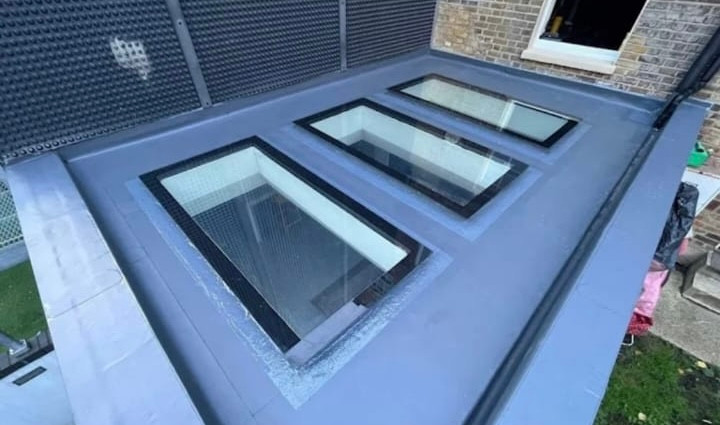
Flats and maisonettes are 31.5% of the dwellings here and they bring most of the flat roof work: communal decks, balconies, dormer tops, garages and rear extensions in felt, GRP fibreglass or EPDM rubber, with the deck opened up and looked at before anyone quotes a covering. On a tall old house a leak means starting in the loft, because water can run several metres along a rafter before it drips. Cast iron rainwater goods survive here and are worth keeping, joints re-made and the run re-aligned rather than swapped for plastic, and where a block shares one system we clear the whole run instead of one flat's share. With the covering off, insulation and eaves ventilation are much cheaper to sort, and Approved Document L sets the standard a renovated roof is expected to reach.
How it runs
From your call to a written price
Same team throughout, one person to ring, and an itemised quote: scaffold, strip out, battens and membrane, the covering and each junction on separate lines. Walhampton and Portmore sit inside the New Forest National Park, which is the planning authority, and part of the area falls in the Forest South East conservation area. A like for like repair or re-cover is maintenance and needs no application, but changing the covering or adding anything visible is a different matter, and the heritage and conservation guidance explains how appearance is assessed. There are 93 listed entries in this parish, so we check the interactive property map before we price. Otherwise re-covering and ordinary rooflights sit within permitted development, within the limits Planning Portal guidance sets out.
Cost
What decides the price of a roof
No rate per square metre: on a roof that is the least useful number there is. Access here is the awkward part. Long gravel drives, narrow lanes with no width for a lorry, tall three storey elevations and mature trees over the roof all mean a bigger platform and longer to put it up. It is work at height, and the work at height rules are why the platform is a priced line rather than an optional extra. Ask anyone else quoting whether the scaffold is in the price, whether battens and membrane are renewed or covered over, and what grade of lead is going on the chimney.
If it is leaking now
Water coming in today
Ring rather than use the form. Anything letting water in goes to the front of the queue, and the first visit makes it safe and watertight while you decide. If you are in a flat, ring us anyway and ring the managing agent at the same time, because we can make a communal roof safe before the paperwork catches up. The phone is answered 24 hours for emergencies; scheduled work runs Monday to Friday, 8am to 6pm.
Worth knowing
In a flat, the roof is not usually yours to instruct
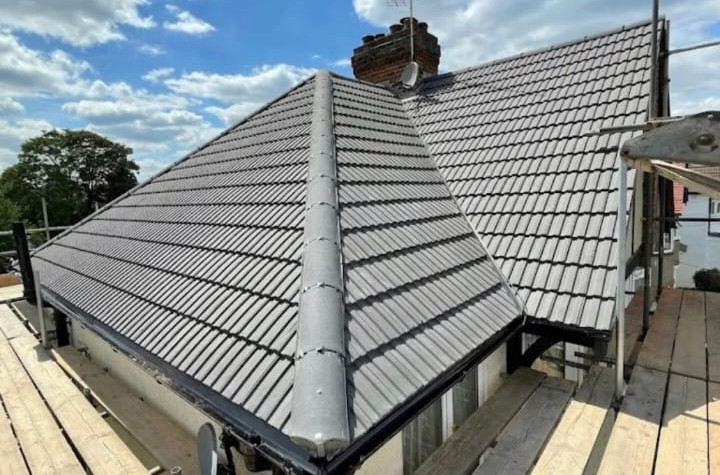
Close to a third of the homes here are flats or maisonettes, high for a rural parish and mostly down to large houses that have been converted. In almost every case the structure and the outside of the building, roof included, stay with the freeholder and are maintained out of the service charge. The person who can see the stain is often not the person who can order the repair.
What to do is simple enough. Ring your managing agent or freeholder, ask them to instruct a survey, and send us the address. We will quote to an agent, a residents' company or a leaseholder gathering prices for a meeting, itemised so it can go in front of everybody. Where the work is large enough to trigger consultation under section 20 of the Landlord and Tenant Act 1985, the freeholder has to consult leaseholders first, and an itemised written quote is what that process needs.
Who you are dealing with
A local firm you can check
About sixteen miles from us, covering Walhampton, Portmore, Boldre, Pilley and the SO41 addresses east of Lymington, with the New Forest National Park Authority as the planning authority for this parish. Bournemouth Roofing & Building Ltd, registered in England and Wales, company number 15471719, which you can look up in a minute. Thomas Hannen's business, and he is the one who comes out to price the job, not a salesman. A verified customer's 10 out of 10 on Checkatrade. The visit and the written quote are both free.
Questions
Walhampton and Portmore questions we get asked
My flat leaks. Who actually orders the repair?
Usually the freeholder or the managing agent, not you. Just under a third of the homes here, 31.5 per cent, are flats or maisonettes, and the outside of a flat, roof and walls alike, belongs to the freeholder and comes out of the service charge. We are content to inspect and set the findings out in writing so you have something to send them, but the instruction has to come from whoever holds the building.
Does the National Park control what covering I use?
The New Forest National Park Authority is the planning authority here, and Walhampton sits inside the Forest South East conservation area, so appearance is controlled. Like for like re-covering counts as maintenance and needs no application. Swapping slate for concrete tile, or changing the colour or the profile, alters appearance and does need consent. We photograph the existing covering before anything comes off so the match can be evidenced later.
The house is listed. Can you still work on it?
There are 93 listed entries in this parish, Walhampton House at the school among them, so it is a fair question to ask. Listed building consent covers work affecting character, which takes in a change of roof covering, new rooflights and altered rainwater goods. A straight repair in matching materials generally does not. We tell you which side of that line the job falls before quoting, and the application stays yours to make.
Why lime mortar rather than cement on an old roof?
Because 26.9 per cent of the housing here was built before 1919 and those walls and stacks have to breathe. Cement bedding is harder than the stone and the old lime around it, so it traps water and drives the damage into the masonry instead of the joint. On a pre-1900 chimney we repoint and flaunch in lime, take the old cement off carefully, and put the sound stone back.
Does the wind here take slates off one at a time?
That is the usual pattern on the older houses around Boldre. Slates were nailed straight to battens and the nails corrode long before the slate itself does, so they let go singly in a gale rather than in sheets. If a handful have gone and the rest ring solid when tapped, it is a re-fixing job. If the nails crumble in the hand as they come out, the slope is finished.
Nearby, and next door
Roofing near Walhampton and Portmore
Roofing nearby
Our other trades in Walhampton and Portmore
Roofing guides
Concrete vs clay roof tiles: which is right? Planning, building regs or listed building consent Storm damage to a roof: the first 24 hoursEverything we do in Lymington Roofing, all areas Every area we cover
Free quote
Get your roof looked at properly
Send the postcode and what you have noticed. We come out, get into the loft as well as onto the roof, and put a written itemised price in your hand.