Driveways and patios in Lyndhurst
Gravel sweeps regraded, block paving, steps and patios across Lyndhurst and SO43. We look at the ground and the roots before we price anything.
The site visit is free and so is the written itemised quote. Thomas Hannen prices every job himself.
On the older houses in Lyndhurst the drive is usually still the right shape. What has failed is the edge, the falls and the stone, and rebuilding those three costs far less than replacing the whole surface with something else.
The calls come in three shapes around Lyndhurst. Gravel is washing off a drive and ending up on the road, and it has to be swept back every few weeks. The paving or the steps at a front door have settled, so there is a lip where nobody expects one.
Or a house that now has more cars in it than it was ever built for needs the front turning into something that will actually take them. We come out, walk it, dig a trial hole where the wheels sit and take levels off the threshold. Then you get an itemised written quote where the dig, the sub-base, the edges, the drainage and the surface are separate lines.
The work
Gravel sweeps, front steps and drives asked to hold more cars
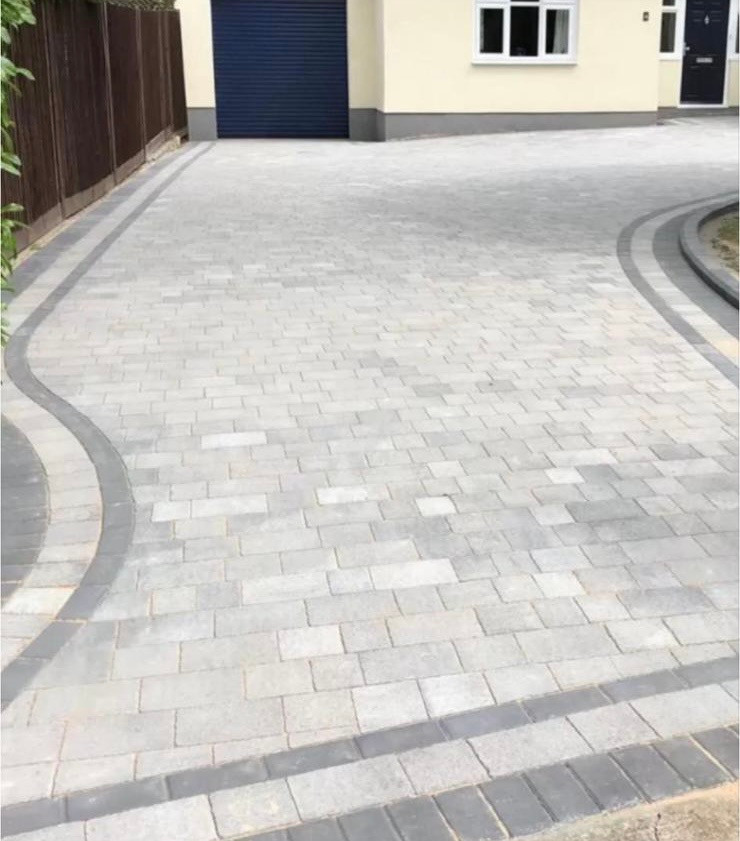
Loose gravel that keeps arriving on the road. The wide gravel sweeps in front of the older houses look right and work well, until the entrance loses its edge. Then every car carries stone out with it and the drive thins where you turn. The repair is an edge restraint haunched in concrete rather than pushed into soil, a bound margin of tarmac or resin across the first couple of metres at the highway, and a crossfall that sends water into a border or a channel drain instead of down the entrance. That is a two day job that ends a chore you have had for years, and on a frontage inside the Lyndhurst conservation area it is worth settling what the finished surface will look like before anything is ordered.
Front steps and the level at the door. There are very few bungalows here and a great many houses where the front door sits up a flight, so steps are part of most paving jobs. What matters is that every riser is the same, that the tread throws water off rather than back at the threshold, and that the surface is one you can trust when it is wet. Under trees, smooth flags stay damp and hold growth and staining, so a textured natural stone or a rated porcelain earns its keep on a step even where a smoother slab is fine out in the open.
Where a big house has been divided into flats, or a family has three cars where the original owners had one, the frontage is being asked to do a different job. That is not a surfacing question, it is a depth question: excavate to a formation that will carry the load, a geotextile membrane over soft ground, and a compacted sub-base built for cars turning rather than one car parking. Block paving takes that punishment well and can be lifted in a bay to get at a service. Concrete and resin both take it too, and neither forgives a base that moves.
The plots here carry big trees and their roots go where the water is. Digging a full depth sub-base through a root plate damages the tree and often gets refused where the tree is protected, so the answer is usually a no-dig build-up that spreads the load above the roots, and a flexible surface such as block paving or gravel that can be relaid cheaply as the ground moves. A rigid slab in the same place will crack, and then it is a break out rather than a lift.
Four in ten houses in Lyndhurst predate 1919, and the small terraces behind them spend much of the year out of direct sun. Everything is bedded on a full mortar bed rather than dabs, the jointing is chosen for the width of the joint rather than for speed, and the finished level stays clear of the damp proof course with a gravel margin along the wall. The ground is slow to drain, so where the water is going is worked out before the surface is picked, and where a garden falls a step and a low wall beat building the whole terrace up to meet the house.
How it runs
From your call to a written price
One person to ring, and an itemised quote: excavation, muck away, sub base, edgings, the surface and the drainage on separate lines. Relaying what is already there is maintenance. More than five square metres of new hard surfacing at the front that sheds onto the road needs planning permission, and the Planning Portal sets out the test, while a permeable build-up or a fall onto your own ground keeps it permitted development. A new opening onto the road is a separate dropped kerb consent from the highway authority. Here the planning side is the New Forest National Park rather than a district council, and the village is a conservation area with better than thirty listed entries inside it.
Cost
What decides the price of a driveway
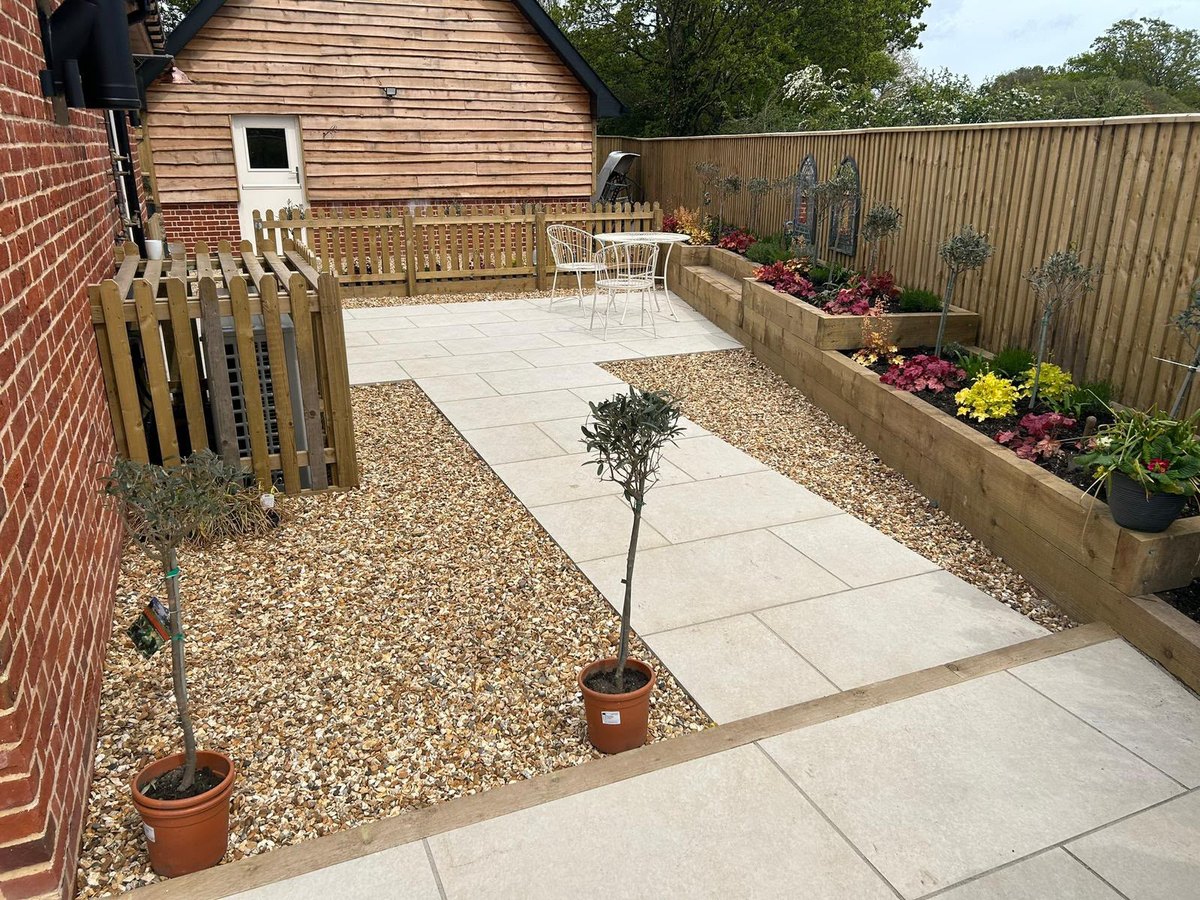
No rate per square metre. What is under it decides more of the cost than what goes on top. A villa with a sweep of gravel at the front, a converted house where several flats share one drive, and a cottage on the main street with no frontage at all are three different jobs. Around mature trees a no-dig build-up changes the method and the number with it. Ask any quote how deep the dig is, what sub base goes in, where the water goes, and who takes the spoil.
If it is urgent
A trip hazard, or a drive that floods
Ring rather than use the form. A lifted slab, a sunken bay by a doorway or a gully that has stopped taking water will not wait. The first visit is about making it safe and getting the water going somewhere. Here that is usually a step settled away from a front door, or gravel washing out of an entrance. The phone is answered 24 hours for emergencies; scheduled work runs Monday to Friday, 8am to 6pm.
Worth knowing
Appearance is controlled here, and that reaches the frontage
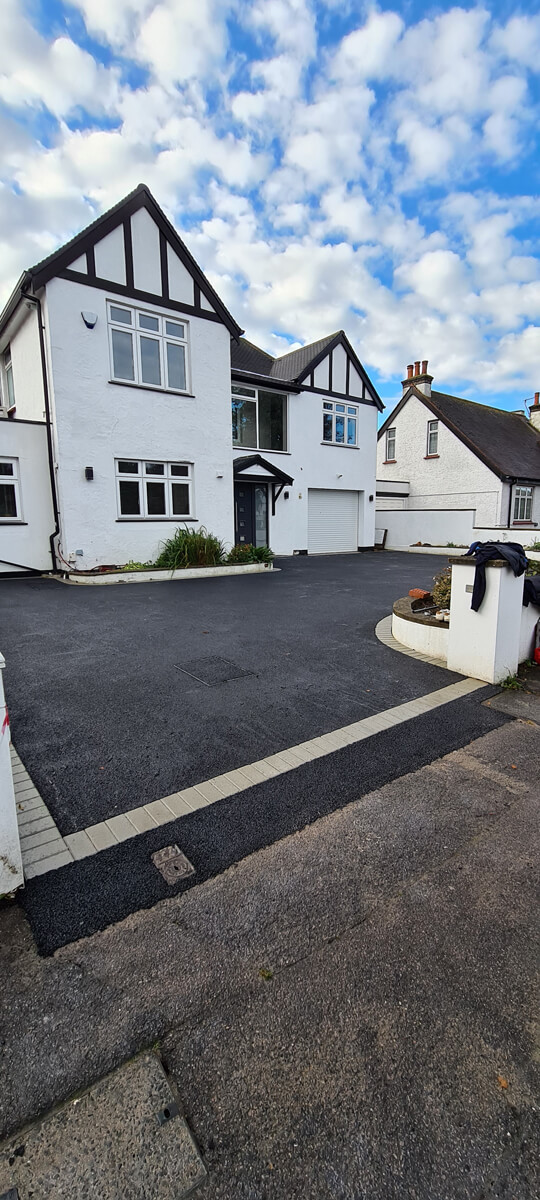
Two things sit over most addresses in Lyndhurst. Your planning authority is the New Forest National Park rather than a district council, and a conservation area covers a good part of the village. Neither of them stops you laying a drive, and neither of them dictates what the surface is made of on an ordinary back garden patio.
What they do bear on is anything visible from the road: the boundary wall, the gate, the railings, the hedge and how wide the opening onto the street ends up being. Taking part of a front boundary out in a conservation area is not automatically permitted development, and the National Park publishes what it protects and why.
So the useful order is to check the address before anybody prices an opening, not after. It costs a phone call and it can change the whole design: keeping the existing gateway and turning behind it rather than widening, choosing gravel or a muted block over something that shouts, and rebuilding a wall in the material that came out of it rather than in whatever the merchant has in stock.
Where a scheme does need an application, we will give you a written itemised quote you can submit alongside it, and we price the boundary work separately so you can see exactly what that part is costing.
Who you are dealing with
A local firm you can check
We cover Lyndhurst and SO43, out towards Emery Down, Minstead, Brockenhurst and Ashurst. Bournemouth Roofing & Building Ltd, registered in England and Wales, company number 15471719, which you can look up in a minute. Thomas Hannen's business, and he is the one who comes out to price the job, not a salesman. A verified customer's 10 out of 10 on Checkatrade. The visit and the written quote are both free.
Questions
Lyndhurst questions we get asked
Can we keep gravel but stop it spreading into the road?
Yes, with a grid and a proper threshold. Loose gravel migrates because nothing holds the top layer and nothing stops it at the boundary, so it ends up on the pavement in Lyndhurst where the traffic is heavy and carries it further. A cellular grid filled with angular stone locks it down, and a flush kerb or a bound strip across the last stretch at the entrance keeps the rest on your side.
The conservation area covers the village. What can we change?
Surfaces visible from the street are part of what the Lyndhurst conservation area protects, so like for like is straightforward and a change of material is a conversation. Replacing a worn gravel or stone front with the same thing counts as maintenance. Moving to a large area of coloured block is the sort of change the National Park will want to look at. It is a short call to ask, and worth making first.
There are air bricks low down on the wall. Do they matter?
They matter a great deal. 39.0% of the housing in Lyndhurst predates 1919, so much of it has suspended timber floors relying on those vents. Bury an air brick under a new patio and the void beneath the floor stops breathing, which is how rot turns up in the joists a season or two later. We either keep the paving below them or duct each one through the build up so the airflow carries on.
How do you work in a village with no off street space?
By keeping material moving instead of stockpiling it. In the middle of Lyndhurst there is often nowhere to stand a skip without a permit and nowhere to leave a heap of stone, so we bring it in as it is used and clear the spoil the same day by grab. That means more lorry movements and a tighter order of work, which we set out beforehand so you know which days are noisy.
Is it worth relaying the old slabs or starting again?
Look hard at the slabs before deciding. If they are full riven stone or thick concrete flags they will outlast a new base and are worth lifting and resetting. If they are thin pressed slabs that have begun to delaminate on the face, relaying them only buys another wet winter. The base underneath is the real decision, because that is where the labour goes either way and it comes out regardless.
Nearby, and next door
Driveways and patios near Lyndhurst
Driveways and patios nearby
Our other trades in Lyndhurst
Everything we do in Lymington Driveways and patios, all areas Every area we cover
Free quote
Get a price for a drive or patio in Lyndhurst
Tell us the address and what the drive or the paving is doing. We will come and look, then put an itemised price in writing. Both cost nothing.