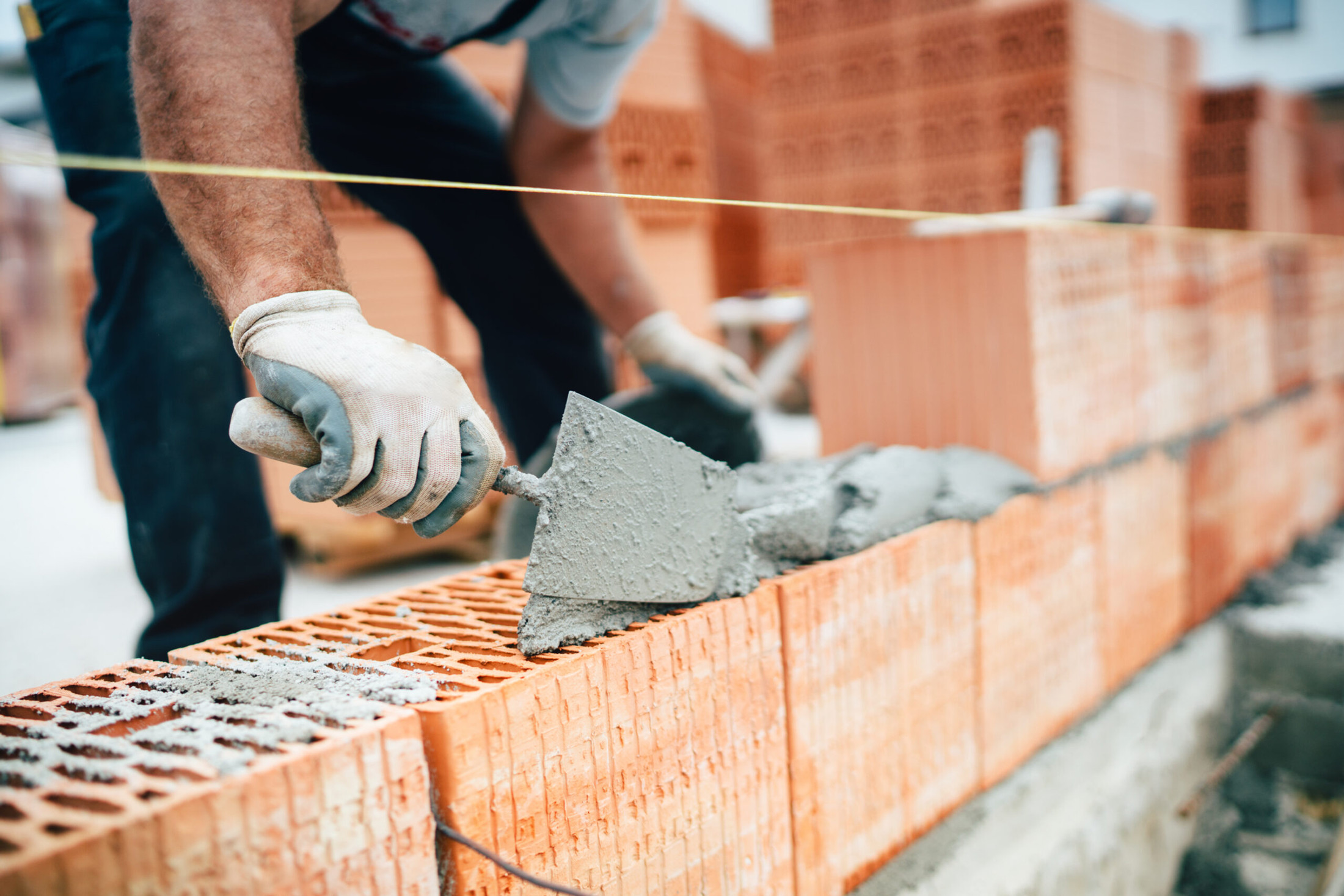
Repointing Victorian brickwork in Lyndhurst
Hand raking, a lime matched to the original sand, and the bands and arches given their own mix and their own joint width.
The site visit is free and so is the written itemised quote. Thomas Hannen prices every job himself.
Much of Lyndhurst is later nineteenth century brick and nearly four in ten homes here predate 1919, so the walls are solid and they have to keep breathing. What decides whether a repointed elevation looks repaired or simply looks like a wall is the joint: the mix in it, its width and the profile it is struck to.
People here ring about pointing that has weathered back far enough to take a finger, usually worst high on a gable or a stack where nobody looks. About a band of coloured brickwork, a moulded string course or an arch over a window where the faces have started to break away. And about a shared stack on a terrace or a converted house that keeps dropping sand and grit into the gutter.
We survey the whole building rather than the elevation you have spotted, scrape joints at several heights, and get close enough to the decorative work to see what it was originally bedded in, because it is rarely the same as the field wall. You get it back in writing, elevation by elevation, with the arches and the bands as their own lines. If the wall belongs to a block rather than to you, the freeholder is the one who instructs the work and leaseholders normally get a consultation first under section 20 of the Landlord and Tenant Act 1985, so it is worth asking where that stands before anybody collects prices. The visit and the quote are free.
The work
The pointing work on Lyndhurst brickwork
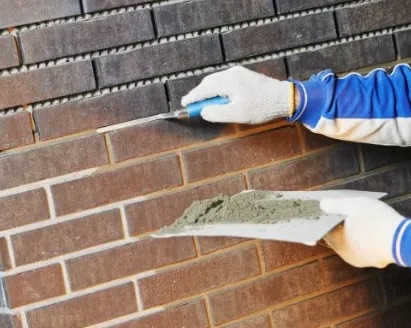
Solid Victorian and Edwardian walls. No cavity behind the face, so the wall gets rid of water by letting it evaporate out of the joint, and the mortar has to stay softer and more open than the brick for that to happen. We rake out by hand to a depth of about twice the joint width, perpends as well as beds, damp the joints down, and point back in an NHL lime or a lime putty gauged against a sample of the original, with the sand chosen for grain and colour. Where an original weather struck finish survives we put that back rather than default to a bucket handle profile because it is faster to strike.
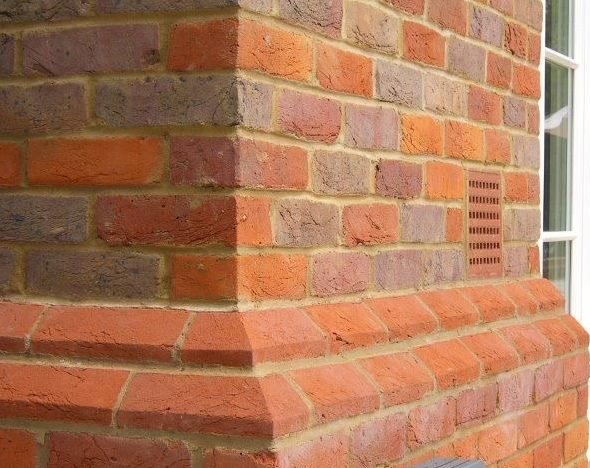
Bands, string courses and gauged arches. A lot of the brickwork here carries detail: coloured banding through an elevation, corbelling under the eaves, rubbed and gauged arches over the windows set in joints only a couple of millimetres thick. That work was bedded in a fine, fat lime with almost no coarse sand in it, which is the only way a joint that thin is possible. It gets its own mix and its own joint width, and it is pointed after the field wall rather than in the same pass.
Cement pointing on soft brick. Where a wall was repointed in sand and cement some decades ago, the water that used to leave through the joint leaves through the face instead, so the joints look sound while the bricks are spalling. Cutting that back out is slow hand work with a chisel and a hacksaw blade, and a disc cutter or an angle grinder never goes near it: the cut widens the joint permanently and takes the arris off the brick either side.
Faces that have gone, and the reason they went. Blown faces come out whole and matched bricks go in, judged against a sample held on the wall and a trial panel you look at dry. They go worst low down on the weather side and where ground has been built up over the damp proof course, and pointing over that only buys a couple of winters, so we say where the cause is levels or a broken gully rather than mortar.
Tall and shared stacks. Stacks here are tall, frequently shared between two houses, and exposed on every side with a cold flue up the middle, so their joints go friable long before the walls do. Repointing above the roof line, rebedding pots and renewing cracked flaunching is regular work, and where the stack is shared the neighbour needs to be in the conversation before a platform is booked.
Boundary walls to the road. Brick walls with piers and a coping, wet from both faces with no roof over them. The coping is what saves one, so it gets rebedded and the top courses pointed before anybody touches the face of the wall.
How it runs
From your call to a written price
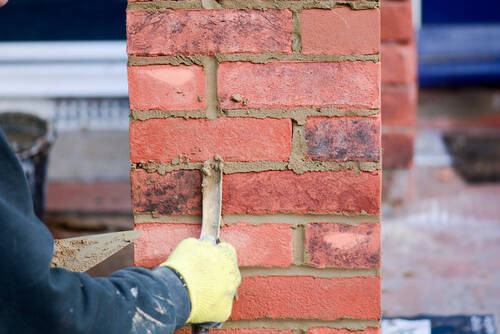
Same team from first visit to last, one person to ring, no sub-contracting. The quote is itemised: access, raking out, the mix, the area of each elevation, brick replacement and disposal on separate lines, so you can compare it against anyone else's.
Nothing is left open overnight and the site is swept at the end of each day. If something turns up that nobody could have seen, you get a photograph and a price first.
A like for like repoint is repair rather than development, so there is no application to make and nothing for building control to sign off. Tell us the address first all the same. The New Forest National Park Authority is the planning authority here rather than a district council, the village has a conservation area of its own, and thirty one entries in the parish are listed, the church and The Queen's House among them. On a listed building the mortar mix and the joint profile are part of what consent covers, and inside the conservation area a change of mortar colour or joint profile on a street elevation is a change of appearance rather than a repair. the National Park Authority's interactive property map lets you check your own address in a minute, and we look before we price.
Cost
What decides the price of a repointing job
No rate per square metre. The area tells you almost nothing until somebody has looked at the joints.
Getting to it. A frontage straight onto the pavement in the middle of the village, a rear return behind a garden and a stack shared between two houses three storeys up are three different set ups. A chimney or a gable wants a scaffold; a boundary wall wants nothing. The work at height rules are why access is a priced line rather than something absorbed into a rate.
The joints decide it, not the wall. How deep they come back, and whether the faces have spalled, sets the hours far more than the area does.
Matching is the part that shows. Lime is slower to work and slower to cure, and right on most pre-1919 walls here.
Comparing quotes? Ask how deep the joints are raked and by hand or by disc, what the mix is and whether it was matched, how many spalled bricks are being replaced, and whether the scaffold is in the price.
If water is getting in
Open joints, and water coming through the wall
Ring rather than use the form. Joints washed out let driven rain through to the inside face, and on a chimney it finds the flashings. We come and look, sheet or temporarily point the worst if the weather is against us, and price the elevation once it has dried enough to see what is sound. Here it is most often a shared stack dropping mortar into a gutter, or open joints high on a gable putting penetrating damp through into a top floor room. The phone is answered 24 hours for emergencies; scheduled work runs Monday to Friday, 8am to 6pm.
Worth knowing
The bands and the arches are not the same job as the wall
A good deal of the brickwork here is more ambitious than it looks from the pavement. Bands of a different coloured brick running through an elevation, corbelled detail under the eaves, and gauged arches over the windows where the bricks were rubbed to shape and set in a joint barely thicker than a pencil line. None of that was laid in the mortar used for the wall around it. Gauged work was bedded in a fine, fat lime with the coarse sand screened out of it, precisely so the joint could be that thin.
Point a whole elevation in one sanded mix at the width that suits the field brickwork and the detail goes. The arch stops reading as an arch and becomes a row of bricks with grey lines through it, and a crisp band turns into a blur. In a conservation area that is also a change of appearance on a street elevation, which is exactly what the designation is there to control. So on a building carrying any of it we price two mixes and two joint widths, the field wall and the detail, and the detail is a separate line because it is a slower day. It is the difference between a repair you stop noticing and one you see every time you come up the path. Ask anyone quoting you whether the arches and the bands are included at the same rate as the wall. If they are, nobody has looked at them.
Who you are dealing with
A local firm you can check
We cover Lyndhurst, Emery Down, Bank, Minstead, Brockenhurst and the SO43 villages, with the New Forest National Park Authority as the planning authority. You are dealing with Bournemouth Roofing & Building, trading name of Bournemouth Roofing & Building Ltd, company number 15471719. Thomas Hannen's business, and he prices every job himself rather than sending a salesman. A verified customer's 10 out of 10 on Checkatrade. The visit and the written quote are free.
Questions
Lyndhurst questions we get asked
Do the arches over our windows need a different mortar from the wall?
Almost always, yes. Gauged and rubbed arch work was set in a fine lime with the coarse sand taken out, which is how the joints ended up so thin. Filling those with the sanded mix used on the field wall widens them and the arch stops reading as one. We price the detail separately and point it after the wall around it.
Our house is in flats. Who arranges repointing?
The freeholder, because the external walls belong to the building rather than to any one flat. There is also no sensible way to point one flat's share of an elevation, so it is priced as a whole face. Leaseholders are usually consulted on major works first, so it is worth finding out where that has got to before quotes are collected.
The original joints are weather struck. Do you have to put that back?
Where it survives, yes, we match it. A weather struck joint is cut back at the top and left proud at the bottom so it throws water clear, and it is part of how the elevation reads. Swapping it for a bucket handle finish because that is quicker to strike changes the look of the wall, which inside a conservation area is the thing that gets noticed.
How do you reach a stack shared with next door?
With a scaffold and with the neighbour's agreement, both sorted before anything is booked. A shared stack usually means shared access and often a shared bill, so it is worth the two of you having the conversation early. We are happy to price the whole stack and set it out so each side can see what belongs to them.
Is a lime mix strong enough for a Victorian wall?
It is what the wall was built with, and strength is not the point. The mortar is meant to be the weaker part, so that water and any movement are taken by the joint rather than by the brick. A mix stronger than the brick does not make the wall stronger, it just moves the damage from the mortar, where it is cheap to fix, into the brick, where it is not.
Nearby, and next door
Repointing near Lyndhurst
Repointing nearby
Our other trades in Lyndhurst
Everything we do in Lymington Repointing, all areas Every area we cover
Free quote
Get the elevation and the detail priced separately
Thomas comes out, scrapes the joints, looks properly at the arches and banding and puts the price in writing, itemised, at no cost to you.