
Driveways and patios in Cadnam and Bartley
Gravel drives, block paving, resin bound surfaces and patios across Cadnam, Bartley and the Forest edge. We build the base properly and put the price in writing.
The site visit is free and so is the written itemised quote. Thomas Hannen prices every job himself.
Nearly every drive that fails around Cadnam and Bartley fails from underneath. The shingle or the tarmac gets the blame, but the sub-base below it was too thin for the ground, so the honest answer is usually a rebuild of the part you never see rather than a fresh surface over the same tired formation.
People here ring us for three things. The gravel has thinned to bare mud and rutting where the cars swing in. An old tarmac drive is cracking at the edges, sprouting weeds down the middle and shedding stone onto the verge. Or a patio has gone slippery, sits in standing water for two days after rain and nobody wants to walk on it.
We come out, look at the levels and the falls, and dig a small trial hole so we can tell you what depth of base is actually under there. If it is sound and only the surface has gone, we will say so and price the cheaper job. If it was never built properly, you get told that too, with photographs, before anybody quotes you for a surface that will move again in three winters.
The work
Drives, verges and long approaches around the Forest edge
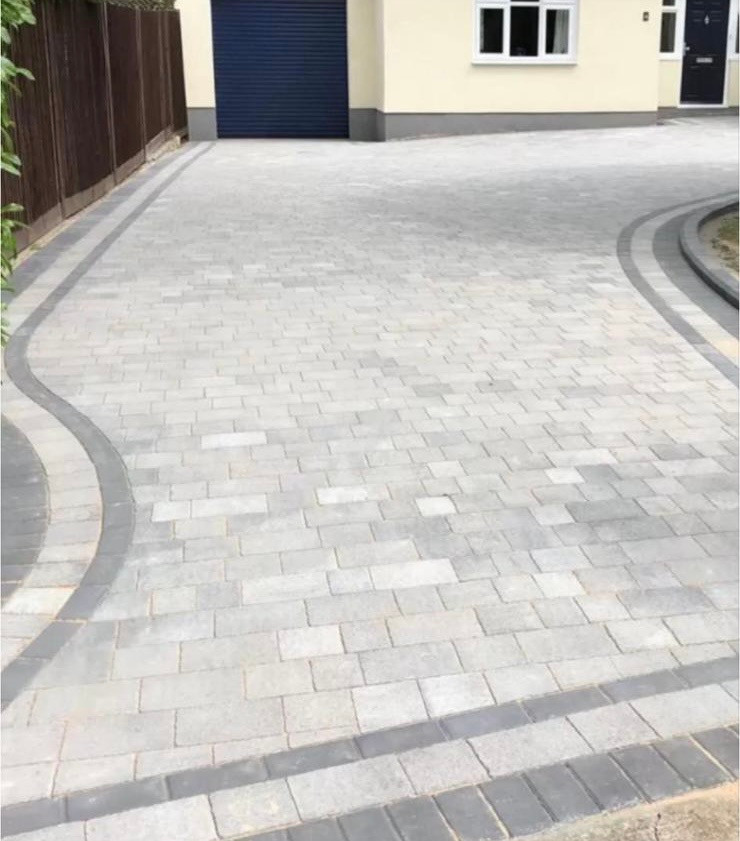
Gravel and hoggin drives. Most of the long approaches off the lanes here are loose surfaces, and they only stay put if three things are right: a dug formation at the proper depth, a compacted sub-base of crushed stone, and a geotextile membrane between the two so the stone does not gradually sink into soft ground. Then edge restraint down both sides, haunched in concrete, or the gravel migrates into the border and out onto the verge. We finish the road end with a bound margin or a bar of block paving so loose stone stops at your boundary rather than ending up where the ponies graze.
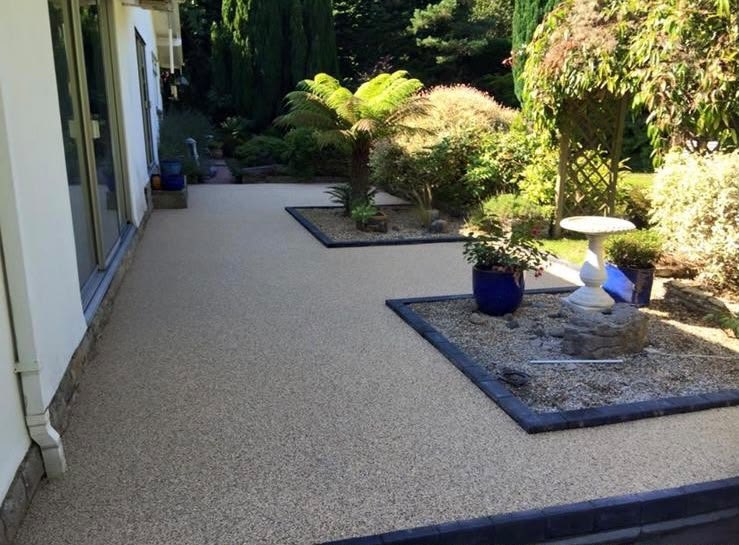
Where the tarmac or concrete underneath is still flat and unbroken, resin bound stone goes straight over it and saves the dig. It is not a cure for a moving base: if the slab beneath has cracked, resin will crack in the same line within a year, so we test it before we offer it. Drainage here is impeded, so a soakaway gets a percolation test rather than an assumption and may have to be a positive outfall instead.
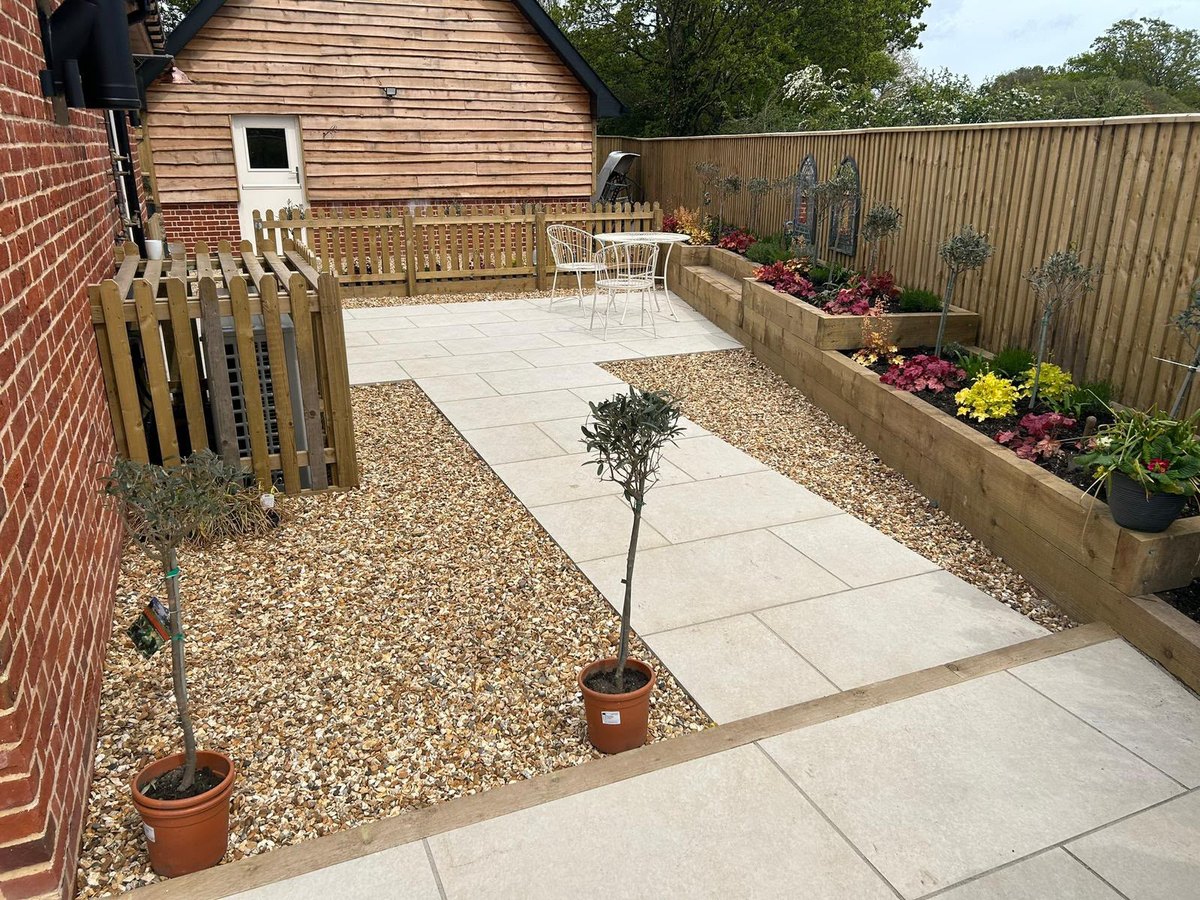
Patios behind the bungalows. A quarter of the houses here are bungalows and a lot of the rear gardens still have the original concrete flags, gone green and rocking on blobs of mortar. Natural stone or porcelain on a full mortar bed sits flat and stays flat. The level against the house has to stay clear of the damp proof course, and the fall has to run away from the threshold rather than back to the wall. On a sloping garden that means a step or two and a low retaining course rather than one flat terrace. Spoil goes out by machine and grab lorry where there is room for one, by barrow and skip where there is not, and disposal is on the quote either way.
How it runs
From your call to a written price
The quote separates excavation, muck away, sub base, edgings, surface and drainage, so you can set it against anyone else's. paving a front garden is normally permitted development so long as the surface is permeable or the water is directed to a border or a lawn, and the rule that catches people out is the five square metre threshold. A new or widened crossing over the verge needs a dropped kerb approved separately by Hampshire County Council, which is a highway matter rather than a planning one. This is New Forest National Park, so the Authority publishes an interactive property map telling you what applies at your address. Cadnam and Bartley has no conservation area of its own.
Cost
What decides the price of a driveway
We do not quote a rate per square metre, because the ground under a drive decides more of the price than the surface laid on it. A modern detached house with a wide frontage, a bungalow with a long side access, and a cottage where the only way in is a narrow gate are three completely different jobs before a single stone is laid. Out here the ground drains badly, so the depth of the dig and where the water goes carry most of the cost. Worth asking of any quote: what depth, what sub base, and who removes the spoil.
If it is urgent
A trip hazard, or a drive that floods
Ring rather than use the form. A slab that has lifted or a gully that has stopped taking water will not wait, because somebody falls or water ends up against the house. Out here it is more often a drive shedding gravel onto a lane other people are driving down, or water off a frontage running straight out onto the road. Monday to Friday, 8am to 6pm; outside that by arrangement.
The one local thing
Working inside the National Park, and up against open Forest
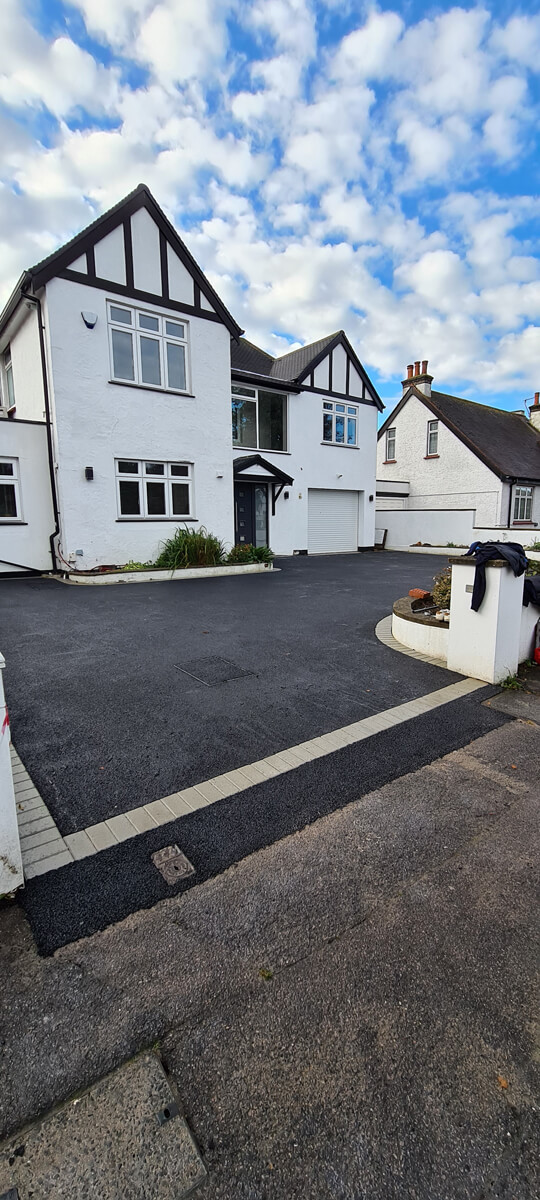
The Park changes two practical things about a drive here. The first is what happens at your boundary. Where a frontage runs out onto unfenced verge rather than a kerb, you cannot simply build the parking area out to where the cars already stand.
That ground is not yours, and a loose surface that spreads onto it is a nuisance as well as a slow loss of your own material. The fix is unglamorous and cheap: a proper edge restraint set true, and a bound entry strip so the shingle stops. We would rather build that in on day one than come back and rescue it.
The second is appearance. Anything that can be seen from the lane gets more scrutiny here than it would on an estate, and that pushes people towards gravel, hoggin and muted stone rather than bright block paving. That is a design choice, not a legal one, and it is worth separating the two.
If your house is listed, or you want a new access rather than a resurfaced one, check it properly first with the interactive property map before you commit to a material. Ten listed entries sit in and around these two villages, and where one of them is involved you may need consent for work that would be routine two miles down the road.
Who you are dealing with
A local firm you can check
We cover Cadnam, Bartley and the villages along this side of the Forest, out through SO40 and back down into Dorset, and we work from a Bournemouth base rather than a national call centre. Bournemouth Roofing & Building Ltd, registered in England and Wales, company number 15471719, which you can look up in a minute. Thomas Hannen's business, and he is the one who comes out to price the job, not a salesman. A verified customer's 10 out of 10 on Checkatrade. The visit and the written quote are both free.
Questions
Cadnam and Bartley questions we get asked
There is no conservation area at Cadnam. Does that free things up?
On appearance, largely. Cadnam and Bartley have no conservation area of their own, though there are ten listed entries in the area and the New Forest National Park Authority is still the planning body, so anything prominent gets looked at on design grounds. For an ordinary house set back from the road the surface is your decision. What actually governs the job here is the ground and where the water is sent.
Puddles stand on the drive for days. Is that the ground?
Almost certainly. Cadnam and Bartley sit on impeded drainage, so rain landing on a sealed surface has nowhere quick to go and any low spot holds it. Two things cure that: a fall that genuinely moves water, which means setting levels rather than following the old surface, and a discharge point that performs in February. Where infiltration will not do it, run off gets piped to an outfall instead of a soakaway.
Most houses here are detached. Does that make access easier?
Usually. Detached houses are 43.5% of the stock around Cadnam and Bartley, so there is more often a side route wide enough for a small tracked machine and a barrow run to the back garden. That matters because everything dug out has to come forward and everything laid has to go back. Where the gap is tight we use a narrower machine and board the route, and the handling shows on the quote.
Should a new terrace sit lower than the back door?
Below the door, and falling away from it. This ground has a significant shrink and swell rating, so repeatedly dumping rainwater beside a footing is a structural matter rather than only a damp one. Keeping the paving down, running the fall out into the garden, and giving the wall a drainage channel where the level cannot drop keeps water moving away from the building instead of soaking in at its base.
The house dates from about 1970. Is the original base sound?
Rarely, by now. 38.3% of homes here were built between 1945 and 1982, with the peak in the late 1960s and early 1970s, and a drive of that vintage was typically laid on very little stone. The surface can look merely tired while the real problem is a thin base that has bedded into soft ground. That is why a hole gets dug in the existing drive before choosing between a relay and a rebuild.
Nearby, and next door
Driveways and patios near Cadnam and Bartley
Driveways and patios nearby
Our other trades in Cadnam and Bartley
Everything we do in Ringwood Driveways and patios, all areas Every area we cover
Free quote
Get a written price for your drive
Free site visit, free itemised quote, and a straight answer about whether your existing base can be kept.