Insulation in Cadnam and Bartley
Loft top ups, rafter insulation and wall work on the Forest edge, with the ventilation checked before the depth goes down.
The site visit is free and so is the written itemised quote. Thomas Hannen prices every job himself.
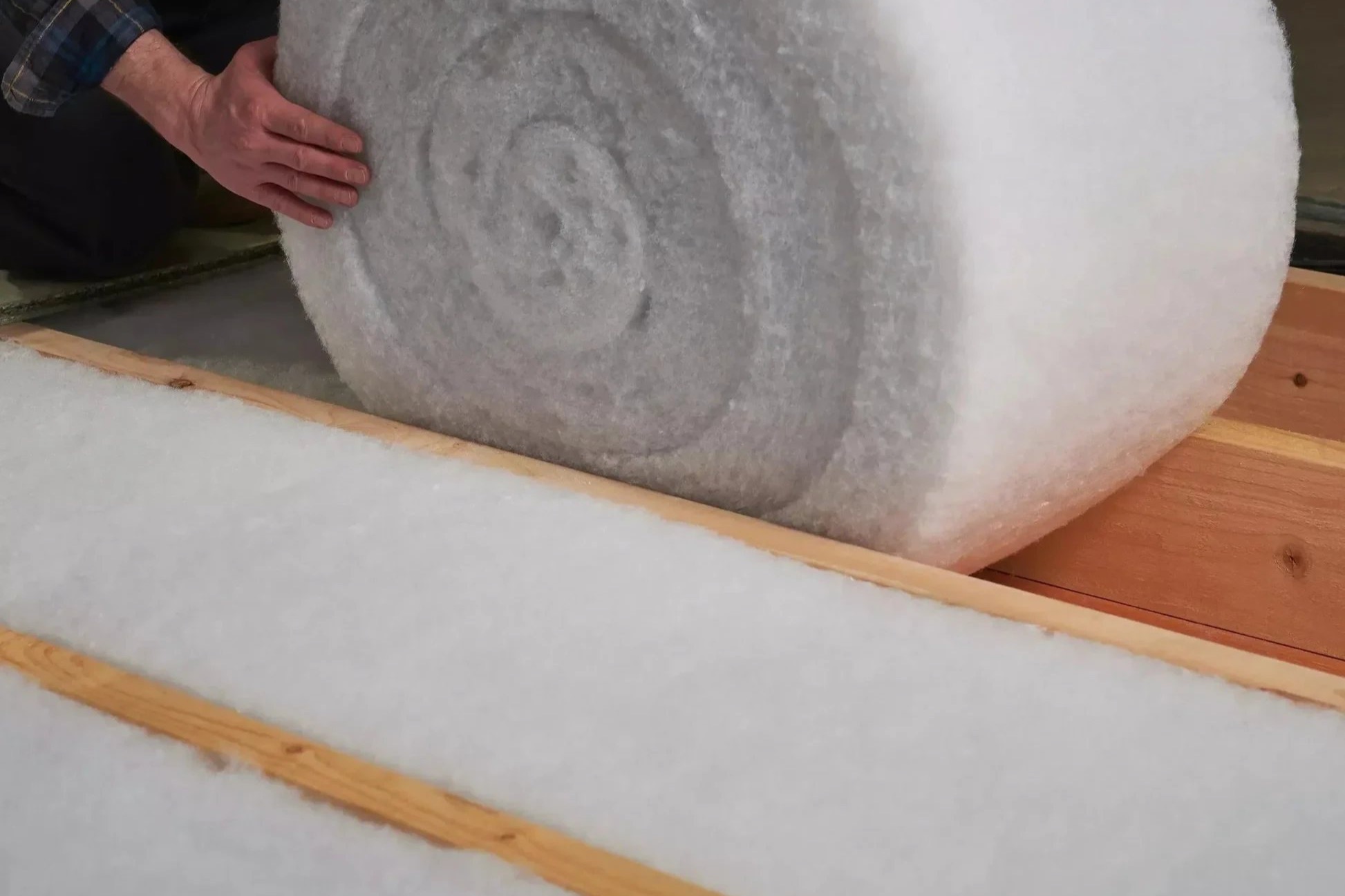
Nearly every insulation job around Cadnam and Bartley starts in the loft, because on a bungalow or a long low house the roof space is the biggest cold surface you own. Most of these lofts already have something in them. It is usually old, flattened and nowhere near the depth it should be, so the work is topping up and tidying the edges rather than starting again.
Three things get us called out here. A bedroom over the garage or out at the gable that never warms up whatever you do with the radiator. A heating bill that keeps climbing while the house gets no warmer, which on an oil or bottled gas system is money you feel straight away. And a loft that smells musty, with beads of water sitting on the underside of the felt on a cold morning.
We come out and look at what is genuinely up there rather than quoting off the doorstep. Depth measured in three or four places, the eaves checked, the hatch checked, and a straight answer on which of those three problems you actually have. The site visit is free and so is the written itemised quote. If a top up and a sealed hatch is all it needs, that is what the quote will say.
The work
Old wool is not rubbish and does not come out
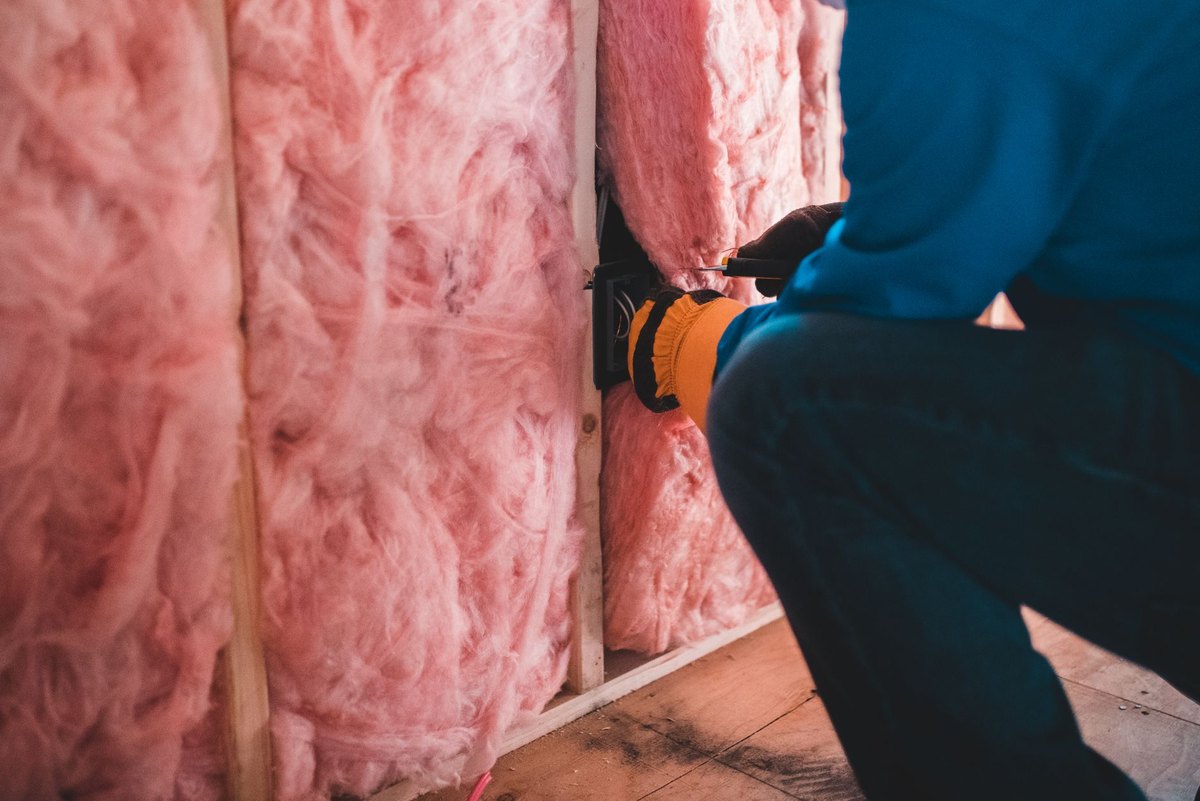
Old wool is not rubbish. Mineral wool goes down in two layers, the first between the joists and the second straight across them, which is what stops every joist acting as a cold bridge through the middle of the insulation. Between and over, to roughly 250 to 270mm, which is the 0.16 u-value a renovated roof is expected to reach. Wool that went down when these houses were built has usually settled to a fraction of what it was, but it does not have to come out. We lay over it and it counts towards the depth.
A quarter of the dwellings along these lanes are bungalows, and a bungalow puts its whole floor plan under one roof, so the ceiling is the largest single heat loss surface in the building. Most of them are boarded for storage, and boarding laid flat on the joists caps the wool at joist depth, so we lift it, raise it on loft legs, run full depth underneath and put your storage back on top. Where there is a cavity wall it gets a borescope check before anyone quotes a fill.
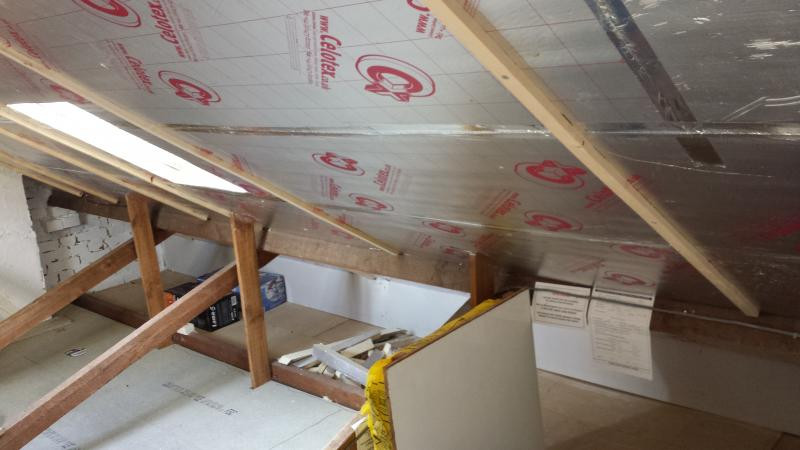
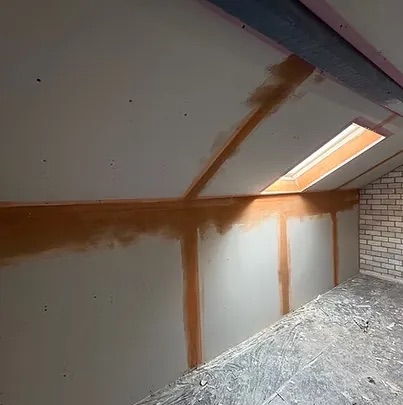
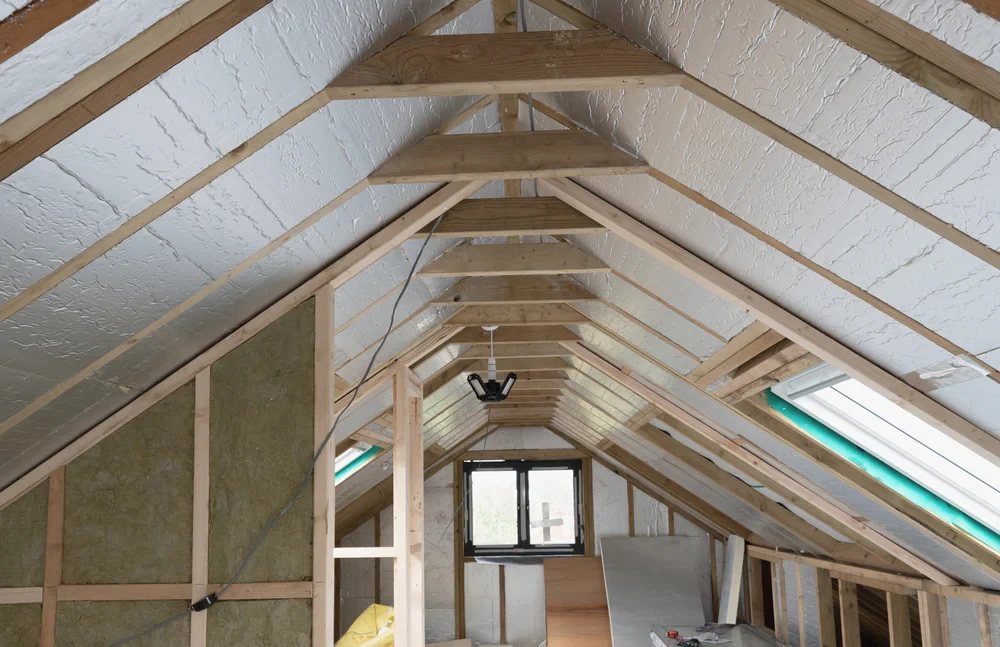
Where the roof space has been turned into a room in the roof the insulation goes between and under the rafters instead: rigid board, PIR and foil faced, cut tight into each bay with the joints taped, or a multi-layer foil quilt such as TLX where a sloping ceiling or a dormer cheek is too tight for board. An air gap stays above it unless the roof has been felted for a warm roof build-up, which is a different detail and we will say so on the visit.
Push wool hard into the eaves and you block the gap the air comes in through, and the loft turns damp instead of warm, so vent trays go in to hold the path open and Approved Document F is the standard for that side of it. Then lagging on the tank and pipework, and fire rated covers over the downlighters.
How it runs
From your call to a written price
The quote is itemised, with clearing, material and depth, ventilation works and disposal each on its own line rather than a figure on the back of a card. Anything nobody could have seen beforehand gets a photograph and a price before we carry on.
Insulating between and over the joists changes nothing anybody can see, so there is nothing to apply for. Anything that changes the outside face of the building, external wall insulation or EWI above all, is a different question here, because the New Forest National Park Authority is the planning authority rather than a district council. Planning Portal guidance on insulation sets out the general position and the National Park Authority's property map will tell you what applies at your address.
Cost
What decides the price of an insulation job
A bungalow with a pull down ladder and a clear loft, a detached house with a hipped roof and shallow eaves where depth has to be worked into every corner, and a cottage with a boarded loft over a narrow landing are three different mornings before a roll is opened. Old material to bag and take away, storage to move and put back, and eaves kept clear all come first, and Approved Document L sets what the work has to reach. Comparing quotes, ask what depth is going down, whether the old material is removed or covered, and whether the hatch and pipework are in.
If it is urgent
Damp, condensation or a room you cannot heat
Ring rather than use the form. A loft dripping with condensation, mould coming back faster than you can wash it off, or a room that will not hold heat gets looked at quickly. Insulating a roof space that cannot breathe makes it worse, so the first visit settles which of the two you have. We are out along the Forest edge most weeks, so it does not have to sit and wait.
The one local thing
You are in the National Park, and that changes one job only
Cadnam and Bartley sit inside the New Forest National Park, so planning here goes to the National Park Authority rather than to a district council. For insulation that matters for exactly one thing: work that changes what the building looks like from outside. Loft roll, rafter board, an internal wall lining, the hatch, the pipework and the draughts are all invisible from the road and none of them need permission.
External wall insulation is the exception, because it thickens the wall and gives it a new finish. Inside a National Park the permitted development right that would normally let you clad the outside of a house is withdrawn, so rendering over insulation is an application rather than a decision you make with your builder.
The practical consequence is the order you do things in. If external insulation is on your list, get the planning question answered before anybody prices a finish you may not be allowed to have, and use the National Park Authority's property map to check your own boundary rather than assuming, because the Park edge runs oddly around here.
In the meantime nothing is stopping the work that pays back soonest. On the houses along these lanes that is the loft, and it is not close. Do note that being in the Park waives nothing on the Building Regulations side: turn a roof space into a room and it is building control work like anywhere else, with a thermal standard to meet.
Who you are dealing with
A local firm you can check
We cover the Forest edge and the villages along it, Cadnam, Bartley, Copythorne, Winsor and Netley Marsh, and the SO40 addresses around them. Bournemouth Roofing & Building Ltd, registered in England and Wales, company number 15471719, which you can look up in a minute. Thomas Hannen's business, and he is the one who comes out to price the job, not a salesman. A verified customer's 10 out of 10 on Checkatrade. The visit and the written quote are both free.
Questions
Cadnam and Bartley questions we get asked
Is there a conservation area covering Cadnam and Bartley?
There is no conservation area of its own here, which surprises people given where it sits. What does apply is the New Forest National Park as the planning authority, and their interest is in anything visible from outside. A loft laid with quilt is not visible. Ten listed entries fall inside the settlement, so a small number of houses need a separate check, and we do that before pricing rather than during the job.
Nearly half the houses here are detached. Does size change things?
It changes the quantity more than the method. Detached houses are 43.5% of the stock in Cadnam and Bartley, and a detached roof has four cold sides where a terrace has two, plus more eaves length for wind to wash through. That means more perimeter to seal and more material through the hatch. The joist spacing and the depth we can achieve are the same as anywhere.
Where does the old material go when you strip it?
Out through the hatch in bags and off site the same day. In Cadnam and Bartley we usually strip only where the old quilt is contaminated, matted or has been sat on, and leave the rest in place under the new layer. Bags go down a sheeted stair route. Nothing is left in the garden and nothing goes in your bin. The clearance is a line on the quote, not an extra afterwards.
Our house is late 1960s. What is likely up there?
Probably a thin layer laid when it was built and topped once since. The peak period for building in Cadnam and Bartley was the late 1960s and early 1970s, and the standard then was a fraction of what is expected now. Almost a quarter of the settlement is older than 1919 as well, and those roofs often have nothing at all over the joists. The hatch tells us within a minute which you have.
Cadnam is a fair drive from Bournemouth. Do you cover it?
We do, and it is about nineteen miles each way, so we set aside the day rather than dropping in between two other jobs. That means one visit to survey and one visit to fit, both booked in advance. Thomas prices it himself after seeing the roof space. The written quote is itemised so the material, the labour and the clearance sit on separate lines.
Nearby, and next door
Insulation near Cadnam and Bartley
Insulation nearby
Our other trades in Cadnam and Bartley
Everything we do in Ringwood Insulation, all areas Every area we cover
Free quote
Find out what your loft has actually got in it
A free site visit, the depth measured in front of you, and a written itemised quote for the work that is worth doing.