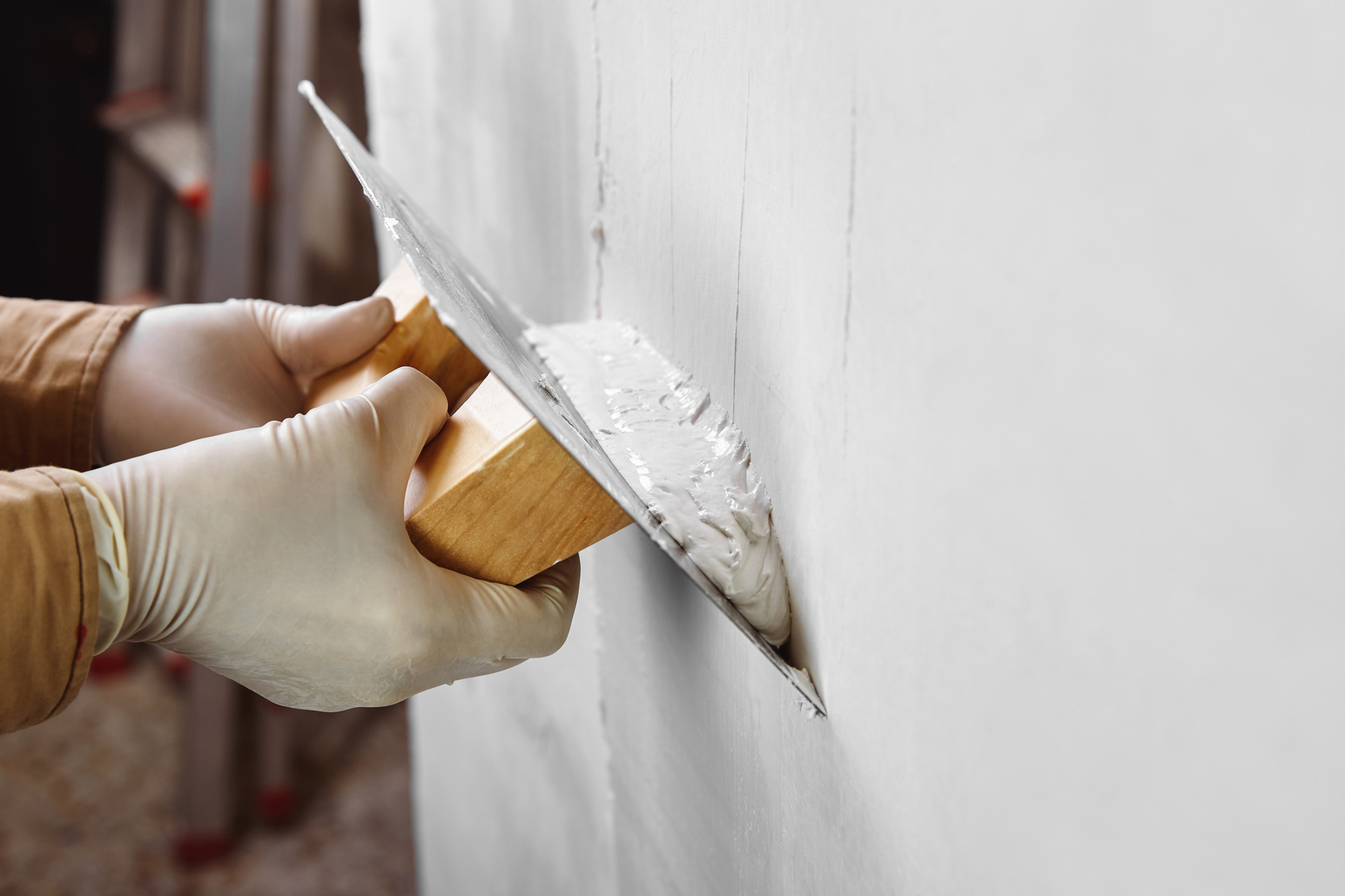
Plastering in Cadnam and Bartley
Skimming, ceilings, lath and lime repairs, dry lining and external render across Cadnam, Bartley and the lanes around them, priced in writing after a free visit.
The site visit is free and so is the written itemised quote. Thomas Hannen prices every job himself.
Most walls in Cadnam and Bartley do not need replastering. If the old plaster is still stuck fast to the brick behind it, a skim over the top gives you a flat, paintable surface for a fraction of what taking it all off costs. Knock the wall with a knuckle: a dull solid note means a skim will do, a hollow one means it has blown. We tell you which you have before we price it, not after.
Three jobs bring most people out here to the phone. A ceiling that has carried the same textured finish since the house was built and has started to crack along the board joints. A wall gone soft and powdery after a leak upstairs, where the plaster comes away on your hand. And a rendered elevation facing the lane that has cracked, gone green and started holding water in it. All three are our work, inside and out, and none of them is safely judged from a photograph sent over the phone.
We are along this stretch of the forest edge regularly, but it is planned work rather than a van passing the end of the drive, so ring and we will book a time. The site visit is free and so is the written itemised quote, and if the honest answer is a morning of patching rather than a room full of new plaster, that is what it will say.
The work
Wide ceilings with no floor above to work from
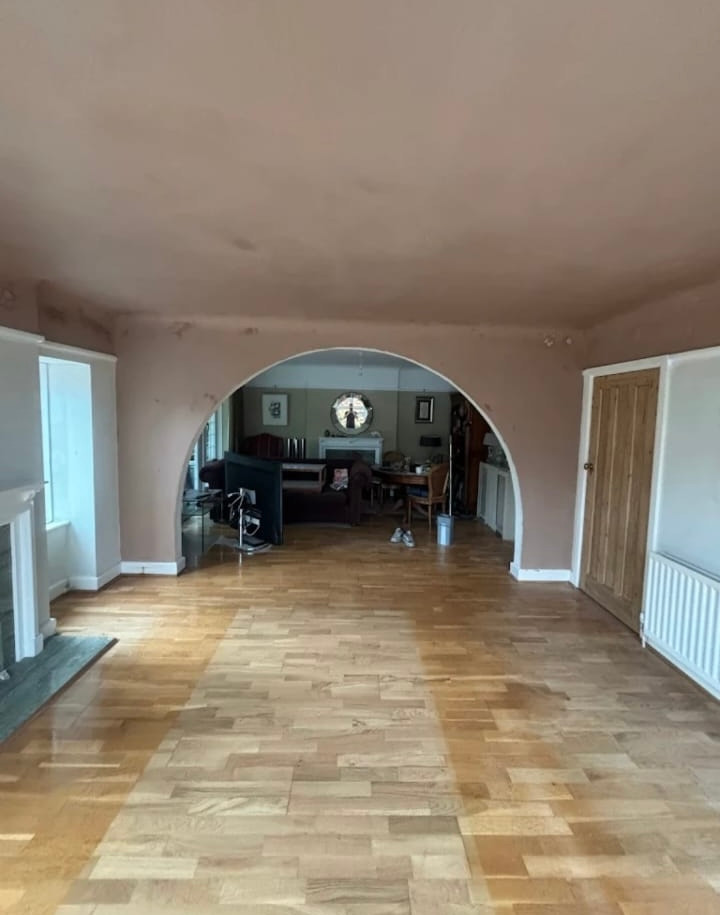
Ceilings, and a lot of single storey ones. A quarter of the housing along these lanes is bungalows, so the ceilings are wide, open and unbroken with no floor above to work from. Textured coatings on them are normal for the age of the stock: where the pattern is shallow and stuck fast we skim straight over it, and where it is heavy, or somebody has patched round a light fitting, overboarding with fresh plasterboard and taping the joints gives a better ceiling for not much more. Anything textured that went on before 2000 can contain a little asbestos, so it is sampled rather than sanded, and boarding over leaves it undisturbed.
The older cottages: lath and lime. Getting on for a quarter of the stock predates 1919. Scattered among the newer houses are brick and rendered cottages with solid walls, no cavity, and a lath ceiling behind the paper. Those walls have to stay breathable. A gypsum skim over one still carrying moisture will blow again inside a winter or two, so the repair is lime plaster on riven lath, haired in the backing coats and left to dry properly before anybody decorates.
Elsewhere it is ordinary work: a skim over a sound wall, board on dabs where there is blockwork to fix to and on stud where there is not, tape and joint or a full skim, and bead on every external corner and window reveal. Pebbledash and roughcast of this era was nearly all sand and cement, which goes rigid and cracks; local damage is cut out and patched, and beyond that it comes off and goes back as a thin coat silicone system with a bell cast at the base.
How it runs
From your call to a written price
The quote is itemised rather than one figure: what comes off, how each background is prepared, the beads, the backing coat, the finish coat, the making good and the waste on separate lines. Nothing we do inside a house needs planning permission. Outside is where it changes, because the planning authority for these two villages is the New Forest National Park Authority rather than a district council. There is no conservation area over Cadnam or Bartley, but ten listed entries sit among the older cottages, and on a listed building consent reaches the inside as well as the front. We check the address before anything is ordered.
Cost
What decides the price of a plastering job
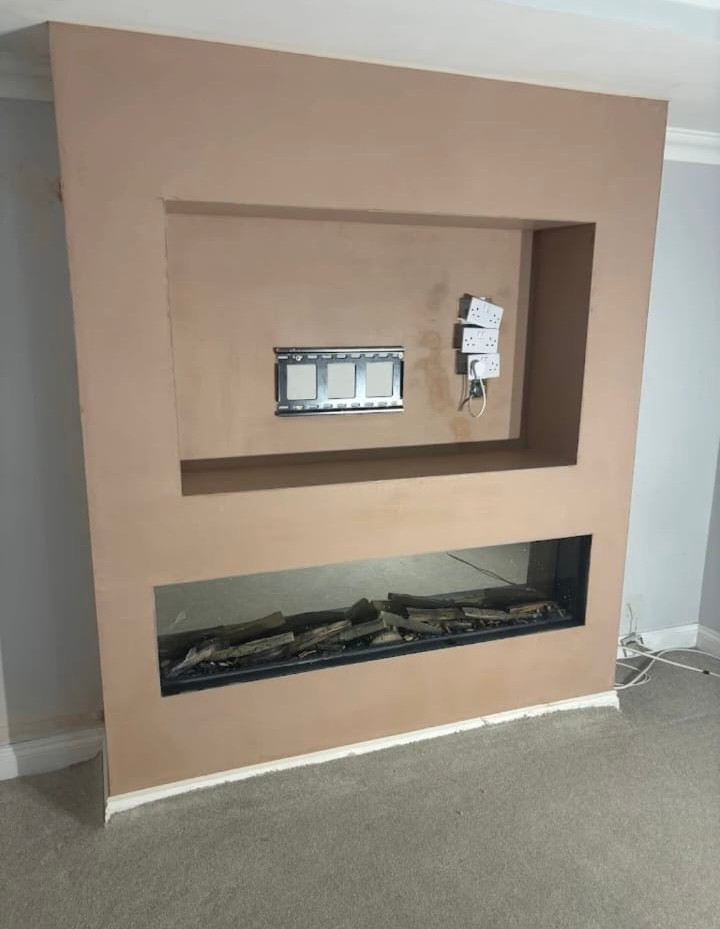
No rate per square metre. What sits behind the finish decides it: sound plaster takes a skim, a hollow wall has to come off and brings a backing coat with it. Out here most houses stand in their own plot with a gate wide enough for a van, so access usually helps; the exception is a cottage hard against the road. Outside, render brings a platform into the price and the work at height rules are why that is its own line. A full elevation also counts as renovating a thermal element, so Approved Document L and building control take an interest where patching does not.
If it has started to come down
A sagging ceiling, or plaster off the wall
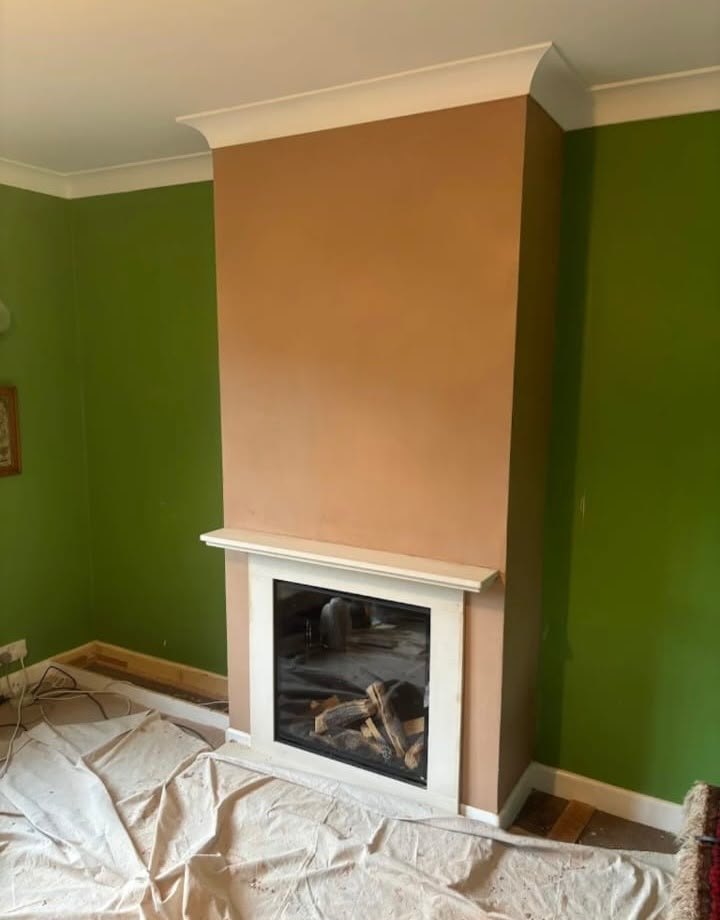
Ring rather than use the form. A ceiling that has begun to bow, or plaster coming off a wall in sheets, goes to the front of the queue. Do not sleep under it. We are the better part of twenty miles out along the A31, so tell us how much has come down and we will be straight about when we can get there.
Worth knowing
Your planning application does not go to the council
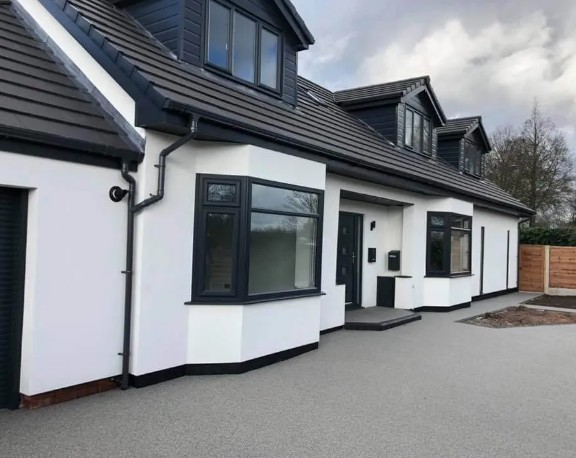
For outside work this is the one local fact that changes what you should do. Cadnam and Bartley sit inside the New Forest National Park, and the National Park Authority, not a district council, decides planning here. That matters for render. Renewing an external finish like for like is maintenance and needs nothing.
Changing it is different, and a change of colour or texture counts, because the appearance of a building in a designated landscape is what the Authority looks at. Swapping a grey pebbledash for a bright silicone topcoat is worth checking before the scaffold goes up rather than after.
Two things follow. Check the address on the Authority interactive property map, which tells you whether the property is listed as well as whether it sits in the Park. Then have the finish and the colour written into the quote by name rather than described as render, so there is no argument later about what was priced and so you have something to show the Authority if it asks.
Both are done at the survey and neither costs you anything. Inside the house none of it applies, unless the cottage is listed, and its heritage and conservation guidance is worth ten minutes if it is.
Who you are dealing with
A local firm you can check
We cover Cadnam, Bartley, Copythorne, Winsor and the SO40 addresses along the forest edge, with planning through the New Forest National Park Authority and building control through the district council. Send the postcode if you are not sure whether we come out that far.
Bournemouth Roofing & Building Ltd, registered in England and Wales, company number 15471719, which you can look up in a minute. Thomas Hannen's business, and he is the one who comes out to price the job, not a salesman. A verified customer's 10 out of 10 on Checkatrade. The visit and the written quote are both free.
Questions
Cadnam and Bartley questions we get asked
There is no conservation area in Cadnam. What still needs consent?
Cadnam and Bartley has no conservation area of its own, but the whole place sits inside the New Forest National Park, and the Park is the planning authority rather than the district council. That means design scrutiny on anything visible from outside, so a change of render material or colour is worth a call to them even with no conservation area line on the map. Indoors, nothing needs asking at all.
Our cottage walls crumble when scratched. What should go on them?
A lime backing coat, gauged to suit what is already there. Some 23.5% of the stock in Cadnam and Bartley predates 1919, which means solid walls built to breathe and often lath overhead. If a wall crumbles when you rake out a joint it will not hold a hard cement float either. We build up in coats and let each one go off in its own time rather than chasing the finish.
Our 1930s Cadnam house has hard grey render. Should it come off?
Not automatically. Cadnam and Bartley has a strong inter war layer at 19.1%, and the sand and cement render from that period is often sound where it has been kept painted and its edges maintained. Tap across the elevation and map the hollow patches; isolated ones get cut out and made good. Once a whole face is failing at the corners and above the openings, patching stops being worth doing and it comes off.
Our bungalow ceilings sag between the joists. Can they be skimmed flat?
Not by skimming alone. A quarter of the homes here are bungalows, 25.2% of them, and every ceiling in one is a top ceiling carrying loft insulation and whatever else has been stored up there, so the board dishes between the joists. A skim simply follows the dish. We either overboard across the existing ceiling or take it down and reboard, then skim. Which of the two depends on how far it has dropped.
Do we clear the room out, or do you?
You move the small things and the curtains, we deal with the rest. Furniture goes into the middle of the room and gets sheeted, floors are boarded where a mixer is being wheeled through, and the doorway is taped so what comes off stays in the room being worked. In a detached Cadnam house with a hall, and 43.5% here are detached, the mixing runs outside and never comes in.
Nearby, and next door
Plastering and rendering near Cadnam and Bartley
Plastering and rendering nearby
Our other trades in Cadnam and Bartley
Everything we do in Ringwood Plastering and rendering, all areas Every area we cover
Free quote
Get a written price for your plastering
Send the postcode and tell us which room, or which wall outside. We come out, look behind the finish where we can, and put the price in writing.