
Plastering in Minstead
Lime plaster and lath ceilings, skimming, damp walls put right and render, on the cottages and houses around Minstead, priced in writing after a free visit.
The site visit is free and so is the written itemised quote. Thomas Hannen prices every job himself.
What goes back on a Minstead wall matters more than who puts it on. These walls were built to breathe, and a gypsum skim over an old cottage wall that is still holding water will blow again in a winter or two. Most of the work here is repair rather than new. Get the backing coat and the drying right and the finish looks after itself.
Three things get us called out to this end of the forest. A damp patch that keeps coming back through the paint on a solid wall, usually where somebody has sealed it with the wrong material. A ceiling that has started to sag or crack between the beams, which on the older cottages is lath and plaster losing its grip on the joists. And a new room that needs boarding and finishing, an extension, a garden room or a converted outbuilding.
None of those is a drama and none of them needs a whole house stripping. We come out, tap the walls and ceilings, tell you which of the three you have got, and put the price in writing. The site visit and the written quote both cost nothing, and if one room is genuinely all that needs doing, that is what the quote will say.
The work
Lime takes a week where gypsum takes two days
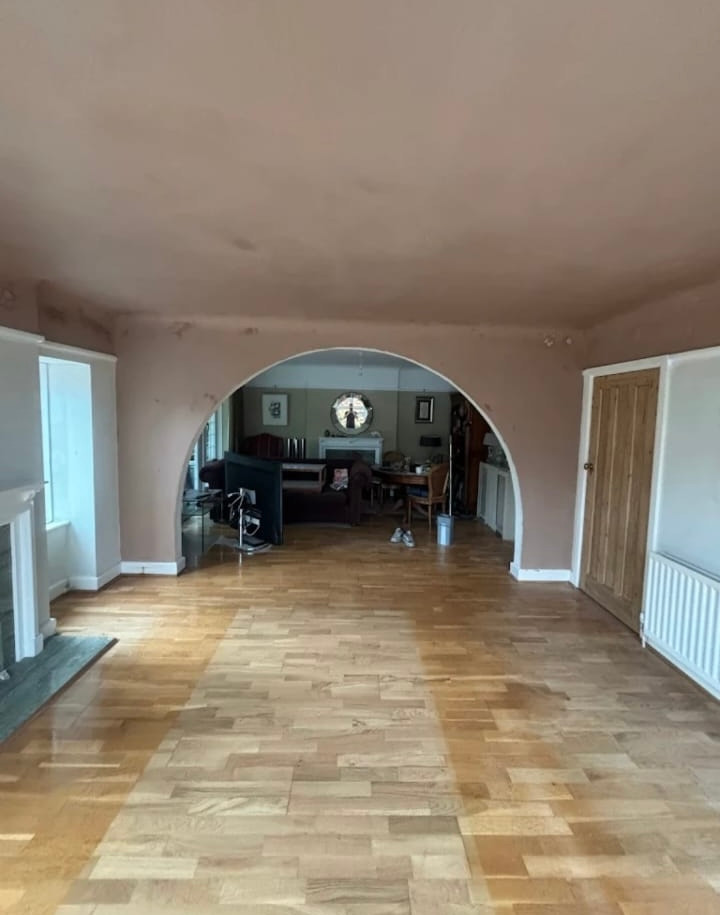
Lime takes a week where gypsum takes two days. The older cottages along the lanes and around the green have soft lime plaster on riven lath overhead and lime on a solid wall of brick, cob or rubble below. It is repaired, not replaced. Loose material comes off back to a firm edge, split or missing lath is renewed, and it goes back in coats: a haired backing coat pushed through the lath so it forms keys, a float coat ruled flat, then a fine finish. It is slower than gypsum because every coat has to go off before the next, so a room is a week rather than two days, and it wants leaving before a mist coat and decorating, and it stays breathable, which is the whole point of it.
Damp patches and blown plaster are the commonest call here, and the commonest cause is a repair somebody did in good faith. Cement render outside or a gypsum patch inside traps moisture in a solid wall, the water moves sideways, and the plaster around the repair goes hollow and salty. Tap it and you can hear the edge of the problem. We take off what has blown, find out what is holding the water in, and let the wall dry before anything new goes on. Anyone offering to skim over it next week is selling you the same job twice.
A lath ceiling that has lost its keys sags in a bay between joists and cracks in a curve rather than a straight line. If most of it is sound we cut out the loose section, re-fix and patch. If it moves when you press it, taking it down and boarding fresh is cleaner and lasts, and where the ceiling follows old beams the boards are cut round them and the edges beaded. That is a dusty day, so everything comes out of the room before we start.
New work is extensions, garden rooms and old outbuildings brought into use. That is board on dot and dab or on stud, finished in tape and joint or skimmed, with an angle bead on every corner, and a blown patch inside comes off for a bonding, browning or hardwall backing coat. The insulation goes in behind the board, so it is worth settling that with building control before the boards are ordered rather than after. Outside, an old solid wall wants a lime render or a breathable thin coat system with a bell cast bead at the base so water drips clear of the plinth. On a modern blockwork extension a scratch coat, render coat and float is still perfectly good, and patching pebbledash is possible and never invisible, which we say before you decide.
How it runs
From your call to a written price
Same team from the first visit to the last, one number to ring, and none of it sub-contracted out. The quote is itemised: what comes off, how each background is prepared, the beads, the backing coat, the finish coat, the making good and the waste. Dust sheets go down and the doorways are sheeted before a bag is opened. Planning here is the National Park Authority rather than the district council, and Minstead sits inside the Forest Central conservation area, so that matters outside far more than in. Nothing we do inside an ordinary house needs planning permission. Building control is the one to watch, because turning an outbuilding or a loft into a room is building work.
Cost
What decides the price of a plastering job
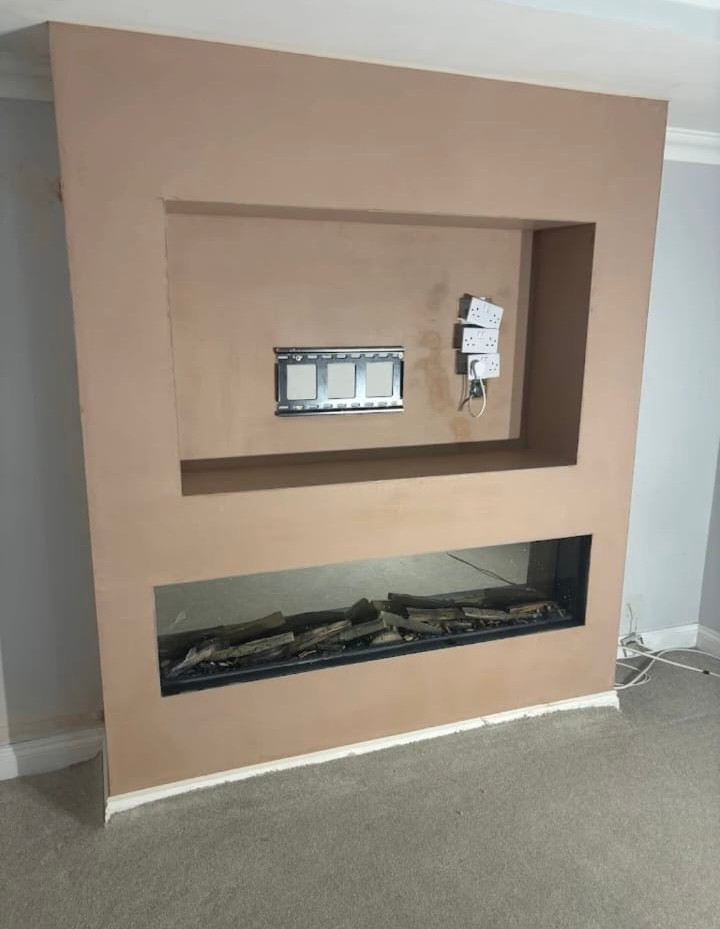
There is no rate per square metre. Old plaster still gripping takes a skim; a wall that sounds hollow has to come off, which brings a backing coat back into the job, and lime is slower again because it has to be left between coats. A cottage on a lane with nowhere to park and a converted barn up a long track are two different jobs, because every bag in and every barrow out is carried. A scaffold is a priced line under the work at height rules, and a stair hall or a high barn wants a tower inside, and Approved Document L can ask for the insulation behind a renewed render to be improved.
If it has started to come down
A ceiling on the move, or plaster blown off a wall
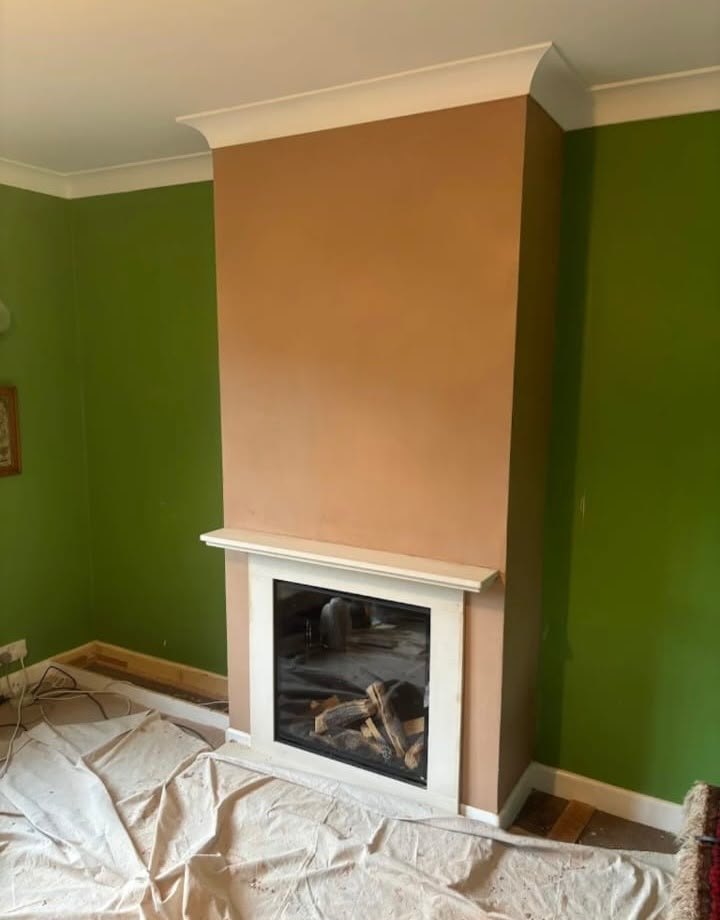
Ring rather than use the form. A ceiling that has begun to bow, or plaster coming off a wall in sheets, goes to the front of the queue. We are the far side of the forest, about seventeen miles, so a Minstead call is normally looked at the same day or the next. Clear the room underneath first, because lath and plaster comes down in slabs.
Worth knowing
The conservation area decides the outside, not the inside
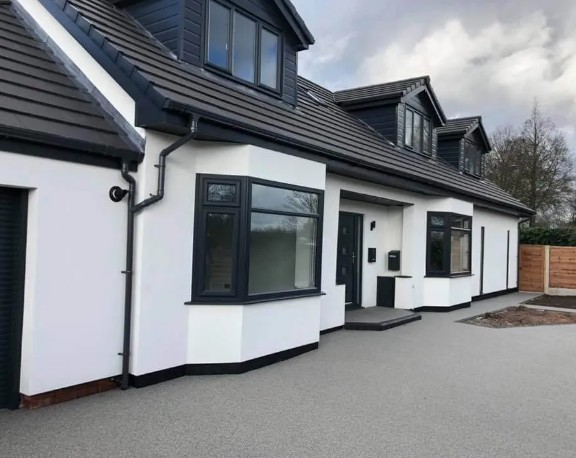
Minstead sits in the Forest Central (South) conservation area, inside the National Park, and the National Park Authority rather than the district council is who says yes. For plastering that line is simple and worth knowing before you choose a finish.
Inside your house nothing changes: skim what you like, board what you like. Outside, repairing render or limewash like for like counts as maintenance and normally needs nothing. Changing the appearance is different, and swapping a limewashed lime render for a coloured silicone topcoat is a change of appearance even when the colour looks close on the sample board.
Two practical things follow. First, check the address before you commit, because the conservation area boundary runs along lanes rather than round the whole parish, and a listed cottage is stricter again: on the eleven listed entries around the village, consent covers the inside too, so a lath and plaster ceiling cannot simply be pulled down and boarded.
Second, if you want to change a finish, get it agreed first. Doing the work and asking afterwards is how people end up paying to take a render off. When it is not obvious we will price both, the like-for-like repair and the change, so you can see what the decision is actually worth before anybody fills in a form.
Who you are dealing with
A local firm you can check
We work across Minstead, Lyndhurst, Cadnam, Bartley and the SO43 lanes either side of the Southampton road, with the New Forest National Park Authority for planning and New Forest District Council for building control. Send the postcode if you want to be sure it is us rather than somebody two counties away.
Bournemouth Roofing & Building Ltd, registered in England and Wales, company number 15471719, which you can look up in a minute. Thomas Hannen's business, and he is the one who comes out to price the job, not a salesman. A verified customer's 10 out of 10 on Checkatrade. The site visit and the written itemised quote are both free.
Questions
Minstead questions we get asked
We are in the Forest Central conservation area. What does that stop?
It stops a change of appearance, not a repair. Minstead sits inside the Forest Central (South) conservation area, so putting the same finish back on a wall in the same colour is maintenance and needs nothing at all. Swapping a lime render for a modern coloured system, or rendering a wall that has always been brick, is a change and the National Park authority will want to see it first. Worth raising early.
The National Park is our planning authority. Does that slow things?
It means an application goes to the New Forest National Park Authority rather than a district council, and anything visible from a lane or the open forest gets closer design scrutiny than it would elsewhere. For internal plastering none of that applies and we could start tomorrow. For external work it is worth allowing time before a scaffold is booked. We do not put a wall up and ask about it afterwards.
The cottage walls are old and soft. What backing coat?
Lime, if lime is what is on there now. An old solid wall works by letting moisture pass through and dry out, and a cement backing or a gypsum skim over the top seals it, so the damp finds the edges and pushes the new work off. Lime takes longer to set and cannot be hurried in cold weather. On a listed cottage here it tends to be the only thing the National Park will accept.
How do we find out if our house is listed?
Ask the National Park authority, or look the address up on the national list. There are eleven listed entries in Minstead, so the odds on any one house are low, but the ones that are listed tend to be exactly the cottages people want replastered. Consent covers internal fabric as well as the outside, so a lath and plaster ceiling in a listed building cannot simply be pulled down and boarded over.
It is a long way out. Do you still come?
We do, and it gets planned as a block of days rather than short visits, because Minstead is the best part of eighteen miles out through the forest. Lanes here are narrow, so on the visit we check where the van and any scaffold can stand without blocking anybody. Thomas Hannen comes out to look and price the job, and neither that visit nor the written itemised quote costs you anything.
Nearby, and next door
Plastering and rendering near Minstead
Plastering and rendering nearby
Our other trades in Minstead
Everything we do in Ringwood Plastering and rendering, all areas Every area we cover
Free quote
Get a written price for plastering in Minstead
Send the postcode and tell us which rooms. We come out, tap the walls and ceilings, and put the price in writing with the days it will take.