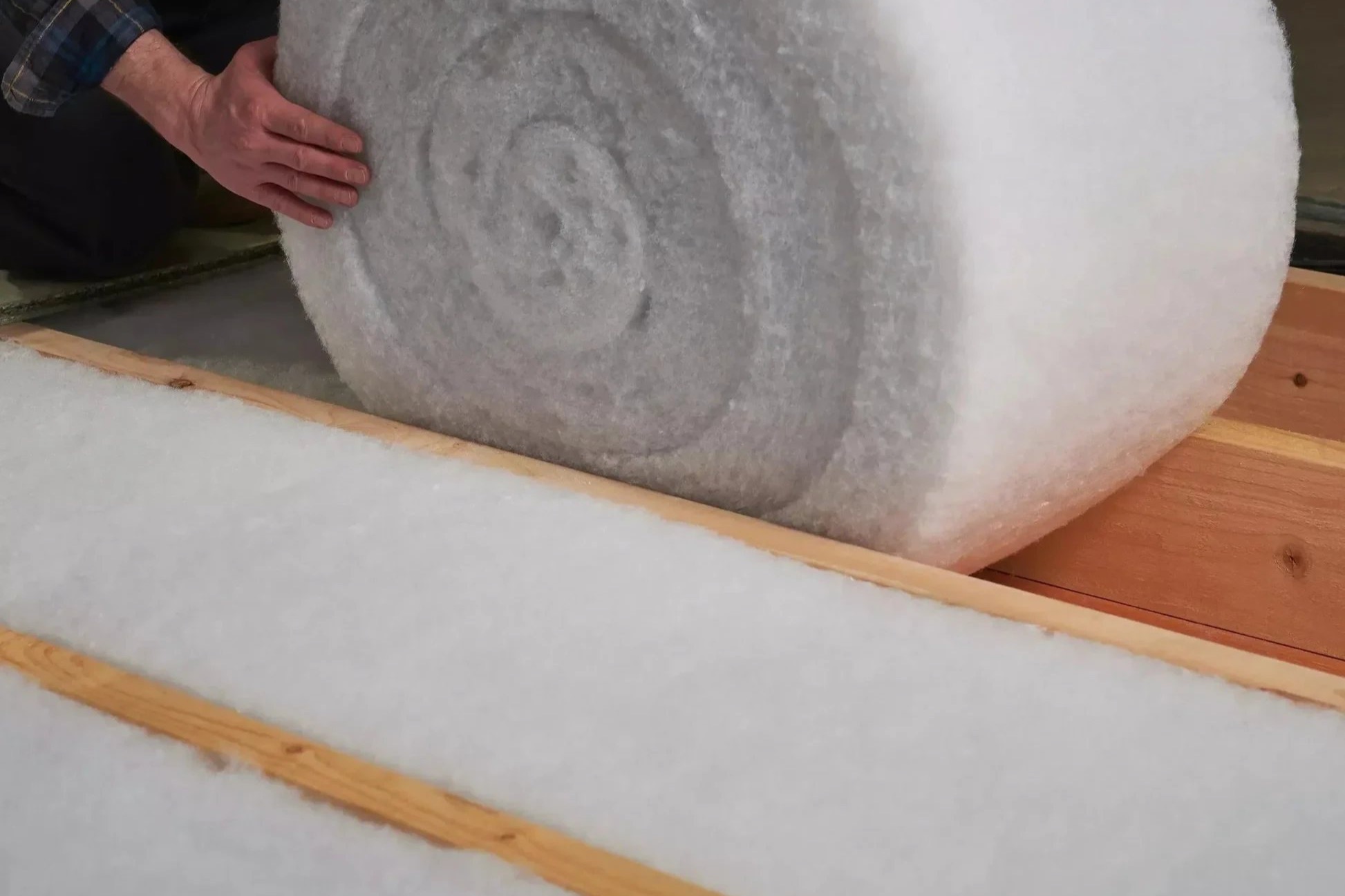
Insulation in Minstead
Lofts, sloping ceilings and solid walls around Minstead, done so the roof space can still breathe, with a free survey and an itemised written price.
The site visit is free and so is the written itemised quote. Thomas Hannen prices every job himself.
Most Minstead lofts are older roof spaces with the covering close over your head and no clear run of air at the eaves, so the work here is as much about keeping the roof breathing as it is about laying wool. We get up there first, then price the loft, the sloping ceilings and the draughts as separate lines.
Three things bring people to ring us from the lanes around Minstead. A bedroom in the roof that is cold by morning however long the heating has been on. A loft somebody has just been into for a cable or a leak, where the wool is thin, settled and stuffed hard into the eaves. And a dark stain or black mould on a ceiling below the roof, which is nearly always a ventilation problem before it is an insulation one.
What we do about it is look properly, with a torch and a depth gauge, and tell you which of the three you actually have. The site visit is free and so is the written itemised quote. If your loft only needs a cross layer, the eaves opened back up and a sealed hatch, that is what we will quote for, and we will say so plainly rather than sell you a system.
The work
You can half stand up in a roof this old
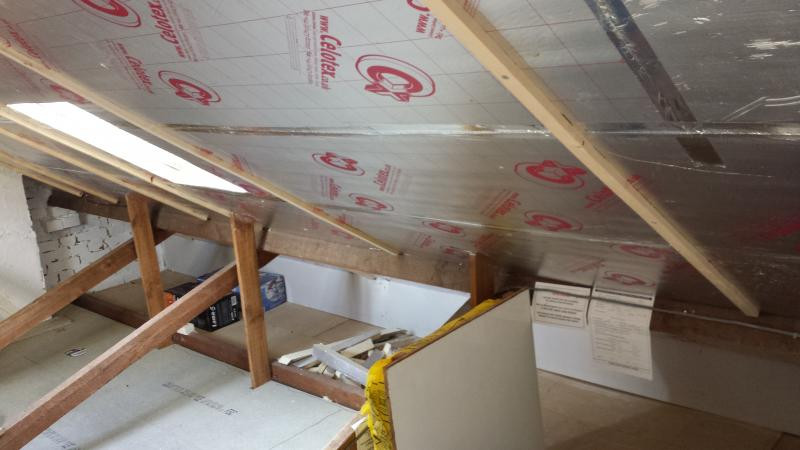
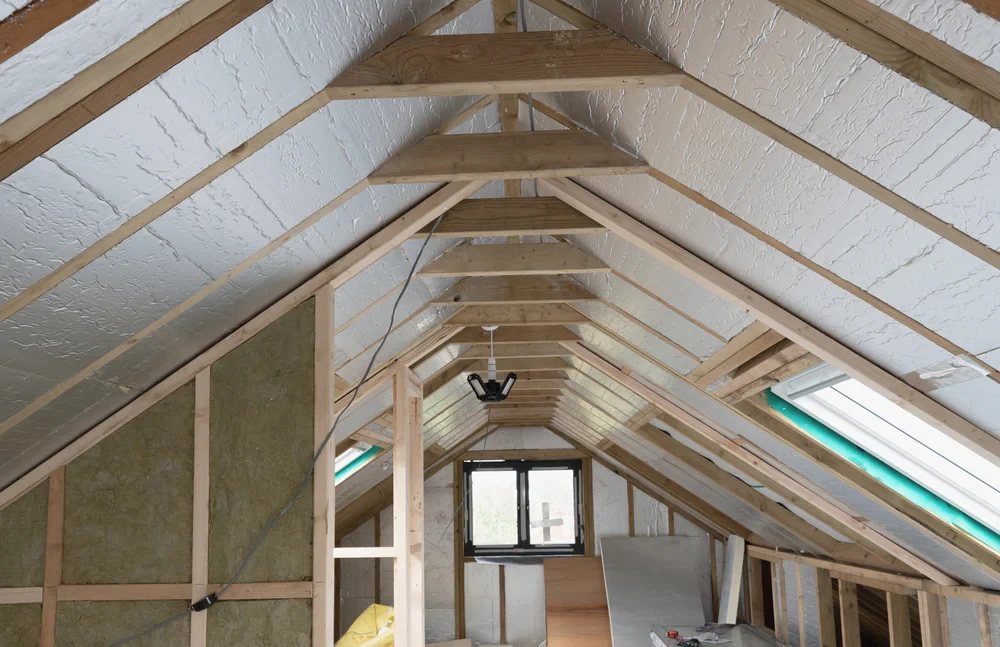
A roof that was never built for a loft. A lot of the houses along the lanes here are old enough to have purlins and heavy rafters rather than a modern trussed roof, which means an attic you can half stand up in, shallow ceiling joists and often lath and plaster underneath. We straighten what is already down, close the gaps at the ends of the runs, then lay mineral wool across the joists at right angles, between and over, so the timber itself stops acting as a cold bridge through the ceiling. Around 270mm finished depth is the usual target, laid loose rather than compressed, because squashed wool is thinner wool. Eco Roll goes down easily in an awkward space and cuts round chimney breasts and old timbers.
Thatch, where we would talk you out of it. If yours is one of the thatched cottages, do not let anybody line the underside of the thatch with foil, board or a sealed membrane. Thatch has to dry in both directions, and shutting it in rots the spars and the fixings from the inside. The right answer is insulation at ceiling level in a breathable quilt with the roof space above it left ventilated, and we will put that in writing rather than take the bigger job. Where an attic has already become a bedroom the insulation goes at rafter level instead: rigid board cut tight between the rafters with an air gap above and a second layer under, taped so the vapour control layer faces the room, or a multi-layer foil quilt such as TLX where the head height will not take it. A dormer cheek is the coldest part of most roof rooms and the one most often missed.
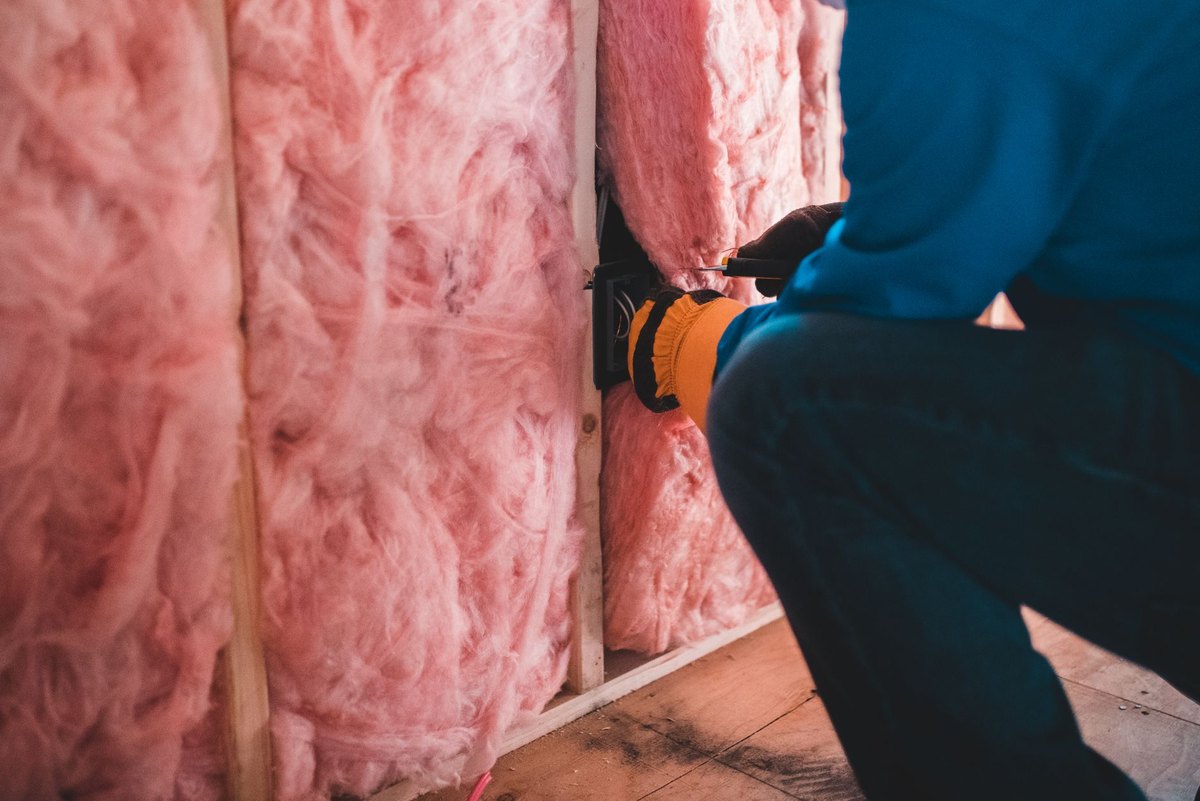
An older Minstead cottage has solid walls with no cavity to fill, so the choice is internal wall insulation, detailed carefully around joist ends and window reveals, or external wall insulation, which is a planning matter here rather than a free choice. Newer houses in the village do have a cavity, and a borescope in the survey tells us whether it was ever filled and whether the fill has slumped. With four in ten households here on oil and another tenth on electricity, the fabric decides how much heat you buy and the loft is worth more than it would be on the gas main. Vent trays go in at the eaves before any new depth, the hatch gets a board and a draught seal, boarding goes back on legs, and downlighters get fire hoods.
How it runs
From your call to a written price
Nothing inside a loft or on the inside face of a wall needs planning permission, and Planning Portal guidance on insulation sets out where that stops. Minstead sits inside the New Forest National Park, and the Forest Central (South) conservation area takes in the village, so external wall insulation needs an application. The National Park Authority's interactive property map tells you whether your address is inside it, and its heritage and conservation guidance explains how appearance is judged. Eleven entries here are listed, and consent comes first. Building control catches more: regulation 23 means renovating more than half of an element brings all of it up to current standard. Planning sits with the National Park Authority, building control with New Forest District Council.
Cost
What decides the price of an insulation job
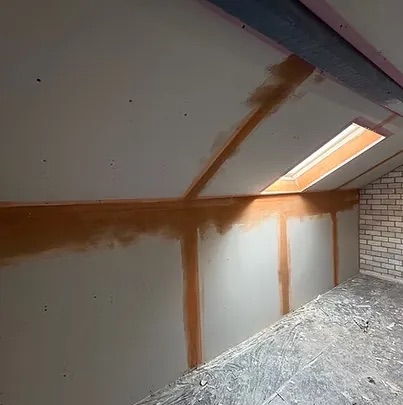
No rate per square metre: the area is the easy part and everything round it is the awkward part. A thatched cottage with a small hatch over a landing is one morning; a converted outbuilding with a sloping ceiling and no loft at all is another. Old material to bag and take away, and boarding to lift and put back, come before anything new goes down. Approved Document L sets what the work has to reach. Ask what depth is being laid, whether the old material comes out, and whether the eaves and hatch are included.
If it is urgent
Damp, condensation or a room you cannot heat
Ring rather than use the form. A loft dripping with condensation, mould that keeps coming back, or a room that will not hold heat gets seen quickly. The first visit settles whether that is insulation, ventilation or both, because insulating a space that cannot breathe makes it worse. Minstead is a run out through the Forest rather than round the corner. Outside Monday to Friday, 8am to 6pm is by arrangement.
Worth knowing
On oil and electric, the loft is worth more than it would be on gas
Nearly half the households in Minstead heat with oil and about one in ten with electricity, because the gas main does not reach most of the village. That does not change how a loft is insulated. It changes what the loft is worth to you.
Every bit of heat you stop losing through the ceiling is heat you are not buying at oil or electric prices, and oil in particular you buy in one lump before winter, which is when the thin loft shows up on the bill. So the sensible order of work here is fabric first: the loft to full depth, the eaves kept clear, the hatch sealed, the sloping ceilings, and only then anything to do with the boiler.
That order matters twice over if a heat pump has been mentioned to you. A heat pump only runs cheaply at a low flow temperature, and a low flow temperature only heats a house that holds onto what it is given, so the insulation is not an optional extra afterwards, it is the thing that decides whether the heating works.
One more practical point while you are comparing quotes: insulation installed in an existing home is currently zero rated for VAT under HMRC Notice 708/6, so if one price has VAT added and another does not, ask why before you assume one is dearer.
Who you are dealing with
A local firm you can check
We cover Minstead, Lyndhurst, Emery Down, Cadnam, Bartley and the SO43 addresses through the middle of the Forest, with the National Park Authority for planning and New Forest District Council for building control. Send us the postcode if you want to be certain you are inside it.
Bournemouth Roofing & Building Ltd, registered in England and Wales, company number 15471719, which you can look up in a minute. Thomas Hannen's business, and he is the one who comes out to price the job, not a salesman. A verified customer's 10 out of 10 on Checkatrade. The visit and the written quote are both free.
Questions
Minstead questions we get asked
We are in the Forest Central conservation area. What does that control?
Appearance, essentially. Minstead lies in the Forest Central (South) conservation area, so like for like maintenance is fine while a change of covering or external material is not something to do without asking. Insulation laid inside a roof space or under a floor is invisible from outside and is not caught by any of it. External wall insulation and a change of roof covering are caught, and those go to the New Forest National Park Authority first.
Most houses here run on oil. Does that change the priorities?
It raises what the roof space is worth to you. Oil heats 44.7% of households in Minstead and another 10.3% run on electricity, so the heat is bought by the tank or by the meter rather than piped in, and every unit going out through the ceiling was paid for the hard way. The fabric decides how much heat you have to buy in the first place. That is why depth over the ceiling comes before anything else here.
The ground stays soggy round the cottage. Does that reach the floor?
It can, and it decides how the floor gets treated. Minstead sits on impeded drainage, so a suspended floor void here holds moisture longer than it would on sand, and the timber ends nearest the wall are the first thing to go. Packing that void without checking the airbricks and the joist ends traps damp against the wood. We lift a board and look before quoting, then clear the ventilation as part of the work.
Is the National Park stricter than an ordinary council?
On what can be seen, yes. The New Forest National Park Authority is the planning authority for Minstead, and design scrutiny applies to anything visible from outside, which is a higher bar than a district would set. It makes no difference at all to material sitting inside the roof or under the floor. It matters if you are lifting the covering, adding rooflights or lining the outside of a wall, so establish that before the quote.
Can we tell for ourselves whether the loft needs doing?
You can get most of the way with a torch and a tape measure. Put your head through the hatch, push the tape down beside a joist and read the depth, then look along the eaves to see whether the material stops short of the wall plate. Snow melting off one patch of roof before the rest is the other giveaway. In an older Minstead roof with no felt, look for daylight at the ridge too.
Nearby, and next door
Insulation near Minstead
Insulation nearby
Our other trades in Minstead
Everything we do in Ringwood Insulation, all areas Every area we cover
Free quote
Not sure what is actually in your loft?
We will get up there, measure the depth you have, look at the eaves and the hatch, and put the options in writing. The visit and the quote are both free.