Roofing in Cadnam and Bartley
Repairs, re-covering, chimney leadwork and flat roofs on the cottages and detached houses of Cadnam, Bartley and Winsor.
The site visit is free and so is the written itemised quote. Thomas Hannen prices every job himself.
Your planning authority at Cadnam and Bartley is the National Park Authority, not the district council. It does not stop a repair or a like for like re-cover, but it does mean anyone quoting you a different covering should be checking first.
Two kinds of roof sit side by side in Cadnam and Bartley. There are the older cottages and farmhouses in brick with clay tile or slate over them, and there are the detached houses built since the war, most of them on concrete interlocking tile. They fail in different ways and get quoted differently.
What they share is trees, because almost every plot here has something big overhanging it. We come out, walk the roof, look in the roof space where there is a hatch and photograph what we find, then put it in writing line by line. Nineteen and a half miles, so we would rather see it once and price it properly than make three trips.
The work
Big stacks, worked hard by a wood burner
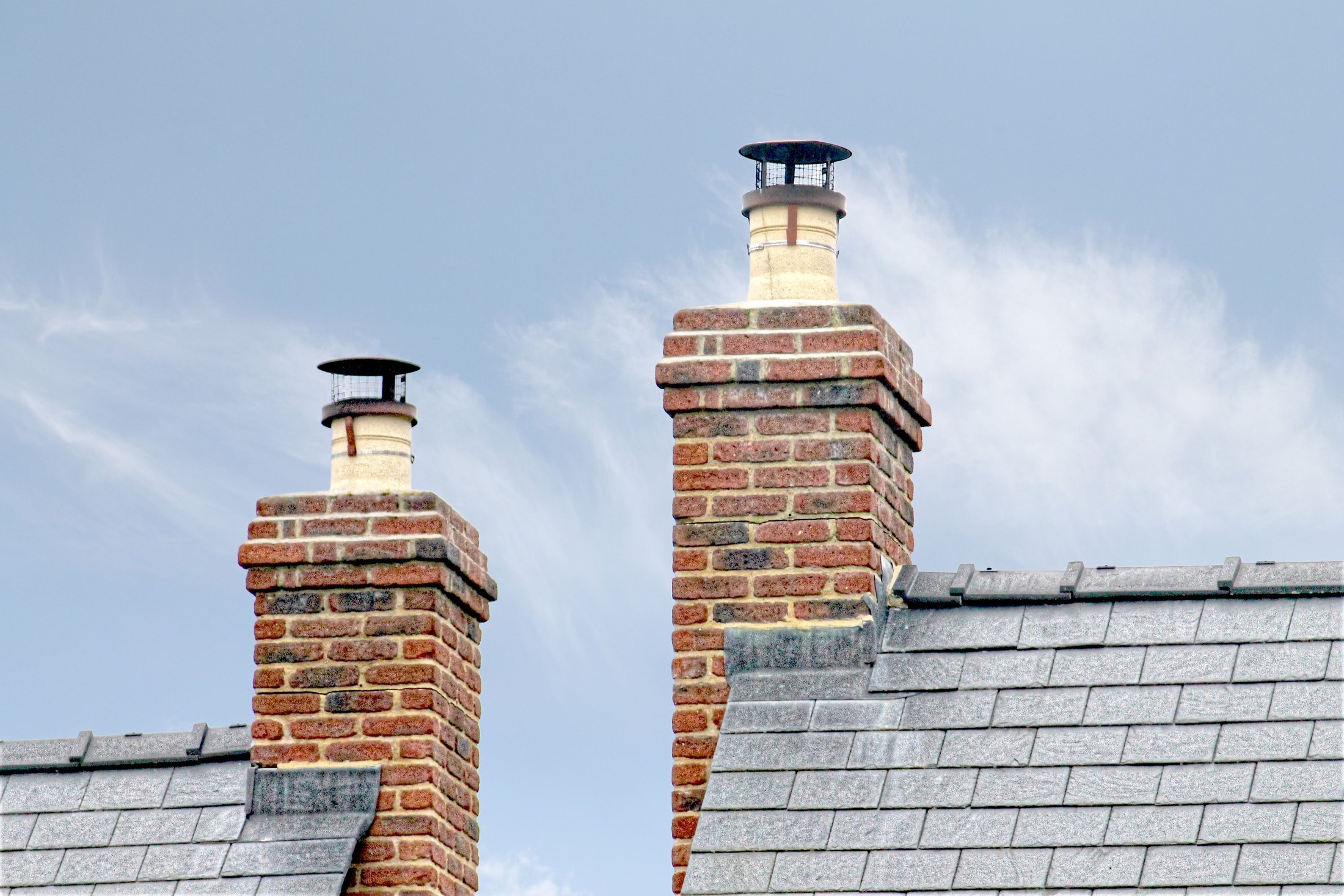
Chimneys and leadwork. Nearly a quarter of the housing here predates 1919, and those cottages carry big brick stacks that get used hard with a wood burner going. Flashings, soakers, back gutters, valleys and the abutments where a roof meets a wall go back in code rated lead cut so it can move without splitting. Cracked flaunching and a stack nobody has looked at in thirty years is the source of most of the leaks we chase, with slipped and missing tiles and other storm damage making up much of the rest. On a plain clay tile or natural slate roof of that age the fault is nearly always a fixing or a junction rather than the covering, and sound old tile is worth keeping, so we sort it as we strip.
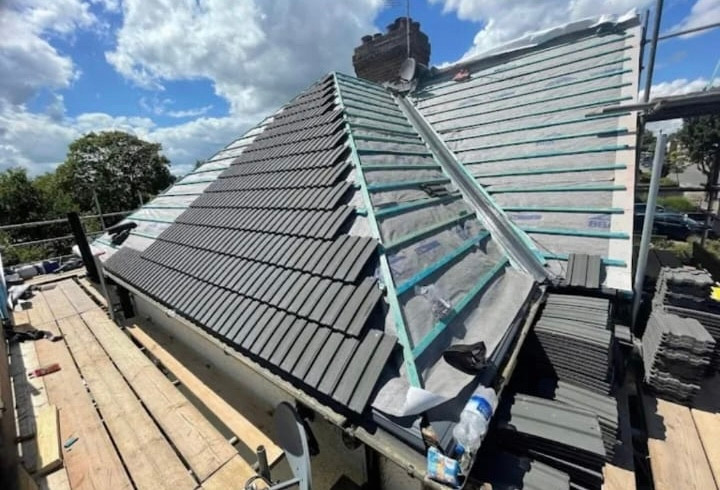
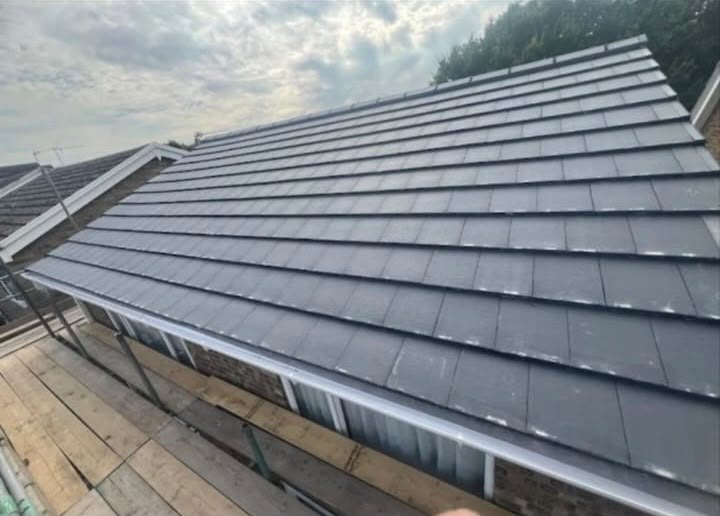
When the nails, battens and underlay have gone together, the covering comes off, soft rafter feet are cut out, and it goes back on breathable membrane and treated battens with matched plain tile or slate. Ridges and hips are screwed down rather than bedded in mortar, which is what BS 5534 expects. On the later houses, where the covering is interlocking concrete tile, it is the mortar that wears out and not the tile, and a dry fixed ridge and dry verge units are priced by the metre of edge.
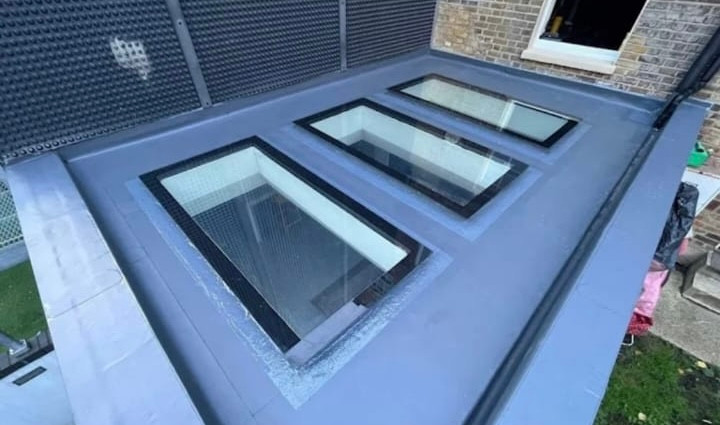
Gutters and downpipes are the job that comes round every year out here. Oak leaf and beech mast are heavy, wet and slow to rot down, so they mat in the gutter, wash into the downpipe and pack the gully at the bottom out of sight, and clearing that debris out of the run is only half of it. A slope under the trees that never dries carries algae and moss as well, and both hold water against the tile. Flat roofs on extensions, stables and workshops fail at the outlet for the same reason. While the covering is off, insulation and eaves ventilation are far cheaper to sort, and Approved Document L sets the standard a renovated roof is expected to reach.
How it runs
From your call to a written price
Same team throughout, one person to ring, no sub-contracting. The quote is itemised line by line, and anything found on the strip gets a photograph and a price before we carry on. On permission, get the authority right first: the New Forest National Park Authority deals with planning here rather than the district council, and you can check what applies to your address on the National Park Authority's interactive property map. A repair, a like for like re-cover, new rainwater goods and rooflights are permitted development on an unlisted house, with no application and no building control sign-off, as long as nothing finishes more than 150mm above the roof plane. Ten entries here are listed and need consent whatever the work.
Cost
What decides the price out here
No rate per square metre. Two roofs of the same area, one on a lane in Bartley and one on a village frontage, are not the same job. Gravel drives, soft verges and a big oak in the way of the elevation that needs the platform get settled before anything is priced, and the work at height rules are why the platform is a priced line. The skip and the stacks of stripped tile also need somewhere off the lane to stand. An old cottage roof has more chimneys and valleys than a modern detached house twice the size, and each is priced on its own. Ask whether access is included and whether battens and underlay are renewed or covered over.
If it is leaking now
Water coming in today
Ring rather than email, and say whether it is running or dripping. Anything active goes to the front of the queue, and the first visit is about making it safe while you decide. Get a bucket under it, move what is beneath and photograph the ceiling before it dries, because that tells us more than the stain will tomorrow. The phone is answered 24 hours for emergencies; scheduled work runs Monday to Friday, 8am to 6pm.
Worth knowing
Trees over the roof, and ground that moves
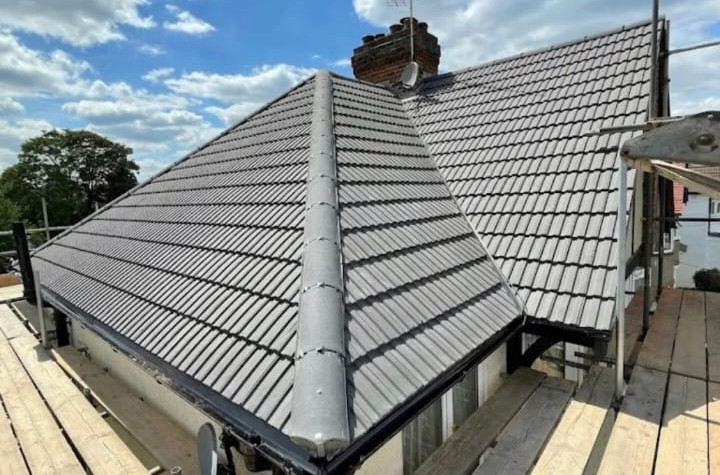
The one thing that genuinely changes the job here is what is growing around the house. Mature oak and beech overhang most plots, so the gutters, valleys and shaded slopes carry a load of wet leaf every autumn and the roof stays damp longer than an open one would.
That matters more than it sounds, because the ground underneath is slow draining and shrinks and swells with the seasons. A downpipe discharging into a broken gully, or into nothing at all, is putting water straight beside a foundation on ground that moves. Fixing a leak in the roof and leaving the rainwater goods discharging into the border is half a job.
When we quote, the outfall gets looked at as well: Approved Document H is the standard for where that water is supposed to end up, and it is usually a cheap thing to put right at the same time.
Who you are dealing with
A local firm you can check
Nineteen and a half miles from us, covering Cadnam, Bartley, Winsor and the SO40 addresses around Copythorne. The New Forest National Park Authority for planning and building control. Bournemouth Roofing & Building Ltd, registered in England and Wales, company number 15471719, which you can look up in a minute. Thomas Hannen's business, and he is the one who comes out to price the job, not a salesman. A verified customer's 10 out of 10 on Checkatrade. The visit and the written quote are both free.
Questions
Cadnam and Bartley questions we get asked
There is no conservation area in Cadnam. Am I free to re-tile?
On appearance, largely so. Cadnam and Bartley have no conservation area of their own, so a straight re-cover is normally permitted development. What still applies is the National Park itself, which takes an interest in anything visible from a road or a track, and the ten listed entries in the area, where consent is a separate matter entirely. Check whether your own house is one of them before settling on a different tile.
We want a loft conversion. Does the Solent rule catch us?
It can, and it catches people out. Cadnam and Bartley sit in the Solent nutrient neutrality catchment, which is engaged only where a scheme adds overnight accommodation. Re-covering or repairing a roof adds no bedrooms and is untouched by it. Turning the loft into a bedroom is a different application altogether. We will tell you which side of that line your plan sits on before you spend anything on drawings.
Our house is detached and set back. Does that make scaffolding easier?
Usually, and it is common round here where 43.5 per cent of homes are detached. A roof you can get all the way round is erected and struck faster than one where an elevation faces a shared path. What catches people out on these plots is the drive surface and the tree cover, because scaffold feet need firm level bearing and low branches decide whether the lift goes up in one piece.
Half the village looks pre war. Does that change the underlay?
It changes whether there is any. Around 23.5 per cent of homes here predate 1919 and another 19.1 per cent are inter war, and roofs of that age were often laid straight onto battens with no felt at all, or on a bitumen felt that has since torn along the rafter line. If daylight shows between the tiles from inside the loft, the covering is the only barrier you have.
How long is the scaffold up on a re-cover?
Longer than the roof work itself, usually by a couple of days at either end. It goes up before we strip and comes down once the last verge is pointed and the gutters are rehung. On a detached Cadnam house with clear access all round, a straightforward re-cover is a working week or so of roof time plus the erection and the strike. Weather moves that date, nothing else does.
Nearby, and next door
Roofing near Cadnam and Bartley
Roofing nearby
Our other trades in Cadnam and Bartley
Roofing guides
Concrete vs clay roof tiles: which is right? Planning, building regs or listed building consent Storm damage to a roof: the first 24 hoursEverything we do in Ringwood Roofing, all areas Every area we cover
Free quote
Get a written price for your roof in Cadnam or Bartley
Send the postcode and what the roof is doing. We come out once, look at all of it and put an itemised price in writing.