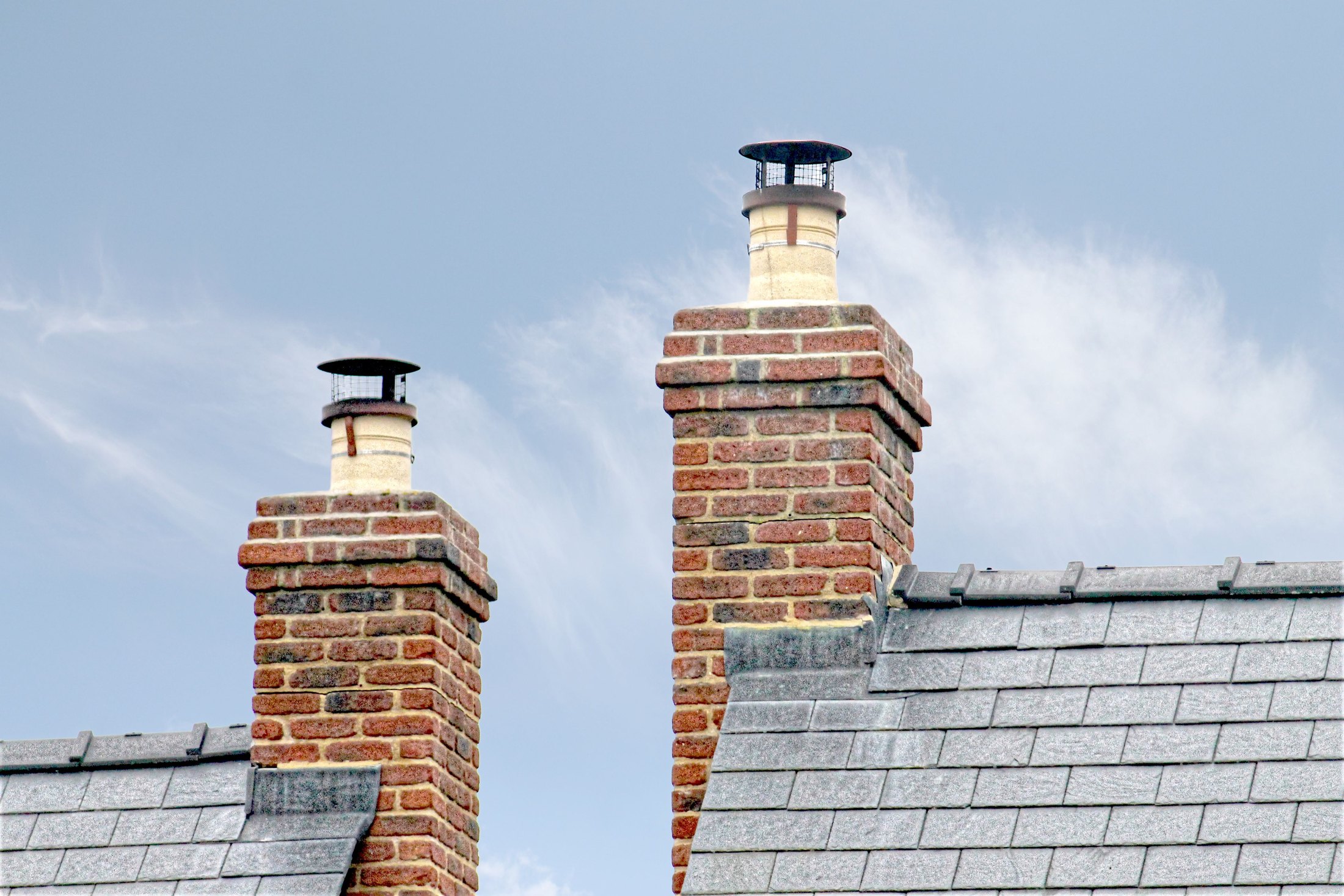
Roofing in Woodlands
Repairs, eaves and underlay work, dry fixed ridge and verge, re-covering and flat roofs across Woodlands and the SO40 lanes around it.
The site visit is free and so is the written itemised quote. Thomas Hannen prices every job himself.
Last updated
Nearly half of Woodlands went up between the war and the early eighties, with the busiest spell either side of 1960, so many roofs here are of a similar age. That is why neighbouring roofs often show the same faults: it is nearly always the fixings, the bedding and the underlay that have run out, not the tiles.
A roof at Woodlands needs looking at when mortar starts appearing on the drive from a ridge or a verge, or when a stain comes through a ceiling with the loft smelling damp after rain. Both are ordinary for a roof of this vintage and neither means the covering has finished. If rain is coming through a ceiling in Woodlands right now, though, ring 07435 839745 and leave the loft until we have talked.
We come out, get on the roof, put our head into the loft with a torch and photograph what is there, the underside of the underlay at the eaves included, because that is usually where the answer is. You get told whether it is a repair, edge work or a strip, in writing and itemised. If all you have is one slipped tile, a rocking hip or a single leak at the stack, roof repairs in Woodlands covers mending that fault and leaving the rest alone. Site visit and quote both free.
The work
The loft answers this one in ten minutes
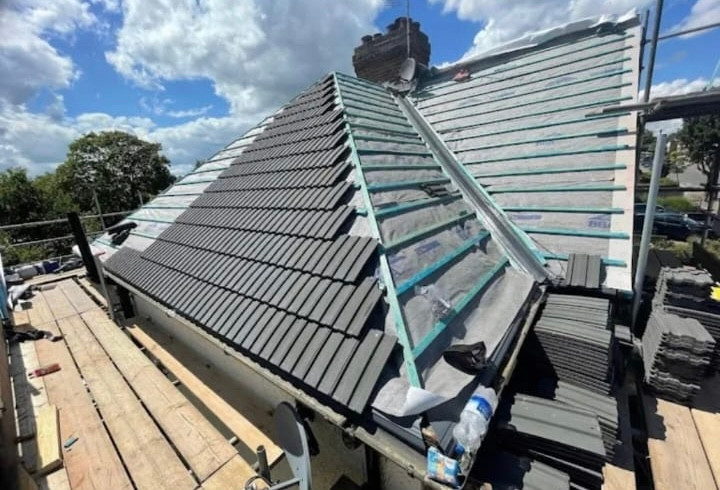
Underlay at the eaves. Start here, because on a roof of this era it is usually the answer. Nearly half the housing went up between the war and the early eighties, and the bitumen felt under those tiles has spent sixty years going brittle.
It fails first where it laps into the gutter, the one place it has to be sound. Water then runs behind the fascia and the first thing you see is a wet soffit or a stain at the top of a wall. It is diagnosed from inside the loft in ten minutes, and it is not always a re-cover: an eaves repair with a proper support tray buys years.
Ridge, hip and verge. The other job this age of roof produces. Mortar bedded when the house was built has had six decades of frost, and the hipped roofs in Woodlands carry a great deal of edge for their size. We take the bedding off and convert to a dry fix system, dry ridge and dry verge screwed onto a ventilated roll, the mechanical fixing BS 5534 expects, which also vents the roof space along the ridge and helps the condensation problem at the same time.
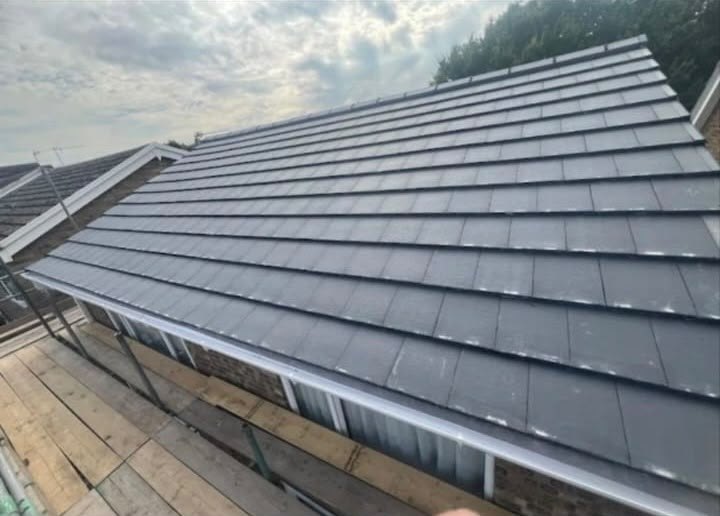
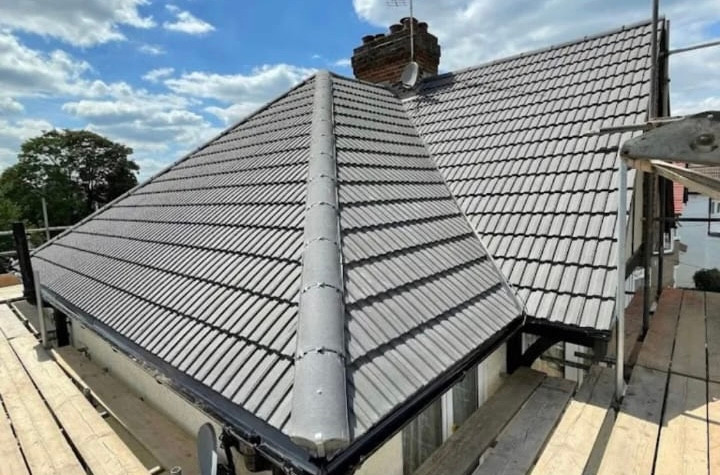
Slipped, cracked and missing tile work, storm damage after a gale off the open forest, and a leak traced back to where water genuinely enters rather than patched where the stain shows. Almost everything here is concrete tile, most of it interlocking, laid when the houses went up, with plain clay tile and natural slate on the older properties along the lanes. No stone slate on this side of the county, and where a thatched roof adjoins we take the tiled slope, the leadwork and the rainwater goods and leave the straw to a thatcher. When nails, batten ends and underlay have gone together the covering comes off, soft rafter feet are replaced, and it goes back on breathable membrane and treated battens with a matched tile. Nothing of this era has a sarking board, so the membrane is the second line of defence and not a place to save money.
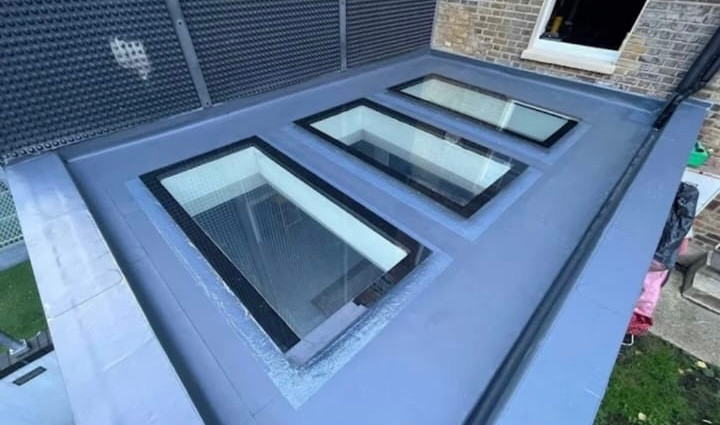
The attached garage, the flat-roofed rear extension and the porch are a common set on a house of this age, in felt, GRP fibreglass or EPDM rubber, with the deck looked at first. Where a flat roof runs into the main tiled slope rather than up a wall, that junction is where they go. Chimney flashings, soakers, valleys and the abutments where an extension meets the original roof go in code rated lead cut so it can move without splitting, and a mortar fillet at a chimney gets replaced, not re-pointed. Mature oak and pine overhang a lot of these roofs, so leaf litter and needles wash off the slope and pack the run and the downpipe below, and clearing that debris heads off the rotted fascia and soffit below. With the roof open, insulation and eaves ventilation cost a fraction to sort, and Approved Document L sets the standard a renovated roof is expected to reach. On a bungalow or a wide detached house, and a third of Woodlands is bungalows, it is the best money on the job.
How it runs
Re-roofing a Woodlands bungalow or house, start to finish
You ring, and Thomas drives the 17.8 miles out from Boscombe to look at the roof and price it himself. The written quote is itemised: scaffold, stripping the old covering, new battens and breathable membrane, the tiles or slates, and every junction, whether that is a valley, a lead chimney flashing or the abutment where a bungalow meets a later extension.
Most roofs in Woodlands sit on generous plots, so the scaffold usually has firm ground and a lorry can pull off the lane, but branches over the eaves sometimes decide which slope goes first. Anything open at the end of a day is sheeted, the drive is swept each evening, and the old tiles and timber leave with us. If the battens or rafters are worse than they looked from the loft, we stop, photograph it and give you a price, and nothing extra happens until you agree.
Planning sits with the New Forest National Park Authority, not the district council. A like for like re-cover or repair on an unlisted house is still permitted development within the limits in Planning Portal guidance. A change of covering, or anything that projects, is judged against National Park heritage and conservation guidance, and Woodlands lies in the Forest North East Conservation Area, shown on the Authority’s interactive property map. Building control is New Forest District Council.
Cost
Why two roofs on the same Forest lane price differently
A roof price is built from what the roof is, where it stands and what turns up under the tiles, so a rate per square metre tells you very little.
The era. A lot of Woodlands went up in the late fifties and early sixties. Many of those roofs still carry their first concrete tiles, battens and bitumen felt, and the felt at the eaves has often rotted into the gutter. That usually means a full strip and new underlay rather than a patch.
Bungalow or house. A third of the homes are bungalows: a long, low roof that is easy to reach but large in area. The detached houses stand taller, with hips, valleys and chimney stacks, and each of those adds lead work and hours.
Trees overhead. Oaks and conifers over a roof bring moss, choked valleys and sometimes a branch that has to be tied back before the platform goes up. The work at height rules are why the scaffold is its own line on the quote.
The older cottages. The pre-war and Victorian houses near the forest edge can have clay tiles or slate on rafters that are out of true, and matching them takes longer.
Put these to any other quote. Is the scaffold included? Are the battens and membrane being renewed, or covered over? What exactly happens at the chimney and in the valleys?
If it is leaking now
A leak, or a branch through the tiles
If water is coming through a ceiling, put a bucket under it and move anything electrical. If a branch has come through the tiles in a gale, keep everyone out of the room below and stay out of the loft.
Then ring 07435 839745 and leave the form for later, because a message in an inbox waits and a call does not. If nobody answers, leave a message and you will get a call back as soon as we can manage it.
On that first visit we stop the water: a sheet over the hole, slipped tiles refixed, and a look at the battens and felt around it. The permanent repair is priced separately once you have seen photographs. Planned work runs Monday to Friday, 8am to 6pm.
Worth knowing
Your planning authority is the National Park
The planning authority for Woodlands catches people out, and quoting builders too. Woodlands sits inside the New Forest National Park, so planning is decided by the National Park Authority rather than the district council your bins come from. Neighbours a couple of miles towards Totton apply to a different body than you do, and the answers are not always the same.
For a roof it matters in one place only. Repairs and like for like re-covering are unaffected and need nobody's permission. Anything that changes the look of the roof, or stands proud of it, is looked at more closely inside the Park than outside, and closer again in the conservation area. So if a re-cover is also the moment you want rooflights, solar panels or a dormer, ask that before the scaffold is booked. A refusal with the covering off is an expensive way to find out.
Who you are dealing with
Who comes out to Netley Marsh and the SO40 lanes
Woodlands sits on the north east edge of the New Forest, in Netley Marsh parish, with the SO40 lanes running out towards Ashurst, Bartley and Totton. It is 17.8 miles from our base at 80a Wolverton Road, Boscombe.
The New Forest National Park Authority decides planning, and New Forest District Council handles building control. The firm is Bournemouth Roofing & Building Ltd, registered in England and Wales under company number 15471719. It is Thomas Hannen’s business, and Thomas is the one who looks at your roof and writes the price. A verified customer scored us 10 out of 10 on Checkatrade. Neither the site visit nor the itemised written quote costs you anything. Before you book a visit in Woodlands, you can read our customers' Google reviews, word for word, on our reviews page.
Planning at a glance
Do you need planning permission in Woodlands?
Most repairs in Woodlands need no application at all. What decides whether a change to the outside of your house does is who the council is, whether a conservation area or a listing applies, and whether the place sits in a protected landscape.
| Question | In Woodlands |
|---|---|
| Who decides | New Forest National Park Authority is the planning authority for Woodlands. New Forest National Park Authority's heritage pages set out what it controls. |
| Conservation area | Yes: Forest North East Conservation Area. Check whether your street is inside the boundary before changing anything visible. |
| Listed buildings | Yes, there are listed buildings in and around Woodlands. If yours is one, work can need listed building consent. |
| Protected landscape | Inside the New Forest National Park, where design is looked at more closely and permitted development rights are narrower. |
Questions
Questions about roofing in Woodlands
Who decides planning here, the district or the National Park?
Planning here sits with the New Forest National Park Authority, not the district council, and Woodlands lies inside the Forest North East conservation area. That matters because the Park applies design scrutiny to anything visible from outside the property. Re-covering in the same material is maintenance and needs nothing at all. A different profile or colour, or a new rooflight on a slope that can be seen, is worth raising with the Authority before you commit.
Many houses here are detached. Does that make it easier?
It makes access easier and the roof bigger. At 41.5 per cent detached, Woodlands has more standalone houses than anything else, so the scaffold can usually go all the way round and there is no party wall or shared valley to work around. The trade off is four elevations of verge, eaves and flashing to detail instead of two, and no neighbouring roof giving yours any shelter.
What normally fails on a late 1950s roof?
The nails and the felt, in that order. Woodlands peaked for building in the late 1950s and early 1960s, 22 per cent of the settlement from that stretch alone, and roofs of that vintage were nailed with steel and lined with bitumen felt. Nails corrode where the tile laps hold moisture, and the felt splits at the eaves. Both can be tackled slope by slope, which is why we price the elevations separately.
The stream is close to the garden. Any bearing on this?
Only on where we put things. Woodlands is in flood zone 2 but not zone 3, with the Fletchwood tributary running around forty metres away, so the risk is occasional standing water instead of a regular soaking. Nothing from the strip goes near the bank, and the scaffold feet are set on boards over ground that will not soften. Where the downpipes discharge gets looked at while we are there.
You are eighteen miles off. Is Woodlands still worth your while?
It is at the far edge of what we cover, which is exactly why the visit matters more here. Rather than a quick look and a second trip, we survey the whole roof in one go, photograph what we find and build the itemised quote from that. If the job turns out to be small we will say whether it is worth pairing with something else while the access is up.
Nearby, and next door
Roofing near Woodlands
Nearby places we also cover for roofing, with straight-line distances from Woodlands, and the other trades we offer in Woodlands itself.
Roofing nearby
Our other trades in Woodlands
Roofing guides
Concrete vs clay roof tiles: which is right? Planning, building regs or listed building consent Storm damage to a roof: the first 24 hoursEverything we do in Lymington Roofing, all areas Every area we cover
Free quote
Get your Woodlands roof looked at properly
A free site visit, a proper look in the loft and a written itemised quote you can compare line by line.