
Bricklaying and repointing in Woodlands
Crack repair, repointing, brick replacement, chimney stacks and boundary walls in Woodlands, Netley Marsh and the SO40 edge of the Forest.
The site visit is free and so is the written itemised quote. Thomas Hannen prices every job himself.
Bricklaying and repointing
Cracking, blown brick and leaning walls in Woodlands
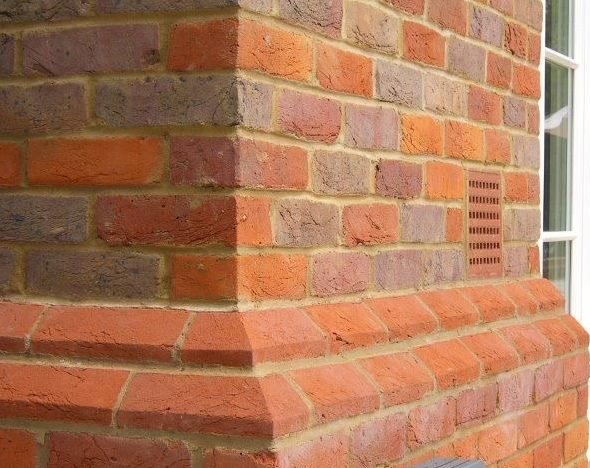
The commonest reason anyone rings us from Woodlands is a crack, and the honest first answer is usually not a price. The ground out here is cohesive and it moves with the seasons, so a crack that opens in a dry August and closes again by February is the ground breathing rather than the house failing. Before anybody rebuilds anything, that crack wants watching across a season. What we can price straight away is the repointing, the blown brick faces and the walls that have genuinely gone.
The other calls are the ordinary ones. Joints on the weather side raked back by wind and rain until a key goes straight in. Brick faces above a path that have blown and gone soft after a frost. A boundary wall along a track leaning further every year, usually with something growing beside it. And stacks, which out here stand in clear air and take everything the Forest throws at them.
We come out and look at the wall, the ground beside it and where the rainwater is going, because on this sort of subsoil those three things are the same question. Then you get a straight answer on what needs doing now, what should be monitored first, and an itemised written quote for whichever of it you want. The site visit and the quote are both free.
The work
The brickwork jobs we do around Woodlands
Cracks, and what caused them. This is where most Woodlands jobs start. We look at the shape of the crack, not just its width. A stepped crack following the bed joints and hairline at one end is telling you something different from a straight vertical split through the bricks themselves. The ground here shrinks and swells, so we check what is planted nearby, what the footing is likely to be, and whether a gully or a soakaway is emptying next to it, with the Fletchwood tributary forty metres off and flood zone 2 over part of the village. Where the movement has stopped, we cut out and stitch the cracked courses with helical bars bedded into the joints, rebuild the worst of it and repoint. Where it has not stopped, we say so and tell you what needs looking at before any bricklayer touches it.
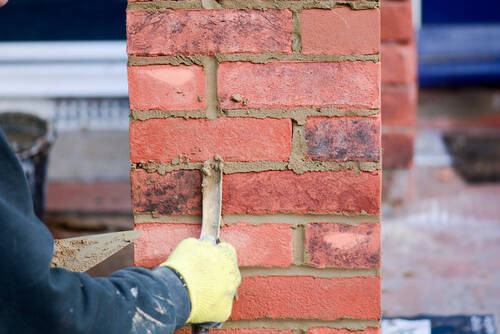
Boundary walls, and what the trees are doing to them. Plots here are big and the walls are long, old and sitting on very little footing, with mature planting either side. A root does not need to lift a wall to break it, it only needs to dry the ground under one end of it. We rebuild bowed and cracked lengths off a proper base, put a movement joint in where a long run needs one, reset copings so the head of the wall sheds water, and tie gate piers in rather than leave them standing on the end of a wall. On a stack it is the same story from the top down: the flaunching goes, then the pointing on the top courses, then it leans, and we rebuild from below the damage and put the access on the quote as its own line so you can see what the scaffold is costing rather than have it buried in a total.
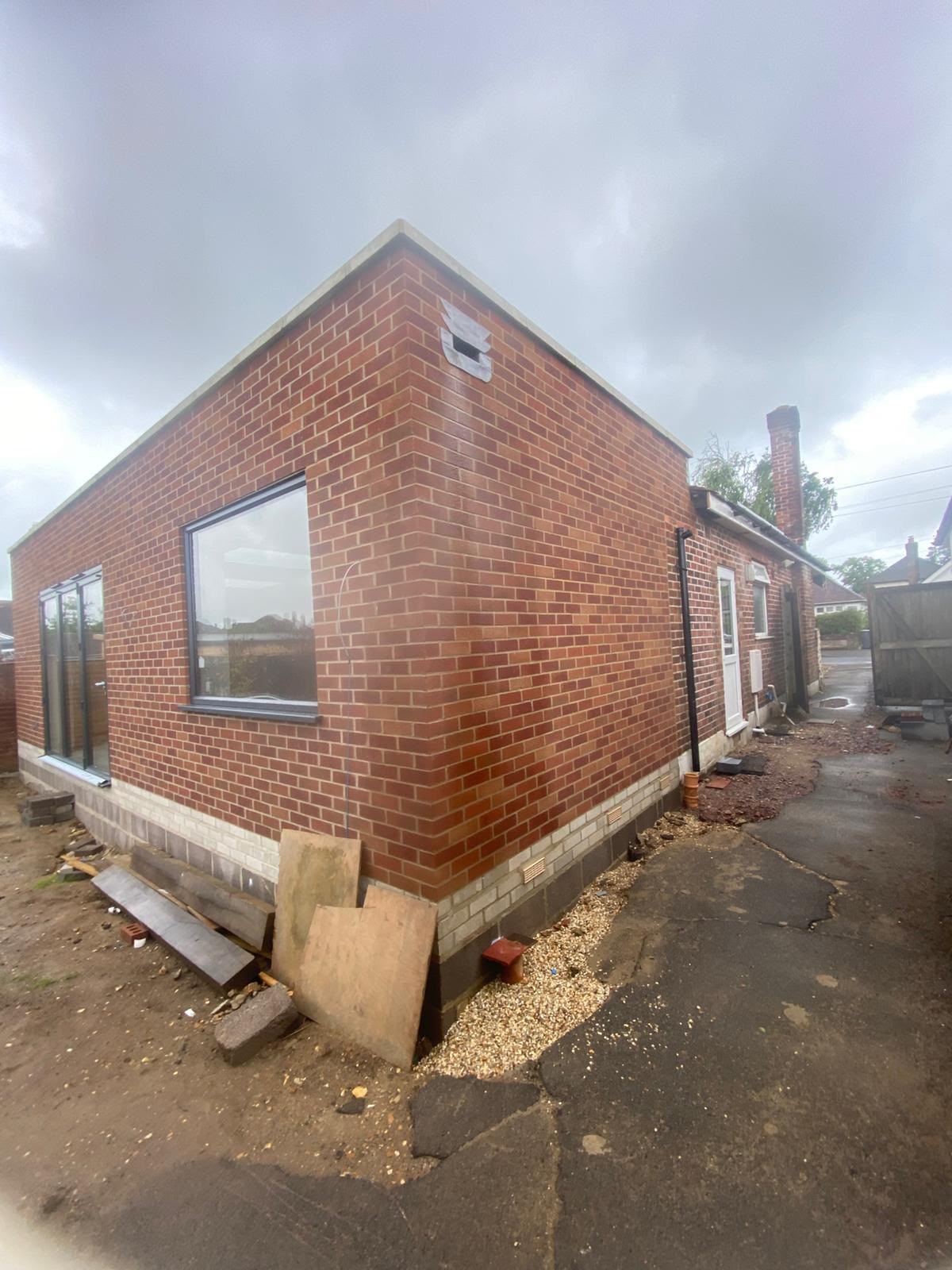
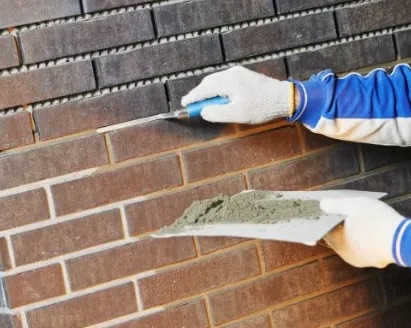
Repointing here is usually one or two elevations, not four. We rake out by hand to roughly twice the joint width, deep enough to key and no deeper, and keep a disc cutter away from soft old brick because the cut widens the joint for good and takes the arris off. Back in goes a matched mix: an NHL lime on the older solid walls, and 18.7 per cent of Woodlands predates 1919 with another 17.8 per cent between the wars, a measured cement and sand mix on the post-war work, which is 46.5 per cent of it and peaks in the late 1950s and early 1960s. Blown brick is cut out and replaced one at a time, matched for size, texture and colour, reclaimed or handmade where the wall is period, and we find out what soaked it first. On the post-war cavity houses we get horizontal cracking every fifth or sixth bed joint where a tie has corroded and jacked the stretcher bond, and cracked lintels over garage and patio door openings; ties are replaced from outside without taking the wall down. New work is the rest: extensions, garden rooms and brick plinths under timber outbuildings and stables, with footings sized for the ground rather than for the drawing.
How it runs
From your call to a written price
Woodlands sits inside the New Forest National Park, so the Authority is the planning authority here rather than a district council, and permitted development is tighter inside a National Park. Repointing and like-for-like repair still need nothing. Changing the appearance of an elevation rather than putting it back can need permission, and the Planning Portal sets out where that line falls. Part of the village falls within the Forest North East conservation area, and the National Park Authority publishes its heritage guidance for work in it. You can check your own address on the Authority's interactive property map. A rebuilt boundary wall has height limits under the guidance on walls, gates and fences, structural work goes through building control, and on a shared wall the Party Wall etc. Act 1996 sets a notice period.
Cost
What decides the price of a brickwork job
No rate per square metre. Access first: a detached house with a stack standing above the ridge, a bungalow you can barrow all the way round and a stable block at the end of a soft track are three different set ups. How long the platform stands matters as much as its size, and work at height rules are why it is a priced line. Stitching a crack and rebuilding a bowed length are priced by the hour, not by the metre. Ask what the mix is and whether the scaffold is in.
If something has moved
Loose brickwork, or a wall that has shifted
Ring rather than use the form. Anything overhead or leaning goes to the front of the queue, and the first visit is about making it safe. Around Woodlands it is usually a long boundary wall that has bowed past the point of standing up, or a stack that has moved in a gale. The phone is answered 24 hours for emergencies; scheduled work runs Monday to Friday, 8am to 6pm.
The one local thing
Ground that shrinks in summer and swells in winter
The subsoil around here is cohesive, with a significant shrink and swell rating, and that is the single fact most worth knowing before you spend money on brickwork. Clay gives up water in a dry summer and takes it back in a wet winter, and it changes volume when it does. Shallow footings, which is most garden walls, most porches and a fair number of older extensions, ride up and down with it.
That is why cracks here have a habit of opening in late summer and closing again by spring, and why a wall that was rebuilt in August can look wrong by Christmas. Trees make it sharper rather than causing it on their own: anything large and thirsty near a shallow footing will dry that patch of ground harder than the ground twenty feet away.
What to do with that is simple enough. If a crack worries you, mark each end of it with a pencil line and the date, photograph it, and look again in three months. A crack that moves with the seasons and does not grow is being caused by the ground and usually wants stitching and repointing rather than underpinning. A crack that widens steadily through the year is a different conversation and we will say so rather than sell you brickwork.
Meanwhile, keep water away from the footings: a gully that has stopped taking water, a downpipe discharging beside a wall or a soakaway sitting full all winter will do more to a clay footing than the weather ever will, and Approved Document H sets out where the surface water is supposed to go. Fixing the drainage first is not a delaying tactic. It is the part that makes the brickwork repair last.
Who you are dealing with
A local firm you can check
Woodlands is at the far end of our patch, about twenty miles out, so we plan work in the Forest rather than dash to it and we will be straight with you about when we can be there. We cover SO40 and the villages around it, Netley Marsh, Ashurst, Bartley, Cadnam and Minstead, along with the rest of the New Forest.
Bournemouth Roofing & Building Ltd, registered in England and Wales, company number 15471719, which you can look up in a minute. Thomas Hannen's business, and he is the one who comes out to price the job, not a salesman. A verified customer's 10 out of 10 on Checkatrade. The visit and the written quote are both free.
Questions
Woodlands questions we get asked
Is a new boundary wall a planning matter in the National Park?
It can be, because the New Forest National Park Authority is the planning authority here and Woodlands lies in the Forest North East conservation area. Height, and position next to a highway, are the usual triggers, and appearance carries more weight inside the designation than outside. Rebuilding what is already there on the same line is normally maintenance. Anything new, taller or in a different material is worth a call first.
Our oak stands near the garden wall. Is it moving it?
Quite possibly, on ground like this. The soil around Woodlands is cohesive with a significant shrink and swell rating, and a mature tree draws a great deal of water out of it through a dry summer, so the ground under a nearby footing drops and then comes back. A wall on a shallow foundation follows it. Before anybody talks about felling, I would watch the crack pattern across a full season.
The garden is wet all winter. Does that reach the brickwork?
It does at the base. Drainage is impeded around Woodlands and the site falls in flood zone 2, with the Fletchwood tributary within about forty metres, so surface water lingers instead of soaking away. A wall standing in soft wet ground draws damp up through its bottom courses and the mortar there goes first. Raising the ground level against the wall to hide the tide mark makes it worse.
Ours is a late fifties detached. What tends to go?
Wall ties and window heads. Woodlands is 41.5% detached with the building peak in the late fifties and early sixties, which is the era of the early galvanised tie, and those rust and swell inside the cavity. The sign is a horizontal crack following one bed joint every few courses, usually on the exposed gable. Ties can be replaced from outside without the leaf coming down, and the joints made good after.
Only two buildings here are listed. Does that simplify things?
For listed building consent, yes. With two listed entries, most houses in Woodlands are not caught by those rules at all. The National Park designation still applies to how the place looks, so changing the material on a visible elevation is a different question from a straight repair. For repointing in a matching mortar nothing is needed from anyone, and the job is booked as ordinary maintenance.
Nearby, and next door
Bricklaying and repointing near Woodlands
Bricklaying and repointing nearby
Our other trades in Woodlands
Everything we do in Lymington Bricklaying and repointing, all areas Every area we cover
Free quote
Get a price for the brickwork in Woodlands
Tell us what the wall is doing and we will come and look at it. Free site visit, free itemised written quote, and a straight answer on what can wait.