
Driveways and patios in Hangersley
Gravel drives, bound entrances, patios and paths across Hangersley and BH24, built to hold up under what actually drives on them.
The site visit is free and so is the written itemised quote. Thomas Hannen prices every job himself.
On the lanes around Hangersley the surface is rarely the problem. Loose gravel spreads and entrances pothole because nothing is holding the edges and nothing is stopping the stone working down into the ground beneath it.
The calls come in three shapes. The gravel has thinned in the wheel tracks and ended up in the verge, so you are raking it back twice a year. The first few metres in from the lane have gone to potholes and hold water after every shower. Or the terrace at the back has dropped at one corner, rocks when you walk on it, and is green for most of the winter.
None of those need the whole drive doing. We come out, dig a trial hole and walk the length of it with you, and the quote often covers the entrance and the edges rather than the lot. Where the answer really is a rebuild, you get told why, in writing, before anything is booked.
The work
Gravel, long entrances and what holds them together
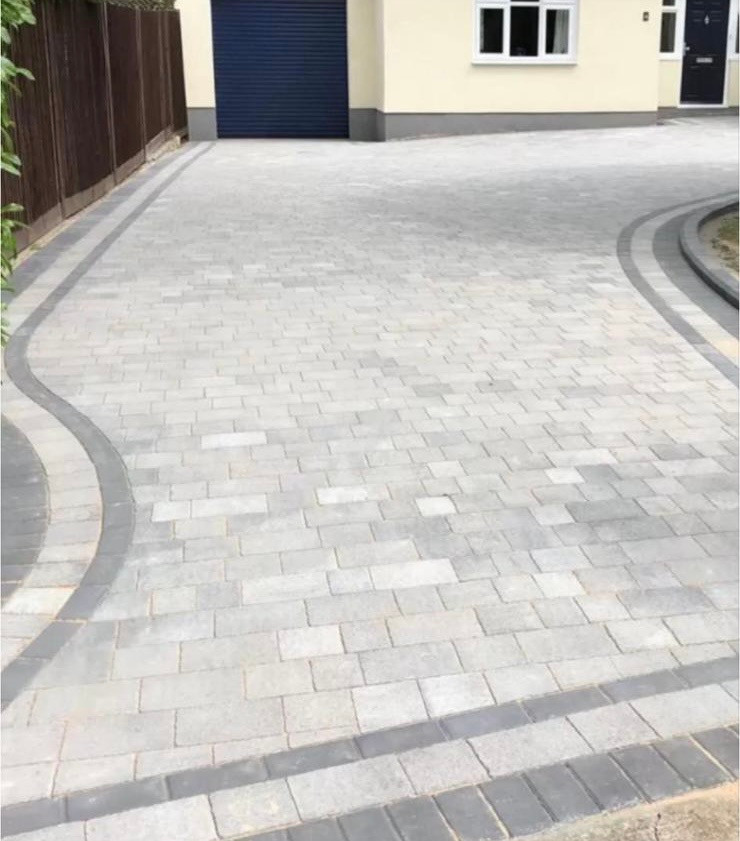
Loose gravel that will not stay put. The commonest job here by a distance. Gravel spread straight onto soil with no edge and no separation layer sinks into the ground, thins where the tyres run and migrates into the verge. Doing it properly means excavating to a firm formation, a geotextile membrane so the stone and the subgrade stay apart, a compacted sub-base, then either a stabilising grid filled with gravel or a bound surface where the fall is steep enough to wash loose stone downhill. A timber or concrete edge restraint round the perimeter is what stops it wandering. Hangersley sits in the Western Escarpment conservation area, so what a frontage looks like from the lane is part of the decision as well: relaying like for like is maintenance, changing the material is not.
The apron where the drive meets the lane. The first few metres take every turning wheel and all the water that runs off the road, and on a rural entrance they are usually the worst part of the whole drive. We bind that section in tarmac or resin, set a channel drain across the mouth of it so nothing discharges onto the highway, and give it more depth of sub-base than the rest, because that is where the loads are. It also stops loose stone being carried out onto the lane, which is the complaint that usually starts the conversation.
Detached houses on generous plots are four in ten homes around here, and the parking areas that go with them get used by more than cars. Oil deliveries, builders and skip lorries all come up the same strip. Rutting and sunken bays mean the sub-base was built for a family car and asked to carry something heavier, and where that is the fault the surface is often salvageable and the base is what gets done again. The ground is slow to drain as well, so a soakaway wants a percolation test rather than an assumption, and sometimes a positive outfall instead.
Concrete flags bedded on spots of mortar rock, hold water and stain. Relaid on a full mortar bed over a compacted sub-base they stop moving. Porcelain and natural stone both want the same build up and the same attention at the threshold, so the paving finishes clear of the damp proof course and the step down from the door stays a comfortable height rather than a trip. Block paving here is often sound under a scruffy surface: weed growth up the joints and a couple of sunken bays usually means the jointing sand has gone and one edge has lost its haunching. Lifting the failed area, kerbing the loose perimeter and a full re-sand with kiln dried sand puts years back into a drive. We would rather quote that and be asked back in ten years than sell you a rebuild you did not need.
How it runs
From your call to a written price
One person to ring, and an itemised quote: excavation, muck away, sub base, edgings, the surface and the drainage on separate lines. Paving a front garden stays permitted development while the water is dealt with on your own land. More than five square metres of new hard surface draining onto the road needs planning permission, and the Planning Portal guidance on paving a front garden sets out where the line falls. Widening the opening onto the lane is a dropped kerb application to the highway authority. Hangersley sits inside the New Forest National Park and the Western Escarpment conservation area, so before anything is ordered we check the address against the National Park Authority's interactive property map.
Cost
What decides the price of a driveway
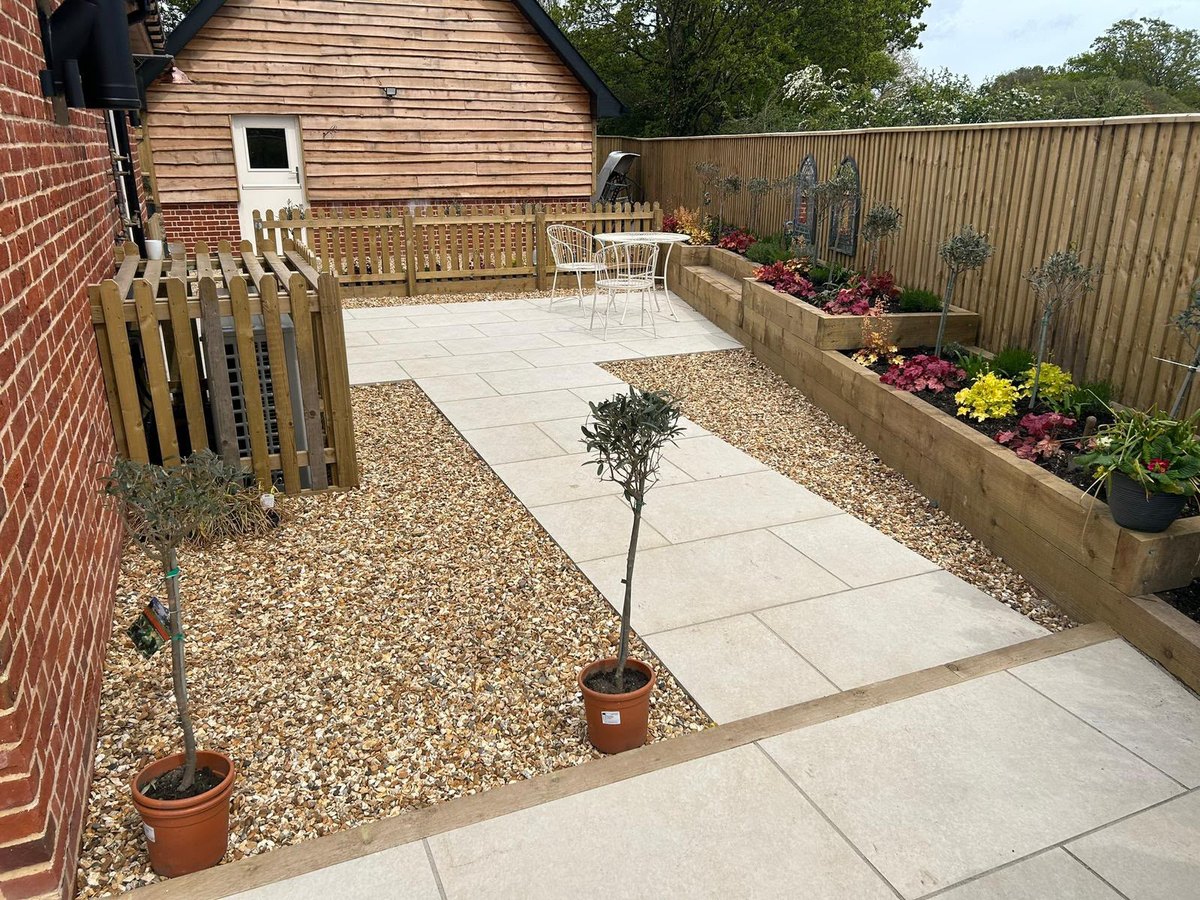
No rate per square metre. What is under it decides more of the cost than what goes on top. A detached house at the end of a long gravel entrance, a cottage with the front door straight onto the lane, and a bungalow with a turning area behind a five bar gate are three different jobs. On ground this slow to drain the outfall is a design decision with a cost. Ask any quote how deep the dig is, what sub base goes in, where the water goes, and who takes the spoil.
If it is urgent
A trip hazard, or a drive that floods
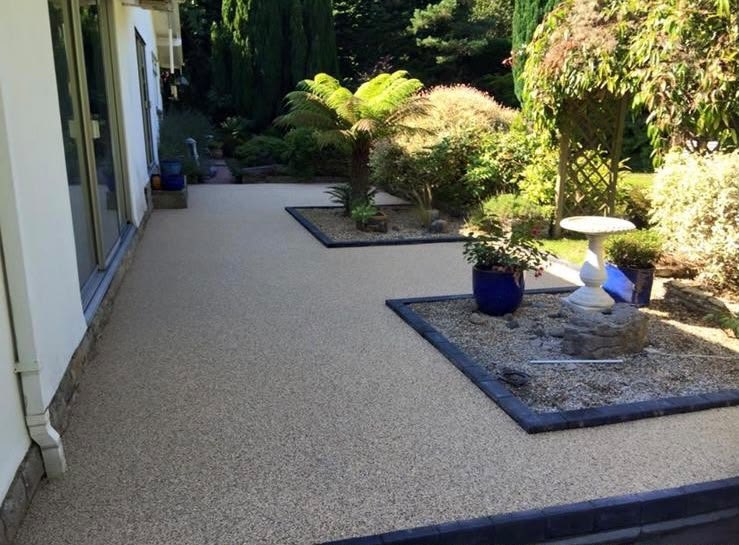
Ring rather than use the form. A lifted slab, a sunken bay by a doorway or a gully that has stopped taking water will not wait. The first visit is about making it safe and getting the water going somewhere. If gravel is being carried out onto the lane, or water off your drive is running into the road, say so. The phone is answered 24 hours for emergencies; scheduled work runs Monday to Friday, 8am to 6pm.
The one local thing
Inside the National Park, appearance is part of the spec
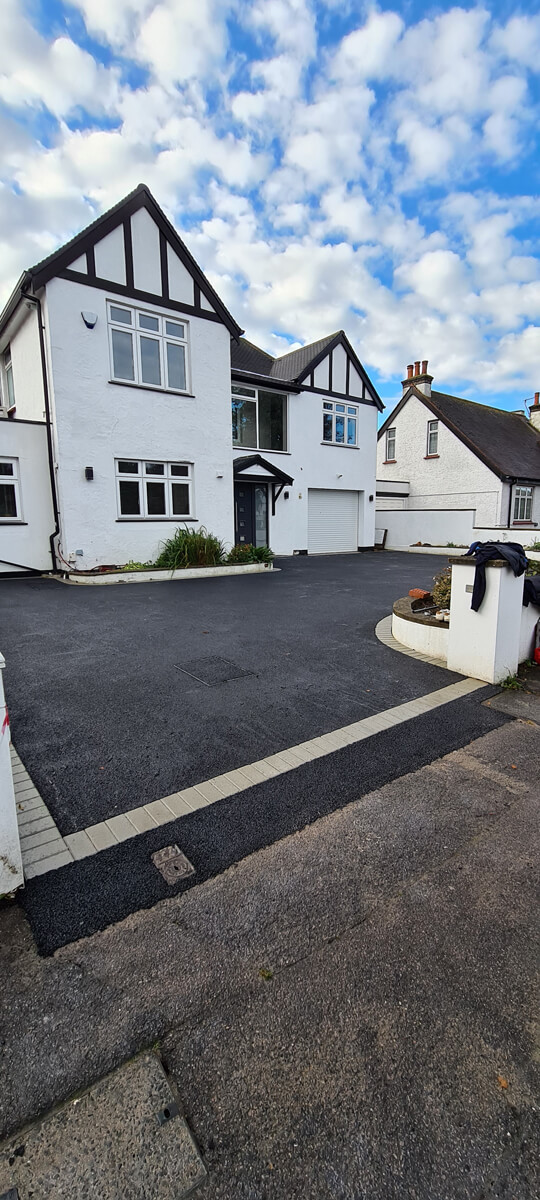
Hangersley falls within the Western Escarpment Conservation Area and within the New Forest National Park. Neither of those stops you rebuilding a drive that has failed. What they change is which answer is the easy one. Replacing like for like is maintenance and nobody argues with it. Changing the material, particularly on a frontage that can be seen from the lane, is a change to the character of the place and gets looked at that way.
Gravel, bound gravel and a dark tarmac apron read the way the lanes here have always read. A bright multi coloured block paving does not, and it is the frontage that gets noticed rather than the back garden. The National Park Authority sets out how it handles this.
The parts that catch people out are almost never the paving itself. They are the things at the edge of it: a boundary wall rebuilt higher than it was, a pair of new gate piers, a hedge taken out to widen an entrance, or a run of railings where there used to be post and rail.
If any of that is in your plan, raise it at the site visit and we will price the drive and the boundary as separate lines so you can take advice on one without holding up the other. Where the property or a structure attached to it is listed, we say so in the quote and nothing is ordered until that is settled.
Who you are dealing with
A local firm you can check
We cover Hangersley and the rest of BH24, out through Ringwood, Poulner and Crow to Burley and Ellingham. Bournemouth Roofing & Building Ltd, registered in England and Wales, company number 15471719, which you can look up in a minute. Thomas Hannen's business, and he is the one who comes out to price the job, not a salesman. A verified customer's 10 out of 10 on Checkatrade. The visit and the written quote are both free.
Questions
Hangersley questions we get asked
Does the Western Escarpment conservation area cover the front garden?
It covers what can be seen from the road, and that includes the drive. Inside the Western Escarpment area the National Park treats like for like as maintenance, so regravelling the same entrance is one thing and swapping gravel for black tarmac with concrete kerbs is another. If you want a different surface it is worth a call to the National Park before we order anything, and we say so on the visit.
Why does the bottom of the drive flood every winter?
Because the water has nowhere to go once the ground is wet. The soil at Hangersley has impeded drainage, so a soakaway at the low end fills in November and stays full until spring. The fix is usually to stop the water reaching the bottom at all: a cross fall part way up, a channel across the drive, and a piped run out to a ditch with somewhere to discharge.
Is resin bound sensible on a National Park lane?
It depends less on the resin than on what sits under it. Resin needs a solid, unbroken base, so on a long entrance that has only ever been gravel over subsoil the base has to be built first and that is most of the work. There is also the look. In the Western Escarpment area a smooth uniform surface reads as suburban next to the verges, and the National Park notices that.
Where does the lorry sit if the lane is narrow?
On the drive itself where there is room, otherwise tight in on the verge side. The Ringwood lanes round here have soft edges, so a loaded grab lorry standing in one spot for an hour will sink and leave ruts we then have to make good. We plan deliveries so stone comes in smaller loads and gets moved straight to the back rather than sitting at the entrance churning up the ground.
Can you match the gravel that is already down?
Close enough that you will not pick the join after a winter. Gravel weathers, so a fresh load always looks brighter for the first few months whatever we do. If you have a bag of the original left we work from that, otherwise we take a handful off the drive and match size and colour at the quarry. Where the stone has scattered rather than worn out, raking and topping up beats a new layer.
Nearby, and next door
Driveways and patios near Hangersley
Driveways and patios nearby
Our other trades in Hangersley
Everything we do in Ringwood Driveways and patios, all areas Every area we cover
Free quote
Tired of raking gravel back off the verge?
Tell us the address and what you have noticed. We walk the drive, open a trial hole and put an itemised written quote in your hands. Both are free.