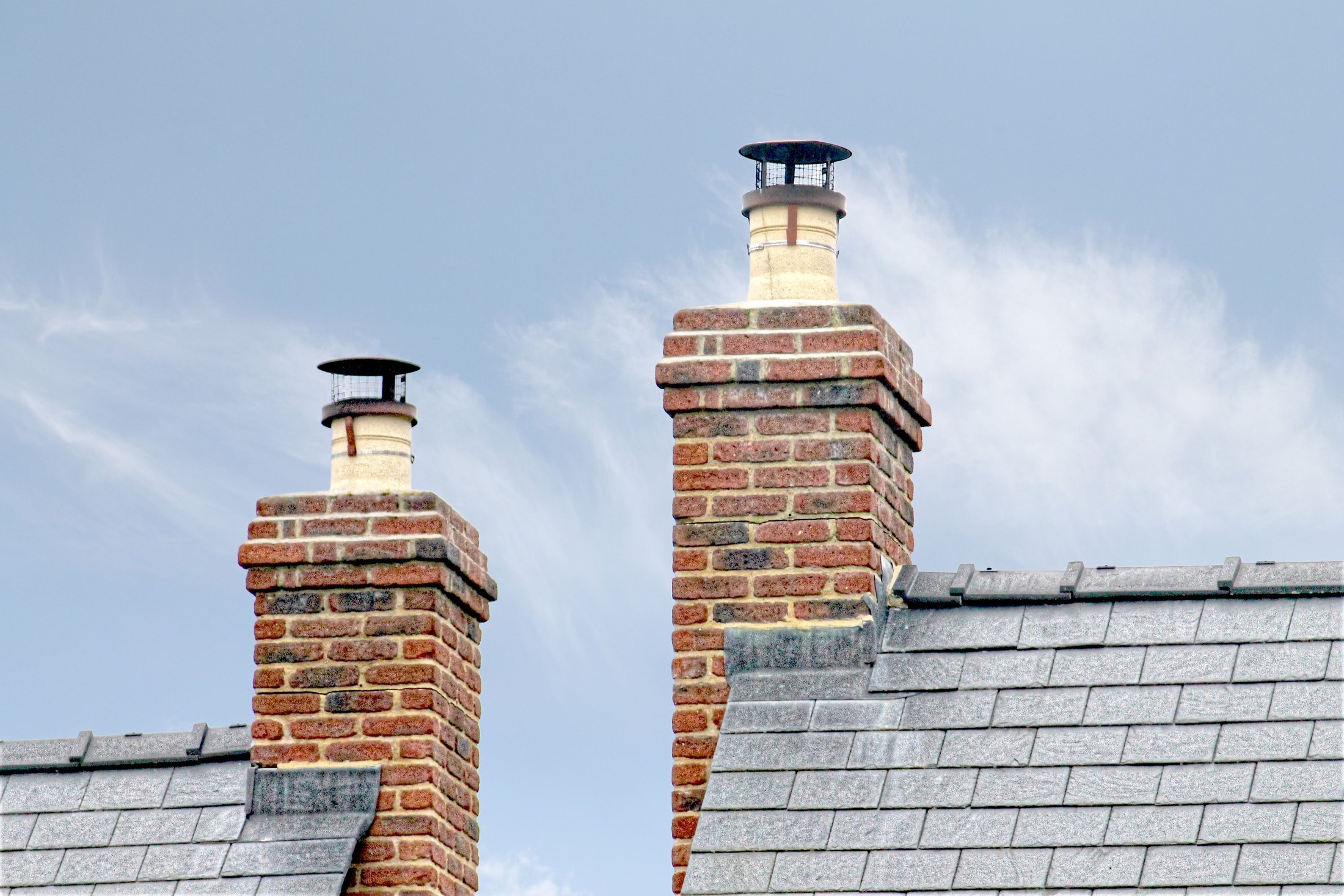
Roofing in Hangersley
Valley and chimney repairs, tile and slate work, dry ridge and verge, flat roofs and gutter clearing across Hangersley and the BH24 addresses.
The site visit is free and so is the written itemised quote. Thomas Hannen prices every job himself.
Anything you have to apply for at a Hangersley address goes to the New Forest National Park Authority, not to the district council. A like for like re-cover is not one of those things, so the roof itself is simpler than people expect.
Two problems bring most of the calls. Water getting in at a valley or a chimney after a spell of rain, and rainwater goods that have given up because of what falls into them.
The houses sit on a wooded slope, which is hard on a roof: leaf litter fills the valleys, shaded slopes stay damp, and the plots at the top of the rise get weather the ones below are sheltered from. We get on the roof, look from inside the loft, and photograph what we find. The site visit and the written itemised quote are free.
The work
A ceiling stain in the middle means the valley
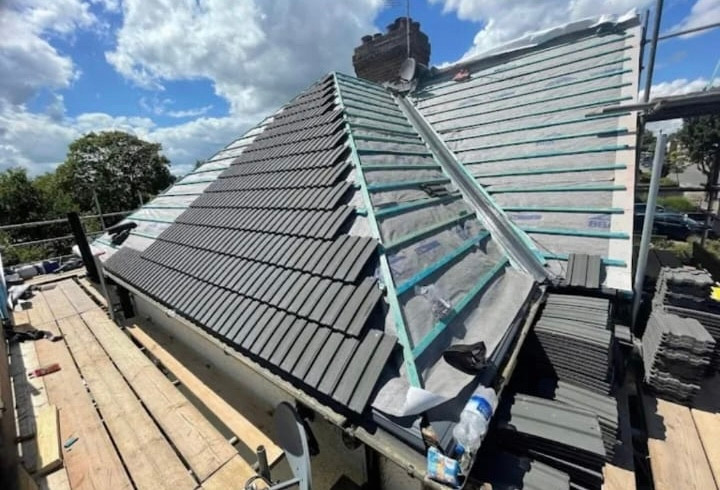
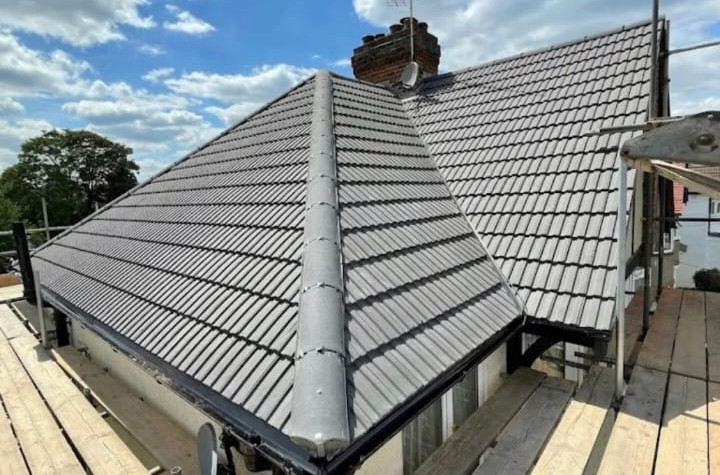
Valleys, first. The commonest fault here and the one people misread. Many of the detached houses have cross gables, so there is a valley on the roof, and a valley on a wooded plot fills with leaf litter until water backs up sideways under the tiles. It shows as a stain in the middle of a ceiling, nowhere near the valley. We clear it, check whether the lead or tile valley beneath has split, and renew the section that has gone. Then the ordinary work: slipped, cracked and missing tiles, storm damage and leaks traced back to the point of entry rather than patched at the stain. Better than half the dwellings went up between 1945 and 1982, peaking in the late sixties and early seventies, so concrete interlocking tile is the usual covering, with plain tile and natural slate on the older cottages and the odd clay tile roof that has been there a great deal longer than either.
Flashings, soakers and the abutments where a roof runs into a wall go in code rated lead. Where a stack has been patched with mortar fillets or mastic, that comes out and proper lead goes in, because a fillet cracks the first winter it sees. The plots along the top of the escarpment take the wind that the sheltered ones do not, and wind works at the edges of a roof: mortar bedding cracks, a hip tile creeps, a verge sheds. We convert to a dry fix system, ridge and hip screwed over a ventilated roll and a dry verge clipped at the gable, which is the mechanical fixing BS 5534 calls for. There is no sarking board under most of these roofs, so the felt underlay is the second line of defence and it perishes first at the eaves where it laps into the gutter. Batten ends, rafter feet and corroded nails get checked from inside before we price anything, and when all three have gone the covering comes off and goes back on breathable membrane and treated battens with a matched tile.
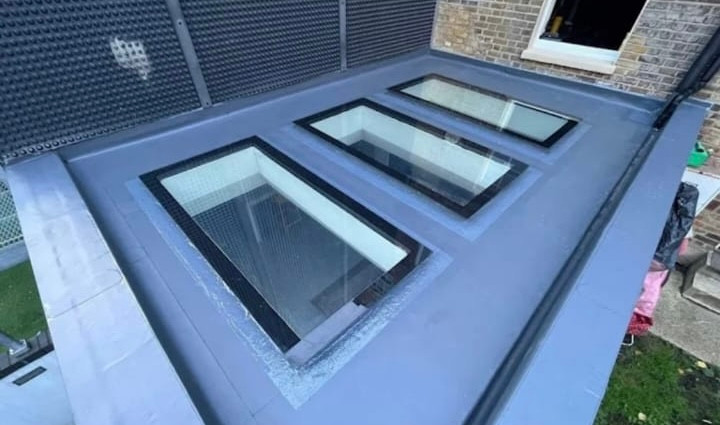
Gutters, more than anywhere else we work. Oak leaf and holly do not wash through, they mat, and the mat ends up in the downpipe and the gully below where you cannot see it. Clearing means emptying the run and then flushing the downpipes through, and moss and algae on the shaded slopes come off at the same time. Garages, rear extensions, porches and dormer tops are felt, GRP fibreglass or EPDM rubber, deck first, then the falls, the upstands and the outlet, and on a plot with trees over it the outlet is the part that decides how long it lasts. With the covering off, insulation, eaves ventilation and condensation are far cheaper to put right, and Approved Document L sets the standard a renovated roof should reach.
How it runs
From your call to a written price
One team from first visit to last, and a quote itemised line by line rather than a figure on the back of a card. This side of the ridge sits in the Western Escarpment Conservation Area and twelve entries in the settlement are listed. That sounds worse than it is. A like for like re-cover, a repair, new rainwater goods and a rooflight sitting flush to the plane remain permitted development, with no planning permission and no building control application. What is withdrawn on National Park and conservation area land is cladding a wall and adding a dormer. Its heritage and conservation pages set out how the Authority reads the rest, and anything listed needs consent whatever the work.
Cost
What decides the price of a roof
The ground decides it here. Plots run up and down a slope, and a scaffold on falling ground needs levelling and more of it than the same job on the flat, so we settle where it stands before pricing. How long it stands matters as much as its size, and the work at height rules are why the platform is a line of its own rather than an optional extra. Chimneys, valleys and abutments are counted one at a time, because that is where the leadwork hours go. Ask whether the scaffold is in the quote, and whether battens and membrane are renewed or covered over.
If it is leaking now
Water coming in today
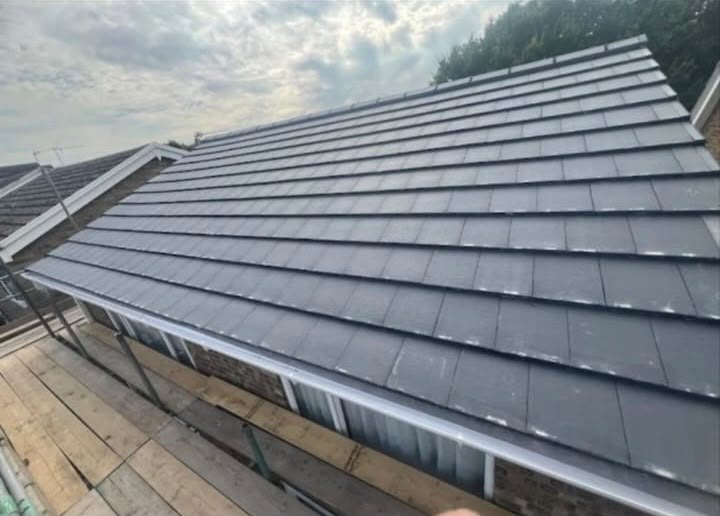
Ring rather than use the form. Anything letting water in goes to the front of the queue, and the first visit makes it safe and watertight. Look along the valleys first if you can see them, because on a wooded plot a blocked valley is a likelier cause of a ceiling stain than a hole. Stay off the ladder. The phone is answered 24 hours for emergencies; scheduled work runs Monday to Friday, 8am to 6pm.
Worth knowing
Your planning authority is the National Park
Most of our patch answers to a council. This address does not. Planning here is decided by the New Forest National Park Authority, and the boundary follows the ground rather than the postcode, so two houses on the same lane can sit either side of it. The National Park Authority's interactive property map will tell you which side yours is on in about a minute, and it is worth knowing before you plan anything beyond a repair.
For a roof it changes less than people fear. Re-covering, repairs, gutters and a flush rooflight are all still permitted development, so routine work needs nothing from anybody. What National Park and conservation area status take away is the right to clad a wall or throw up a dormer without asking, and they put the look of a covering into the balance, so a change from slate to something modern gets read on appearance. If a loft conversion is in your thinking, raise it early.
Who you are dealing with
A local firm you can check
About eleven miles from us, covering Hangersley, Hangersley Hill and the BH24 addresses in the Ringwood North and Ellingham ward. Planning and building control through the New Forest National Park Authority. Bournemouth Roofing & Building Ltd, registered in England and Wales, company number 15471719, which you can look up in a minute. Thomas Hannen's business, and he is the one who comes out to price the job, not a salesman. A verified customer's 10 out of 10 on Checkatrade. The visit and the written quote are both free.
Questions
Hangersley questions we get asked
Does the Western Escarpment area stop me changing tile for slate?
Possibly, yes. Hangersley sits inside the Western Escarpment conservation area, where appearance is controlled: putting back what is already up there counts as maintenance, while swapping to a different material changes the look and is treated as a change. Concrete tile off and the same profile back on is straightforward. Concrete off and slate on is a question for the National Park before anyone orders a pallet. We price the like for like option alongside it.
Every roof on the lane looks the same age. Why?
Because they are. In Hangersley 53.2 per cent of the dwellings were built between 1945 and 1982, and the late 1960s and early 1970s on their own account for 22.5 per cent, so whole runs of houses were covered within a season or two of each other. Roofs that go on together wear out together, and the perimeter goes long before the field of the slope does. When a neighbour has scaffold up it is a sensible moment to have yours looked at.
Where does the water from my roof actually end up?
That is the right question to ask before a roof job is signed off. Ground here is cohesive with a significant shrink and swell rating, so water leaving a downpipe and standing against a wall does more than mark the plaster inside. We check the fall on the gutter, the state of the gulley and where the run finally discharges, then put any of it that needs doing on the quote as its own separate line rather than burying it.
Can I put a rooflight in facing the forest?
That one gets looked at. Hangersley is inside the New Forest National Park, and the Park applies design scrutiny to anything visible, which includes a new opening cut into a slope facing out. A conservation rooflight sitting flush with the tile line is a very different proposition from a wide box dormer. We will fit whichever version is agreed, but get the Park's view before the batten order goes in rather than afterwards.
What do you look at before pricing a re-cover?
Timbers first. We lift a tile or two and check the rafter feet and the wall plate, because rot there is what turns a straightforward re-cover into a much longer job. Then the underlay, the battens, the ridge and hip bedding, the verges, every flashing and the gutter line. With 12 listed entries in the area and the conservation area sitting over the top of it, we also note whether what is on the roof now can simply go back on.
Nearby, and next door
Roofing near Hangersley
Roofing nearby
Our other trades in Hangersley
Roofing guides
Concrete vs clay roof tiles: which is right? Planning, building regs or listed building consent Storm damage to a roof: the first 24 hoursEverything we do in Ringwood Roofing, all areas Every area we cover
Free quote
A written price for your Hangersley roof
Tell us the address and what the roof is doing. We come out, look at it properly and put the price in writing.