Insulation in Hangersley
Loft top-ups, warm roof work and solid wall insulation around Hangersley and BH24, surveyed before anything is priced.
The site visit is free and so is the written itemised quote. Thomas Hannen prices every job himself.
In a Hangersley house the loft is nearly always the cheapest place to start, and up here it is also the one place you can improve without anybody having an opinion about how the building looks.
Three things bring people to the phone on this side of Ringwood. A big detached house that swallows heat, never feels warm at the far end, and turns that into a heating bill nobody can account for. A converted roof space with sloping ceilings that bakes in July and cannot be heated in January.
Or a run of cold, clammy weather that leaves damp patches on an upstairs wall and nobody can say whether that is the wall, the roof or the way the house is being lived in. We go up and in rather than guessing from the landing, and we look at ventilation and insulation together, because on this ground they are the same conversation. What you get back is photographs, a written quote and a short list in the order the work is actually worth doing.
The work
One house, three roof voids, one hatch
Lofts that turned into three lofts. Houses here have been added to over fifty years: a bedroom over the garage, a rear extension, a sun room across the back. Each of those has its own roof void, and it very often does not connect to the main one. The survey is half about finding a way into every void rather than the obvious hatch on the landing, because the usual pattern is one space done properly, one done badly in the eighties and one never touched at all. That is why one end of a house like this is warm and the other is not.
Exposed eaves, and wind moving through the material. Up on the Western Escarpment the wind comes off open ground with nothing to slow it, and it gets into an open eaves. Loose mineral wool sitting at the perimeter of a windy loft has air blowing through it, and material with air moving through it is not doing the job the depth on the label says it is. We hold the edge with vent trays so the air path over the wall head stays open, and close the perimeter so the wind runs above the material instead of through it. On this side of Ringwood that detail is the difference between a loft that works and one that measures well.
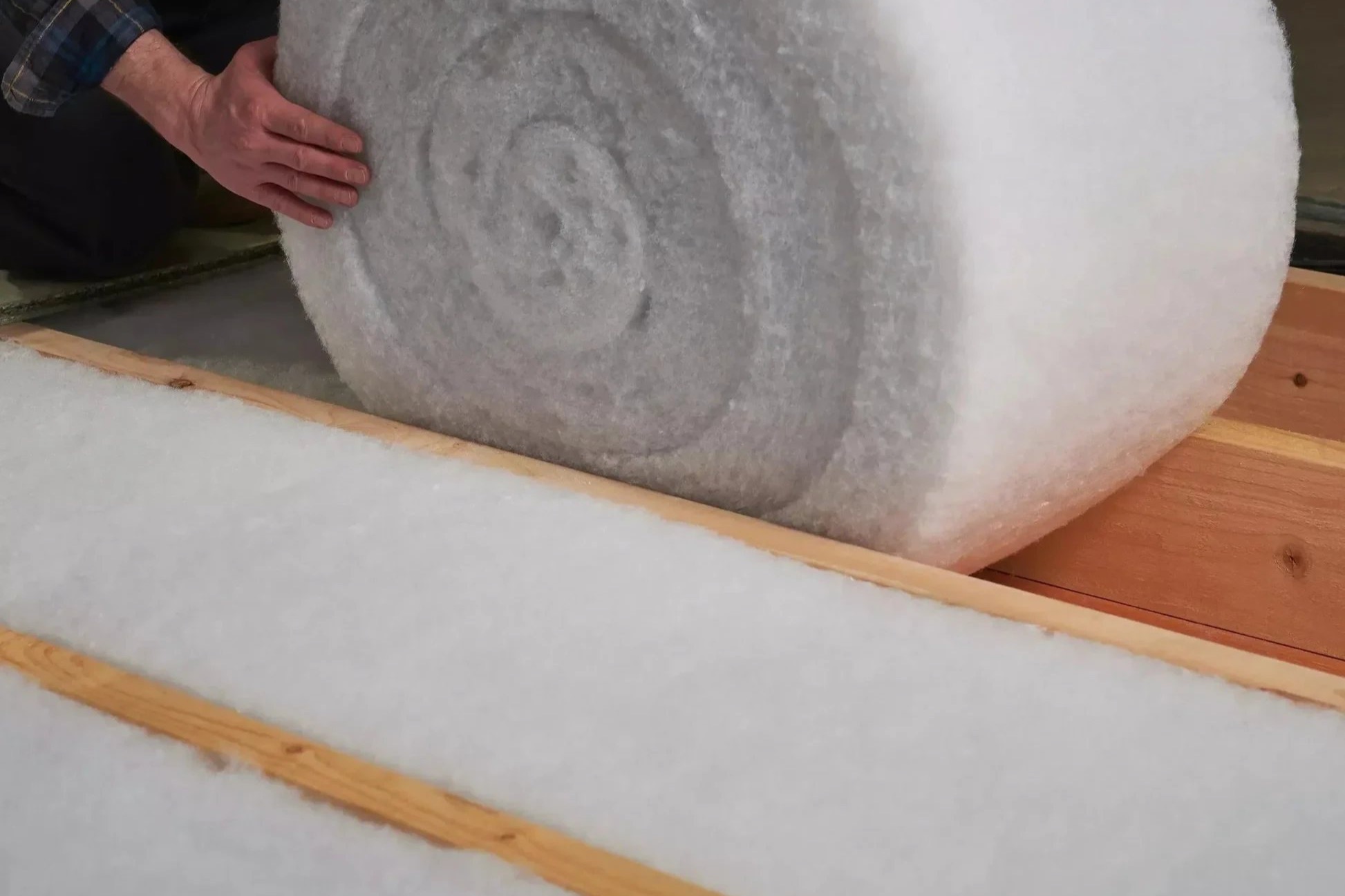
More than half the housing here went up between 1945 and 1982. Where the existing layer is dry and simply settled we work with it: lift, straighten, and add the between and over layer so the joists themselves stop being cold lines across the ceiling. Aim at 270mm of mineral wool, though 250mm laid to the wall plate is worth more than a deeper heap that stops a foot short. Anything wet, compressed flat under boarding, or full of debris comes out, gets bagged and leaves with us.
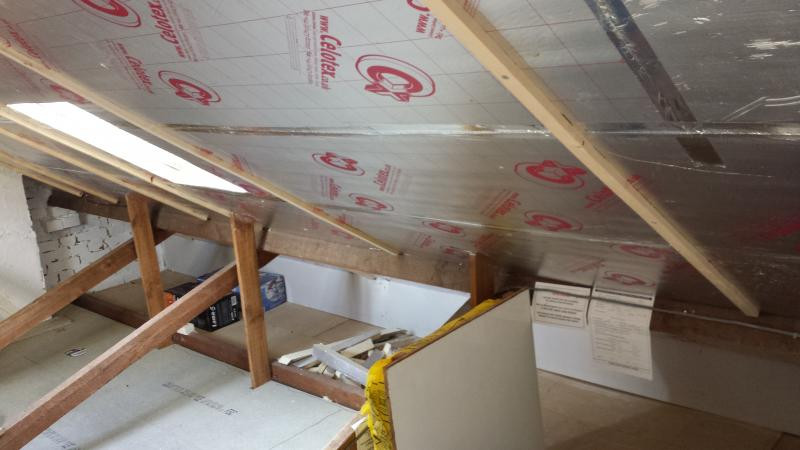
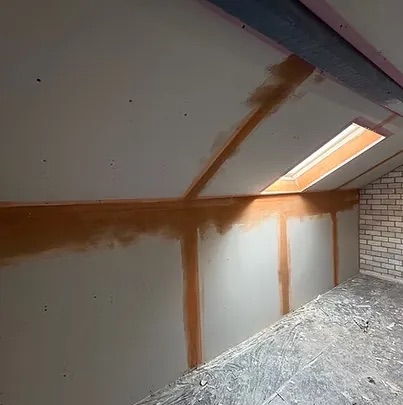
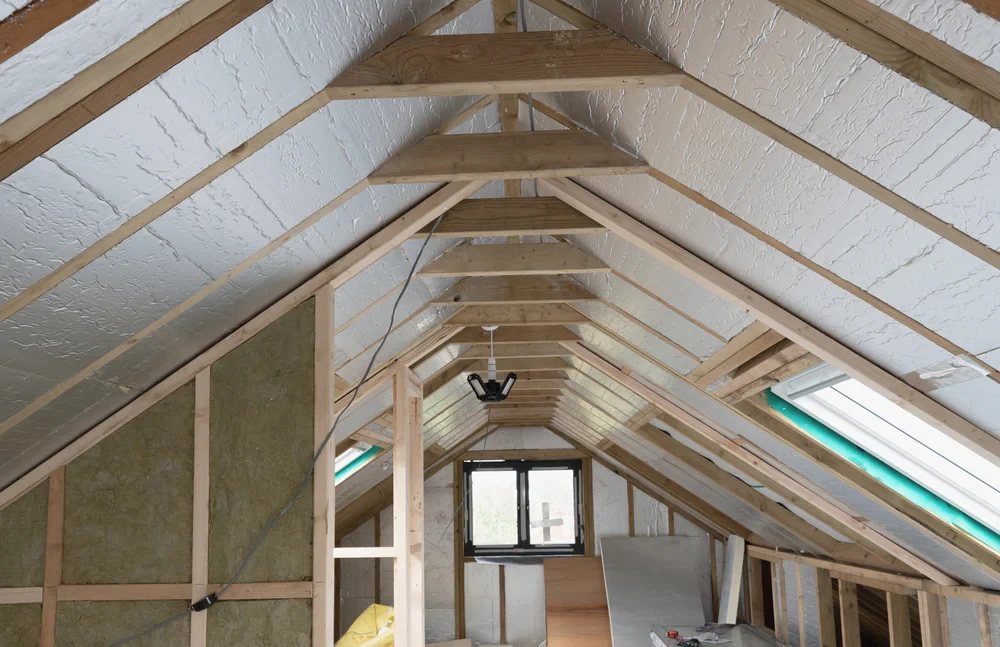
Plenty of houses here have gone upwards rather than outwards, and once a roof is a room in roof conversion there is no loft floor left to fill. That is a warm roof build-up: rigid PIR board cut tight between the rafters, a continuous layer of board or a multi-layer foil quilt such as TLX across them so the rafters are not a cold bridge every four hundred millimetres, a vapour control layer on the warm side and a clear air gap kept above. Skip the air gap and you move the condensation off the ceiling and into the roof timbers, where you will not see it for years.
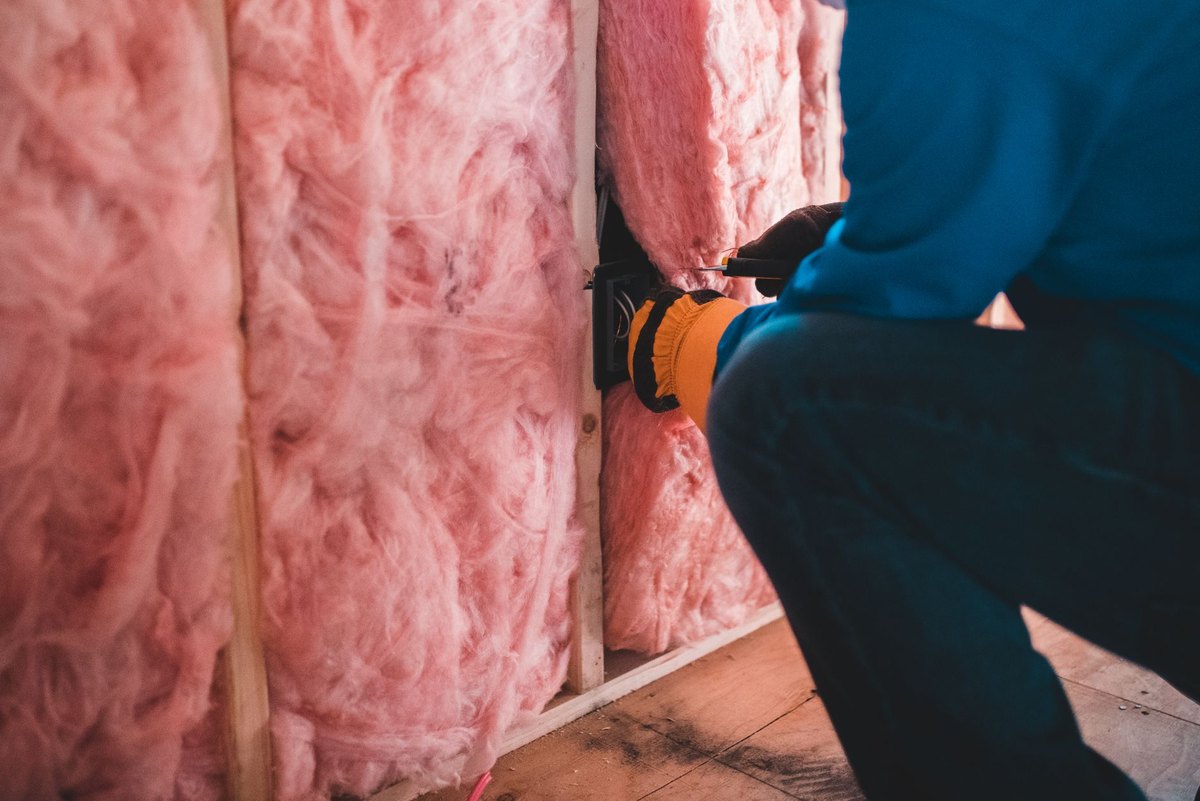
The brick cottages round here have no cavity to fill, so it is internal wall insulation on the coldest elevations, built so the wall can still dry, or external wall insulation, EWI, which changes the outside of a building inside a conservation area. On a post-war house the cavity may be empty, may be part filled already, and only a borescope tells you which. Then the small things: a hatch insulated on its back and sealed round the frame, raised boarding on legs where storage matters, fire rated covers so downlighters can be run over, and lagging on the tank and its pipework.
How it runs
From your call to a written price
Same team throughout, one person to ring, no sub-contracting. The quote comes itemised: survey, clearing, material and depth, ventilation and disposal on separate lines, so you can compare it properly. What comes out leaves with us. Insulating an existing loft, filling a cavity or lining a wall on the inside is permitted development and there is nothing to apply for. Anything that changes the outside is a different conversation inside the Western Escarpment conservation area, and on one of the twelve listed entries around Hangersley even internal work needs consent, so the first five minutes are best spent checking your address on the National Park's property map.
Cost
What decides the price of an insulation job
A price per square metre tells you nothing here. The area is the easy part. A Forest edge cottage with a loft you can barely sit up in, a seventies detached with three separate roof voids, and a garden room with a flat roof are three different jobs before anybody opens a bag. Old material has to be bagged and taken away before anything new goes down. Approved Document L sets what the work is expected to reach. A quote that does not name a finished depth, or mention the eaves, is not the same job as one that does.
If it is urgent
Damp, condensation or a room you cannot heat
Ring rather than use the form. We are eleven miles out, so a loft that has gone damp, or a room you cannot get warm before a cold spell, gets a visit quickly. On the exposed side of the escarpment those two turn out to be the same problem more often than not, and the first visit is about telling them apart. The phone is answered 24 hours for emergencies; scheduled work runs Monday to Friday, 8am to 6pm.
Worth knowing
What the conservation area stops, and what it does not
Hangersley sits in the Western Escarpment conservation area and the whole of it is inside the New Forest National Park, so how a building looks from the outside is controlled here in a way it is not a few fields away. For insulation that cuts one way only. Everything on the inside is invisible to the planners.
Loft insulation, a cavity fill, internal wall insulation, work under a suspended floor, an insulated and sealed hatch: none of it needs an application and none of it is touched by the designation. If anybody tells you otherwise, ask them which part of the designation they mean.
What does change is anything that alters the outside. External wall insulation adds a layer to the face of the building and takes the reveals, the eaves overhang and the window heads with it, and in a conservation area inside a National Park that is a planning matter rather than a formality. The Park is the authority to ask and it publishes the heritage and conservation guidance itself.
Roof work is the other one to watch, because permitted development is drawn more tightly inside a National Park than outside one, and a dormer a Ringwood address could add without asking may need an application at this one. If the plan is to convert the roof rather than simply insulate it, get that answered before you collect quotes, not after.
Who you are dealing with
A local firm you can check
We cover Hangersley, Ringwood, Ashley Heath and the rest of BH24, and out into the Forest villages beyond. Bournemouth Roofing & Building Ltd, registered in England and Wales, company number 15471719, which you can look up in a minute. Thomas Hannen's business, and he is the one who comes out to price the job, not a salesman. A verified customer's 10 out of 10 on Checkatrade. The visit and the written quote are both free.
Questions
Hangersley questions we get asked
We sit in the Western Escarpment conservation area. What does that stop?
Nothing you would do inside the roof. The Western Escarpment designation controls how the building looks from outside, so a change of covering, a new rooflight or a run of vent tiles across the front elevation is what the National Park authority wants drawn. Material over ceiling joists changes no appearance and needs no application. Where extra ventilation is needed, we take it in at the eaves where it is not seen.
Could we convert the loft rather than just insulate it?
You can, but it stops being a fabric job and becomes a planning one. Hangersley drains to the River Avon catchment, and because a conversion adds sleeping space it triggers the nutrient rules on top of the National Park's own design scrutiny. That is months rather than weeks. If the aim is a warmer house and not another bedroom, improving the existing roof space gets you there without any of it.
Our house is early seventies. Where is the heat going?
Straight up, in most cases. Over half of Hangersley was built between 1945 and 1982 and the peak was the late 1960s and early 1970s at 22.5%, so a whole run of houses got the same shallow layer in the same few seasons. Those lofts are flat and patchy now. Second on the list is the hatch itself, which on that generation is a sheet of ply with no seal round it.
Ours is detached with four slopes. Is there more to lose?
More surface, yes. Detached houses make up 41.6% of Hangersley and a detached roof gives up heat off every side, with no neighbour taking the edge off any of it. On a hipped shape there is also more eaves line for the same ceiling area, and the eaves are where draughts get in. I measure the ceiling and the perimeter separately, because on that roof the perimeter is where the work sits.
How quickly can you get out here to look?
Hangersley is 11 miles from the yard, so it is a straightforward run and usually a few days. Thomas Hannen does the visit himself rather than sending one man to measure and another to price. You get the roof space measured, the hatch and the ventilation checked, and a written itemised quote afterwards, and there is no charge for any part of that.
Nearby, and next door
Insulation near Hangersley
Insulation nearby
Our other trades in Hangersley
Everything we do in Ringwood Insulation, all areas Every area we cover
Free quote
Get the loft at Hangersley surveyed
Tell us which room you cannot heat and we will come and look at it. Free site visit, free written itemised quote, and an honest order of work.