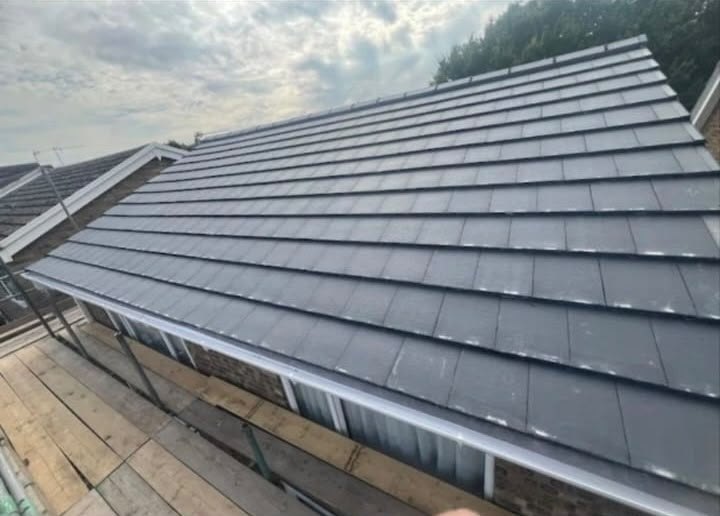
Fascias, soffits and guttering in Hangersley
Sagging soffits, soft fascias and long gutter runs that have lost their fall, put right around Hangersley. Free site visit and a free written price.
The site visit is free and so is the written itemised quote. Thomas Hannen prices every job himself.
Before anything else is decided, it is worth knowing what your roofline is actually made of. Painted softwood, asbestos cement soffit sheet, early plastic capping, cast iron and modern uPVC all fail differently and all want a different job doing, and most houses here carry two or three of them at once.
The calls come in three shapes. Water sheets over the front of the gutter every time it rains hard. A soffit has sagged or split where the overhang is at its widest. Or the fascia has gone soft behind the gutter, which is something you only ever find by pushing at it.
Underneath all three is the same question, and it is not really about the gutter. It is about the material the run is hung on and what condition that material is in. So we get a tower to the eaves, take a length down, and identify what is there before anybody talks about replacing it. You get photographs of what we found, a written itemised price with boards, gutter and downpipes on separate lines, and a clear note of anything that ought not to be disturbed.
What it is made of
Five materials, five different jobs
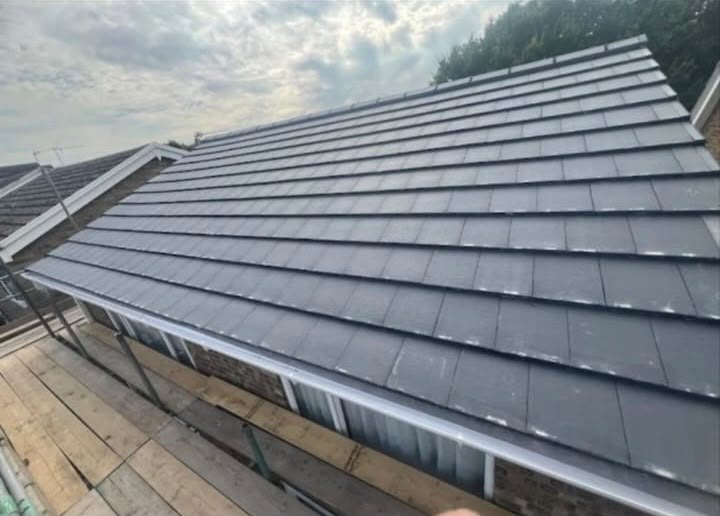
Painted softwood, the original. A moulded fascia with a boxed soffit running back to the wall, decorated every few years until it stopped being worth it. Blistered, peeling paint is the warning and a soft board is the verdict. Rot begins where water lingers, so the foot of a bargeboard and the top edge of the fascia go first, and once a fixing has nothing solid to bite on the whole length starts sagging between brackets. Sound timber can be cut back to and spliced. Timber that has gone comes off, and the rafter feet and wall plate behind it get looked at properly.
Asbestos cement soffit sheet. Common on houses of this vintage and the one thing on this list that changes how the day runs. If a soffit looks like grey cement board rather than timber or plastic, we stop, tell you, and it comes down whole and goes as a separate item. It is never cut, drilled or broken up on site. Nobody should be quoting you for a roofline here without having established which sort of soffit you have.
Early plastic capped over the old boards. A lot of that went on in the eighties and nineties, and it is now reaching the end twice over. The capping itself has gone brittle and chalky, and the timber sealed up behind it has been quietly wet the whole time. That is why we take old boards off rather than cap over soft ones. Where the fascia underneath is genuinely dry and hard, capping is a reasonable and cheaper answer and we will tell you so rather than talk you into the bigger job.
Cast iron rainwater goods. Heavy, long lived and repairable. A cracked section swaps out, a leaking joint gets stripped and re-bedded, sound iron is rubbed back and repainted, and a rise and fall bracket can be reset to correct a lost fall. Iron is worth keeping where it survives, particularly on anything visible from the road, and where it has rusted through at the sockets, aluminium takes its place better than plastic does because it comes in long lengths and holds a painted finish.
Modern uPVC, hung the way it should be. Half round, ogee, square or deepflow is a capacity choice, and on a long run off a wide slope in driving rain the small profiles simply cannot shift it. Brackets go at proper centres, screwed into timber that will hold them, with a real fall to the outlet, since a length hung level stands full of rainwater and perishes its own seals. Downpipes are clipped straight and discharge through a shoe into a gully or a soakaway, not at the footings where it leaves staining outside and damp within.
Whatever it is made of, the eaves detail is the same. The tilt fillet is reset so the bottom course drips forward, a felt support tray carries the underlay over the edge, and the verge and eaves course go back fixed the way BS 5534 sets out. Ventilation carries on through the new panels, by way of soffit vents or an over fascia vent if the boxing is too shallow to take them, leaving the air gap into the loft clear and you do not swap a rotten fascia for condensation, which is what Approved Document F is about. Open ends get closed against birds and wasps, and outlets are left clear of moss and debris.
How it runs
From your call to a written price
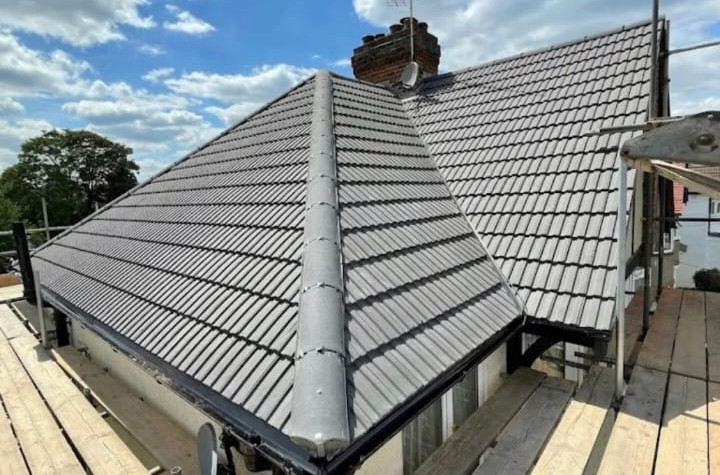
Same team from first visit to last, one person to ring, and no sub-contracting your work out to somebody you have never met. The quote is itemised, not a figure on the back of a card: access, the length of each run, stripping the old boards and gutter, the fascia, soffit and any bargeboard, the gutter, outlets and downpipes, and disposal on separate lines, so you can compare it properly against anyone else's.
Nothing is left open or unusable overnight. The site is swept at the end of each day rather than the end of the job, and what comes out leaves with us. If something turns up once we start that nobody could have seen, you get a photograph and a price before we carry on.
Renewing a roofline like for like is repair and maintenance, so there is no planning application and nothing for building control. Planning here is the New Forest National Park Authority rather than the district council, and the Western Escarpment conservation area covers part of this ground, which controls appearance rather than repair. the National Park Authority's interactive property map will tell you whether your own address is inside it, and there are a dozen listed entries near here.
Cost
What decides the price of a roofline
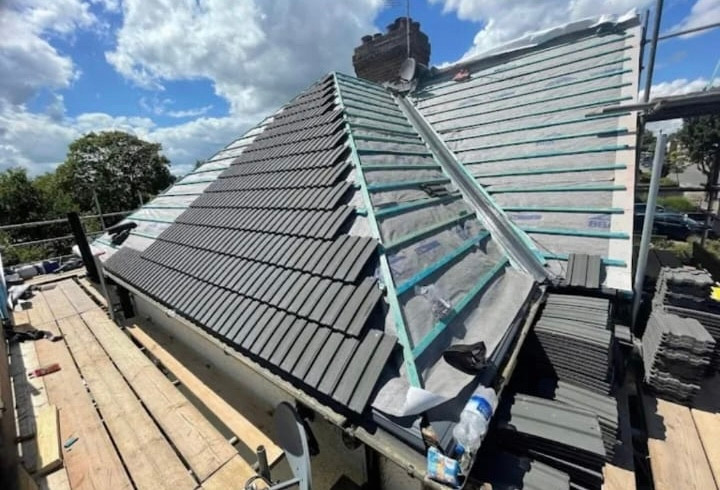
No rate per square metre, because a metre of fascia over a bay is not the same metre as one on a straight gable.
Getting to it. A detached house with a deep eaves overhang, a bungalow with the run over a border, and a house with an attached garage and a porch tying into the same gutter are three different set ups. A bungalow run comes off a tower, a two or three storey gable wants a scaffold, and a run over a conservatory or a bay window means building the platform around it. The work at height rules are why the access is a priced line rather than something absorbed into a rate.
What is behind the boards. Rotten fascia is a symptom. The question is whether the rafter feet and the wall plate behind it are still sound, and nobody knows until the old board comes off. Capping over with plastic hides that instead of fixing it, which is why we take the old boards off rather than clad them.
The run, not the metre. A straight gable is quick. Bay windows, a conservatory in the way, a corner return, a run that has to be worked around a satellite dish or a service cable, and every outlet, hopper and downpipe are priced one at a time. So is putting the fall back: a gutter hung level looks fine and holds water all year.
Comparing quotes? Ask whether the old boards are coming off or being capped over, what happens if the rafter feet or the wall plate turn out to be rotten, whether the gutter, outlets and downpipes are all being renewed or only the fascia, and whether the scaffold is in the price. Two quotes for the same job are usually two different jobs.
If a section has come away
A gutter hanging off, or a fascia gone through
Ring rather than use the form. A length of gutter pulled off its brackets, a downpipe snapped at the bend or a fascia soft enough to put your hand through goes to the front of the queue, because the next heavy rain runs straight down the wall and into the brickwork. The first visit is about getting it supported and discharging somewhere sensible, and we price the run properly once we can see how far the rot goes. Hangersley sits on the Ringwood side of our patch, which we are on and off most weeks, so a section hanging off does not have to wait for a full crew to be free. The phone is answered 24 hours for emergencies; scheduled work runs Monday to Friday, 8am to 6pm.
Check the boundary before you order
Two houses on the same lane can sit on different sides of the line
The Western Escarpment conservation area runs across this ground, and its boundary does not follow road names in the way people assume. Neighbours can be inside and outside it. Five minutes with the interactive property map is worth spending before anything is ordered, because inside the area what is controlled is how a building looks, and a roofline is one of the most visible things about a house.
Repair is untouched either way. Renewing a rotten board in the same material, refixing a run that has come away, repainting timber: that is maintenance wherever you happen to stand. What changes inside the boundary is a change of appearance, so painted timber going to gloss white plastic on an elevation people can see becomes a planning question. There is nearly always a route that still gets you the low maintenance you were after, whether that is a woodgrain or coloured board or aluminium, and we will price the alternatives beside each other so you are choosing rather than guessing.
Who you are dealing with
A local firm you can check
We cover Hangersley, Ringwood, Ellingham, Poulner, Crow and Burley, broadly BH24, with the New Forest National Park Authority as the planning authority. You are dealing with Bournemouth Roofing & Building, the trading name of Bournemouth Roofing & Building Ltd, registered in England and Wales, company number 15471719, which you can look up in a minute. Thomas Hannen's business, and he is the one who comes out to price the job, not a salesman. A verified customer's 10 out of 10 on Checkatrade. The visit and the written quote are both free.
Questions
Questions we get asked about Hangersley rooflines
Could our soffits contain asbestos?
On a house of this age it is quite possible. If a soffit looks like cement sheet rather than timber or plastic we stop before anything is disturbed and tell you, and it is taken down intact and removed as a separate item rather than being cut or broken.
It overflows even though it was cleared last year. Why?
The fall, nearly always. Brackets loosen over time, a long run flattens out, and water then stands in it until the first heavy shower puts it over the edge. Re-hanging that length to a proper slope fixes what clearing it again will not.
Who is the planning authority out here?
The New Forest National Park Authority rather than the district council, which catches people out. It makes no difference to a like for like repair, and a good deal of difference to changing how the front of your house looks.
Our soffits are boxed out a long way. Does that add to the job?
Yes, and it should be shown as its own line. A deep boxed soffit is a lot more board than a narrow one, it needs noggins to fix back to, and it is where the ventilation has to be got right. Anyone pricing by the metre of gutter has not looked at it.
Can we do the front now and the back later?
You can, and plenty of people do. Each elevation is measured and priced on its own line, so you can take the worst one first. We will say which of the others will wait and which will not.
Nearby, and next door
Fascias, soffits and guttering near Hangersley
Fascias, soffits and guttering nearby
Our other trades in Hangersley
Everything we do in Ringwood Fascias, soffits and guttering, all areas Every area we cover
Free quote
Get a price for your Hangersley roofline
Tell us which runs are overflowing or coming away. Thomas comes out, checks the board behind the gutter and puts an itemised price in writing. The visit and the quote are free.