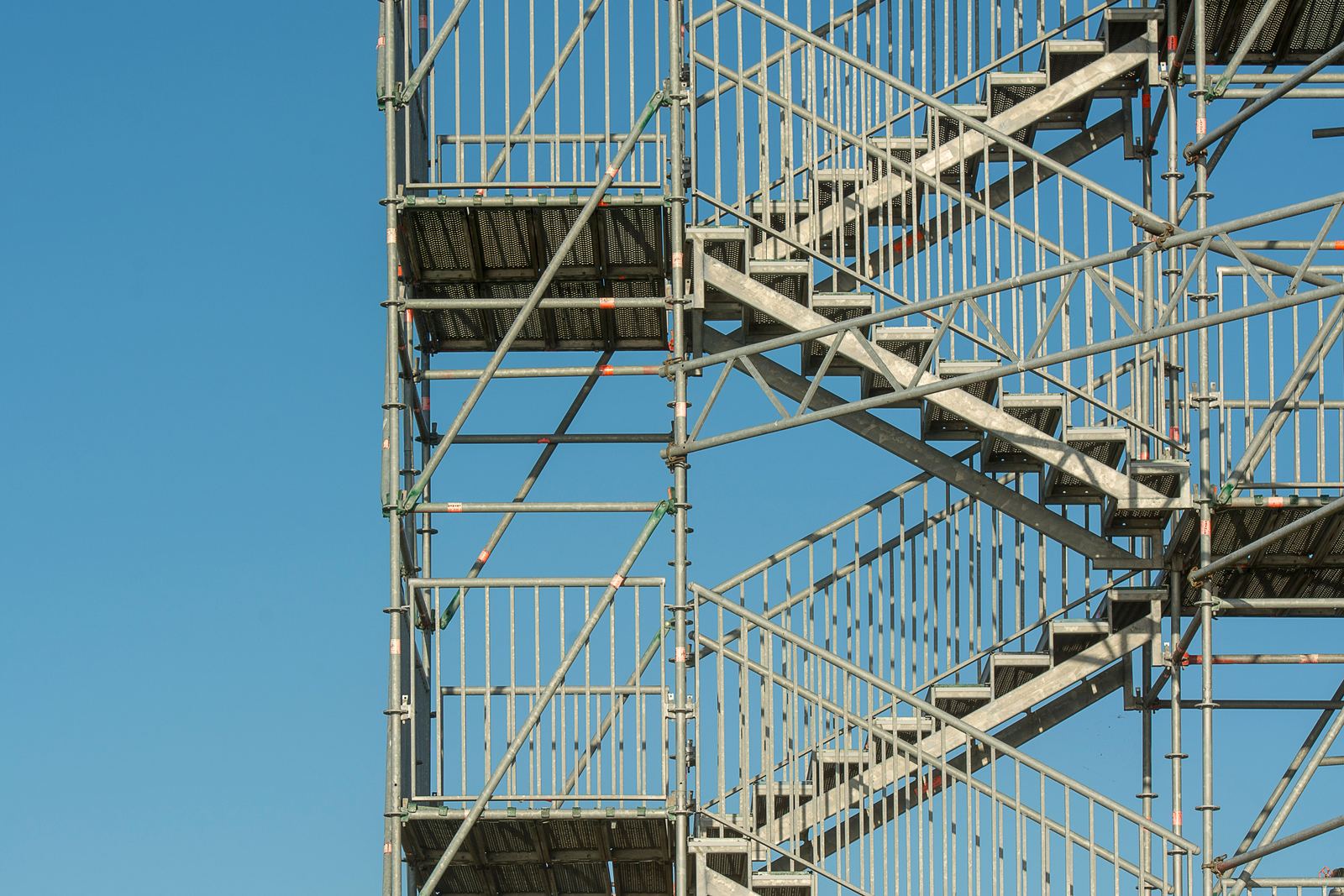
Is scaffolding in the quote, and who needs the highway licence?
Two quotes both say scaffold included. Neither says how many weeks, and neither says who applies for the licence if it has to stand on the pavement.
Scaffolding is usually inside a roofing quote, but the number of weeks is the part that actually matters. If the scaffold stands on the pavement or the road, the highway licence is applied for by the contractor or the scaffolding company, not by you. Scaffolding wholly on private land needs no licence at all.
The short version
- The licence is the contractor's to apply for. Your job is to check they hold one and that it does not expire before the roof is finished.
- A scaffold that sits entirely on your own drive or garden needs no licence, no fee and no lead time. That is the whole answer for a lot of detached houses.
- The licensee has a statutory duty to keep the structure lit between half an hour after sunset and half an hour before sunrise. A dark scaffold in December is a breach, not a preference.
- Neighbouring councils charge on different bases for the same licence, so where the house is changes what a two week overrun costs.
- "Scaffold included" with no number of weeks in it has fixed nothing. Get the weeks, the overrun rate and who strikes it written into the quote.
Whose job it is
The licence belongs to the contractor, not to you
Whether you have to apply for the scaffold licence is the question most people are really asking. You do not apply for a scaffold licence. Whoever puts the scaffolding up does.
Dorset Council states it plainly: it is the responsibility of the builder or the scaffolding company to get a licence, you can apply if you are a contractor, and the homeowner's responsibility is to check they have one and that it does not run out before the building work is finished.
So there are two things to do and neither is filling in a form. Ask whether a licence is needed at all, and if it is, ask to see it and check the dates against the programme you were given. An expiry date landing in the middle of week three is the contractor's problem, but it happens on your street.
Now the part that saves a lot of readers a fee. No licence is needed for scaffolding standing wholly on private land. A detached house with a drive down one side and a lawn down the other is often the entire answer: nothing to apply for, nothing to pay, no two week wait. Ask the roofer whether the scaffold can go up off your own ground, because that one question can take a cost and a delay out of the job.
The pavement outside your gate is highway, and so are the verge and the road. Section 169 of the Highways Act 1980 bites on scaffolding erected or retained on or over a highway which obstructs it, in connection with building or demolition work or the alteration, repair, maintenance or cleaning of a building. That is wider than a re-roof: a tower over the footway for repointing a front elevation or for cleaning render is caught by the same words. So is a scaffold based on your drive whose lifts oversail the footway.
The statute
What section 169 actually makes somebody do
The council does not have a free hand to say no. Once a contractor applies and gives the particulars the authority reasonably asks for, it is the duty of the authority to issue the licence unless it considers the structure would cause unreasonable obstruction of a highway, or that a different structure would cause less obstruction and could conveniently be used for the work. Those are the only two grounds.
If a licence is refused, or issued on terms the applicant thinks unreasonable, the appeal is to the magistrates' court, which can direct the authority to issue the licence or alter the terms. That route belongs to the contractor, but it is worth knowing it exists when somebody tells you the council has blocked the job.
The lighting duty, and why it is worth knowing. Under section 169(4)(a) the person holding the licence must ensure the structure is adequately lit at all times between half an hour after sunset and half an hour before sunrise. In December on the south coast that means lamps on from mid afternoon. An unlit scaffold over a footway is a breach of a statutory duty by the licensee, which is the thing to know if a neighbour is complaining or somebody has already walked into it.
The licensee also has to follow any written directions the authority gives about traffic signs. Erecting the scaffold without a licence, breaching the terms of one, or failing without reasonable excuse to perform those duties is an offence carrying a fine not exceeding level 5 on the standard scale. That is why a decent contractor treats the paperwork as part of the job.
Where the house is
Two councils, five miles apart, two different fee structures
The same licence under the same section of the same Act is charged on genuinely different bases by neighbouring authorities, and that changes what an overrun does to the bill. It decides whether a delayed job costs a little more each week or falls off a cliff on a fixed date.
| Highway authority | Published fee | How long it lasts, and what an overrun does |
|---|---|---|
| BCP Council | £78 per week | Charged by the week, so a job running two weeks long adds two more weeks of fee and nothing else changes |
| Dorset Council | £93 for a new licence, £47 to renew | A new licence is valid 28 days and a renewal buys 14 more. Application at least 2 weeks before the scaffold goes up. Leave the scaffold standing past the expiry date and the council charges a further £93 |
| Inside the New Forest National Park | Set by the highway authority, which is Hampshire County Council | The National Park Authority handles planning and the district council handles building control, but neither of them issues the scaffold licence |
Read the third column, not the second. A weekly charge rises smoothly and a fixed period is a step: on a 28 day licence, day 29 means a renewal and fresh administration, and a six week roof gets handled twice. The two week lead time matters as much as the money, because a contractor who has not applied by the time the tiles are ordered has already moved the start date.
Two things ride alongside the licence and are charged separately. Suspending the parking bays outside the house is its own application, and so are temporary traffic lights if the scaffold narrows the carriageway. On a terraced street with permit parking that is often what sets the start date. So ask which authority the house falls under, because two roofs a few miles apart can be working to different rules the same week.
The quote
The six lines that should be on the page
"Scaffold included" is not a specification, and it is the most common vague line on a roofing quote. Scaffolding is hired: a charge to erect and dismantle it, then a running charge for as long as it stands. So the honest question is not whether it is included but how many weeks are, and what happens in week four.
- Included or excluded, in words. If it is excluded, the figure on the front of the quote is not the figure you will pay, and you now have to price it separately before you can compare anything.
- How many weeks are allowed, counted from the date it goes up rather than from the date work starts. Those are frequently not the same day.
- What an extra week costs and who pays for it. Weather delays and a rafter end nobody could see from the ground are ordinary, so settle in writing who carries the overrun before it happens.
- Who strikes it, and when. Scaffold left standing for a fortnight after the last tile went on is still costing somebody and still annoying your neighbours.
- Whether a highway licence, a footway closure or a parking suspension is needed, who applies, and who pays the fee. On a terrace with no rear access this line sets the programme.
- Whether the price assumes the scaffold goes up off the drive. If it is priced for private ground and the scaffolder arrives needing the footway, that is a variation, and the kind that turns into a bill larger than the quote.
Anything unusual is a design item rather than a price. HSE is explicit that a scaffold outside a generally recognised standard configuration needs strength and stability calculations. Bridging a conservatory or a bay, a base on sloping ground and a sheeted structure on an exposed elevation all fall into that. A quote treating those as ordinary has probably not priced them. The rest of what belongs on the page is in what a roofing quote should include, and the reason two quotes for one roof land so far apart is mostly scope rather than price.
Three separate things
The licence is not the safety file, and neither is the paperwork
Keep these apart, because they get blurred constantly. A highway licence is about one thing: obstruction of the public highway. It says nothing about whether the scaffold is safe, whether the people on it are trained, or what cover anybody carries. A council issuing a licence has not inspected anything.
Safety sits under a different regime. Regulation 6 of the Work at Height Regulations 2005 sets a hierarchy rather than a shopping list: avoid work at height where the work can reasonably be done another way, then use equipment that prevents a fall, then mitigate the distance and consequences of one. A scaffold is one lawful way to discharge that duty on a pitched roof, and it is not the only one, which is a real reason two quotes can differ on method as well as on price.
Then inspection. HSE's scaffolding guidance is that scaffolding must be inspected after installation and before first use, at intervals of no more than 7 days after that, and following anything liable to jeopardise the safety of the installation, high winds being the example it gives. On an exposed coastal elevation that last one is not a formality: after a named storm it is the first thing that should happen before anybody climbs back on. What to do with your own roof in that situation is a separate first 24 hours job.
Third, and this is the one homeowners worry about needlessly. Regulation 7 of the Construction (Design and Management) Regulations 2015 provides that where the client is a domestic client, the client duties fall on the contractor where there is only one, or on the principal contractor where there is more than one. You are not running the site. None of this says anything about anybody's cover, which is a separate subject and a separate document to ask for, and separate again from how the work gets signed off by building control.
Next steps
What to do next
Ask whether the scaffold can stand wholly on your own ground, who is applying for any licence, and how many scaffold weeks the quote includes. Five minutes on the phone settles most of this before anybody orders a tile.
- Ask whether the scaffold can stand wholly on your own ground. If it can, there is no licence, no fee and no lead time.
- If it cannot, ask which highway authority the house falls under, whether the application has gone in, and how long the licence period runs.
- Get the number of scaffold weeks written on the quote, along with what an extra week costs and who carries it.
- Ask to see the licence once it is issued, and check the expiry date against the programme rather than against the start date.
- Check the lights are on after dark once the scaffold is up. That is a duty on the licensee and it is the easiest thing on this page to verify yourself.
- Keep the scaffold out of the deposit conversation. Hire charges fall due over time, so they are not a reason to pay a large sum up front, as deposits and staged payments sets out.
If you want the access question answered before you commit, that is what a site visit is for. Thomas comes out, looks at what the scaffold has to reach and puts the weeks and the licence position in writing with the rest of the work. What is covered is on the roofing page, and you can ask for a free written itemised quote.
Questions
Common questions
Do I need a licence for scaffolding outside my house?
Not personally, under section 169 of the Highways Act 1980 the licence is issued to whoever erects or retains the structure, so the contractor or the scaffolding company applies for it. Dorset Council states that it is the builder or scaffolding company's responsibility to get one, and that your responsibility is to check they hold it and that it does not expire before the work finishes.
Is scaffolding usually included in a roofing quote?
Usually yes, but the word included settles very little. Scaffolding is hired, with a charge to erect and dismantle and a running charge for as long as it stands, so the useful question is how many weeks are allowed and what an extra week costs. Get both written on the quote.
Do I need a licence for scaffolding on my own driveway?
No, a scaffold standing wholly on private land needs no highway licence at all. It only becomes a licensing question when the structure is on or over a highway, which includes the pavement, the verge and the road, and a base on the drive with lifts oversailing the footway counts as over the highway.
Does a scaffold have to be lit at night?
Yes, where it is licensed on the highway. Section 169(4)(a) of the Highways Act 1980 puts a duty on the licensee to ensure the structure is adequately lit at all times between half an hour after sunset and half an hour before sunrise. Failing to perform that duty without reasonable excuse is an offence carrying a fine not exceeding level 5 on the standard scale.
How long does a scaffold licence last?
It depends which authority issues it, and the difference is real. BCP Council charges by the week. Dorset Council issues a new licence valid for 28 days, with a renewal running 14 more, and asks for the application at least two weeks before the scaffolding goes up. Inside the New Forest National Park the highway authority is Hampshire County Council.
Read next
Related advice
The guides below pick up where this one leaves off, and the roofing page covers the work itself and the places we cover, if you would rather have the job looked at.
Who wrote this
Thomas Hannen
Thomas owns Bournemouth Roofing & Building and prices every job himself instead of sending somebody else. The company is Bournemouth Roofing & Building Ltd, number 15471719, registered in England and Wales. If you want to talk something through before you commit to anything, the site visit and the written itemised quote are both free.
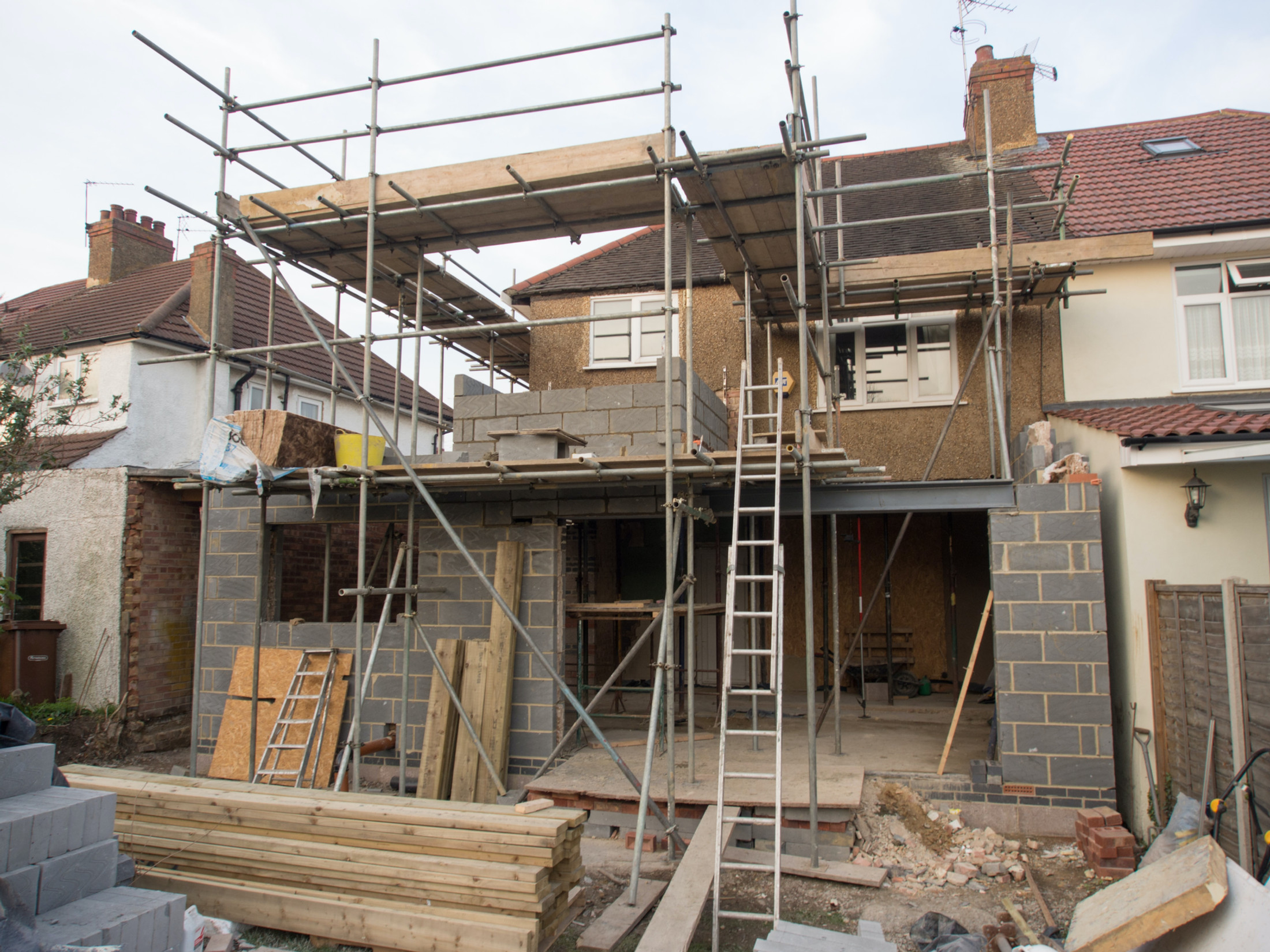
Free quote
Want the access question answered before you commit?
Thomas comes out himself, looks at what the scaffold actually has to reach and puts the weeks and the licence position in writing alongside the rest of the work. The site visit and the written itemised quote are both free.