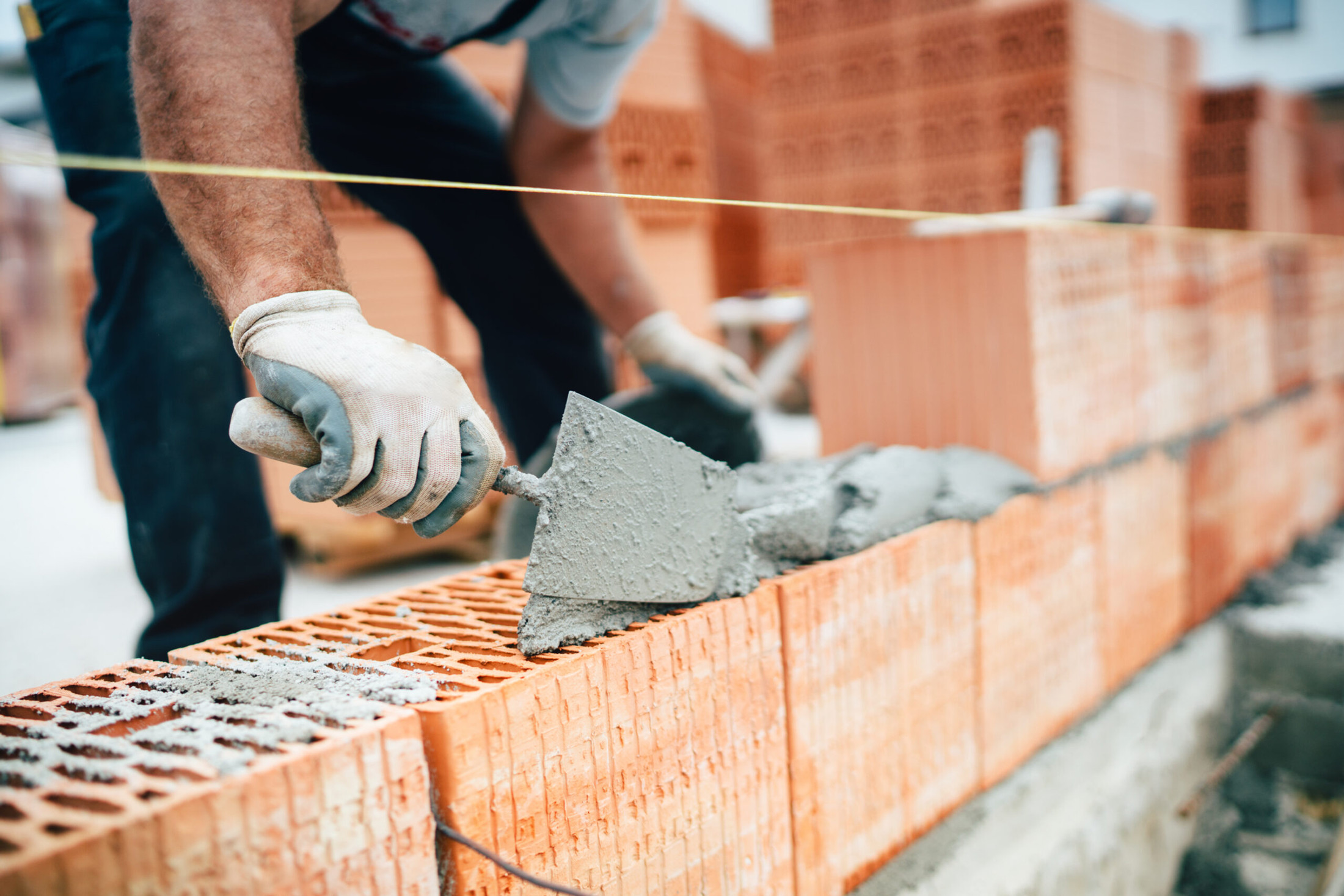
Repointing and lime mortar in Ringwood
Joints raked by hand, a mix matched to the wall it is going into, and the cement pointing somebody put on in the seventies taken back off.
The site visit is free and so is the written itemised quote. Thomas Hannen prices every job himself.
Repointing in Ringwood is mostly lime work. Close to a fifth of the town was built before 1919, the biggest slice of it before 1900, so the walls around the centre are solid brick with no cavity, and they stay dry only by letting water evaporate back out through the joint.
Four things bring people to the phone here. Joints on a frontage gone back far enough to see from the pavement. A damp patch inside that turns up a day after heavy rain and fades. Brick faces flaking off in thin plates while the mortar still looks solid. A chimney dropping sand into the gutter.
Not one of those is a wall that needs taking down. All four are mortar, and the last two usually mean somebody has already pointed the wall in the wrong mix. We look at every elevation rather than the one you have noticed, scrape joints in two or three places to find how deep the decay runs, and photograph the lot. You get it back in writing, elevation by elevation, with the faces that can wait marked as such. The visit and the written itemised quote are free.
The work
Lime frontages, cement patches and the stacks above them
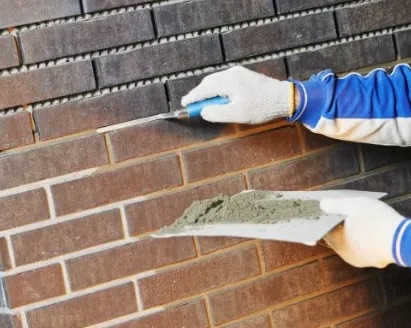
Pre-1900 solid wall, in lime. The older streets around the centre are handmade brick laid in lime, often a soft red stock you can mark with a thumbnail. That works only while the mortar stays softer and more permeable than the brick either side of it. We rake those joints out by hand to roughly twice the joint width, perpends included, and point back in an NHL lime or a lime putty mix gauged to the original for sand, colour and texture. The finish goes back to the profile the wall carries, usually flush or slightly recessed on a period frontage.
The cement pointing somebody put on in the seventies. The commonest thing we cut out in Ringwood. A soft Victorian wall gets repointed in hard sand and cement because hard sounds like it lasts; the dense joint then stops the wall breathing, moisture leaves through the brick face, and the first hard frost lifts that face off in flakes. The tell is a wall where the joints look sound and the bricks do not. Taking that mortar out without damaging the arris either side is slow, careful work.
Post-war and later outer skins. Around six in ten homes in the town went up between 1945 and 2008: cavity work, one skin of fired brick in cement and sand, struck weather or bucket handle. Those joints pit and open at the arris rather than washing out, water stands in them, and frost takes the surface off. Match the sand and the gauge as well as the colour, because plenty of the earlier mixes had lime in them.
Spalled faces, cut out rather than filled. Where a face has blown we cut the brick out whole and turn or replace it against a sample held on the wall. Mortar in the hollow leaves a patch that never matches and drops out in a couple of winters. Sourcing a replacement means a trial panel you look at in daylight first.
Stacks, parapets and the joints above your head. Flats and converted houses are a big share of the housing here, and a converted house still carries the tall shared stack it was built with. Weather on four sides, a cold flue up the middle, nothing warming it: the joints go friable long before anything at ground level does, and the damp that follows lands on a top floor ceiling. Repointing a stack, renewing the flaunching and making good the parapet joints all want a proper platform. One thing we will not do is point over movement: regular horizontal cracking every fifth or sixth course is corroding wall ties, not tired mortar.
How it runs
From your call to a written price
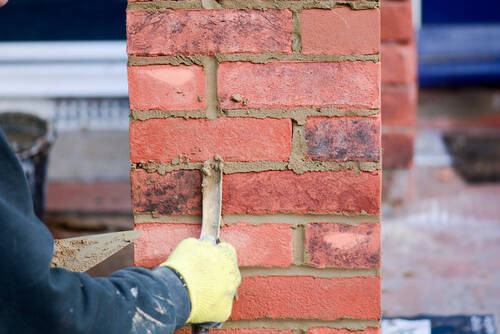
Same team from first visit to last, one person to ring, and no sub-contracting. The quote is itemised: access, raking out, the mortar mix, the area of each elevation, brick replacement and disposal on separate lines.
Nothing is left open overnight, the site is swept daily, and what comes out leaves with us. If something turns up that nobody could have seen, you get a photograph and a price before we carry on.
Repointing like for like is repair rather than development, so there is no planning application and nothing for building control to sign off. Appearance is where it changes. Ringwood has no conservation area of its own, but sixty one listed entries stand in and around the town, a lot for a place this size, and on a listed building the mortar is protected fabric: a change of mix, sand colour or joint profile is a change of character, and works affecting the character of a listed building need consent. We check an address before a mixer is filled.
Cost
What decides the price of a repointing job
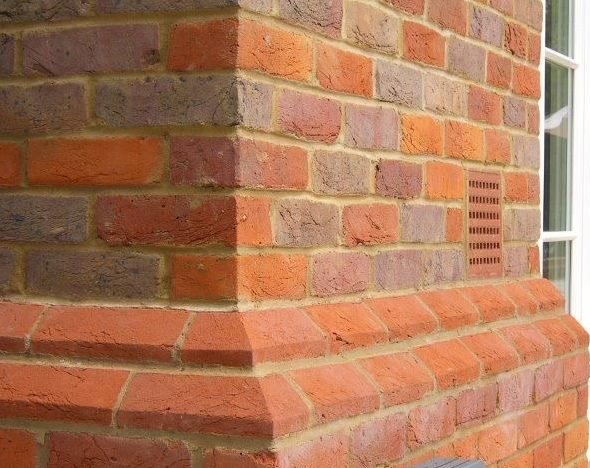
No rate per square metre. The area tells you almost nothing until somebody has looked at the joints.
Getting to it. A three storey building on the market square with a shared stack, a terrace behind the high street with one gable taking all the weather, and a low front wall onto the pavement are three different set ups before a single joint is raked. The work at height rules are why access is its own priced line.
The joints decide it, not the wall. Raking out by hand is slow, and on soft brick the only safe way: a disc widens the joint and takes the arris off. Depth, and whether faces have already spalled, sets the hours far more than area does.
Matching is the part that shows. Lime is slower to work and slower to cure, and on most walls in this town it is the right answer.
Comparing quotes? Ask how deep the joints are raked and by what, what the mix is, how many spalled bricks come out, and whether the scaffold is in the price. Two quotes for the same job are usually two different jobs.
If water is getting in
Open joints, and water coming through the wall
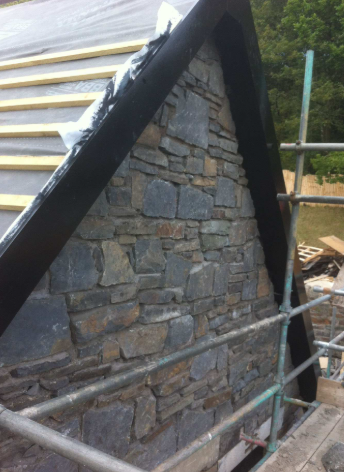
Ring rather than use the form. Washed out joints let driven rain straight through to the inside face, and on a chimney it finds the flashings too. We come and look, sheet or temporarily point the worst, then price the elevation once it has dried enough to show what is sound. In Ringwood it is usually a west facing gable or a stack above a converted flat. Damp on a top floor ceiling rather than a wall moves the chimney to the front of the survey. The phone is answered 24 hours for emergencies; scheduled work runs Monday to Friday, 8am to 6pm.
Worth knowing
On a listed building the mortar is part of what is listed
People assume listing protects the front door, the windows and the roof. It protects the fabric, and on a brick building the mortar is fabric. The mix, the sand that gives it its colour and the profile the joint is struck to are part of how the building reads, so swapping a flush lime joint for a weather struck cement one is a change of character even though every brick stays put. The specification has to be settled before anyone opens a joint, not agreed on the day with a mixer running.
So find out whether your address is listed before you accept a quote, and get the mix and the joint profile written into it as lines rather than left to the contractor. If consent is needed, the mix and the panel are what the conservation officer will want to see. We will make the enquiry for you. And if you are not listed, which most people here are not, the wall behaves the same way. Listing adds a permission step, not a different mortar.
Who you are dealing with
A local firm you can check
We cover Ringwood, Poulner, Ashley Heath, Hangersley and out towards Fordingbridge, Verwood and St Leonards, broadly BH24, with planning under New Forest District Council. You are dealing with Bournemouth Roofing & Building, the trading name of Bournemouth Roofing & Building Ltd, registered in England and Wales, company number 15471719. Thomas Hannen prices every job himself. A verified customer's 10 out of 10 on Checkatrade. The visit and the written itemised quote are free.
Questions
Ringwood questions we get asked
The house is listed. What has to happen before the mortar comes out?
The mix and the joint profile have to be agreed, and consent obtained, before a joint is opened, because the mortar counts as protected fabric. We take a sample of the sound original, propose a matched mix, make up a trial panel, and put all of it in the written quote so the paperwork has something concrete to point at.
How can we tell whether our pointing is lime or cement?
Scrape a joint with a key in a sheltered spot. Lime is softer, comes away as powder and often has visible lumps of unburnt lime in it. Cement resists the key and fails in hard flakes. Colour is a poor guide, since both go grey. Bricks spalling while the joints look untouched means a hard mix on a soft wall.
Somebody pointed our frontage in cement years ago. Can that be undone?
Yes, and on a soft Victorian wall it is usually worth doing. The hard mortar comes out by hand, slowly, because the point is to leave the edge of every brick intact, and a matched lime mix goes back. Blown faces are cut out and replaced at the same time. Pointing over the top is what caused the problem.
Why does a lime job take longer than a cement one?
Because lime cures on its own timetable. It cannot be rushed in cold weather, it needs protecting from frost and from drying sun while it takes up, and the joints are damped down before filling and brushed back at the right moment. The quote gives working days and says plainly that weather is what would push it.
Our building was converted into flats. Who signs off the repointing?
The freeholder, not the individual owners, because the external walls belong to the building rather than to any one flat. That also means we price a whole elevation. Major works to a block are usually subject to consultation under section 20 of the Landlord and Tenant Act 1985.
Nearby, and next door
Repointing near Ringwood
Repointing nearby
Our other trades in Ringwood
Everything we do in Ringwood Repointing, all areas Every area we cover
Free quote
Have the joints looked at before the frost
Thomas comes out, scrapes a few joints on every elevation, photographs them and puts the price in writing, itemised, at no cost to you.