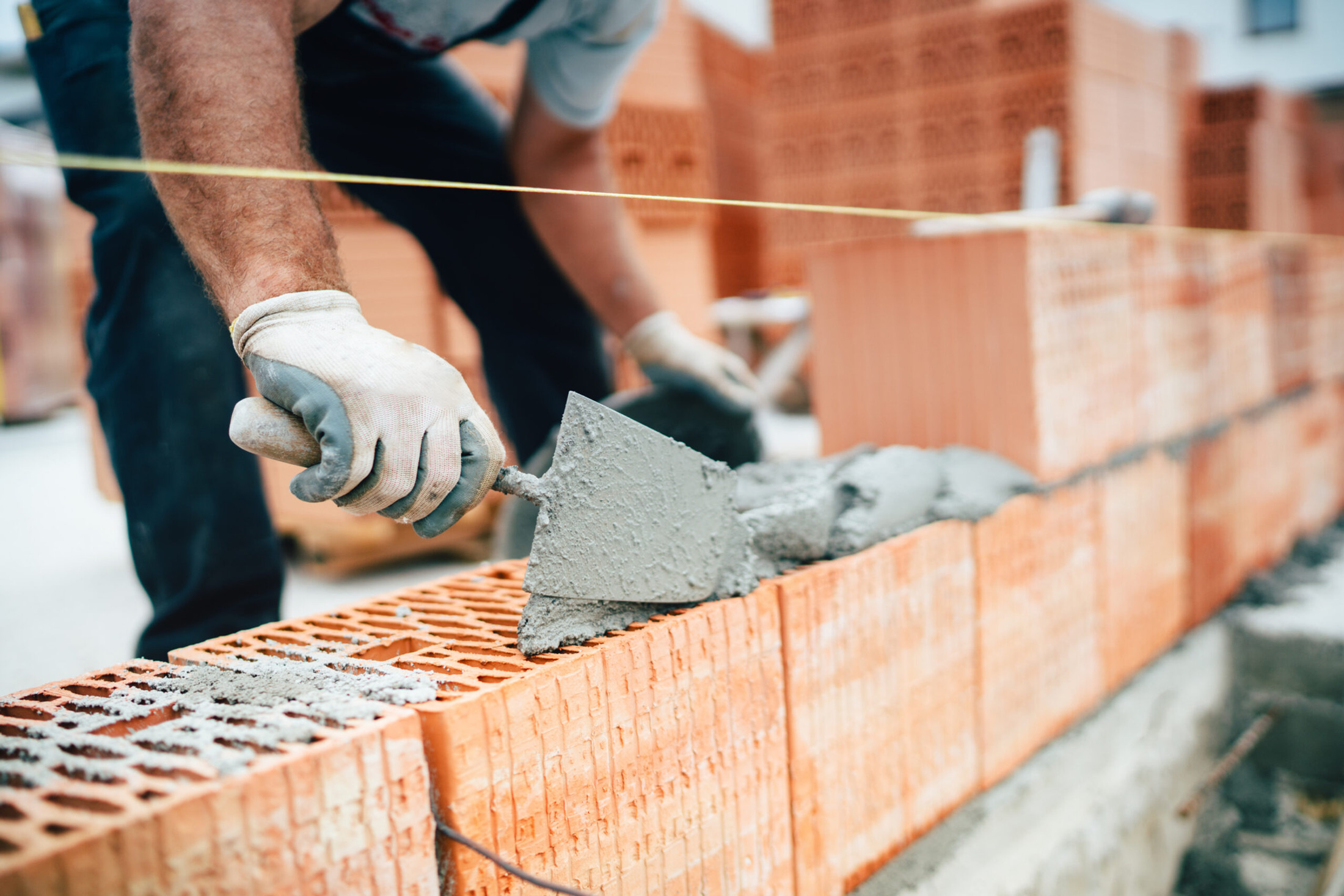
Repointing in Westbourne
Raked out by hand and filled in lime or a matched mortar, on villas, shop frontages and chimneys across Westbourne and BH4.
The site visit is free and so is the written itemised quote. Thomas Hannen prices every job himself.
Last updated
Repointing in Westbourne is mostly about the Victorian and Edwardian houses: raking out washed-out or cement-filled joints by hand and filling them with a mortar that suits the brick, which on the older walls usually means lime.
Villa walls in Westbourne fail in a few ways. Joints on the side of a villa that have gone sandy and hollow, so you can scrape the mortar out with a key. Brick faces flaking off around a patch of hard grey pointing that somebody put in years ago. Damp showing on an inside wall of a top floor flat after a wet, windy spell. Or a chimney where the joints have opened and the flashings have started to leak.
Thomas walks every elevation in Westbourne before he quotes, because on a tall villa the gable facing the weather and the sheltered back wall wear at very different rates. Only the walls that need doing are priced. On a building of flats, the quote goes to the freeholder or agent. The visit and the written itemised quote are free.
The work
Raking out and filling, one elevation at a time
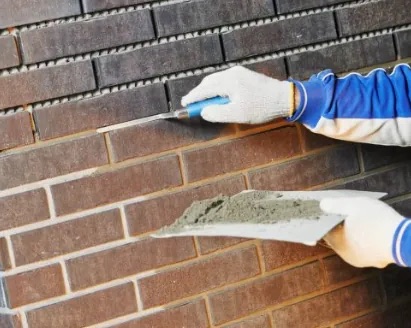
Raking out is done by hand. On soft Victorian brick the old joints are cut out with a plugging chisel and hammer, to about twice the joint width or back to sound mortar. No disc cutter or angle grinder is used on these walls: it widens the joint and chips the arris of the brick each side, and that damage stays visible. Joints are brushed out and damped down before the new mortar goes in, so it cures slowly.
The mix. The Westbourne villas were built in solid pre-1919 walls laid in lime, so they are repointed in natural hydraulic lime, NHL, or lime putty, with a sand chosen for colour and grain against the original. The 1960s and 70s blocks were built with cement mortar in cavity walls, and there we match the cement mix rather than put lime where it was never meant to be.
Getting cement off a period wall. Plenty of Westbourne villas had hard sand and cement pointing put in at some time. The joints look fine; the bricks round them do not, because the damp that used to leave through soft mortar now leaves through the brick face and the frost takes it off. Cutting that cement out without chipping the brick is slow, and how much of it there is moves the price more than anything.
The finish. Flush, weather struck, bucket handle or recessed, each profile catches the light differently from the pavement. We copy what the wall already has, and on any wall that faces the street a trial panel goes up first so you can judge colour and texture in daylight. Fresh mortar is always paler for the first months and settles as it weathers.
Chimneys, gables and the weather side. On a Westbourne house, stacks and the elevation facing the prevailing wind go first. Very often only one or two walls need doing now and the rest can wait years, and we would rather tell you that than repoint the whole house. A single elevation on a villa is usually about a week once the scaffold is up.
Over the shops on Poole Road and Seamoor Road. The upper floors above the shops, many inside the conservation area, are repointed from a scaffold standing on the pavement. That needs a licence from the council and a covered walkway so the shops can trade underneath, and both go on the quote as their own line. The flats above and the shop below often have different owners, so we confirm who is instructing the work before the licence is applied for.
How it runs
From your call to a written price
One person to ring from the first visit to the last. The quote is itemised, not a figure on the back of a card: access, raking out, the mortar mix, the area of each elevation, any brick replacement and disposal on separate lines, so you can compare it properly against anyone else's.
Nothing is left open or unusable overnight. The site is swept at the end of each day rather than the end of the job, and what comes out leaves with us. If something turns up once we start that nobody could have seen, you get a photograph and a price before we carry on.
Like for like repointing is maintenance and does not need planning or building control. Changing the mortar colour or joint on a street frontage inside the Westbourne Conservation Area can be a different matter, the council keeps the list, and on a listed building any change needs listed building consent first.
Cost
What decides the price of a repointing job
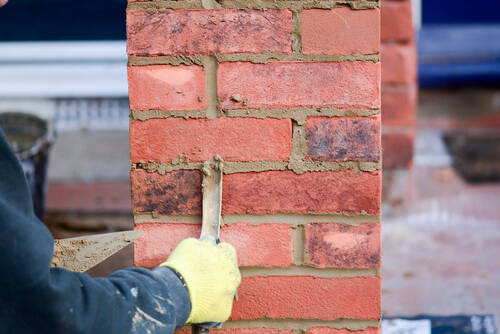
No rate per square metre, because the square metres tell you almost nothing until somebody has looked at what the joints are actually like.
Getting to it. A villa gable facing the street, a shop frontage over the pavement on Seamoor Road and the side wall of a later block behind its car park are three different set ups to reach. A chimney or a gable wants a scaffold, a boundary wall wants nothing at all. How long the platform stands matters as much as how big it is, and the work at height rules are why it is a priced line rather than something absorbed into a rate.
The joints decide it, not the wall. Raking out by hand is slow, and on soft brick it is the only safe way, because a disc widens the joint and takes the arris off either side. How deep the joints have to come back, and whether the faces have already spalled, sets the hours far more than the area does.
Matching is the part that shows. Too strong a mix is the classic mistake: cement holds water against a soft brick and the face blows off in the first hard frost. Lime is slower to work and slower to cure, and it is the right answer on most pre-1919 walls in Westbourne.
Comparing quotes? Ask how deep the joints are being raked and whether by hand or by disc, what the mortar mix is and whether it has been matched to what is there, how many spalled bricks are being cut out and replaced, and whether the scaffold is in the price. A cheaper quote may leave one of those out.
If water is getting in
Open joints, and water coming through the wall
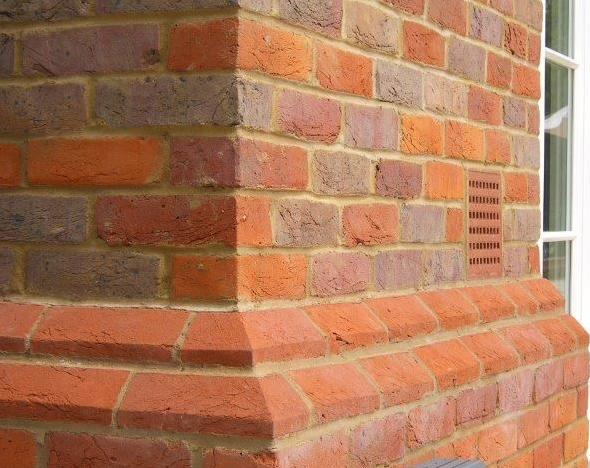
Ring rather than use the form. A wall with the joints washed out lets driven rain straight through to the inside face, and on a chimney it will find the flashings as well.
We come and look, sheet or temporarily point the worst of it if the weather is against us, and price the full elevation once it has dried out enough to see what is sound. On a converted house or a block, the outside walls belong to the building, so let the managing agent know as well. Scheduled work runs Monday to Friday, 8am to 6pm. For anything urgent, ring rather than use the form, and if we cannot pick up we ring you back as soon as we can.
The one local thing
Why the old villas want lime, not cement
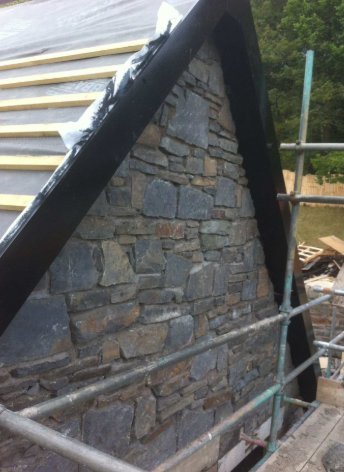
Nearly four in ten homes in Westbourne were built before 1919, and many of those are the big red brick villas, many now divided into flats. Their walls are solid, with no cavity, and they stay dry by letting moisture out through the mortar joints. That only works while the mortar is softer and more breathable than the brick. Lime mortar does that. Hard cement does not.
When a solid wall is repointed in cement, the water that should come out through the joints comes out through the brick instead. The brick faces stay wet, frost gets into them, and they start to flake. That is why a Victorian wall repointed in cement can look worse after ten years than one left alone. So on an older wall here, ask whoever is quoting what the mix is. If the answer is cement, ask why. We will explain what the wall is built of and what it needs, and write the mix and the joint finish into the quote.
Who you are dealing with
A local firm you can check
We cover Westbourne and BH4, from County Gates across to the West Cliff side and down to Alum Chine, and next door into Branksome and Canford Cliffs. BCP Council is the planning authority, and our base in Boscombe is under three miles away.
You are dealing with Bournemouth Roofing & Building, the trading name of Bournemouth Roofing & Building Ltd, registered in England and Wales, company number 15471719, which you can look up in a minute. Thomas Hannen's business, and he is the one who comes out to price the job, not a salesman. A verified customer's 10 out of 10 on Checkatrade. The visit and the written quote are both free. Before you book a visit in Westbourne, you can read our customers' Google reviews, word for word, on our reviews page.
Planning at a glance
Do you need planning permission in Westbourne?
Most repairs in Westbourne need no application at all. What decides whether a change to the outside of your house does is who the council is, whether a conservation area or a listing applies, and whether the place sits in a protected landscape.
| Question | In Westbourne |
|---|---|
| Who decides | BCP Council is the planning authority for Westbourne. BCP Council's heritage pages set out what it controls. |
| Conservation area | Yes: Westbourne Conservation Area. Check whether your street is inside the boundary before changing anything visible. |
| Listed buildings | Yes, there are listed buildings in and around Westbourne. If yours is one, work can need listed building consent. |
| Protected landscape | No National Park or National Landscape covers Westbourne. |
Questions
Questions about repointing in Westbourne
Does the whole house need repointing?
The whole house seldom needs repointing at once. On a tall villa the stacks and the gable facing the weather go first, and a sheltered back wall can often wait years. Each elevation is priced on its own line, which also helps a freeholder spread the cost.
Can you remove old cement pointing?
Yes. It is cut out by hand with a plugging chisel, slowly, so the soft red brick edges survive. It takes longer than raking out old lime, and the quote says how much of each wall has it.
How long does repointing take?
A single elevation on a villa is usually about a week once the scaffold is up. Lime needs protecting from frost and hot sun while it cures, which we plan for.
Will the new pointing match?
Yes. Sand, colour and joint profile are copied from the existing wall, and anything visible from the street gets a trial panel first. The new joints look lighter for a few months, then weather in.
Nearby, and next door
Repointing near Westbourne
Nearby places we also cover for repointing, with straight-line distances from Westbourne, and the other trades we offer in Westbourne itself.
Repointing nearby
Our other trades in Westbourne
Repointing guides
Lime or cement mortar: which do you need? Reading a repointing quote: rake out Listed building consent for repointing and re-renderingEverything we do in Westbourne Repointing, all areas Every area we cover
Free quote
Have your Westbourne walls looked at
Thomas comes out, checks the joints on every elevation and gives you a written itemised quote for the walls that need it. The visit and the quote are both free.