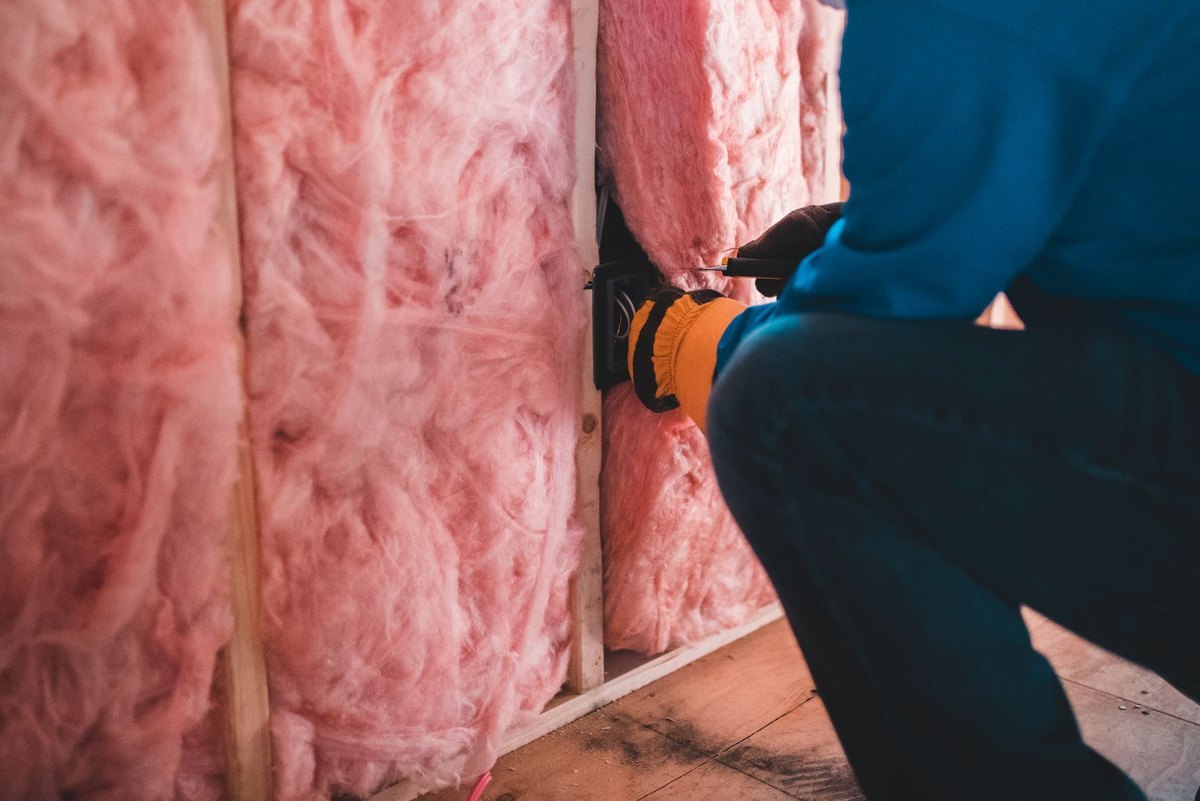
Wall insulation in Oakdale
Honest advice on thirties cavity walls, and internal lining for cold rooms, across Oakdale, BH15.
The site visit is free and so is the written itemised quote. Thomas Hannen prices every job himself.
Last updated
Oakdale is largely thirties semis and bungalows, many of them pebbledashed, and the dash hides whether the cavity behind it is empty, narrow, full of old fill or held by rusting ties. A borescope settles which, and we tell you whether to fill, line inside or leave it before anything is sold. Lofts and floors are on insulation in Oakdale.
Usually one room in an Oakdale house starts it. The front bedroom over the bay that never gets warm, the gable wall on the end of a pair with the paper lifting in the corner, or a chalet bungalow whose dormer bedroom is freezing while downstairs is fine. Sometimes it is a new owner holding an EPC that recommends cavity wall insulation, who wants to know whether a pebbledashed thirties wall is really suited to it.
Thomas looks at both faces of each wall, the dash outside and the plaster inside, and on a semi at how your half meets next door. The free written itemised quote then lists what each wall needs and in what order.
The work
Thirties cavities, old fill and cold rooms
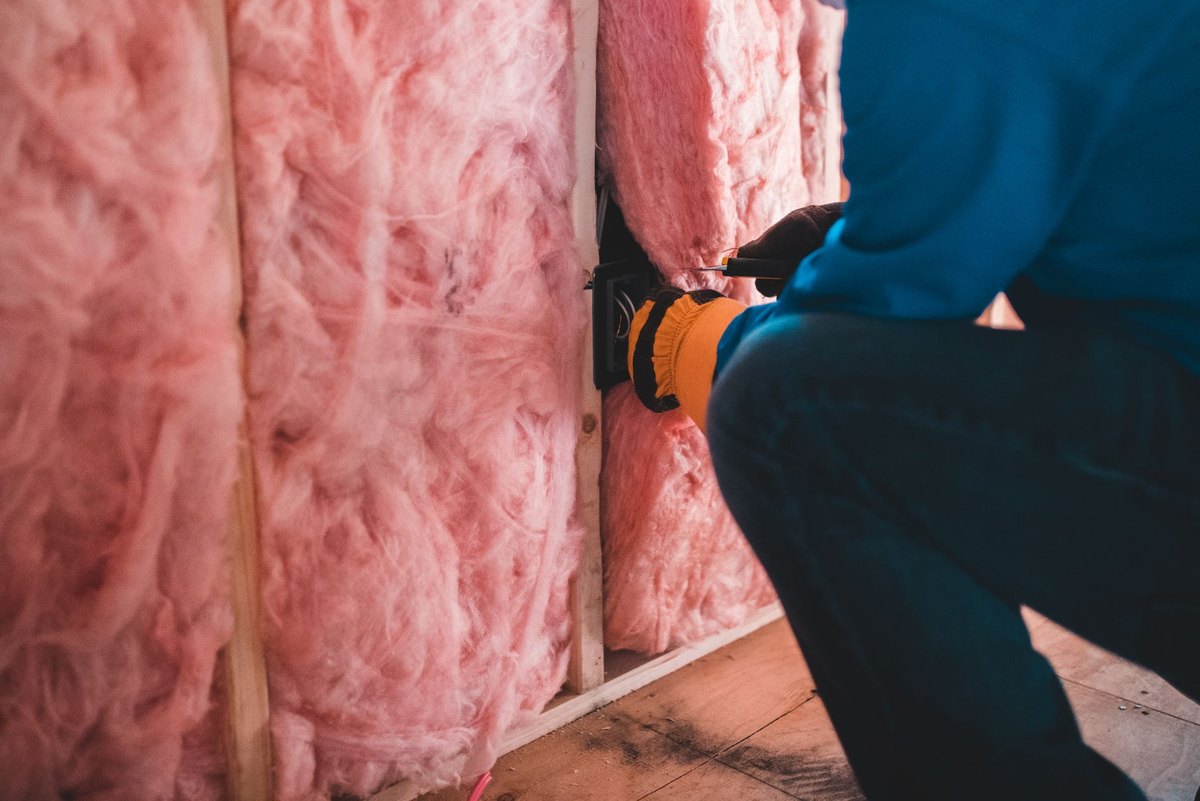
Reading a thirties wall first. Pebbledash hides every clue you would normally read from the brick bond, so Thomas drills one small hole in a mortar joint and puts a borescope through it. That shows whether the cavity is narrow, choked with mortar droppings from the build, or already filled. A moisture meter on the plaster inside, and a tap along the dash for hollow panels, show whether the outer leaf still keeps the rain out.
When a fill is the right answer. A clean, dry Oakdale cavity behind sound pebbledash can take bonded bead or mineral wool, blown in through a drilled pattern that is made good to match. That job belongs to a registered cavity wall installer, and the CIGA paperwork they hand over is what a buyer's solicitor later asks for. Our part comes first: hollow dash patched, a cracked bay sill sealed, the shared gutter across the pair unblocked and the air bricks under the floor cleared, because a fill behind a wet wall carries the wet inside.
Lining the rooms that stay cold. The bay bedroom and the gable room on the end of a pair are the usual ones. Where the cavity is too narrow or too dirty to fill, that internal wall insulation goes on from inside. Insulated plasterboard backed with PIR, Kingspan or Celotex, costs only a few centimetres. Where the wall needs to dry, a stud or batten frame packed with mineral wool behind a vapour check does better. Bay reveals are fiddly and they are where a cold bridge turns into black mould, so they get a thin board of their own, and the joist ends at the floor junction are sealed. Allow a few days a room, skim included.
Cladding a house that needs new dash anyway. When Oakdale pebbledash has blown so badly it must come off, external wall insulation is worth pricing alongside it. EWI boards fixed to the brick, a render carrier with mesh bedded in, and a thin coat finish that can be dashed again. It deals with the thermal bridge at every floor and corner. On a semi, cladding only your half leaves a step at the party wall line, so talk to next door first. The eaves and sills need extending, and it goes up on a scaffold.
A fill that has gone wrong. Some Oakdale cavities were filled decades ago, when the only question asked was whether a gap existed. Where that old fill has slumped, the borescope finds a cold, empty band under the eaves. Where fibre has bridged the cavity and got wet, you see penetrating damp inside on the weather wall. Either way the failed material is extracted by a specialist before anything else, and the reason it got wet is fixed. We say so plainly rather than lining over it.
Air, once the draughts have gone. A thirties Oakdale house was built leaky, with open fireplaces and air bricks doing the drying. Many of those fireplaces are blocked up now, and the air bricks sit under a raised path or patio. Insulating the walls removes more of that air movement, so ventilation gets looked at: trickle vents where the windows lack them, the kitchen and bathroom extract, and any air brick that has been buried. The first payback you notice is a bay room that stays warm into the evening, and the EPC improves with it.
How it runs
From your call to a written price
One person to ring from the first visit to the last. The quote is itemised, not a figure on the back of a card: the survey and any borescope check, the system and its thickness, making good around windows and doors, ventilation works, and disposal on separate lines, so you can compare it properly against anyone else's.
Nothing is left open or unusable overnight. The site is swept at the end of each day rather than the end of the job, and what comes out leaves with us. If something turns up once we start that nobody could have seen, you get a photograph and a price before we carry on.
Lining a wall inside needs no planning application, as the Planning Portal guidance on insulation confirms, but it is building control work under regulation 23 and has to meet Approved Document L. Cladding the outside can need planning because it changes how the house looks. Oakdale has no conservation area of its own, and BCP Council handles both.
Cost
What decides the price of a wall insulation job
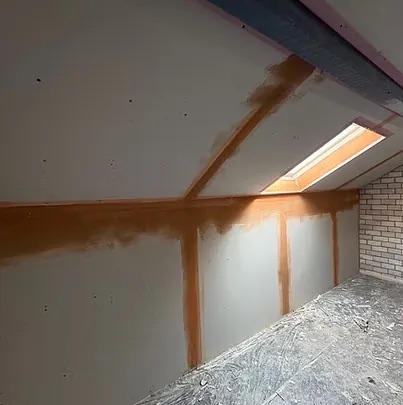
No rate per square metre, because the wall area is the easy part; what happens at every window, door and floor junction is not.
Getting to it. A detached bungalow with every wall reachable from the ground, a two storey semi with a gable against next door's drive, and a first floor flat in a small block each start from a different set-up. Cavity fill is drilled from outside and a bungalow comes off a tower where a three storey gable wants a scaffold. Internal lining is worked room by room from inside, so it is your rooms rather than a platform that gets disrupted. The work at height rules still set the platform.
Which wall you actually have. A cavity that is clear and dry can be filled in a day. A solid wall cannot be filled at all, and has to be lined inside or insulated outside, which is a different job at a different price. A borescope through one drilled hole settles it, and no honest quote is written before that.
The junctions, not the field of the wall. Reveals at windows and doors, the floor junction, the eaves and any party wall are where heat escapes and where condensation shows up if the detailing is wrong. That work is slow, it is most of the labour, and it is the first thing a cheap quote leaves out.
Comparing quotes? Ask whether the wall has actually been checked with a borescope or just assumed, what system and what thickness is specified, how the reveals and floor junction are being detailed, whether ventilation is being addressed, and who makes good the plaster and decoration afterwards.
If damp has appeared
Damp or mould after a wall was insulated
Ring rather than use the form. Damp patches or black mould appearing on an outside wall after cavity fill or internal lining usually means water is tracking across the cavity, or warm air is reaching a cold surface at a junction.
We look before we take anything out, because the fix depends on which of those it is. If the patch appeared after a spell of wet, windy weather, photograph it with the date, because that points to water crossing the cavity rather than condensation in the room. Scheduled work runs Monday to Friday, 8am to 6pm. For anything urgent, ring rather than use the form, and if we cannot pick up we ring you back as soon as we can.
The one local thing
Check the wall ties before you fill a thirties cavity
Cavity walls were still fairly new when Oakdale was built up in the thirties. The two leaves of brick were tied together with metal ties, and in houses of that age those ties were often iron or thinly galvanised steel.
Over many decades the part buried in the outer leaf can rust. Rust takes up more room than the metal it came from, so it lifts the mortar joint, and you see it outside as a horizontal crack in the brickwork every few courses, sometimes with the wall bowing slightly. On a pebbledashed front the same thing shows as a horizontal crack in the render.
That matters before any fill goes in. A fill does nothing for failing ties, and once the cavity is full they are much harder to inspect or replace. So in a thirties Oakdale house, the borescope survey is also a look at the ties. If they are corroded, the right order is new remedial ties first, then decide about insulation. If you see those horizontal cracks, tell us when you ring, and do not let anyone fill the wall until someone has looked at them.
Who you are dealing with
A local firm you can check
We work on walls across Oakdale and Stanley Green, from Wimborne Road and Darby's Lane to the Canford Heath side, in BH15, from our base in Boscombe, about six miles east.
You are dealing with Bournemouth Roofing & Building, the trading name of Bournemouth Roofing & Building Ltd, registered in England and Wales, company number 15471719, which you can look up in a minute. Thomas Hannen's business, and he is the one who comes out to price the job, not a salesman. A verified customer's 10 out of 10 on Checkatrade. The visit and the written quote are both free. Before you book a visit in Oakdale, you can read our customers' Google reviews, word for word, on our reviews page.
Planning at a glance
Do you need planning permission in Oakdale?
Most repairs in Oakdale need no application at all. What decides whether a change to the outside of your house does is who the council is, whether a conservation area or a listing applies, and whether the place sits in a protected landscape.
| Question | In Oakdale |
|---|---|
| Who decides | BCP Council is the planning authority for Oakdale. BCP Council's heritage pages set out what it controls. |
| Conservation area | None covers Oakdale, so a like-for-like repair is ordinary maintenance. |
| Listed buildings | Yes, there are listed buildings in and around Oakdale. If yours is one, work can need listed building consent. |
| Protected landscape | No National Park or National Landscape covers Oakdale. |
Questions
Questions about wall insulation in Oakdale
Do you fill cavity walls yourselves?
No, we do not fill cavities ourselves. On a pebbledashed Oakdale wall we do the borescope survey, the repairs to the dash and the pointing, any internal lining and the ventilation. The fill itself goes to a registered cavity wall installer, and we tell you if the wall is not suited to one.
There are horizontal cracks in my brickwork. Can the cavity still be filled?
Not until the wall ties have been checked. Those cracks are a common sign of rusting ties in older cavity walls, and they need dealing with first.
Our cavity was filled years ago and a wall is now damp. What now?
On a thirties wall, check the ties and the dash as well as the fill. The borescope shows whether the old material has slumped or is carrying water, and a failed fill comes out once the reason it got wet has been dealt with.
Will internal insulation make my rooms smaller?
A little: a bay bedroom loses a few centimetres off each lined wall, and the window board is cut back to suit. Skirtings, sockets and radiators come off and go back on.
Nearby, and next door
Wall insulation near Oakdale
Nearby places we also cover for wall insulation, with straight-line distances from Oakdale, and the other trades we offer in Oakdale itself.
Wall insulation nearby
Our other trades in Oakdale
Wall insulation guides
Damp at the bottom of a wall: what it is PIR board vs mineral wool: which insulation? Hollow-sounding wall: blown plaster or dot and dabEverything we do in Oakdale Wall insulation, all areas Every area we cover
Free quote
Find out what your Oakdale walls need
Thomas checks each wall with a borescope and prices the work in writing. The visit and the quote are free.