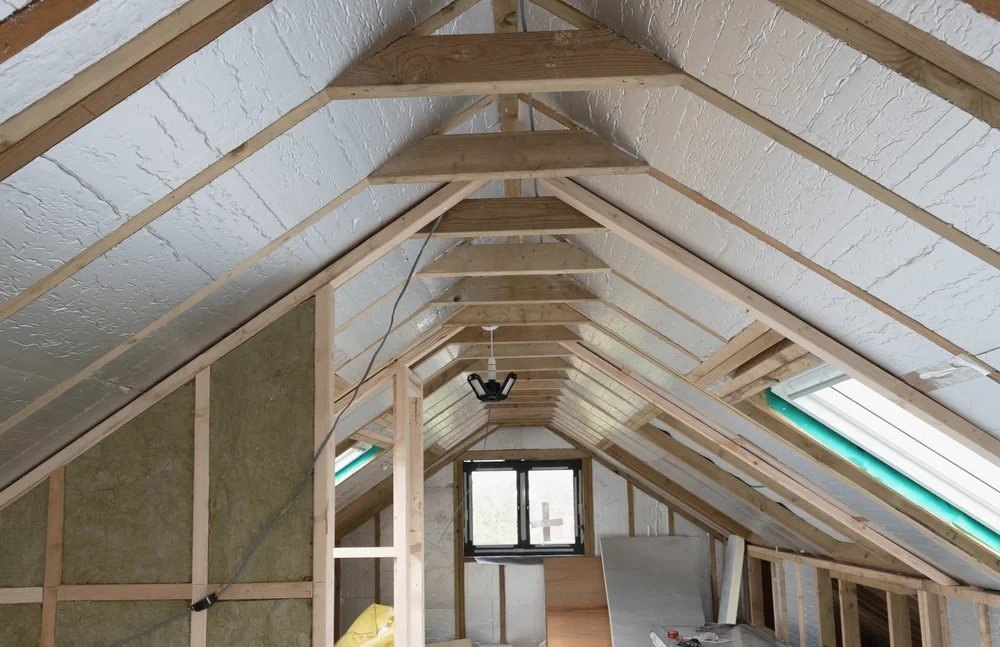
Loft insulation in Spetisbury
Loft top-ups, cleared roof spaces and raised boarded storage around Spetisbury and DT11, surveyed and priced in one visit.
The site visit is free and so is the written itemised quote. Thomas Hannen prices every job himself.
Wet marks on the underside of a roof are almost never a leak. They are the house breathing into a cold space that cannot clear what it is given, and adding depth without fixing that makes the problem worse rather than better.
Two sorts of call come in. The plain one is cold: bedrooms along the outside walls that never catch up, and a heating bill that agrees. The other one arrives with a photograph attached, of dark staining on the roof timbers or beads of water on the felt, and a question about whether the roof is leaking.
It usually is not. Warm air carries moisture out of a house, it rises, and if it can get into the roof it condenses on the first cold surface it meets. That is why we look at both jobs as one visit. Depth measured in several places, the air path over the wall plate checked by hand, the underside of the covering read for tide marks and mould, the hatch checked for the draught coming up through it, and photographs of everything. Free site visit, free written itemised quote, with the ventilation priced as its own line rather than hidden.
What gets done
Getting the roof dry before making the ceiling warm
Air first, because the order matters. Insulation is carried across the ceiling until it sits over the wall plate and it stops there, with a vent tray at each rafter holding an air gap open above it. That gap is the route: cross ventilation moves from one eaves, along under the felt and out the other side, taking vapour with it. Where a roof has boxed soffits that cannot be opened, a ridge vent or a run of tile vents does the same work from higher up, and a modern breathable membrane changes the detailing rather than removing the need. Approved Document F is the standard behind it. Get this right and the loft stays dry however cold it gets. Get it wrong and the dew point sits inside the material, interstitial condensation forms where nobody can see it, and black mould appears on the rafters within a winter.
The hatch belongs to the same argument. A bare trapdoor in an untreated lining is the main way warm wet air leaves the house and enters the roof, so it takes a rigid board on its back and a compression seal round the lining before any depth is discussed. Extract fans in the bathroom and kitchen are worth a look at the same time, because a fan discharging into the loft instead of out through the wall will defeat everything else in this list.
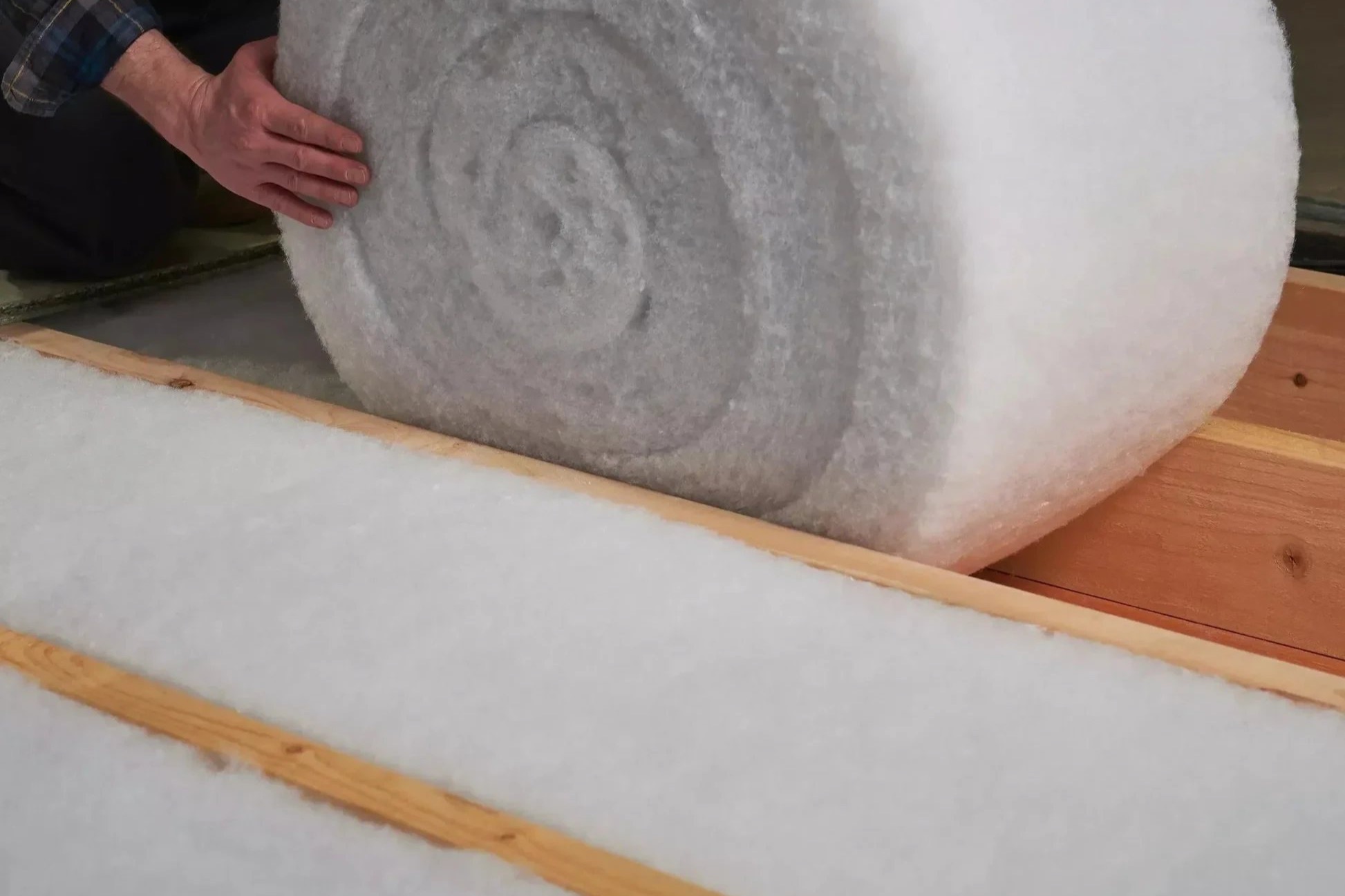
Only then the depth. Whatever is there now gets read first: it will have settled, gone patchy, been compressed under storage and stopped short at one edge, and if it is damp, dusty or contaminated with droppings it is bagged in place and carried out. Sound wool stays as the base layer, teased apart and levelled between the joists. Over it goes the second layer, cross laid across the joists at right angles so the timber is buried and stops carrying heat down into the plaster. About 270mm finished is the depth a renovated ceiling is expected to reach under Part L in Approved Document L. Mineral wool roll on the open floor, rockwool batts where the bays vary, glass wool, loose fill in the corners, sheep wool if you prefer it, PIR rigid board and multi-foil where the headroom has gone.
Then the fittings, quickly, because they are easy to leave out. Fire rated covers over recessed lights and downlighters. Cable and wiring lifted onto the new layer rather than buried under it. Lagging on the cold water tank and its pipework, which are now sitting in genuinely cold air. Loft legs and a raised floor where you want storage, so the boarding and the platform clear full depth, with the loft ladder set to suit. And where a roof has already been converted into a room in roof, the whole approach changes to a warm roof at rafter level, with a taped vapour control layer behind the plasterboard and the sloping ceiling and dormer cheeks treated as carefully as the flat part.
How it runs
From your call to a written price
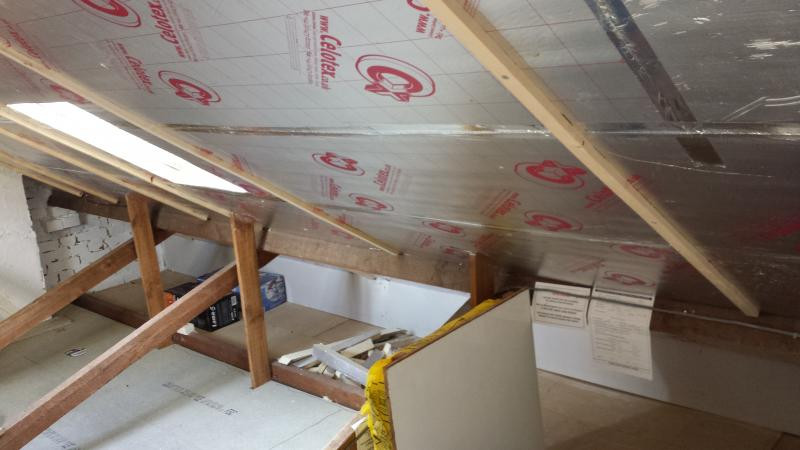
Same team from first visit to last, one person to ring, and no sub-contracting your work out to somebody you have never met. The quote is itemised, not a figure on the back of a card: the survey, clearing and bagging whatever is up there now, the material and its depth, keeping the eaves clear, the hatch and any pipework, and disposal on separate lines, so you can compare it properly against anyone else's.
Nothing is left open or unusable overnight. The site is swept at the end of each day rather than the end of the job, and what comes out leaves with us. If something turns up once we start that nobody could have seen, you get a photograph and a price before we carry on.
There is nothing to apply for. Insulating an existing roof space is not development, as Planning Portal guidance on insulation sets out, so it sits within permitted development. Building control applies where a thermal element is renovated rather than topped up, since regulation 23 expects the whole element brought up to current standard and Approved Document L defines that. Dorset Council is the authority. There are 18 listed entries in and around the parish, and on a listed building listed building consent can be needed for work inside the roof as well as out, so say so when you ring.
Cost
What decides the price of a loft
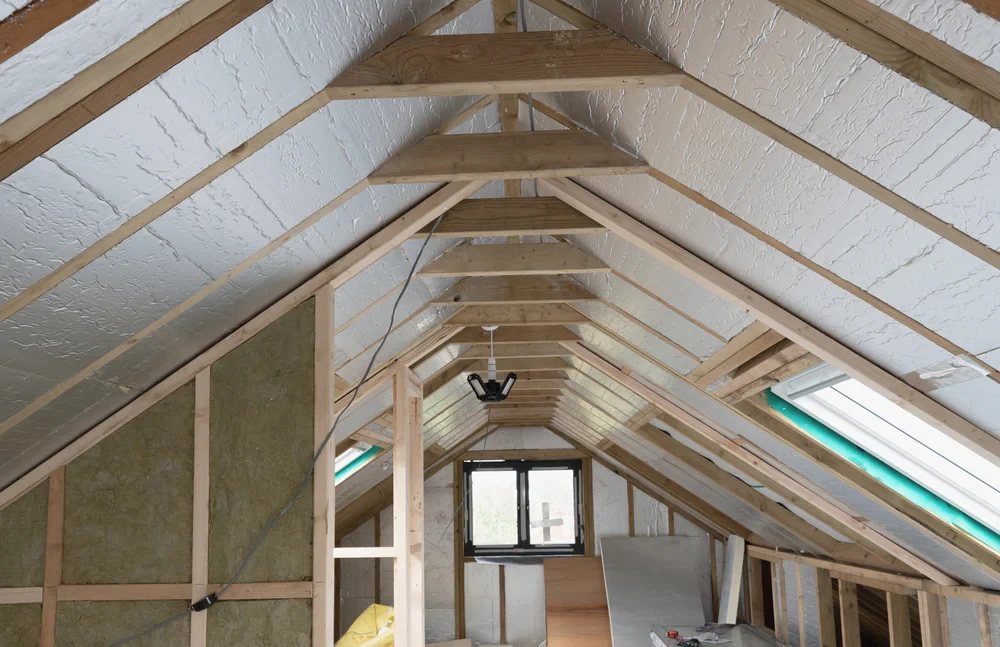
No rate per square metre, because the floor area is the easy part and the awkward edges are where the time goes.
Getting to it. A terraced cottage with a small trap over the stairs, a semi with a landing hatch and a fitted ladder, and a house with the loft already boarded and full are three quite different starts to a day. A hatch on a landing you can stand a ladder under is one job. A hatch over a stairwell, a crawl space you can only move through on your knees, or a loft full of boarding that has to come up and go back, is time before any material is laid.
What is up there now, and what it is sitting on. Old material that has to come out, be bagged and taken away is a cost before anything new goes down, and so is a loft full of boxes that has to be emptied and put back. Joists at 400 centres with a flat run across them is a different afternoon from a trussed roof full of bracing.
Ventilation, and the edges nobody reaches. Insulation stops at the wall plate and the eaves have to stay clear, or you trade a warm bedroom for a wet roof. Getting depth right into the corners and around the hatch, boxing over downlighters and lagging anything that now sits in the cold, is most of the labour. Approved Document L sets what the work is expected to reach.
Comparing quotes? Ask what depth is actually being laid and in how many layers, whether the old material is coming out or being covered over, whether the eaves are being kept clear, what happens to anything you store up there, and whether the hatch and the pipework are included. Two quotes for the same job are usually two different jobs.
If the loft is wet
Water running off the felt, or mould on the underside
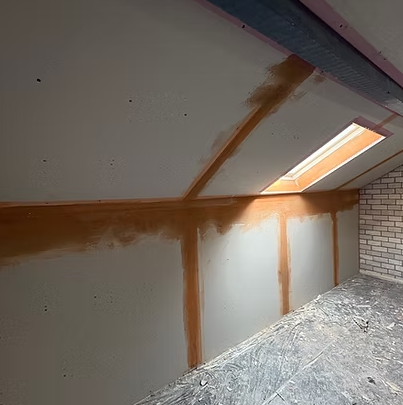
Ring rather than use the form. Droplets on the underside of the felt, black mould spreading across the roof timbers, or insulation that is visibly damp are all telling you the same thing: warm wet air is getting into a space that cannot breathe. That does not wait, because it is the timbers that pay for it. We look before anything is added, because putting more insulation into a loft that cannot ventilate makes it worse. Spetisbury is a run up the valley for us, so a loft that is running with water is booked as a first call rather than squeezed onto the end of a day. The phone is answered 24 hours for emergencies; scheduled work runs Monday to Friday, 8am to 6pm.
Two kinds of house
Half the village is a century older than the other half
There are two clearly different sorts of roof along this stretch, and they want different things. A fifth or so of the houses are pre-war cottages with cut roofs, purlins through the space, hand cut joists at spacings that wander, and often no underlay at all. The larger share went up between the war and the early eighties, mostly semis and terraces with trussed roofs, a sealed underlay and one thin quilt rolled out when they were built.
On the older roof the ventilation is largely a gift and the difficulty is fitting material to a space where no two bays match, which means batts and cutting rather than rolling. On the later roof it is the reverse: the floor is regular and easy to cover, but the roof is sealed above and the original layer has usually been shoved into the eaves, so the air path is the thing that needs rescuing. Ask anybody quoting which of the two you have and what they intend to do about it. If the answer is the same for both, they have not been up there.
Who you are dealing with
A local firm you can check
We cover Spetisbury, Charlton Marshall, Blandford St Mary, Blandford Forum, Sturminster Marshall and the DT11 addresses around them, with Dorset Council for planning and building control. You are dealing with Bournemouth Roofing & Building, the trading name of Bournemouth Roofing & Building Ltd, registered in England and Wales, company number 15471719, which you can look up in a minute. Thomas Hannen's business, and he is the one who comes out to price the job, not a salesman. A verified customer's 10 out of 10 on Checkatrade. The visit and the written quote are both free.
Questions
Spetisbury questions, answered
There is water on the underside of our roof. Is the roof leaking?
Usually not. A leak leaves a track down one line and it follows the weather. Condensation shows up as an even film or as droplets all over the cold surface, and it is worst after a still, cold night rather than after rain. We will tell you which one you have before anything is added, because putting more insulation into a roof that cannot ventilate makes it worse.
Does the bathroom fan matter to a loft job?
It matters a lot. A fan ducted into the roof space instead of through the wall pumps warm wet air straight at the coldest surface in the building. If that is what we find, it goes on the quote as something to put right, and doing it turns a damp loft dry more reliably than anything else on the list.
Will more insulation make the condensation worse?
On its own, yes it can. Depth makes the roof space colder, and colder air gives up its moisture sooner. That is why the ventilation and the hatch are settled first and the depth second. Done in that order the loft ends up drier than it was, not wetter.
Do we need to be in while you work?
Only to let us in and to lock up. It is inside work, nothing is left open overnight and nothing outside is disturbed. We sheet the stairs and the landing, bag the old material inside the loft, sweep at the end of each day and take the waste with us.
Nearby, and next door
Loft insulation near Spetisbury
Loft insulation nearby
Our other trades in Spetisbury
Everything we do in Blandford Forum Loft insulation, all areas Every area we cover
Free quote
Want it measured, quoted and done in one visit?
We will come out, get into the loft, measure the depth and check the eaves, then put an itemised written price in front of you. The visit and the quote cost nothing.