Re-roofing in a conservation area: what actually changes
Designation restricts a named list of permitted development rights. It does not stop you putting the same roof back, and the consent most pages tell you to apply for was abolished in 2013.
No. A conservation area does not remove your right to re-roof. Stripping the covering and putting the same thing back is still not development, so there is nothing to apply for. What designation removes is a named list of permitted development rights, and the biggest one on a roof is dormers.
The short version
- A conservation area is article 2(3) land, which restricts named classes of permitted development. It does not turn a like-for-like re-cover into a planning application.
- Class B goes, so no dormer without permission. Class C stays, so rooflights inside the 0.15 metre limit survive designation.
- Conservation area consent has not existed in England since 1 October 2013. Any page telling you to apply for it is out of date.
- Demolition carries a criminal offence and no time limit on enforcement. Settle that part before the scaffold goes up.
- No statute says you must use natural slate. The test is your area's published appraisal, so read it before anyone orders materials.
Start here
A conservation area does not take away your right to re-roof
Designation restricts what you may do without permission. It does not turn a like-for-like re-cover into a planning application. A conservation area is designated under section 69 of the Planning (Listed Buildings and Conservation Areas) Act 1990.
What designation does, in permitted development terms, is put your address into a category the General Permitted Development Order calls article 2(3) land. Part 1 of Schedule 1 to the Order lists article 2(3) land as conservation areas, areas of outstanding natural beauty (renamed National Landscapes in 2023, with the Order still using the old wording), the Broads, National Parks and World Heritage Sites.
Being on that list restricts named classes of permitted development. It does nothing to section 55 of the Town and Country Planning Act 1990, which is what keeps most re-roofs out of the planning system in the first place. Work that does not materially affect the external appearance of a building is not development at all, and a roof stripped and re-covered in the same material does not materially affect it. That holds inside a conservation area for the reason it holds on a 1970s estate, and the longer version is in do I need planning permission to replace a roof. So designation changes what you may do to the shape of the roof and what you may put on the outside of the walls. It does not change whether you may put the same tiles back on.
Permitted development
What article 2(3) land actually removes
Class B goes and Class C stays, and that one sentence answers most of what people ring about. Schedule 2, Part 1 of the Order splits work on a house into classes. Class B covers enlargement of a roof: dormers, a rear slope rebuilt higher, a hip turned into a gable.
Paragraph B.1(f) says development is not permitted by Class B where the dwellinghouse is on article 2(3) land. There is no dimension to check. A dormer in a conservation area is a planning application.
Class C covers any other alteration to the roof, which in practice means rooflights, and it carries no article 2(3) exclusion at all. The limits are the ordinary ones: nothing may protrude more than 0.15 metres beyond the plane of the slope of the original roof, and nothing may end up higher than the highest part of it. Original is a statutory word and on an already-altered house it is not the roof you are looking at, which is worked through in permitted development for rooflights, dormers and solar.
The one that catches builders out is Class A. On article 2(3) land, development is not permitted by Class A if it would consist of or include cladding any part of the exterior with stone, artificial stone, pebble dash, render, timber, plastic or tiles. So a render job that is permitted development two streets outside the boundary is a planning application inside it. Worth knowing before you price rendering alongside the roof.
| The job | Inside a conservation area | What that means for you |
|---|---|---|
| Strip and re-cover, same material | Not development under section 55 | Nothing to apply for. Confirm the match by email anyway |
| Change to a visibly different covering | Capable of being a material change of appearance | Ask before ordering; a lawful development certificate puts it on file |
| Rooflights in the existing slope | Class C survives designation | The 0.15 metre limit is measured off the original roof |
| Dormer, or the roof raised | Class B not permitted on article 2(3) land | A full householder application, whatever the volume |
| Render or cladding to the walls | Class A restricted on article 2(3) land | Planning application for the render, not just the roof |
| Taking down a chimney stack or a wall | Relevant demolition, so planning permission | A criminal offence without it, and enforcement never times out |
The correction
Conservation area consent was abolished in 2013
If a page tells you to apply for conservation area consent, it is out of date. In England that consent stopped existing on 1 October 2013.
It was removed by Schedule 17 to the Enterprise and Regulatory Reform Act 2013, commenced on that date. Demolition in a conservation area did not become free. It became relevant demolition, which needs ordinary planning permission rather than a consent of its own.
The teeth moved across with it. Section 196D of the Town and Country Planning Act 1990 makes it an offence to carry out, or cause or permit to be carried out, relevant demolition without the required planning permission. Conviction on indictment carries up to two years. Schedule 17 also inserted a subsection into section 171B stating that there is no restriction on when enforcement action may be taken over relevant demolition, so the time limits that eventually make other planning breaches unenforceable never start running. A wall taken down without permission in 1998 is as enforceable now as one taken down last month, and it usually surfaces at conveyancing.
Wales kept conservation area consent until 4 November 2024, so check the date on any guidance written from a Welsh source.
Demolition is the part that bites. Re-covering a roof is not demolition and none of this touches it. Taking down a chimney stack, a boundary wall, a porch or an outbuilding is a different question with a criminal offence behind it, and it is the one that stops a job mid-week with the scaffold up. Settle it before work starts. Walls are covered in garden wall planning permission and the height rules, and if the building is listed as well then listed building consent is a separate offence on top.
Two different things
A conservation area is not an article 4 direction
A conservation area and an article 4 direction get used as if they were the same thing. One is automatic and the same everywhere; the other is a decision somebody made about your street.
A conservation area is statutory. Designation happens, and the Order's fixed list of restrictions applies to every house inside the boundary, identically, everywhere in England. Nobody chose which classes to withdraw for your area.
An article 4 direction is discretionary. A council makes it over a defined area, names the Parts, Classes or paragraphs it wants withdrawn, and can take away almost anything, including rights a conservation area leaves alone: front boundary walls, windows, doors. Directions are often made over conservation areas, which is why the two get confused, but a conservation area can have no direction over it at all, and a direction can be made on a street that is not in a conservation area. If one covers your address, the answers on this page change and you need to read the direction itself, because each is worded differently. Article 4 directions and what they mean for your house covers how to find yours.
On the ground
There is no rule that says natural slate
The most repeated claim about conservation areas is that you have to use natural slate. No statute says that, and no national policy says it either.
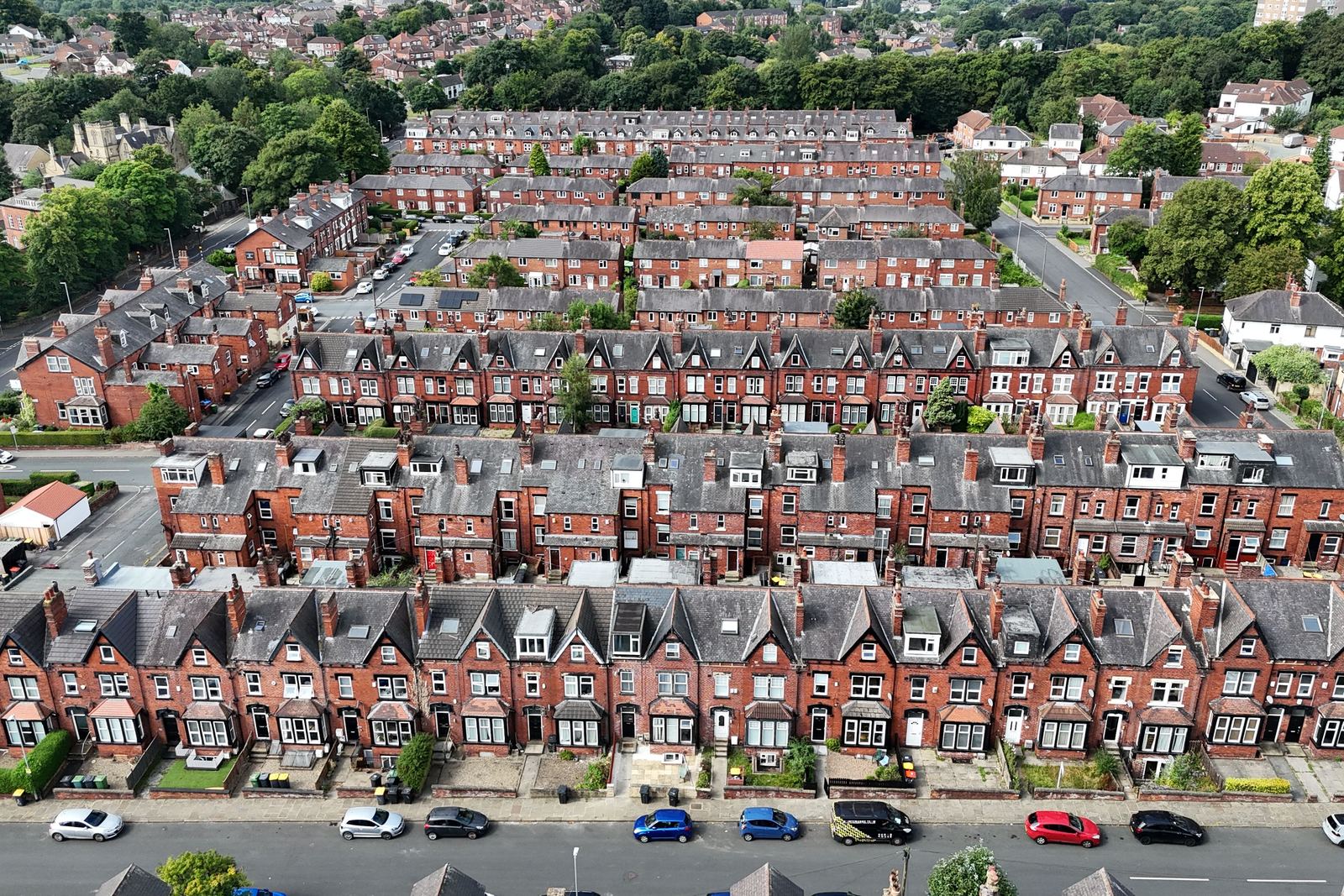
What exists is a duty. When an authority decides an application affecting a conservation area it must pay special attention to preserving or enhancing the character or appearance of that area. That is a judgement about your street, not a materials list handed down nationally. On a Victorian terrace roofed in Welsh slate it points at slate, firmly. On an area designated for its street layout, its trees or its villa plots, the roof covering may barely feature in the reasoning.
The document that tells you which of those you are standing in is the conservation area appraisal. It is published, free, and usually a PDF with a boundary map, a description of what the designation protects and often a management plan. Read the parts on roofscape and materials before anybody prices the job. If your area has only a map or an older character study, say that on the phone: there is no published description to work against, and the officer's own reading is what you have.
The practical rule is short. Like for like is the safe route. Same material, same unit size, same lap, same colour range, same ridge and verge detail, and you are putting back what the appraisal describes. A departure is not banned, it is a conversation you need to have first. Natural slate against fibre cement slate is the version of it people have most often, and how close the roof sits to the pavement decides most of that.
Detail settles these jobs more often than the covering does. Sound ridge tiles, cresting and hand-made bonnet hips are worth salvaging and putting back, and mortar colour at the verges and the stack reads from the pavement, which is repointing territory as much as roofing.
Before you order anything
Ring the conservation officer, and check who you are ringing
The call is free, it usually takes ten minutes, and it belongs before the materials are ordered rather than after they are on the drive.
Describe what is on the roof now, what you propose to put back, and whether anything is coming down. Ask them to confirm by email, and most will. You are after one of three answers: this is not development so carry on, this needs an application, or this is acceptable if you match a stated thing. The third is the reason to ring, because it turns a judgement into a specification your roofer can price against.
Ring the right organisation, though, and locally that is less obvious than it looks. Three separate planning authorities cover this patch and their boundaries do not follow the road signs. BCP Council handles 48 conservation areas across Bournemouth, Christchurch and Poole, publishing a map for each one and an appraisal for most. Dorset Council covers the rest of the county. A conservation area inside the New Forest National Park is not the district council's: the National Park Authority designates and protects conservation areas within the park and decides the planning applications, while building control stays with the district council. Two organisations, one roof.
This page states the general position in England and is an explainer, not legal advice. Boundaries, directions and appraisals are local, so confirm your own case with your local planning authority before work starts. Which permission system you are in is set out in planning permission, building regulations and listed building consent.
Next steps
What to do, in order
Re-roofing in a conservation area starts with confirming the boundary for your address, reading the appraisal, checking for an article 4 direction and settling whether anything is being demolished. None of this needs a consultant, and almost all of it is free.
- Confirm the boundary for your address, not your street name. One side of a road is often in while the other is out.
- Download the appraisal and read the sections on roofscape and materials. If there is only a map, note that, because it changes how the conversation goes.
- Check whether an article 4 direction also covers you, and pull the original planning permission for the estate off the council's register while you are there.
- Work out whether anything is being demolished: chimney stack, wall, porch, outbuilding. That is the element with a criminal offence attached and it needs settling first.
- If the same covering is going back on, you are almost certainly outside the planning system. Ring the conservation officer anyway and keep the reply.
- If you are changing material, ring before ordering, and for anything significant apply for a lawful development certificate so the answer is on file at sale.
- Tell every roofer quoting that the house is in a conservation area and ask how they propose to match. Then you are comparing the same job, which is the point of what a roofing quote should include.
If you want somebody to look at the roof and say what it would take to put back what is already there, that is what a site visit is for. Thomas comes out himself and puts in writing what he found. What we cover is on the roofing page, and you can ask for a free written itemised quote without committing to anything.
Questions
Common questions
Do I need conservation area consent to replace my roof?
No, and not just because of the roof. Conservation area consent stopped existing in England on 1 October 2013, abolished by Schedule 17 to the Enterprise and Regulatory Reform Act 2013. Demolition in a conservation area now needs ordinary planning permission instead, and re-covering a roof is not demolition, so neither applies to a re-roof.
Can I put concrete tiles on a roof in a conservation area?
Sometimes, and it turns on the appraisal for your area rather than on a national rule. A change of covering can materially affect external appearance, which makes it development, and the authority has to pay special attention to the character of the area when it decides. Ask the conservation officer before you order anything.
Are rooflights allowed in a conservation area?
Usually yes. Class C of the General Permitted Development Order covers other alterations to the roof and carries no exclusion for article 2(3) land, so rooflights survive designation. They must not protrude more than 0.15 metres beyond the plane of the original roof slope or sit higher than its highest part, and an article 4 direction can still remove the right.
Do I need planning permission for a dormer in a conservation area?
Yes. Class B, which covers enlargements of the roof, is not permitted development on article 2(3) land, and a conservation area is article 2(3) land. The volume allowances that apply elsewhere are irrelevant, so it is a full householder planning application whatever the size of the dormer.
Does a conservation area mean I must use natural slate?
No, there is no statutory rule requiring any particular roof covering. The test is whether the work preserves or enhances the character and appearance of the area, judged against the published conservation area appraisal, which you can download for free. On some areas that points firmly at slate; on others the roof covering is barely mentioned.
Read next
Related advice
The guides below pick up where this one leaves off, and the roofing page covers the work itself and the places we cover, if you would rather have the job looked at.
Who wrote this
Thomas Hannen
Thomas owns Bournemouth Roofing & Building and prices every job himself instead of sending somebody else. The company is Bournemouth Roofing & Building Ltd, number 15471719, registered in England and Wales. If you want to talk something through before you commit to anything, the site visit and the written itemised quote are both free.

Free quote
Not sure what the conservation officer will accept on your roof?
Thomas comes out himself, looks at what is on the roof now and puts in writing what it would take to put the same thing back. The site visit and the written itemised quote are both free.