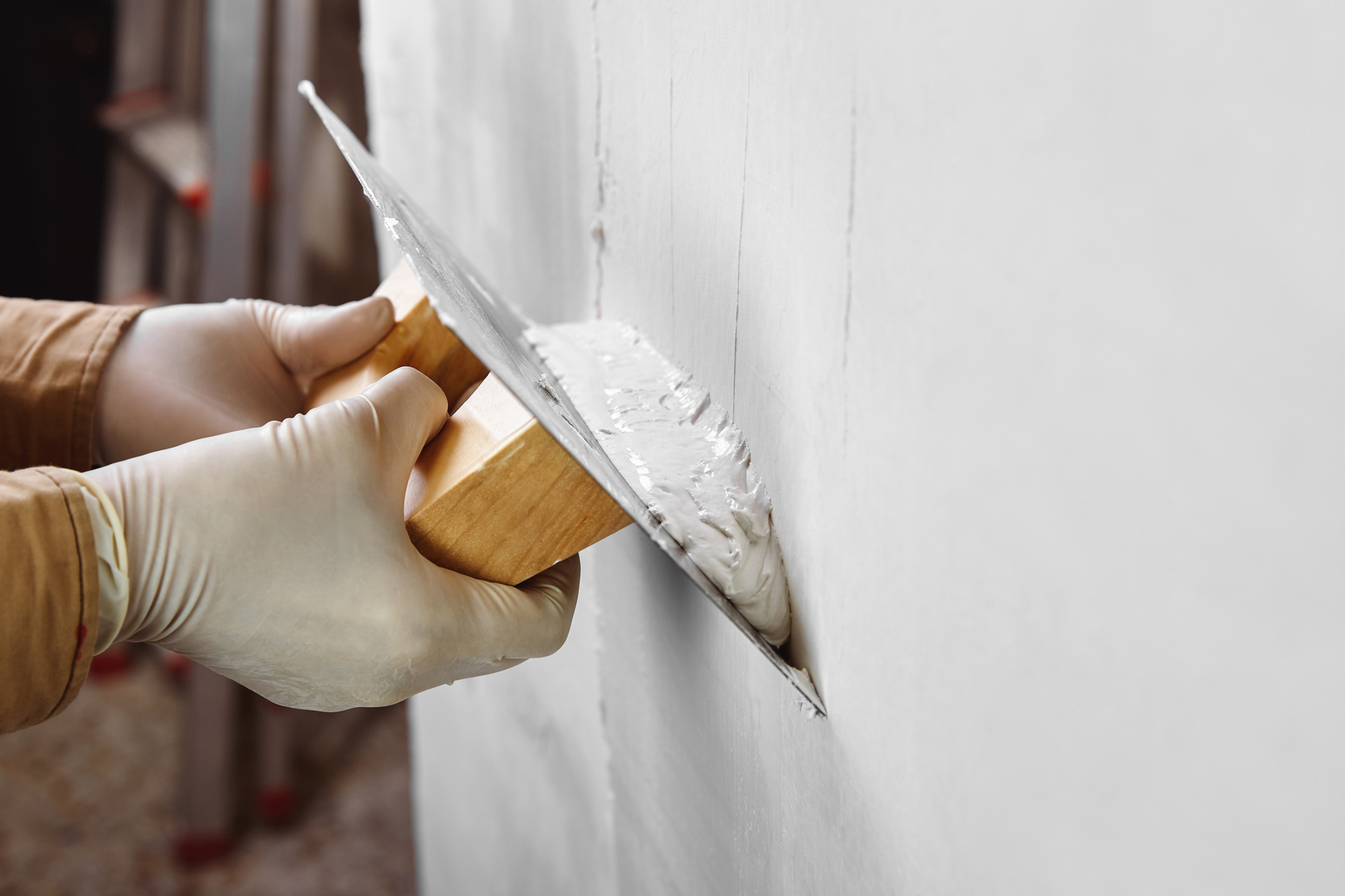
Plastering and rendering in Hyde
Lime plaster, lath ceilings, damp walls and external render across Hyde and SP6. We check what the wall is made of, and whether it is dry, before we price it.
The site visit is free and so is the written itemised quote. Thomas Hannen prices every job himself.
On an old Hyde wall the plaster is not just decoration, it is how the wall gets rid of moisture. Lime lets a solid wall dry through its surface. Gypsum and cement stop it, and the water comes out somewhere less convenient instead. So the first question on the site visit is what the wall is built of, and the second is whether it is dry yet.
Out here the calls come in three shapes. A ceiling that has begun to sag and shed grit, usually in the oldest part of the house. Plaster that has gone soft and crumbly along the bottom of a wall and comes back every time it is patched.
And a room that has to be put right after water has been through it, from a burst pipe, a leaking gutter or a wet winter. None of that is settled by a phone quote. We come out, go round the walls by hand, take moisture readings where it matters, and then put a written price together.
The work
Three coats of lime, each one in its own time
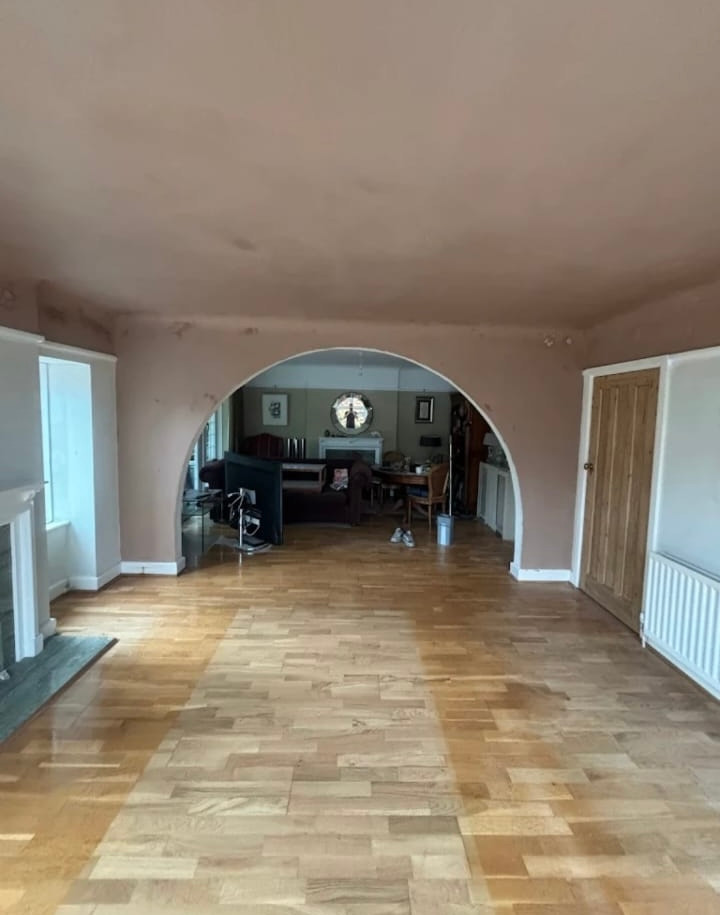
Three coats of lime, each in its own time. The older buildings here are one thickness of brick or cob with no cavity, and they were plastered in lime for a reason. We work in three coats the way the wall expects: a scratch coat pushed well in, a float coat brought true, and a fine finish trowelled up. It takes longer than gypsum because each coat has to set in its own time, and it is the difference between a wall that dries out and one that pushes salts through your paint every spring.
Old ceilings are lime pressed through timber lath, held up by the nibs squeezed out over the top. When those break the ceiling bows and drops dust. Firm to the palm and only hairline cracked, it can be over-boarded and skimmed. Moving under your hand, it comes down, the joists are checked while they are open, and it goes back in board and skim, or in haired lime where the building is worth it.
After water has been in. A burst pipe in an empty cottage, a gutter that has run down a wall all winter, a shower that has leaked behind the tiles. The flood zones do not reach the village but the surface water risk here is high and Huckles Brook runs a little over half a kilometre off, so we see plenty of it. The plaster is the last part of that job, not the first: skirtings off, the loose material back to something sound, and the wall left open to dry properly before anything covers it up. On a dry lined wall the board itself wicks water up and has to be cut out, because there is no drying a soaked plasterboard. A band of blown plaster a foot off the floor usually means ground levels outside have crept above the inside floor, or that cement render is holding water in, so we look outside first and put breathable lime back rather than sealing the wall up again.
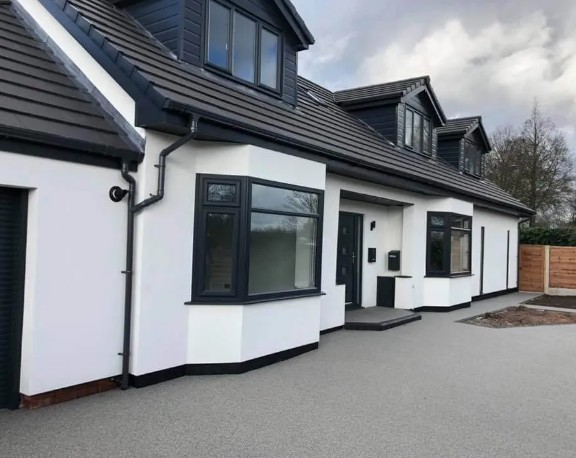
The rest is ordinary work and plenty of it. Artex over-boarded and skimmed rather than scraped, because a coating put up before the turn of the century can hold asbestos fibre. Dabbed walls that sound hollow, damaged corners cut back to board and let in square, plasterboard on a stud, tape and joint, angle bead on the corners and stop bead at the reveals. Outside, an old building gets a lime render and limewash; on a modern house it is cracked sand and cement replaced with a primer, a mesh reinforced basecoat and a silicone thin coat topcoat on a bell cast bead.
How it runs
From your call to a written price
Same team from the first visit to the last, and an itemised quote rather than one figure on the back of a card. Inside your own walls nobody needs telling, unless the building is listed, and Hyde has twenty one listed entries for a parish this size. On one of those, taking off old lime plaster or changing an external render needs consent, and heritage and conservation guidance sets out how the National Park Authority handles it. Outside, do not assume the usual rights: rendering a house is normally permitted development, but not inside a national park or a conservation area, as Planning Portal guidance on external walls says. Part of the parish sits in the Western Escarpment conservation area, and Interactive property map tells you which applies to your house.
Cost
What decides the price
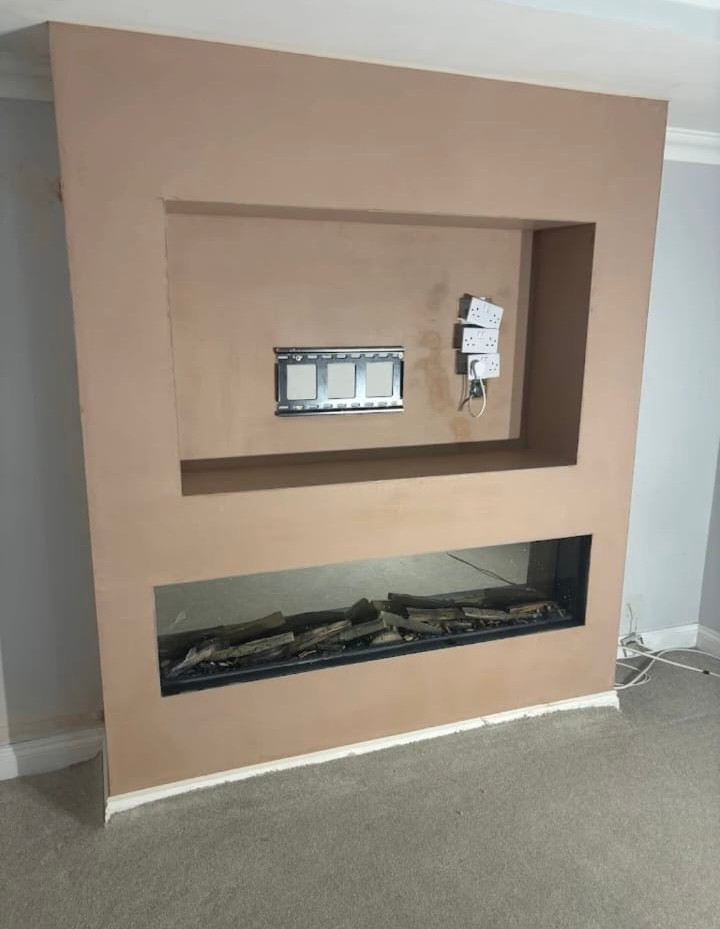
No rate per square metre. A forest cottage with narrow doors and low beams is slow before a bag is opened; a modern house along the lane is a barrow and a dust sheet; an outbuilding with a high open roof wants a tower inside as well as anything outside. A wall that wants a skim is a different job from one where the backing coat has blown and has to come off back to the masonry, and lime work adds the waiting between coats to both. Ask whether it is a skim or a full replaster, and who takes the waste.
If it has come down
A ceiling down, or plaster blown off the wall
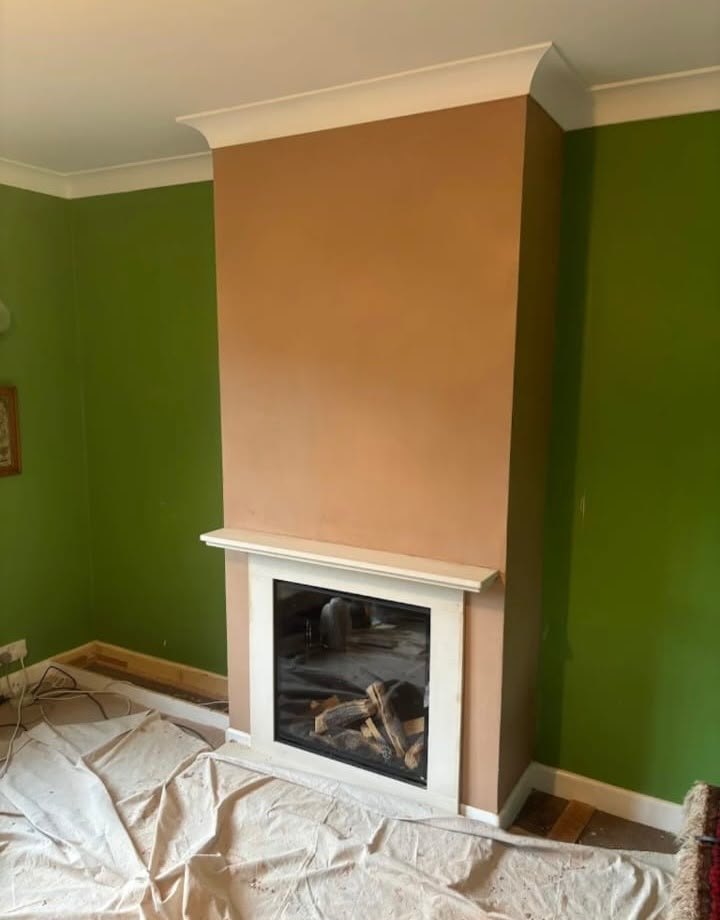
Ring rather than use the form. A ceiling that has cracked and dropped goes to the front of the queue. Hyde is one of the furthest places we go and the lanes are slow, so it is often the next morning rather than the same afternoon, and we will tell you what to move and what to leave alone meanwhile. The phone is answered 24 hours for emergencies; scheduled work runs Monday to Friday, 8am to 6pm.
The one local thing
Surface water, and why a wet wall must not be replastered yet
Hyde is not sat in a river flood zone, and Huckles Brook is far enough off most of the houses not to be the issue. The risk here is surface water: heavy rain coming off ground that will not take any more, running along the lanes and finding the low side of a building. The government flood risk service rates that risk as high for this area, and it is worth ten minutes with your own postcode, because it explains a lot of the damp that turns up at the bottom of walls out here.
What it means for plastering is patience. A solid wall that has been wet holds that water for months, not days, and the old rule of a month for every inch of thickness is not far out. Replaster it too early and you seal the moisture in: the new finish blows, salts come through the paint, and you pay twice.
So we take readings rather than guess, take the skirtings off and leave the wall open, get air moving without cooking it with a fan heater, and put lime back rather than gypsum so the wall can keep drying through its surface afterwards. If somebody offers to replaster a flooded wall next week, that is a good reason to ring somebody else.
Who you are dealing with
A local firm you can check
We cover Hyde, Frogham, Godshill, Fordingbridge, Sandleheath and the rest of SP6, in the New Forest National Park, out of Bournemouth. Bournemouth Roofing & Building Ltd, registered in England and Wales, company number 15471719, which you can look up in a minute. Thomas Hannen's business, and he is the one who comes out to price the job, not a salesman. A verified customer's 10 out of 10 on Checkatrade. The visit and the written quote are both free.
Questions
Hyde questions we get asked
Hyde is in the National Park. Who deals with permissions?
The New Forest National Park Authority, not the district council, which catches people out when they start looking for the right form. Anything visible from outside gets design scrutiny here. Internal plastering is not planning work and needs no application at all, so a re-skim, a ceiling or a damp wall inside the house is between you and us. The Authority matters when the outside of the building changes appearance.
Does the Western Escarpment designation cover our cottage outside?
It does. Hyde falls inside the Western Escarpment conservation area, and there are 21 listed entries in the parish on top of that, so the external face of a building here carries controls an ordinary estate house does not. Repairing render in the same material and finish is maintenance. Swapping to a modern system, or rendering a wall that has never been rendered, is a change and needs asking about first.
Water runs off the field past the cottage. Does that reach plaster?
It can, and the surface water risk at Hyde is rated high even though the site is not in flood zone 2 or 3, with Huckles Brook a little under 600 metres away. What does the damage is not a flood but repeated splashing and a saturated base of wall. Plaster inside goes soft along the bottom two feet, salts come through, and the skirting rots quietly behind it. Drainage gets sorted before we replaster.
The wall has been wet all winter. How long before plastering?
Longer than most people want to hear, and it depends on the thickness of the wall. A solid wall dries at roughly an inch a month once the source is stopped and there is air moving past it, so a wall saturated since November is not ready in March. Rushing it traps moisture behind the new work and it blows again. We would rather come back later than plaster something still wet.
There is damp on the chimney breast. Is that plastering?
Partly, but the plaster is the symptom. An old flue holds soot and salts that pull moisture out of the air, so the breast stays damp in a way the walls either side do not, and ordinary plaster over it stains through within months. The flue wants capping and ventilating first. Then the breast can be hacked back and finished with a build-up that tolerates what is left in the masonry.
Nearby, and next door
Plastering and rendering near Hyde
Plastering and rendering nearby
Our other trades in Hyde
Everything we do in Ringwood Plastering and rendering, all areas Every area we cover
Free quote
Get the wall looked at, then priced
Tell us what the wall or the ceiling is doing. We come out, take readings where they matter, and put a written itemised price in front of you.