Roof repairs in Three Legged Cross
Slipped interlocking tiles, loose bungalow hips, cracked lead at extensions and leaking garage flat roofs, repaired across Three Legged Cross.
The site visit is free and so is the written itemised quote. Thomas Hannen prices every job himself.
Last updated
Roof repairs
Put right the part that is letting water in
Yes, we repair roofs across Three Legged Cross, from a single slipped interlocking tile on a bungalow to a cracked lead flashing where a garage roof meets the house. We trace where the water really gets in, repair that point, and put the price in writing after a free site visit.
If water is dripping through a ceiling as you read this, ring 07435 839745 and tell us which room it is in and which side of the house.
A concrete tile has slid down the bungalow roof and sits proud of its neighbours. There are crumbs of mortar on the path under a hip after a windy night. Or the kitchen extension ceiling has a damp line along the wall it shares with the house.
The houses here are mostly seventies and early eighties, so the faults are the ones a roof of that age throws up. We look from the ground, the loft hatch and, where it is safe, a roof ladder, and photograph the fault for you. Our main roof repairs page explains how we trace a leak.
The repairs
The faults on a seventies roof, and how each one is fixed
Nearly every roof in the village is concrete interlocking tile over bitumen felt, with ridges, hips and verges bedded in mortar. These are the repairs that roof type needs.
A tile that has slid or cracked. When these roofs were laid, not every course was nailed or clipped. A tile stays put by its weight and its side lock until the nail that was there rusts through or the batten under it goes soft, and then it creeps down and opens the lap. Cracks usually come from someone walking the slope to fit an aerial or a dish, or from a falling branch. We lift the courses above, slide in a tile of the same profile and fix it with a tile clip, as BS 5534 now expects. Where that profile is no longer made, the quote says what we would use. A few tiles on a bungalow take roughly a morning.
Loose hips and ridge on the bungalows. A hipped bungalow has four hip lines running down to its corners, each tile sitting on sand and cement. After forty-odd winters that bedding cracks, washes out and leaves the tile rocking, and rain gets in at the joint between one tile and the next. If two or three are loose and the rest of the line is solid, we rebed that stretch in fresh mortar and screw each tile down. If the whole hip sounds hollow, fresh mortar only restarts the clock, so we strip that hip and fix it mechanically, to BS 8612 on dry fixed ridge and verge systems, with a hip iron at the foot. The ridge on top gets the same test.
Verges on the gable ends. On gable ends and at the ends of terraced rows, verge mortar falls out in lumps. A short gap can be repointed. A whole verge coming away takes clip-on dry verge units.
Felt that has reached the end. On most of these houses the bitumen felt under the tiles is forty to fifty years old. It turns brittle, tears wherever tiles were lifted before, and lets wind-driven rain through at its laps. Whenever we lift tiles for a repair we check the felt around the hole. If it is still pliable, a strip of breathable membrane goes in under the repair. If it snaps when bent and the battens crumble, patching the tiles above just moves the leak one course along. That is a re-cover, and our roofers in Three Legged Cross page covers how that job runs.
Lead where an extension meets the house. Extensions, porches and garages against the main wall need a flashing where their roof meets the brickwork: properly, lead stepped into the mortar joints with a soaker under each tile. Some were done with a mortar fillet instead, which cracks away from the wall and lets water run down behind it. We cut out the fillet, chase the joints, dress new lead with soakers and point the chase. A section of flashing is usually a day.
Valleys that overflow. An L-shaped house, or an extension meeting the main slope at right angles, has a valley. On this age of roof it may be open lead or a preformed trough liner with the tiles cut in alongside. Leaves and moss build up in it, the water backs up over the edge of the liner and runs under the tiles. A split liner or cracked lead means lifting the cut tiles on both sides and laying a new valley, which is a day or two.
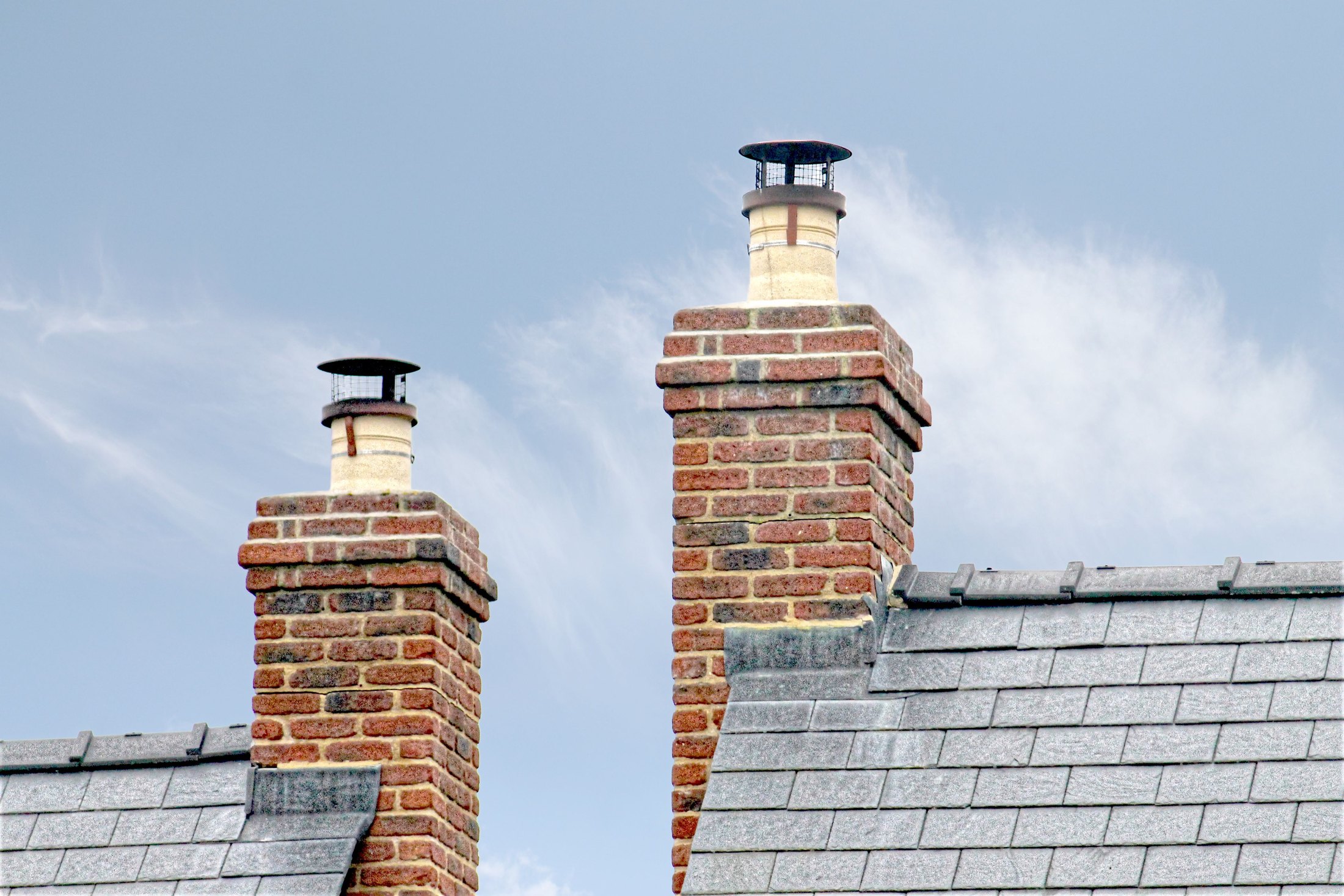
Chimneys, where there are any. Plenty of houses here were built with no chimney at all. Where a brick stack does exist, the leak is normally in the back gutter behind it, the side flashings, cracked flaunching round the pots or brick that has started to flake. The lead we do with the roof. Work on the stack itself is chimney repairs.
Flat roofs on garages and extensions. These carry felt from several decades, and a few have been redone in GRP or EPDM rubber. Blisters, split laps, a puddle sitting over a blocked outlet and a perished upstand or drip edge are where they leak. On a firm, dry deck a patch or a new outlet holds. If the deck gives underfoot, a patch will not, and it becomes flat roofing in Three Legged Cross.
Terraced rows and flats. In a terraced row your slope runs into your neighbours' as one roof, so a repair near the party line can mean lifting tiles on their side. Have a word with them first. In one of the flats, the roof is normally the freeholder's or managing agent's to repair, so report the leak to them.
How it runs
From your call to a written price
One person to ring from the first visit to the last. The quote is itemised, not a figure on the back of a card: access, where the fault is and what is being opened up to reach it, each tile, slate, ridge or flashing being renewed and what with, making good, and disposal on separate lines, so you can compare it properly against anyone else's.
Nothing is left open or unusable overnight. The site is swept at the end of each day rather than the end of the job, and what comes out leaves with us. If something turns up once we start that nobody could have seen, you get a photograph and a price before we carry on.
A like for like repair in Three Legged Cross needs no planning application, as no conservation area covers the village or sits near it, and the Planning Portal guidance on roofs shows where that would change. The one listed building is Chapel Farm Cottage on Ringwood Road, which is thatched and so a job for a specialist thatcher. If your own home is listed, read Dorset Council's page on listed building consent before anything on the roof is altered.
Cost
What decides the price of a roof repair
No rate per square metre, because a slipped tile over a porch and the same tile above a three storey gable are one repair and two very different jobs.
Getting to it. In Three Legged Cross that might be a hipped bungalow with every hip in reach of a roof ladder, a two storey detached house with a valley above the garage, or the middle house of a terraced row reached only from the front. A tile over a porch or a bungalow eaves can often be reached from a ladder and a roof ladder. A ridge, a chimney or a valley on a two storey house usually wants a tower or a scaffold, so a small repair can still need a proper platform. The work at height rules decide that, which is why access is its own line on the quote and not hidden inside the repair.
Finding the cause, not the stain. Water runs along the battens and the underlay before it drips, so the mark on the ceiling is rarely under the fault. Tracing it back to a cracked tile, a lifted flashing, a perished valley or a ridge joint that has opened is part of the job, and a repair priced before anyone has looked is a guess.
What the repair uncovers. Lifting a few tiles shows the battens and the underlay around them. If they are sound the repair stays small. If the felt has perished or the battens have rotted, you get a photograph and a separate written price before anything more is done. Where patching stops being worth it is a conversation you have with the facts in front of you.
Comparing quotes? Ask what fault they actually found and where, whether access is included, what is being replaced and with what (a matched tile, new or reclaimed slate, which code of lead), whether the ridge and verge are being bedded in mortar or mechanically fixed, and what happens if more is found once the roof is open. Two quotes for the same job are usually two different jobs.
If it is leaking now
Water coming through a ceiling
Ring rather than use the form. Put a bowl under the drip, keep anything electrical away from the wet patch, and if a ceiling is bulging keep everyone out from under it. The first visit is about finding where the water gets in and making the roof weathertight, and the permanent repair is priced in writing once the fault can be seen properly. When you ring about a roof in Three Legged Cross, say whether it is a bungalow, a house or a flat, and where the water is showing. Scheduled work runs Monday to Friday, 8am to 6pm. For anything urgent, ring rather than use the form, and if we cannot pick up we ring you back as soon as we can.
Worth knowing
When the gap at the extension keeps coming back
The ground under Three Legged Cross is clay that shrinks in a dry summer and swells when wet. So a leaking gutter joint, an overflowing valley or a blocked outlet on a garage roof is more than a stain: every storm tips water at the foot of the wall and soaks the ground beside the footing. When we mend one, we check where the downpipe ends. If it spills onto the ground by the house and not into a gully or drain, we tell you, as Approved Document H expects roof water to be carried away. The wider run is fascias, soffits and guttering work.
That ground is also why an extension flashing deserves a second look. If the joint where a garage or kitchen roof meets the house has opened, or was filled once and cracked again, sealant or a fresh mortar fillet will crack too. The lasting fix is lead chased into the brickwork in steps, with soakers under the tiles, which copes with a little movement. If the gap is widening, or cracks in the brickwork line up with it, have a structural engineer look before you pay for roof work. We will tell you that on the visit and not just re-flash it.
Who you are dealing with
A local firm you can check
Three Legged Cross is in BH21, in Verwood parish between Verwood and West Moors, about eight and a half miles from our base in Boscombe, and Dorset Council handles planning and building control. You are dealing with Bournemouth Roofing & Building, the trading name of Bournemouth Roofing & Building Ltd, registered in England and Wales, company number 15471719, which you can look up in a minute. Thomas Hannen's business, and he is the one who comes out to price the job, not a salesman. A verified customer's 10 out of 10 on Checkatrade. The visit and the written quote are both free.
Nearby, and next door
Roof repairs near Three Legged Cross
Nearby places we also cover for roof repairs, with straight-line distances from Three Legged Cross, and the other trades we offer in Three Legged Cross itself.
Roof repairs nearby
Our other trades in Three Legged Cross
Everything we do in Verwood Roof repairs, all areas Every area we cover
Questions
Questions about roof repairs in Three Legged Cross
What goes wrong most on a seventies tiled roof?
Slipped interlocking tiles, cracked hip and ridge bedding, a flashing pulled away at an extension, a blocked or split valley, and perished felt. The first four are repairs. The felt decides whether repairing is still worth it.
Can one slipped tile be put back without scaffolding?
On a bungalow or over a porch, often yes, from a ladder and a roof ladder. On a two storey house the HSE rules on roofwork may call for a tower or a scaffold, and if so it shows on the quote as its own line.
The flashing on my extension keeps cracking. Why?
It is usually a mortar fillet or a sealant bead doing a job that lead should do. Neither can flex, so they crack away from the wall. Stepped lead with soakers lasts. If the gap itself keeps widening, get a structural engineer to look first.
How do I spot a roofer I should not use?
Be wary of anyone who knocks unannounced after a storm, wants cash up front, or says the whole roof must come off without showing you why. Ask to see the fault in a photograph and check the company on Companies House. Our page on how we price a job shows what a written price should contain.
My roof was damaged in a storm. Will my insurer pay?
That is the insurer's decision, not ours. Before you phone them, it helps to know the three questions the Financial Ombudsman asks about a storm claim. What we give you is a dated photo record of the damage on your roof.
Our cottage is thatched. Can you help?
Not with the thatch itself, which is work for a specialist thatcher. A tiled extension or outbuilding joining it, and the lead where it meets the wall, we can repair.
Free quote
Tell us what your roof in Three Legged Cross is doing
Send your postcode and what you have spotted: a tile out of line, mortar on the path or a stain by the extension. We come out, find the fault and put the repair in writing.