Roof repairs in Winterborne Stickland
Slipped clay tiles and slates, loose ridges and verges, split lead, leaking stacks and flat roof patches, repaired across Winterborne Stickland and nearby DT11 villages.
The site visit is free and so is the written itemised quote. Thomas Hannen prices every job himself.
Last updated
Roof repairs
Where the water gets in, and what it takes to stop it
Yes, we repair roofs in Winterborne Stickland: a clay tile or slate that has slipped, a ridge or verge shedding its mortar, split lead at a chimney or valley, or a flat roof patch on a rear extension. We trace the leak to where water actually gets in, mend that spot, and put the price in writing after a free site visit.
If water is coming through a ceiling in Winterborne Stickland now, ring 07435 839745 and say which room it is in.
Maybe a south westerly gale has left a verge tile or a lump of ridge mortar on the path. Maybe a damp patch on the chimney breast upstairs grows after every wet spell. Or the felt on the porch has blistered and now holds a puddle.
We look at every slope from the ground, go up on a roof ladder where that is safe, and check the timbers from the loft. What we find is photographed and priced in writing, and if mending the slope would be wasted money, we say so.
The repairs
Slipped tiles, split lead and a stack that lets water in
Clay plain tile, natural slate and concrete interlocking tile each fail differently and are mended differently, so the first thing we note on a Winterborne Stickland roof is which of them you have.
If yours is clay plain tile. A plain tile hangs on its batten by two small nibs, and on an old roof only some courses were nailed. When a nib snaps or a nail rusts through, the tile slides down and opens the double lap beneath it. Frost also flakes the face off a soft old tile, which then drinks water and cracks. We ease out the broken tile and hang a matching handmade or reclaimed one, held with a tile hook or a fresh nail, because BS 5534 expects a mechanical fixing. A handful of tiles within reach of a roof ladder is a morning.
If it is natural slate. Each slate hangs on two nails, and when those corrode, which roofers call nail sickness, slates drop singly and then in runs. One slipped slate goes back on a tingle: a strip of lead or copper nailed to the batten through the gap and turned up under the slate's tail. A slate flaking apart in layers is replaced with one of the same size and thickness. Once slates are sliding all over a slope, tingles turn into a patchwork and the slope needs stripping and re-nailing.
Ridge, hips and verges on the south west side. The most exposed face of a house in Winterborne Stickland looks south west, and wind carrying rain works the edges of a roof far harder than the open slope. Ridge and hip bedding cracks and washes out, and the end tiles on a verge work loose until the mortar drops into the garden. We rebed in fresh mortar with a screw or clip through each ridge tile, or fit a dry system to BS 8612. A dry verge suits a concrete tiled roof. On a clay or slate cottage in the conservation area, rebedding in mortar keeps it looking as it did, and plastic verge caps would be a change of material.
If it is concrete interlocking tile. On a later house or an extension roofed in concrete, a cracked tile is swapped for one of the same profile and clipped at the tail. The part that goes first is the felt at the eaves, which perishes where it laps over the fascia and lets water drip behind the gutter. We lift the bottom courses, fit an eaves carrier tray and lap new membrane over it.
Lead at abutments, valleys and stacks. Where a newer range was built against an older wall, or two cottage roofs meet in a valley, lead carries the water. Old lead laid in lengths too long to move with the heat splits along its creases. We cut out the failed piece and renew it in short lengths of the correct code, with a soaker under each course and a cover flashing wedged and pointed into the joint above. A flashing is about a day. A valley takes longer, because the tiles either side have to come up.
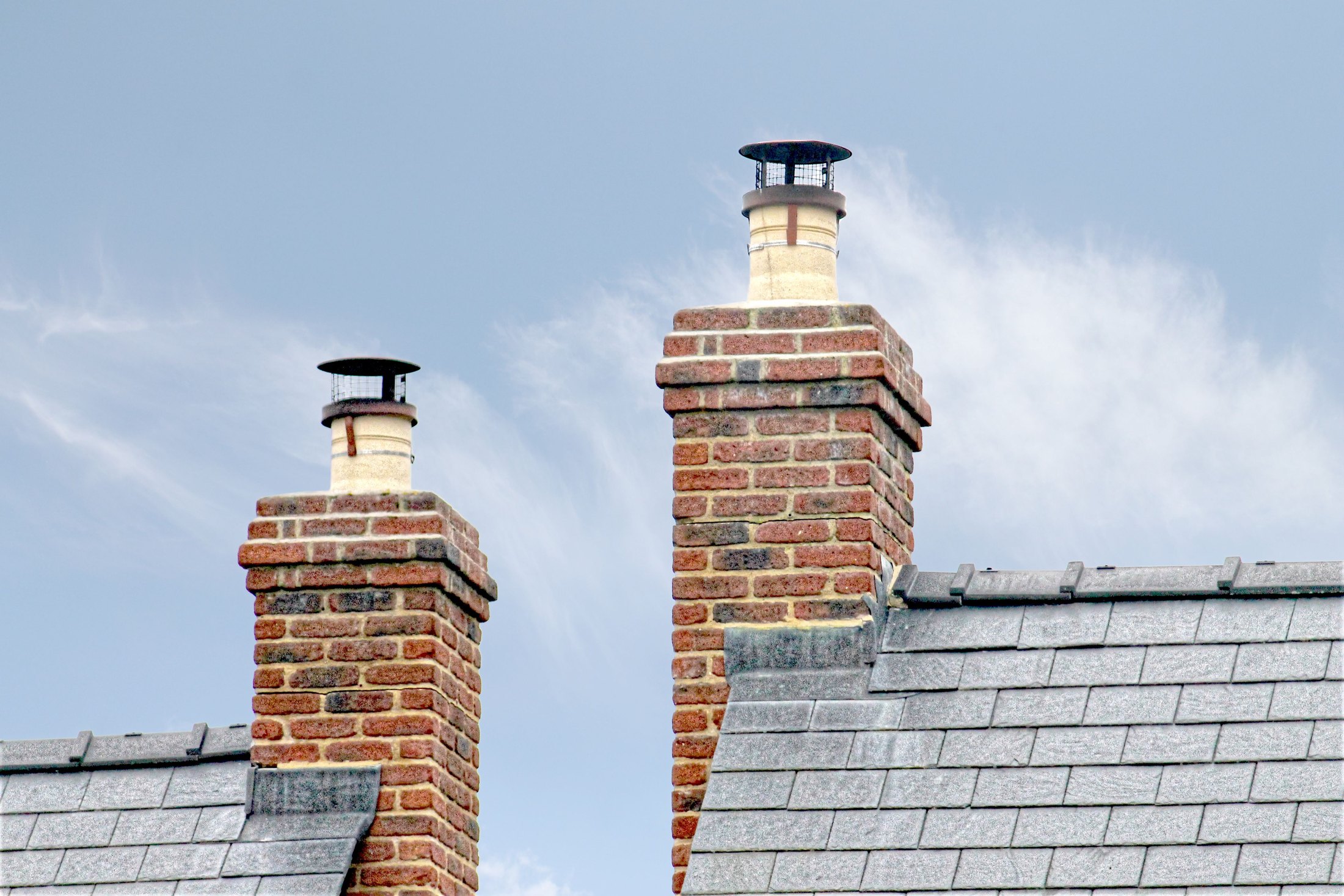
When the chimney is the leak. Water gets into a stack at the top as well as at the base: cracked flaunching round the pots, open joints in the brick or flint, a cracked mortar fillet where the tiles meet the stack. It runs down inside and shows on the chimney breast, which looks like a roof fault and is not one. We check the stack before touching the tiles round it. More detail sits on our chimney repairs page.
Flat roofs on extensions, porches and garages. Felt blisters and splits, GRP cracks along its edge trims, and EPDM lifts at an upstand or round the outlet. On a firm, dry deck a split can be patched or the roof overlaid. A deck that gives underfoot has taken in water and needs re-covering, which is flat roofing in Winterborne Stickland. Beside thatch, the method changes, as set out below.
After a storm. Verges, ridge ends and the eaves course lift first. We make the roof weathertight, take dated photographs of the damage for your insurer, and then price the repair. Water streaming down the wall below the eaves can be a gutter rather than the roof, which is fascias, soffits and guttering work. See emergency roof repairs for the first steps.
When to stop patching. If the nails have gone across a whole slope, battens crumble when a tile is lifted and the felt tears at a touch, each repair only moves the leak along. That is a re-cover, and our roofers in Winterborne Stickland page explains how it is done.
How it runs
From your call to a written price
One person to ring from the first visit to the last. The quote is itemised, not a figure on the back of a card: access, where the fault is and what is being opened up to reach it, each tile, slate, ridge or flashing being renewed and what with, making good, and disposal on separate lines, so you can compare it properly against anyone else's.
Nothing is left open or unusable overnight. The site is swept at the end of each day rather than the end of the job, and what comes out leaves with us. If something turns up once we start that nobody could have seen, you get a photograph and a price before we carry on.
Putting back the same tile, slate or lead is maintenance, even inside the Winterborne Stickland Conservation Area that Dorset Council drew over the village core. Swapping clay for concrete, or mortar for a plastic dry verge, is a change of material, and on a listed cottage read Dorset Council's page on listed building consent before anything is altered.
Cost
What decides the price of a roof repair
No rate per square metre, because a slipped tile over a porch and the same tile above a three storey gable are one repair and two very different jobs.
Getting to it. Here that might be a cottage in the conservation area whose front slope overhangs the street, a later detached house with a flat roofed garage beside it, or a converted farm building with one long unbroken slope. A tile over a porch or a bungalow eaves can often be reached from a ladder and a roof ladder. A ridge, a chimney or a valley on a two storey house usually wants a tower or a scaffold, so a small repair can still need a proper platform. The work at height rules decide that, which is why access is its own line on the quote and not hidden inside the repair.
Finding the cause, not the stain. Water runs along the battens and the underlay before it drips, so the mark on the ceiling is rarely under the fault. Tracing it back to a cracked tile, a lifted flashing, a perished valley or a ridge joint that has opened is part of the job, and a repair priced before anyone has looked is a guess.
What the repair uncovers. Lifting a few tiles shows the battens and the underlay around them. If they are sound the repair stays small. If the felt has perished or the battens have rotted, you get a photograph and a separate written price before anything more is done. Where patching stops being worth it is a conversation you have with the facts in front of you.
Comparing quotes? Ask what fault they actually found and where, whether access is included, what is being replaced and with what (a matched tile, new or reclaimed slate, which code of lead), whether the ridge and verge are being bedded in mortar or mechanically fixed, and what happens if more is found once the roof is open. Two quotes for the same job are usually two different jobs.
If it is leaking now
Water coming through a ceiling
Ring rather than use the form. Put a bowl under the drip, keep anything electrical away from the wet patch, and if a ceiling is bulging keep everyone out from under it. The first visit is about finding where the water gets in and making the roof weathertight, and the permanent repair is priced in writing once the fault can be seen properly. When you ring, tell us whether the drip shows only when rain comes from the south west, and whether your roof meets a thatched one, because both change what we look at first. Scheduled work runs Monday to Friday, 8am to 6pm. For anything urgent, ring rather than use the form, and if we cannot pick up we ring you back as soon as we can.
Next to thatch
When your roof joins a thatched one
Several listed cottages in the village are thatched, and where a tiled roof, porch or lean-to joins thatch, the repair changes. No flame goes near thatch. A flat roof under or beside it is patched with a cold-applied system, EPDM bonded with adhesive or GRP that cures without heat, and never with torch-on felt. Lead is cut, dressed and fixed mechanically, not welded up on the roof. If thatch is within reach, ask any quote how the work will be done.
Then find out which side the water comes from before anyone is paid. A leak at the junction can be the tiled side: a soaker, a cover flashing, a slipped tile at the abutment. Or it can be the thatch: a worn ridge, a thin coat, or the thatcher's detail round the stack. We check and photograph the tiled side and the lead. Thatching is a separate craft we do not take on, so if the fault is in the thatch we say so in writing and you need a thatcher. The stack above the thatch line, its pointing, flaunching, pots and any lead onto a tiled slope, is ours to repair.
Who you are dealing with
A local firm you can check
We cover Winterborne Stickland from North Street to the houses round the green, and out to Winterborne Clenston and Winterborne Houghton, all DT11 and about nineteen miles from our base in Boscombe. Dorset Council is the planning authority. You are dealing with Bournemouth Roofing & Building, the trading name of Bournemouth Roofing & Building Ltd, registered in England and Wales, company number 15471719, which you can look up in a minute. Thomas Hannen's business, and he is the one who comes out to price the job, not a salesman. A verified customer's 10 out of 10 on Checkatrade. The visit and the written quote are both free.
Nearby, and next door
Roof repairs near Winterborne Stickland
Nearby places we also cover for roof repairs, with straight-line distances from Winterborne Stickland, and the other trades we offer in Winterborne Stickland itself.
Roof repairs nearby
Our other trades in Winterborne Stickland
Everything we do in Blandford Forum Roof repairs, all areas Every area we cover
Questions
Questions about roof repairs in Winterborne Stickland
Is it worth patching, or has the roof had its day?
Patch it if the covering is sound and the trouble sits at an edge, a junction or the stack. Talk about re-covering when tiles or slates are failing across a whole slope and the battens are soft. You see the photographs before you decide.
Can you fix a roof while it is raining?
A temporary cover can go on in the wet, and tracing a leak is easier while it runs. Tile and slate work on a wet, steep slope is not safe, and mortar should not go on in rain or frost, so the proper repair waits for a dry day.
The house is listed. Can a slipped tile just be put back?
Yes, if it goes back like for like in the same clay or slate, fixed the same way. There are about twenty five listed entries in and around the village. On any of them, works affecting the character of a listed building need consent, so swapping to a concrete tile, a plastic valley or a dry verge is not a simple repair. Ask Dorset Council first. The quote names the materials so you can show them.
How do I know the repair was done properly?
You get photographs of the fault and of the finished repair, and the written quote names what was replaced and with what, so you can check one against the other. The Consumer Rights Act expects every service performed with reasonable care and skill, whoever you hire.
What does it cost to fix a roof leak?
That depends on where the fault is and how we reach it, so we do not guess before looking. The visit is free and the quote itemised. See how we price a job.
Free quote
Show us where the water is getting in
Send your postcode, the covering if you know it, and whether the house joins a thatched roof. We come out, look properly and put the repair in writing.