Roof repairs in Hyde
Slate, clay tile, lead and chimney repairs in Hyde, Hungerford and round Hyde Common, near Fordingbridge in the New Forest.
The site visit is free and so is the written itemised quote. Thomas Hannen prices every job himself.
Last updated
Roof repairs near Fordingbridge
One fault, found and mended
Yes, we repair roofs in Hyde, near Fordingbridge in SP6: slipped slates and clay tiles, loose ridges and verges, split lead, leaking chimneys and flat roof patches. We find the point where water gets in, mend that point, and put the price in writing after a free site visit.
If water is coming in now, ring 07435 839745 and say whether the roof above it is slate, clay tile or thatch.
A slate has slid down on to the gutter of a brick cottage and left a dark slot in the slope. A damp patch creeps down a chimney breast in wet westerly weather. Or the lean-to on an old cottage drips where it meets the wall.
We look from the lane and the garden, go up on a roof ladder where that is safe, and check the underside from the loft hatch. You get photographs of the fault and a written, itemised quote for mending it.
The repairs
What fails on Hyde's slate, clay and newer tile
The Park's appraisal for the Western Escarpment conservation area records the roofs round Hyde Common and Hungerford: plain clay tiles on the 18th century buildings, natural slate on the late Victorian brick cottages and the 1885 school with its slate spire, thatch on the older timber framed and cob cottages, and larger newer houses along the escarpment edge and at Furze Hill. Each fails in its own way.
Slates sliding out of line. A natural slate hangs on two nails, and on a roof well over a century old those nails are usually iron. When they rust through, the slate drops to the gutter or the flower bed. One or two go back with a tingle, a strip of copper or lead nailed to the batten in the gap below and folded up over the slate's tail. When slates are coming loose in runs across a slope, that is nail sickness: every nail has reached the same age, and a tingle on each slate just stacks up more patches. That slope wants stripping and re-slating, which is work for our roofers in Hyde.
Cracked and flaking slate. Poorer slate, and slate that has been walked on, cracks across or delaminates, the face lifting away in thin sheets. We replace it with natural slate of the same size and thickness, checked against the A, T and S codes for natural slate, and never a fibre cement copy on a slate cottage. Many old slate roofs have no underlay at all, only lime torching on the underside of the slates. Where it has dropped out you see daylight and grit in the loft, and it can be renewed without stripping anything.
Plain clay tiles letting go. A plain tile hangs on its nibs over the batten, with a nail every few courses. Old handmade tiles lose a nib to frost, or the timber pegs in a peg tile rot, and the tile slides out of its double lap. We slide the broken one out and hang a reclaimed handmade tile of the same colour and camber, held by a nail, hook or tingle to suit the batten. Scalloped and beaver-tail bands and decorative ridge tiles on the 19th century cottages are matched, never swapped for plain.
Ridges, hips and verges facing the open heath. Houses on the escarpment edge look west over the Avon valley and those round Hyde Common face open heath, so ridges, hips and verges take the weather head on. Mortar under the ridge cracks and washes out, then a ridge tile rocks and lets rain in at the joint. We lift the loose run, clean off the old bedding and rebed it with a mechanical fixing in every tile, as BS 5534 now expects, using a lime based mortar on soft old clay or slate. Most ridges are a day.
Concrete tiles on the newer houses. The appraisal says the modern houses along the escarpment, at Furze Hill and at Hungerford are built in non traditional materials, and they may well carry concrete interlocking tiles. A slipped tile, a verge that has shed its mortar or a cracked ridge joint is then the usual fault, and a clipped replacement tile, a dry verge or a dry ridge to BS 8612 puts it right with nothing left to wash out.
Lead where a newer roof meets an older wall. Several cob cottages here were extended in brick in the 19th century, and porches, lean-tos and extensions of every age lean against older walls. Each junction relies on step flashing and soakers, or on a mortar fillet that has cracked away from the wall. We cut the fillet out and dress new lead into the brick joints, or renew the soakers. Against a cob or thatched wall there is no brick joint to chase into, so the lead is dressed under a lime fillet instead, and no flame or hot work goes anywhere near straw. The thatch itself needs a specialist thatcher, because we do not thatch.
Split lead valleys. An old lead valley cracks along a fold or where its lengths were too long to move with the heat. Relaying it means lifting the slates or tiles each side, so allow one to two days.
Flat roofs on extensions and garages. A felt or GRP flat roof on an extension, garage or dormer gives way at a blister, a split at the upstand against the wall, or water ponding by the outlet. If the deck below is dry and firm, a split takes a few hours to patch. A deck that gives underfoot has soaked up water and needs relaying. More on flat roofing in Hyde.
When mending stops making sense. Slates slipping on every slope, clay tiles laminating across the roof, battens soft enough to push a screwdriver into: then a re-roof beats another winter of patches, and the quote prices both when it is close.
How it runs
From your call to a written price
One person to ring from the first visit to the last. The quote is itemised, not a figure on the back of a card: access, where the fault is and what is being opened up to reach it, each tile, slate, ridge or flashing being renewed and what with, making good, and disposal on separate lines, so you can compare it properly against anyone else's.
Nothing is left open or unusable overnight. The site is swept at the end of each day rather than the end of the job, and what comes out leaves with us. If something turns up once we start that nobody could have seen, you get a photograph and a price before we carry on.
In Hyde the planning authority is the New Forest National Park Authority, and putting back slate for slate or clay for clay is ordinary repair. If a covering is changing, a stack is coming down or the house is listed, read the National Park heritage and conservation guidance and speak to the Authority before we order anything.
Cost
What decides the price of a roof repair
No rate per square metre, because a slipped tile over a porch and the same tile above a three storey gable are one repair and two very different jobs.
Getting to it. Round Hyde that could be a single storey lean-to against a cob cottage, a late Victorian slate cottage with a stack on each gable, or a tall newer house on the escarpment edge. A tile over a porch or a bungalow eaves can often be reached from a ladder and a roof ladder. A ridge, a chimney or a valley on a two storey house usually wants a tower or a scaffold, so a small repair can still need a proper platform. The work at height rules decide that, which is why access is its own line on the quote and not hidden inside the repair.
Finding the cause, not the stain. Water runs along the battens and the underlay before it drips, so the mark on the ceiling is rarely under the fault. Tracing it back to a cracked tile, a lifted flashing, a perished valley or a ridge joint that has opened is part of the job, and a repair priced before anyone has looked is a guess.
What the repair uncovers. Lifting a few tiles shows the battens and the underlay around them. If they are sound the repair stays small. If the felt has perished or the battens have rotted, you get a photograph and a separate written price before anything more is done. Where patching stops being worth it is a conversation you have with the facts in front of you.
Comparing quotes? Ask what fault they actually found and where, whether access is included, what is being replaced and with what (a matched tile, new or reclaimed slate, which code of lead), whether the ridge and verge are being bedded in mortar or mechanically fixed, and what happens if more is found once the roof is open. Two quotes for the same job are usually two different jobs.
If it is leaking now
Water coming through a ceiling
Ring rather than use the form. Put a bowl under the drip, keep anything electrical away from the wet patch, and if a ceiling is bulging keep everyone out from under it. The first visit is about finding where the water gets in and making the roof weathertight, and the permanent repair is priced in writing once the fault can be seen properly. When you ring about a Hyde roof, say whether it is slate, clay tile or a tiled roof beside thatch, and whether the damp shows on a chimney breast, so the first visit brings matching material. Scheduled work runs Monday to Friday, 8am to 6pm. For anything urgent, ring rather than use the form, and if we cannot pick up we ring you back as soon as we can.
Chimneys in the conservation area
Mend the chimney, keep the pots
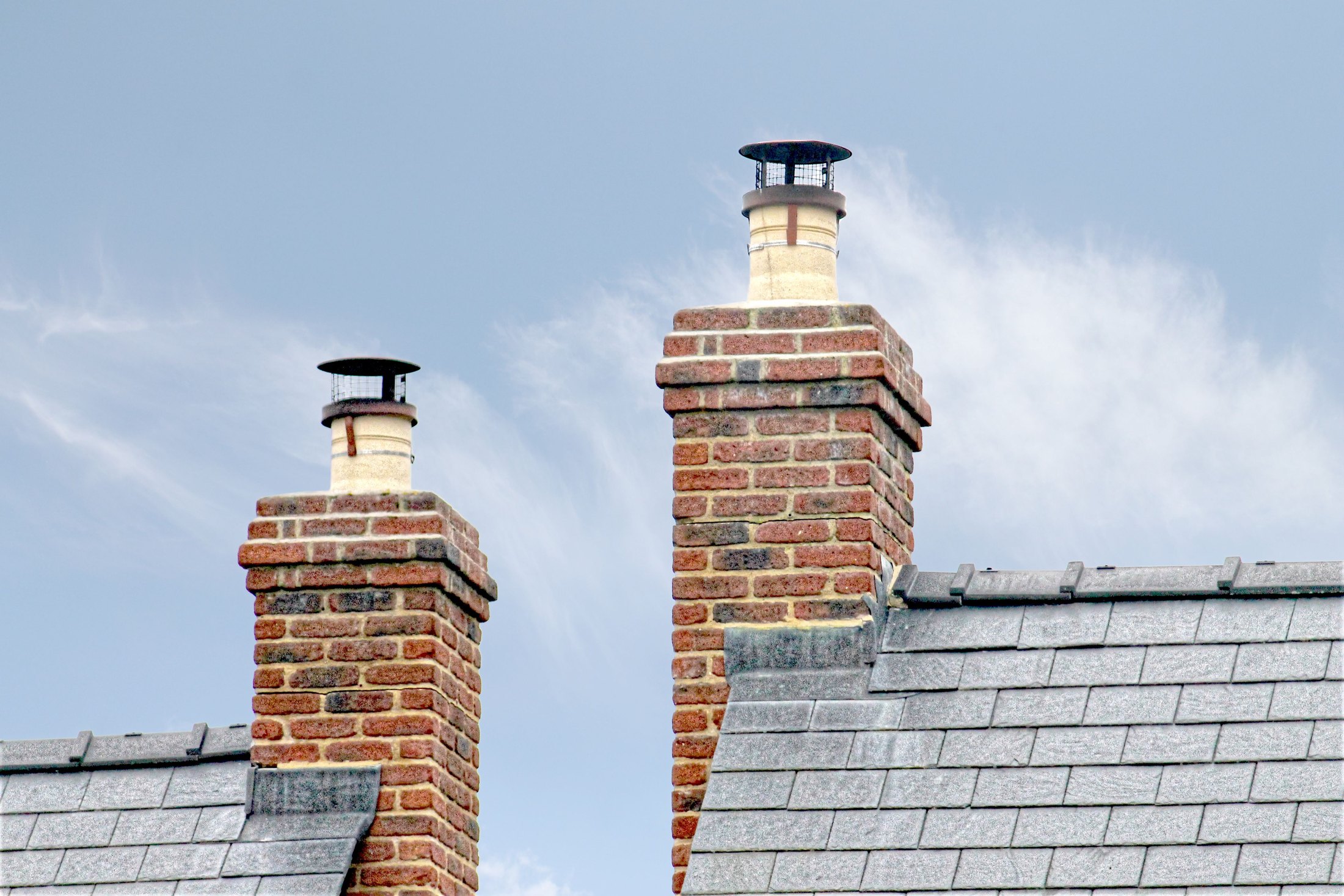
When an unused stack leaks, the cheap answer is to take it down below the roof line and tile over the hole. Around Hyde, think twice. The Park's appraisal for the Western Escarpment conservation area says chimneys make an important contribution to the skyline, and that every attempt should be made to retain both stacks and pots. It notes pots here ranging from local handmade ones to very distinctive Fareham pots, and describes Hungerford House on the escarpment edge by its large decorative chimney stacks.
So the repair starts by finding where the stack actually lets water in. It is usually the step flashing down the sides, the lead back gutter on the uphill face, flaunching cracked open round the pots, a pot with no cap letting rain straight down the flue, or soft old brick with open joints soaking up rain. We re-flash and re-flaunch, fit a ventilated cowl to a disused flue, and repoint soft brick in lime mortar, since hard cement traps water in the brick and makes the face spall. Pots come down by hand and go back on fresh flaunching. More on chimney repairs.
Check with the Park before a stack is reduced or removed. There are 21 listed entries around Hyde, and the law says works affecting the character of a listed building need consent, so a listed stack is not touched without it. The same appraisal discourages concrete tiles in the conservation area because they look heavier than clay and slate, so a slipped clay tile or slate goes back as clay or natural slate.
Who you are dealing with
A local firm you can check
We cover Hyde, Hungerford, Hyde Common, Stuckton and North Gorley, all SP6, 12.7 miles from our base in Boscombe. The New Forest National Park Authority handles planning here, and New Forest District Council handles building control. You are dealing with Bournemouth Roofing & Building, the trading name of Bournemouth Roofing & Building Ltd, registered in England and Wales, company number 15471719, which you can look up in a minute. Thomas Hannen's business, and he is the one who comes out to price the job, not a salesman. A verified customer's 10 out of 10 on Checkatrade. The visit and the written quote are both free.
Nearby, and next door
Roof repairs near Hyde
Nearby places we also cover for roof repairs, with straight-line distances from Hyde, and the other trades we offer in Hyde itself.
Roof repairs nearby
Our other trades in Hyde
Everything we do in Ringwood Roof repairs, all areas Every area we cover
Questions
Questions about roof repairs in Hyde
What decides what a roof repair costs in Hyde?
Where the fault is, how we reach it and what goes back. Reclaimed handmade clay and natural slate take sourcing that a stock concrete tile does not. Each goes on its own line of the written quote. See how we price a job.
How can I check a roofer is genuine before they go up?
Ask for things you can check. Our company number is 15471719, and Companies House shows who runs the firm. Expect a written, itemised quote after a proper look, and photographs before any extra work. Be wary of a knock at the door after a gale.
Is there a best time of year to get a roof repaired?
Any time the roof is dry enough to work on. Slates, tiles and lead go on in most dry weather, but mortar and lime need frost free days to cure, so in a cold snap we make the roof weathertight first and bed the ridge or re-flaunch the stack once the frost has lifted.
Can you mend the tiled lean-to on my thatched cottage?
The lean-to, its lead against the cob or brick, and the chimney, yes, with no flame near the straw. The thatch itself goes to a specialist thatcher.
Free quote
Tell us which part of the roof is letting water in
Send your Hyde postcode and what you have spotted: a slipped slate, a damp chimney breast or a drip by the lean-to. We come out, look properly and put the repair in writing.