
Driveways and patios in Freshwater and Totland
Block paving, resin bound, stone and porcelain patios, steps and terracing across Freshwater, Totland and PO40. Free site visit, free written quote.
The site visit is free and so is the written itemised quote. Thomas Hannen prices every job himself.
On an older cottage at Freshwater and Totland the height of the paving matters more than the material on it. These walls are solid, many were built with no damp proof course at all, and a path or patio laid too high against one puts water into the house rather than taking it away.
Three jobs make up most of what we do over here. A patio or path that has crept up over the years, one layer laid on top of another, until it sits level with the floor inside and the wall above it has gone dark.
A drive that has rutted and washed on a plot that slopes towards the sea, with the loose stone collecting at the bottom of it. And flags or block paving that have rocked and dished, so there is a puddle by the door and a trip on the way to it.
None of that is guesswork to diagnose. The free site visit is a spade, a level and a look inside as well as out: we find where the floor level sits, what the ground beneath the surface is doing and how far the old build-up goes down. You are told on the spot whether it is a re-lay, a full dig out or a level that simply has to come down, and then the same in writing.
The work
West Wight drives, terraces and sloping gardens
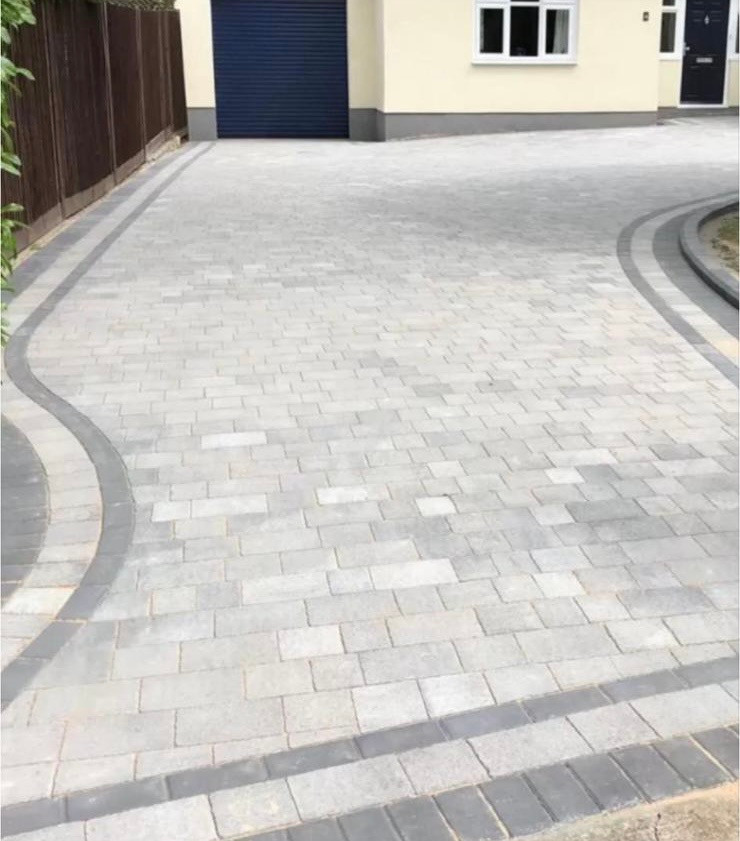
Taking a raised level back down. More than a quarter of the housing across Freshwater and Totland predates 1919, and on those houses the ground outside has crept up one surface at a time until the paving sits hard against the wall. The old surface and everything under it comes out, the ground is dug back to a proper formation, and the new paving is set low against the wall with a fall running away from it. Where the level cannot drop far enough we leave a gravel margin or a channel drain along the wall instead of butting a solid surface up to old brick or stone. Spoil goes off the plot by skip or grab lorry rather than being spread on the garden, which is how the levels crept up in the first place.
Gardens that fall away. A lot of Totland sits on a slope, and a sloping plot is a terracing job before it is a paving job. That means a retaining edge built to hold what is behind it, drainage taken out from behind the retained face so water is not building pressure against it, steps with a consistent rise, and each terrace laid to its own fall. Done properly you get a level place to sit. Done as slabs on a slope you get a rocking patio and a wall that leans within a couple of winters.
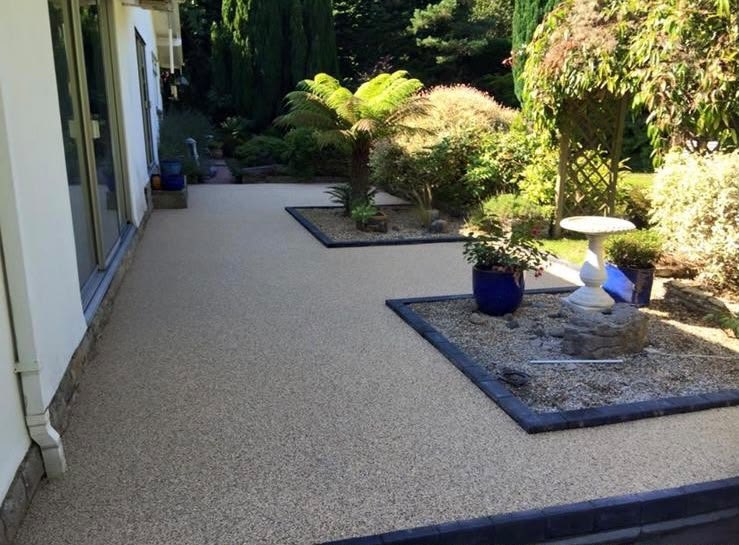
Loose gravel and shingle are everywhere here and they wash downhill in the weather this coast gets. The fix is an excavation, a geotextile membrane, a compacted sub-base, an edge restraint haunched in concrete, then either resin bound or a bound apron at the entrance so the top course stays where it was put. Where a drive takes a van or a trailer, tarmac or machine-laid concrete does the heavy end of it. Nearly three in ten homes here are bungalows, and on those the step at the door is shallow to start with, so the finished level matters more than the material laid on it.
Riven natural stone and textured porcelain go on a full mortar bed, joints pointed rather than brushed, laid to a fall of about one in eighty. Smooth sawn slabs look right and go slippery in the shade, and everything greens over faster on a plot that catches the sea air, so we put the grip where the walking is. Some gardens here drain freely and some hold on to it for days. Where infiltration is poor a soakaway needs a percolation test rather than an assumption, and the answer may be a permeable build-up or a positive outfall instead. Approved Document H is what that design is set against, and getting it right is what stops a new patio ponding and staining in its first winter.
How it runs
From your call to a written price
The quote is itemised: excavation, muck away, sub base, edgings, the surface and the drainage on separate lines, so you can compare it against anyone else's. Paving round a house is normally permitted development, with the front garden rule as the catch: more than five square metres of impermeable surface at the front needs planning permission unless the water drains to a soakable area on your own land, which Planning Portal guidance on paving a front garden explains. There are getting on for thirty listed entries across Freshwater and Totland, and the Isle of Wight Council is the planning and building control authority here.
Cost
What decides the price of a driveway
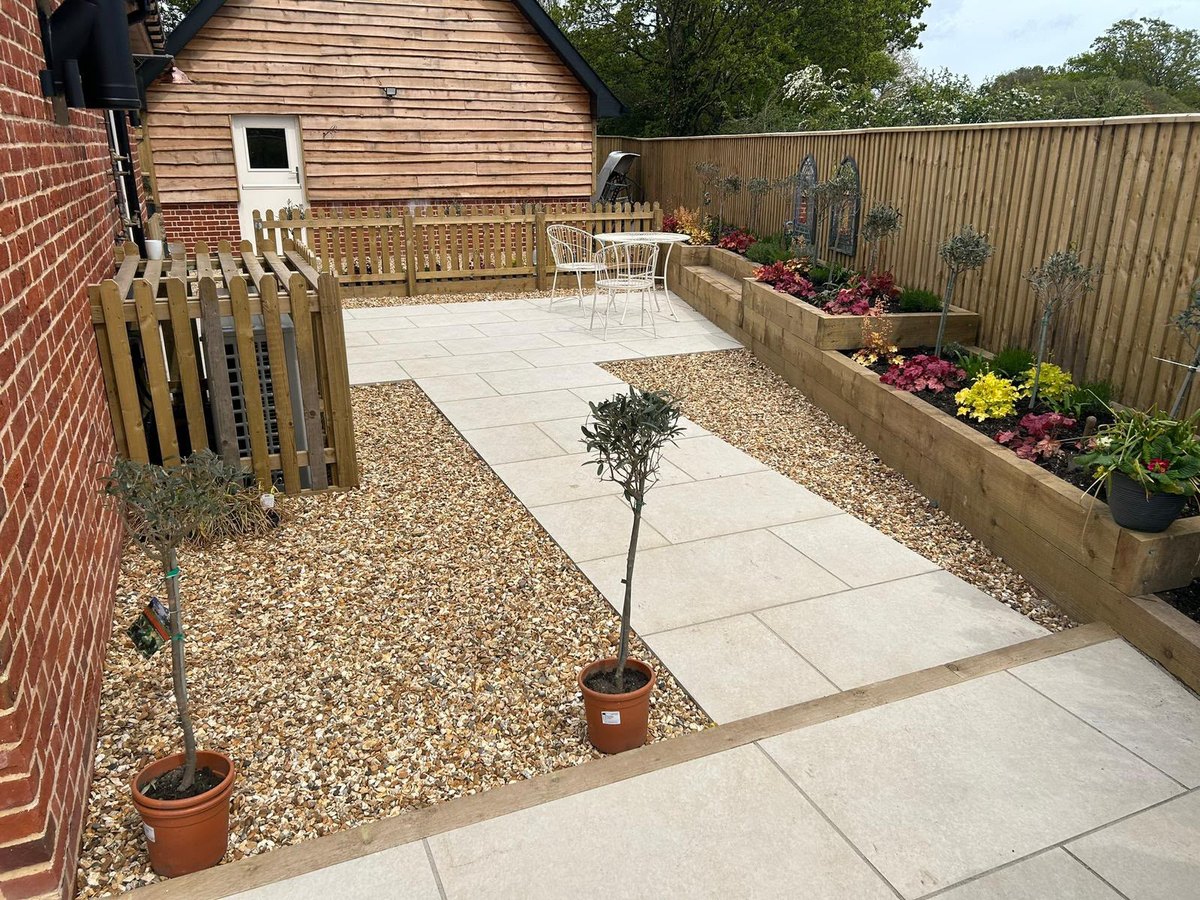
No rate per square metre. What is under it decides more of the cost than what goes on top. A Victorian cottage on a lane with no room to stand a lorry, a bungalow with a straight run in off the road, and a house on a slope where everything goes down by barrow are three different jobs. Some gardens here drain freely and some hold water for days, so the outfall is priced rather than assumed. Ask how deep the dig is, what sub base goes in, where the water goes and whether the edgings are haunched.
If it is urgent
A trip hazard, or a drive that floods
Ring rather than use the form. A slab that has lifted, a bay sunk by a door or a gully that has stopped taking water will not wait. The first visit is about making it safe and getting the water going somewhere. Here it is usually a retaining edge starting to lean, or a drive washing its surface downhill. The phone is answered 24 hours for emergencies; scheduled work runs Monday to Friday, 8am to 6pm.
Worth knowing
Old walls, and the level you lay against them
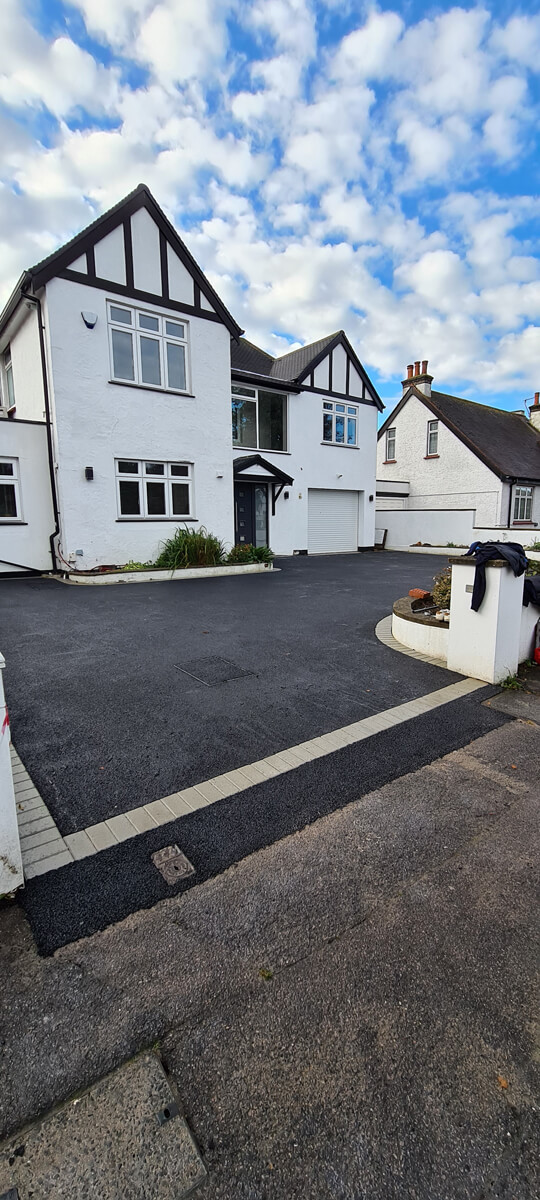
A good quarter of the housing here was built before the First World War, and much of that is solid wall with nothing between the brick or stone and the ground. On a wall like that, damp is not a defect, it is physics: the wall takes water up and lets it go again through its face. Lay an impermeable patio tight against it, at or above the level of the floor inside, and you have blocked the way out and given the water a way in.
That is why the first thing we measure on an old cottage is not the area but the height, and why the finished paving goes down at least a couple of courses below the internal floor, or the damp proof course where a later one exists. Where the geometry genuinely will not allow it, the answer is a gravel filled margin or a slot drain against the wall so the face can still breathe and nothing is held against it.
The useful part of this is that it works in reverse. If a previous owner has already built the path up, and the room behind it now has a tide mark, digging that level back down is often the cheapest and most permanent thing anybody can do about it, and it is paving work rather than specialist treatment. Look for the clue outside: layers of different paving stacked at the wall, or a threshold that used to have a step and no longer does. Two other things follow from the age of the stock.
Front boundary walls here are often as old as the house, so opening one up for a drive is a proper rebuild rather than a knock through, and Planning Portal guidance on garden walls sets out where permission comes into that. And if the house is listed, work in its curtilage needs consent before the dig, not after, which is the sort of thing the permissions that sit outside planning covers.
Who you are dealing with
A local firm you can check
We cover Freshwater, Totland, Norton and Colwell and out towards Yarmouth across the PO40 addresses, and the Isle of Wight Council is the planning and building control authority for this address. Bournemouth Roofing & Building Ltd, registered in England and Wales, company number 15471719, which you can look up in a minute. Thomas Hannen's business, and he is the one who comes out to price the job, not a salesman. A verified customer's 10 out of 10 on Checkatrade. The visit and the written quote are both free.
Questions
Freshwater and Totland questions we get asked
Our cottage predates 1900. Does that change the patio?
It changes the level and the edge detail. Over a quarter of the housing here, 27.5% of it, went up before 1919, and those walls are solid with no damp course protecting them. So paving finishes well below internal floor level and falls away from the wall, and we leave a gravel margin against the stonework rather than butting slabs and mortar hard up to it. Cement pointing tight against an old wall traps water in it.
Will the patio drain, or does this ground hold water?
Freshwater sits on ground with slightly impeded drainage, which means water moves through it but never quickly. A soakaway can still work, though it needs a percolation test first, and the answer you get in a wet February is not the answer you get in August. Where the test comes back slow we fall the paving to a channel drain and pipe it to a positive outfall rather than letting it stand.
Does the Solent designation hold up a patio job?
Not for paving. The Solent catchment rules engage where a scheme adds overnight accommodation, so a garden room with a bed in it is a different conversation from a terrace outside the back door. Isle of Wight will still want the surface water dealt with on your own land. That is the part people trip over, because the drainage detail is what turns a simple patio into a job needing thought.
What holds up best on the exposed side of the house?
Whatever you lay, the failures start at the edges rather than in the middle, because the wind and driven rain come in from the south west and work at anything with a joint or a step in it. On that side we bed the perimeter units on a full mortar bed, keep the joints tight and set the levels so water is pushed off the corner instead of running along the wall line.
Can we reuse the old stone edging in the new patio?
If it comes up in one piece, keep it. Old kerbs and thresholds here are worth saving because a fresh machine cut edge beside a weathered wall looks wrong for a long time before it dulls down. We lift them by hand, stack them out of the way, clean the old bedding off the backs and reset them at the new level. Anything already broken through gets used as fill under the base.
Nearby, and next door
Driveways and patios near Freshwater and Totland
Driveways and patios nearby
Our other trades in Freshwater and Totland
Everything we do in Lymington Driveways and patios, all areas Every area we cover
Free quote
Get a written price for your Freshwater or Totland job
A free site visit, levels taken inside and out, and an itemised written quote with the method on it.