
Plastering in Bournemouth
Skimming, ceilings, replastering and external render across Bournemouth and BH8. Free visit, itemised written quote.
The site visit is free and so is the written itemised quote. Thomas Hannen prices every job himself.
If it is inside your own flat or house, you can book it today and most rooms are a day or two. If it is the outside of a converted house or a block in Bournemouth, the first job is finding out who owns that wall, because that decides who can instruct the work rather than what it costs.
Most of what comes in from this postcode is one of three things. A room in a bay-fronted house that has been papered since the seventies and now wants stripping and skimming. A ceiling that has cracked, sagged or come down after a leak upstairs.
Or a brown stain that keeps bleeding back through fresh paint on a chimney breast, no matter how many coats go on it. We are a mile and a half away, so we can usually look the same week, and the site visit and the written quote both cost nothing.
The work
A bay front is six reveals and no square angles
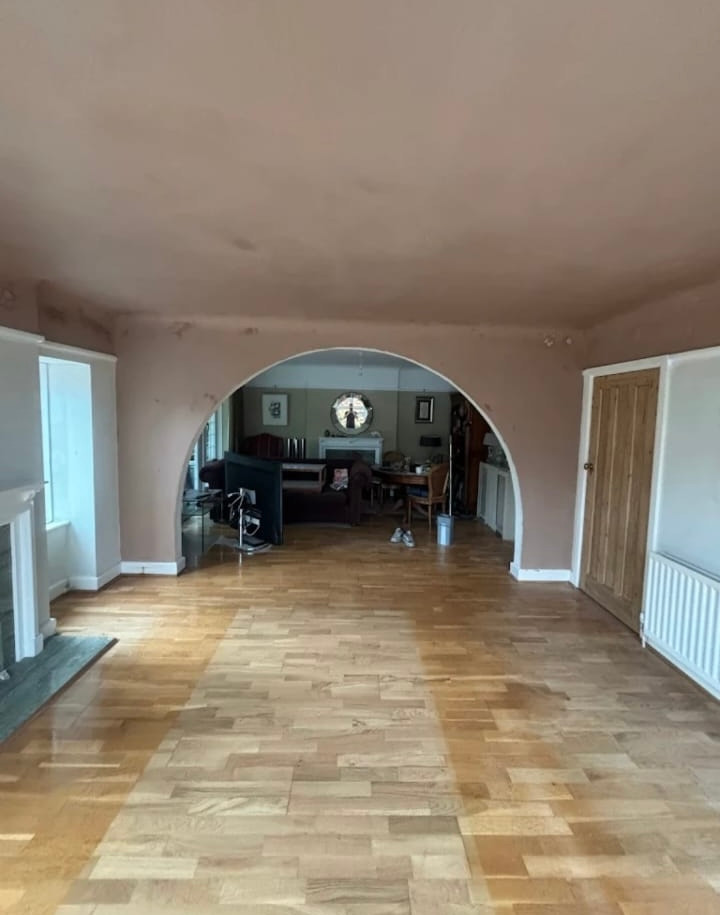
The bay-fronted houses. The streets around Charminster and Winton are full of them, built much the same way: brick walls with a browning or hardwall backing coat and a finish over it, lath and plaster to the upstairs ceilings, coving or a picture rail, and a bay at the front. The bay is the awkward part. Three windows means six reveals, none of the angles are square, and it wants a stop bead at every frame and an angle bead on every return or the edges break up within a year. Elsewhere it is ordinary work: take off whatever sounds hollow, a bonding coat on the patches, PVA where the suction is high, then skim the room as one surface.
Upstairs in these houses is usually lath and plaster and downstairs is often plasterboard with an artex finish from a later decade. A sound lath ceiling can be fixed back to the joists and skimmed. One that sags under your hand comes down and goes back in board with tape and joint. Artex takes a skim once sealed, or gets overboarded where the texture is deep, and we do not sand it, because anything put up before 2000 may contain asbestos.
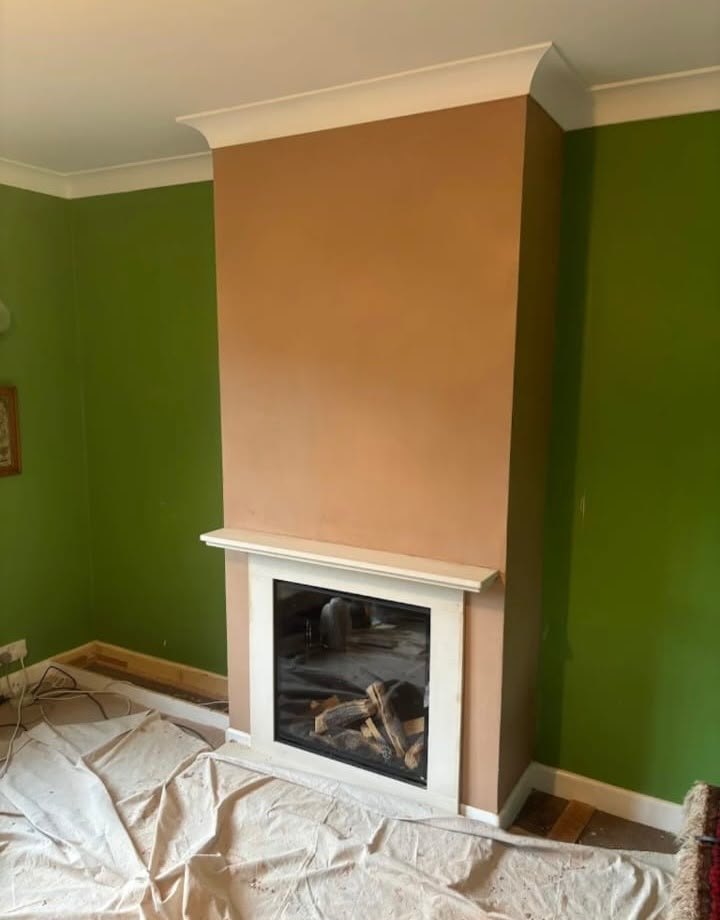
Stained chimney breasts. We get this one constantly around here. A fireplace was blocked up years ago, the flue capped at the top with nothing left to ventilate it, and now damp and soot salts are pulling through the plaster and colouring your paint brown or yellow. Sealing it with paint never works. The flue wants a vent at both ends first, then the affected plaster comes off and goes back with a backing coat made to hold salts back, or a board on battens with a gap behind it.
Half the homes on this patch are flats, and a lot of them are these same houses divided up. That work is dry lining and stud partitions, but the ceiling between two flats is a fire and sound separating floor: it goes back as a proper build-up, not one sheet of board, and building control holds it to the fire and sound standards rather than to whatever was there before. Outside, being under three kilometres from the water changes the specification rather than the method. Salt air keeps a wall damp between showers and eats galvanised beads and fixings from the edge in, so beads want to be stainless or plastic. A tired elevation is better recoated over a mesh basecoat with a primer and a silicone thin coat, or a monocouche where you want the colour carried through the material rather than painted onto it.
How it runs
From your call to a written price
Same team from the first visit to the last, one person to ring, and nobody sub-contracted in. The quote is itemised rather than one figure on the back of a card: preparing and protecting the room, any board or backing coat, the beads, the finish coat, making good and disposal on separate lines. If something turns up behind the old finish that nobody could have seen, you get a photograph and a price first. Skimming and replastering inside your own home is not development. No conservation area covers this part of Bournemouth and only a handful of listed buildings sit near it, though the council keeps the list if you want to check the boundaries. What changes the answer round here is who owns the wall.
Cost
What decides the price
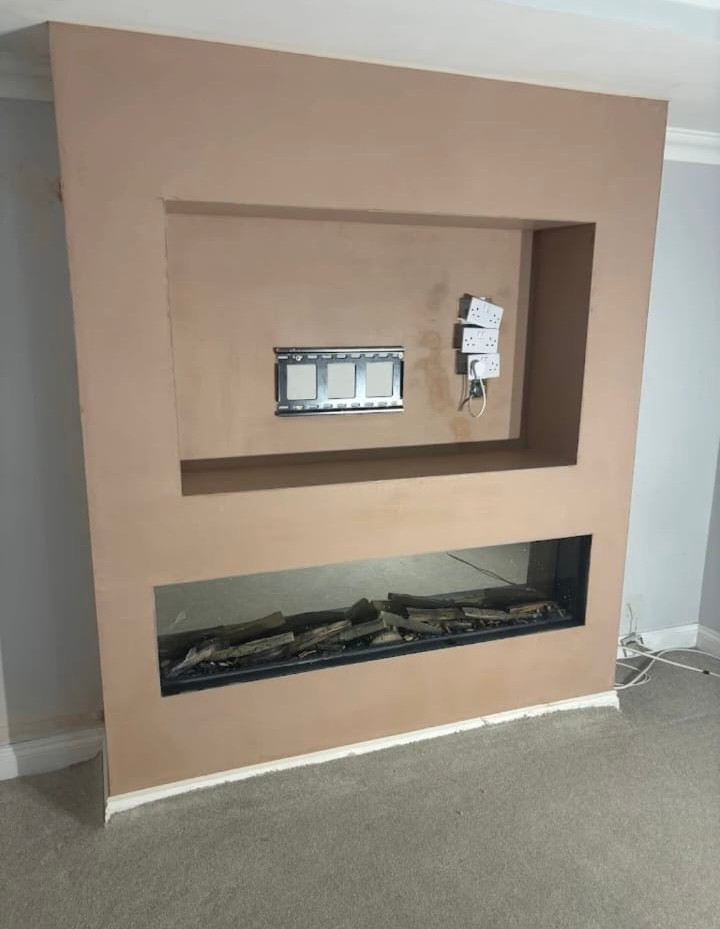
No rate per square metre, because the square metres are the easiest thing to measure and the least useful thing to know. A sound wall that only wants a skim is a different job from one where the backing coat has blown and has to come off back to the masonry. A bay-fronted semi with a side alley, a top floor flat up two flights with a turn in the stairs, and a house split into three where everything comes past somebody else's front door are three different jobs before we start. Outside, a bay or a gable brings a tower or a scaffold in as its own line. Ask any quote who moves the furniture, and how long it wants for drying before a mist coat goes on and you can decorate.
If it has come down
A ceiling down, or plaster blown off the wall
Ring rather than use the form. A ceiling that has cracked and dropped goes to the front of the queue. We are a mile and a half away, so this is normally same day. If it is a top floor ceiling in a converted house, ring whoever manages the building the same afternoon as you ring us, because the cause is nearly always above your ceiling rather than in it.
Worth knowing
Inside the flat is yours. The outside almost certainly is not
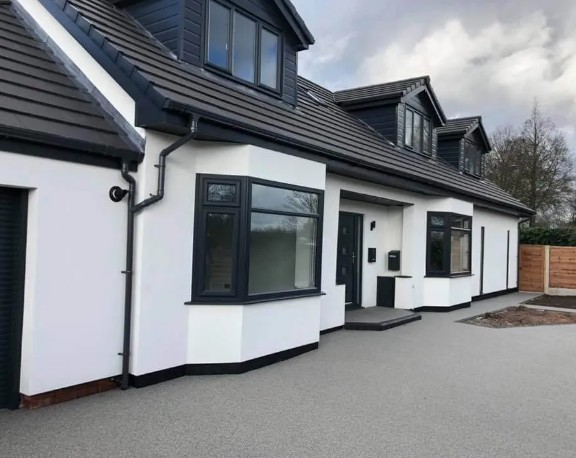
Half the homes in this part of Bournemouth are flats or maisonettes, so before we price anything we often have to work out who owns the surface in question. Inside a flat, the plaster on your walls and ceilings is normally yours to deal with under the lease, so if you want a room stripped and skimmed you can simply book it and nobody else needs asking.
Outside is a different thing. The external walls, the render, the structure and the communal stairwell belong to the freeholder and get paid for out of the service charge. So a leaseholder looking at cracked render under a bay, or a stain spreading across a shared landing ceiling, is not the person who can instruct that work, however much they want it done.
If you are the freeholder, or you sit on the residents' company, one thing is worth knowing before you start collecting quotes. Where the work would cost any single leaseholder more than £250, the leaseholders have to be formally consulted first, under section 20 of the Landlord and Tenant Act 1985.
There are notice periods inside that process, so rendering a block is something to start in spring rather than in November. We will come and look either way and put the specification and the price in writing so you have something to circulate, whether or not we end up doing it. And if the damage inside your flat came from a defect outside it, that written report is usually the thing that gets the freeholder moving.
Who you are dealing with
A local firm you can check
We cover Charminster, Winton, Springbourne, Queen's Park, Littledown and the rest of BH8. Bournemouth Roofing & Building Ltd, registered in England and Wales, company number 15471719, which you can look up in a minute. Thomas Hannen's business, and he is the one who comes out to price the job, not a salesman. A verified customer's 10 out of 10 on Checkatrade. The visit and the written quote are both free.
Questions
Bournemouth questions we get asked
I lease my flat. Can I instruct external render myself?
Usually not. Half the dwellings here, 50.1%, are flats or maisonettes, and in a leasehold block the outside walls belong to the freeholder and are maintained out of the service charge. The freeholder also has to consult leaseholders before major works, so it is not a decision one flat makes on its own. Inside your own demise is different, and a ceiling or a wall in your flat is yours to sort.
Does being under three kilometres from the sea matter?
For anything metal in the wall, it does. At 2.9km from the coast salt reaches the render as fine spray and settles on it, and salt holds moisture, so the surface never dries fully between showers. Beads and fixings corrode from a cut edge inwards and lift the coat off in a line above them. On the seaward elevation we use stainless and plastic rather than galvanised steel.
Our thirties house has a rigid render. Is that a problem?
It can become one. Inter-war stock accounts for 19.8% of the housing here, and where those walls still carry their original hard sand and cement, the render has no movement in it while the wall behind has been shifting with every season since it was built. Cracks show at the corners of openings first. Patching a rigid render with more of the same puts the crack back in the same place.
How soon can someone come and look at the wall?
Quickly. The yard is 1.7 miles from here, so it is not a visit that needs planning around. Thomas Hannen comes out himself, looks at the wall and writes the quote, which means nothing is lost between the person who saw it and the person who priced it. Both the visit and the written quote are free and the quote is itemised. VAT goes on top, as the firm is a limited company.
Are there listed buildings in this part of Bournemouth?
Seven entries in this area, and the ones people recognise are the Roman Catholic Church of the Annunciation and the Church of St Alban. There is no conservation area over it, so for ordinary houses and blocks the external finish is not a heritage question, and Bournemouth, Christchurch and Poole would only be involved if the work needed permission in its own right. Check the address if the building is unusual.
Nearby, and next door
Plastering and rendering near Bournemouth
Plastering and rendering nearby
Our other trades in Bournemouth
Everything we do in Christchurch Plastering and rendering, all areas Every area we cover
Free quote
Get a price for plastering in Bournemouth
Tell us the address and which rooms. We will come out, look properly, and put an itemised price in writing. No charge, and no obligation.