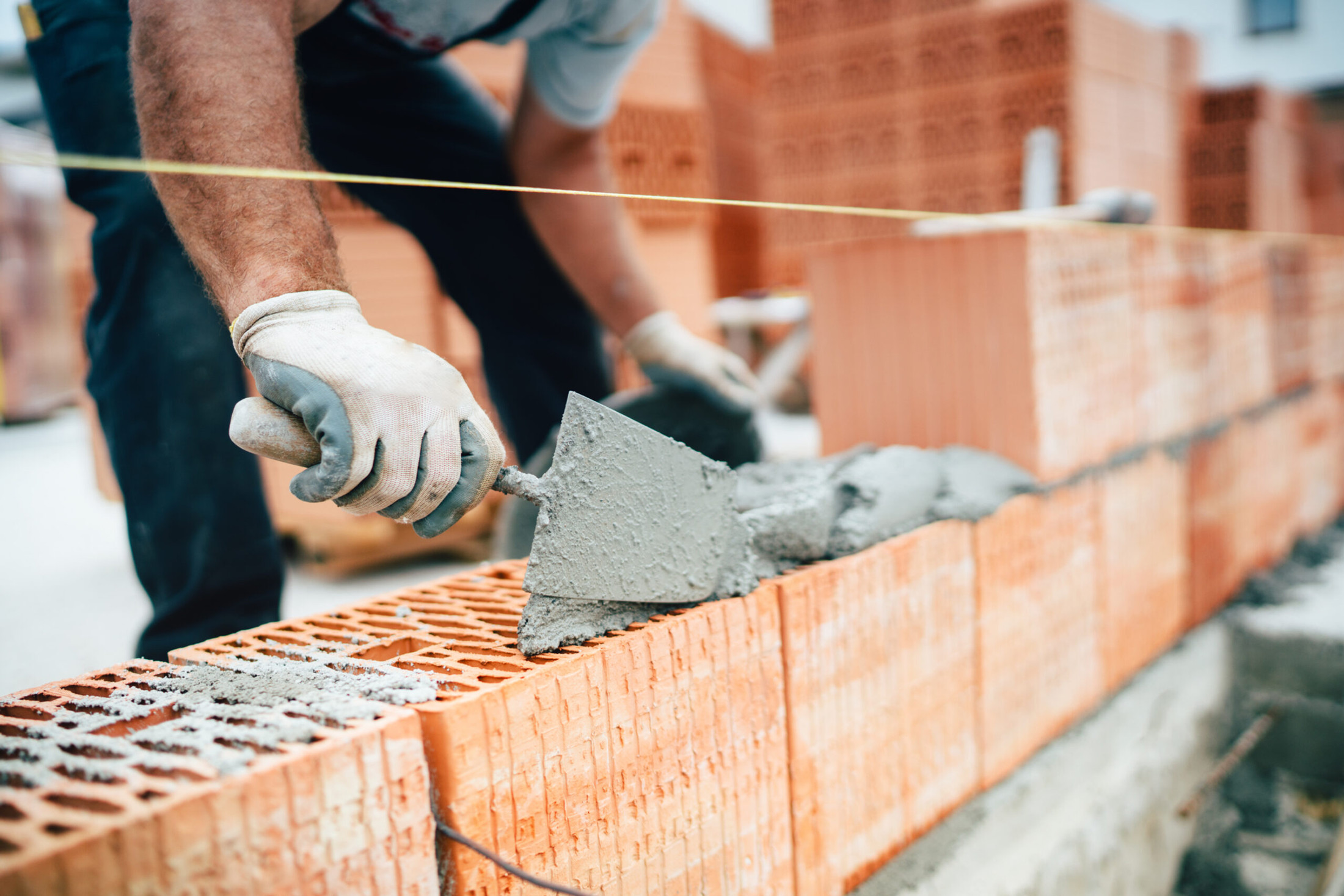
Bricklaying and repointing in Bournemouth
Repointing, wall tie repairs, brick replacement and garden walls across Charminster, Winton and the rest of BH8.
The site visit is free and so is the written itemised quote. Thomas Hannen prices every job himself.
A horizontal crack running along the same mortar course, right across a Bournemouth gable, is almost never subsidence. It is the wall ties rusting inside the cavity and lifting the brickwork as they go, and it is a repair you can have done without taking the wall down.
The brickwork round here is mostly inter war and post war cavity work, a lot of it in large houses that have since been split into flats, and it tells you when it has had enough in three or four ways. Joints that have weathered back until water sits in them.
A line of cracking that runs level along the wall rather than stepping up through it. Brick faces flaking off below a window or behind a downpipe. A front garden wall on the pavement that has been shunted or pushed by a street tree.
We are a mile or two away, so coming to look at it is easy and it is free. We get up close to the wall, survey what is actually failing rather than what shows from the road, photograph it and put it in writing. Most of what we find is a repair. When it is not, we say so plainly rather than quoting for a rebuild you may not need.
The work
What we do on the walls around Charminster and Winton
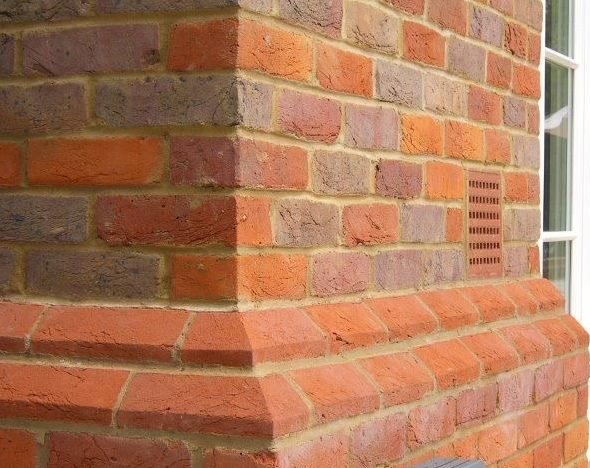
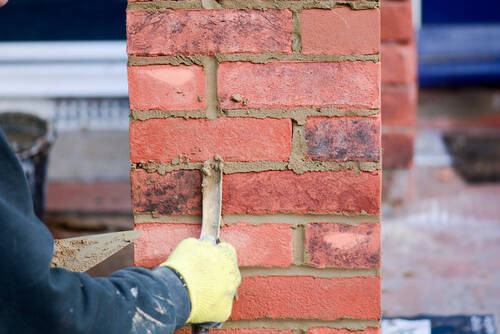
Repointing an inter war house. A fifth of the housing around Winton and Charminster is inter war, and the mortar on a 1930s wall was mixed to be softer than the brick, so it is meant to wear and after ninety odd winters on the weather side it has. We rake out to about twice the joint width, by hand where the brick is soft enough that a disc would damage the arrises, and point back in a mix matched to the original for sand, colour and strength, finished to the profile the wall already has, which on this stock is usually weather struck or bucket handle rather than flush. A gable and a chimney together are days rather than weeks.
Bays, ties and blown faces. The bay is the part of one of these houses that gets everything: rain off a small flat roof, a gutter that overflows onto it, and a structure carried on brick piers and a lintel with very little to spare. Cracked joints where the bay meets the main wall, a dropped lintel over the bay window and spalling brick at the corners are all common here. Wall ties are the job people misread most often. Steel that corrodes expands and lifts the joint above it, so you get regular horizontal cracking at roughly every sixth course, worst on the elevation that takes the weather, and it is repaired by fitting new stainless ties through the wall and making the joints good rather than the rebuild people fear when they first see it. Blown faces cluster below sills, behind downpipes and in the courses above the damp proof course where a drive or a patio has been laid up against the house.
Half the dwellings here are flats, a lot of them in converted houses, and their large stacks often serve nothing at all now but still take weather from every side, so the joints and the flaunching go and the water they let in comes out on a top floor wall. Repointing a stack, renewing flaunching or taking one down below the roof line wants proper access, usually a scaffold rather than a tower, and it is worth doing all of it in one visit. We are close enough to the sea here that a fixing into an outside wall goes in stainless rather than galvanised. Walls onto the pavement take knocks from cars and push from street tree roots, and where one is shared with next door the Party Wall etc. Act 1996 gives your neighbour a say that is better sorted before the job than during it.
How it runs
From your call to a written price
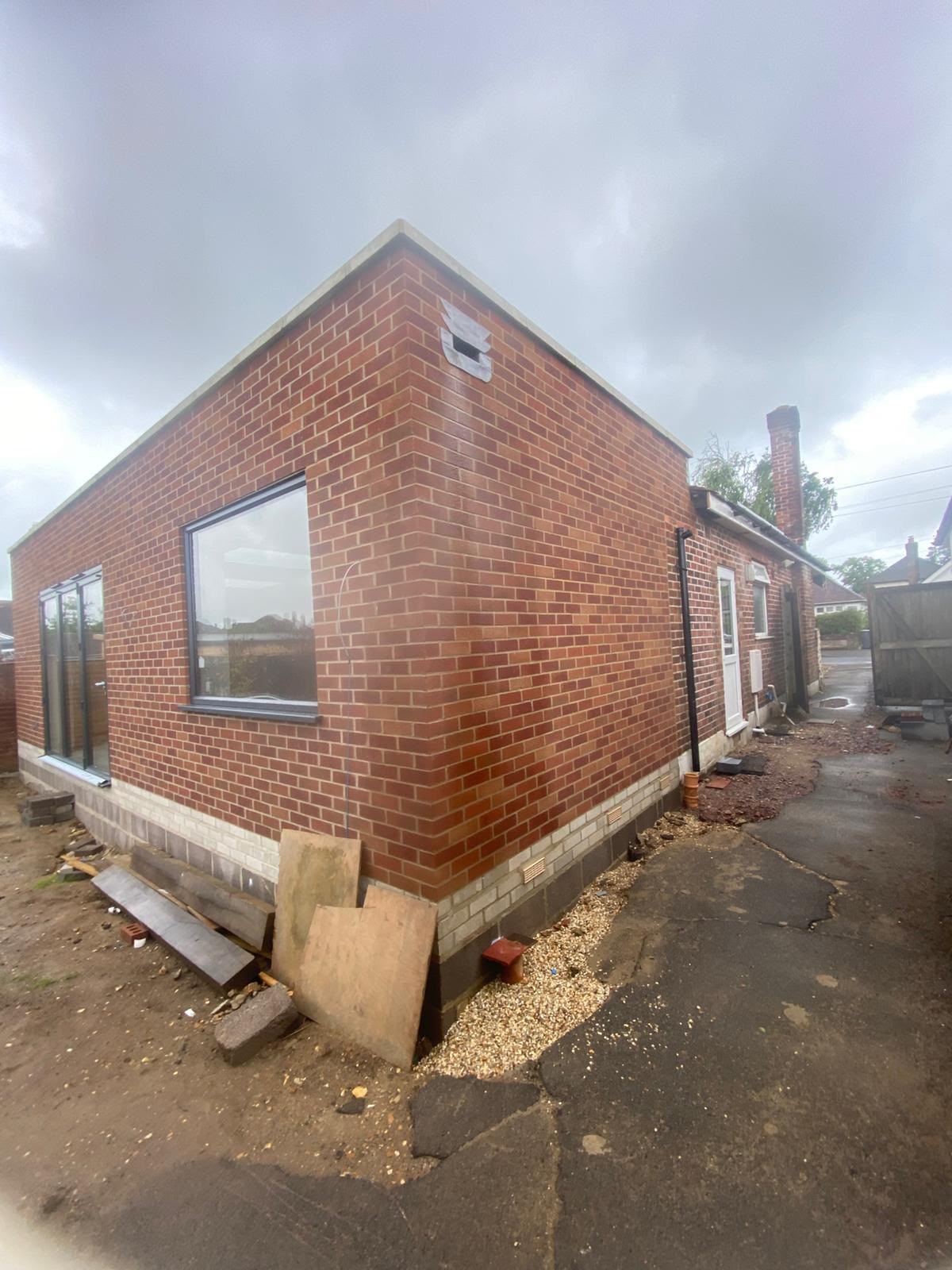
The quote is itemised: access, raking out, the mix, the area of each elevation, brick replacement and disposal on separate lines. On permission, repointing and repairing an existing wall in the same materials is maintenance, so no planning permission and no building control are involved. This part of Bournemouth has no conservation area over it and seven listed entries, and the council keeps the list if you want to check your own address before you start. If the wall is on a block of flats rather than a house, and half the homes here are flats, the thing to establish first is not permission but who is entitled to instruct the work.
Cost
What decides the price of a brickwork job
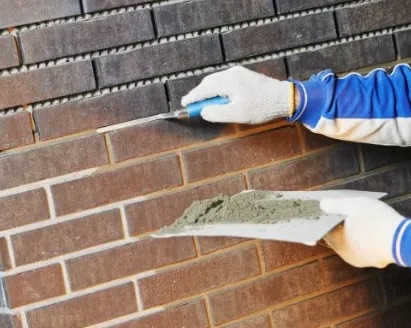
No rate per square metre. The joints decide this job, not the area. A converted villa where the scaffold has to go up beside a shared drive, a semi with a side path a barrow just fits down, and a front garden wall on a busy pavement are three different jobs before a brick is touched. A chimney or a gable wants a scaffold, and how long it stands is why work at height rules make access a priced line. Raking by hand is slow, and joint depth and spalled faces decide the hours. Ask how deep, by hand or disc, what mix, and whether scaffold is in.
If something has moved
Loose brickwork, or a wall that has shifted
Ring rather than use the form. Anything overhead or leaning goes to the front of the queue, and the first visit makes it safe before we price the permanent repair. We are a mile or two away, so brickwork leaning over a pavement or a parking space usually gets looked at the same day. The phone is answered 24 hours for emergencies; scheduled work runs Monday to Friday, 8am to 6pm.
The one local thing
Salt air goes for the metal in the wall, not the brick
We are a couple of miles from the sea here, and the air carries salt a good deal further inland than that. Salt does two things to brickwork. It holds moisture, so a wall that catches the wind off the coast stays damp between showers instead of drying properly, and salts crystallise just under the surface of a brick and push the face off. Then there is the metal.
Cavity wall ties, the steel over a bay window, old iron cramps and the stubs of railings cut off a garden wall all corrode faster in this air than they would ten miles inland, and corroding metal grows and lifts the brickwork around it. That is why so much of the cracking we are called to on the seaward side of a house is horizontal and regular rather than diagonal.
What it changes for you is the specification, not the price of a bag of sand. On an exposed elevation we use stainless steel for anything going back into the wall, we point in a mix that is not stronger than the brick so salts and moisture can still get out, and we choose a replacement brick that is fired hard enough for a wet, exposed face rather than whatever is on the shelf.
The one thing worth resisting is the urge to seal the wall with a water repellent or a hard render, which traps salt behind the surface and takes the faces off in a couple of winters. If you are comparing quotes for a wall that faces the sea, ask what the ties are made of and what the mortar mix is. Those two answers tell you more than the total does.
Who you are dealing with
A local firm you can check
We cover Charminster, Winton, Moordown, Queen's Park, Springbourne and the rest of BH8, and we are usually a few minutes away rather than a drive. Bournemouth Roofing & Building Ltd, registered in England and Wales, company number 15471719, which you can look up in a minute. Thomas Hannen's business, and he is the one who comes out to price the job, not a salesman. A verified customer's 10 out of 10 on Checkatrade. The visit and the written quote are both free.
Questions
Bournemouth questions we get asked
Half the homes here are flats. Who orders brickwork on a block?
Whoever holds the freehold or manages the building, not an individual leaseholder. Flats are 50.1% of the stock around Winton East, and under most leases the outside of the structure is repaired collectively and recovered through the service charge. We will survey it and put a written itemised quote in front of a management company or a residents association. Get the other owners involved early, because the scope grows once everybody has a say.
Can you match the brick on a 1930s house here?
Close, rarely perfect. Inter war building runs to 19.8% of the housing around here and those bricks were made in a way nobody replicates now, so we source reclaimed where an elevation is on show and use a matched modern brick round the back. The mortar does more of the work than the brick anyway. Get the sand colour and the joint profile right and the eye reads the wall as original from the pavement.
Does being under two miles from the sea affect brickwork?
It shows in the fixings and the chimneys before it shows in the wall. At 2.9km from the sea the air still carries salt inland on a south westerly, and salt keeps a wall damp between showers rather than letting it dry out. That slows drying on shaded brickwork and speeds up corrosion of ties, cramps and the metal in a chimney flaunching. Rust staining running down a face from a fixing is what to look for.
Where does the scaffold go on a tight Winton East street?
Against the frontage, with a licence for the footway where there is no front garden. Around Winton East the plots are narrow and the parking is on street, so we agree the standing position and the pedestrian route with the council and with the neighbours before anything gets delivered. Where a rear elevation can be reached off a tower we do that instead, because it costs less and takes up less kerb.
Is horizontal cracking in a cavity wall serious?
Horizontal cracking at regular heights is the classic wall tie signature and it is worth taking seriously. The tie rusts, the corrosion expands and it jacks the bed joint apart, so the crack follows the tie course instead of a random line. The postwar stock is 39.7% of the housing here, and that is the era when thin galvanised ties were normal. A borescope through a small hole confirms it without opening the wall up.
Nearby, and next door
Bricklaying and repointing near Bournemouth
Bricklaying and repointing nearby
Our other trades in Bournemouth
Everything we do in Christchurch Bricklaying and repointing, all areas Every area we cover
Free quote
Get the brickwork looked at this week
A free site visit, photographs of what is failing, and an itemised written quote for the work that is genuinely needed.