
Driveways and patios in Bournemouth
Forecourts, side drives and patios built for the traffic they actually take, with the drainage designed rather than assumed.
The site visit is free and so is the written itemised quote. Thomas Hannen prices every job himself.
A Bournemouth forecourt that cars turn on all day is not a domestic drive and should not be built like one. The wearing surface is the cheap part. What holds it up under constant turning, and where the rain goes once the whole front garden is hard, is the job we are actually quoting.
Three sorts of call come in from this part of town. The parking area in front of a converted house has potholed and nobody is sure who is supposed to sort it out. A narrow drive down the side of a semi has cracked and sunk where the wheels run, and the gate at the end has stopped swinging.
Or a small back garden has a patio that holds water at the back door and greens over every winter. We are a mile and a half away, so we come and look properly: levels, falls, where the existing gully goes, and a couple of units lifted so we can see the base rather than guess at it.
The work
Villa forecourts, side drives and the lanes behind
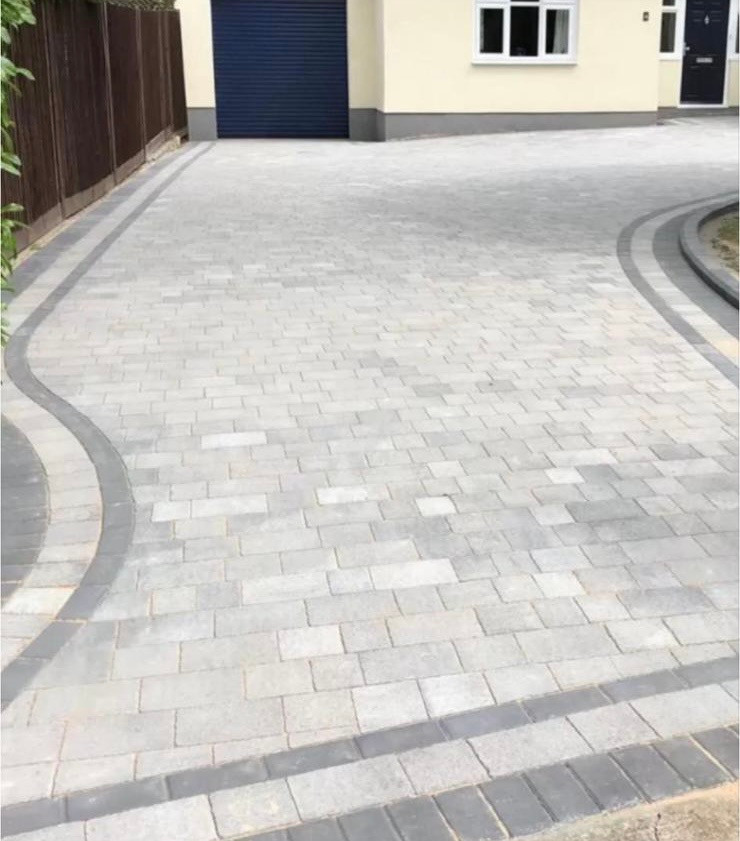
Forecourts to converted houses. The big Victorian and Edwardian villas around here mostly had their front gardens turned into parking a long time ago, usually in tarmac laid straight onto whatever was there. Half the homes on these streets are flats now, so those forecourts take far more traffic than a private drive, and decades of cars turning on the same three metres grinds a hollow into it. Water stands in the hollow, the base softens and the potholes arrive together. Rebuilding one means a heavier build up: a deeper dig to firm formation, a geotextile membrane, a graded sub-base compacted in layers, and a surface that copes with turning rather than rolling. Heavy duty block paving and hot laid tarmac both do it. Resin does not enjoy tight turning circles and we say so before you buy one.
On these frontages there is often no soft ground left at all, and the original gully has silted up or been paved over, so the drainage gets designed rather than assumed: a channel drain across the entrance so nothing runs out onto the footway, falls set to a working outlet, and either a permeable build up or a proper connection to a surface water outfall. Rain from your frontage is not allowed to become the highway's problem, and that is the rule most tired forecourts are quietly breaking.
Side drives on the inter-war semis. Nearly a fifth of the housing here is between the wars, which usually means a bay fronted semi with a single width drive down the side and a side gate to the back. The original concrete has cracked along its bays and dropped where the ground was made up. It is a tidy job with one catch, the access: everything past the gate goes by barrow, so the width of that opening changes the labour more than the area of paving does.
Short back gardens put the patio hard against the house, and the two faults are always the same, a level crept up to the damp proof course and a fall running the wrong way. Both get fixed by dropping the level or taking a step down and running a drain at the threshold. Three kilometres from the sea, surfaces stay damp between showers and green over faster than they do inland, and salt air is hard on cheap metal edgings. That is a wash and a re-sand every couple of years rather than a new drive, and black staining on block paving is usually organic rather than permanent.
How it runs
From your call to a written price
Bournemouth, Christchurch and Poole are the planning authority and the highway authority, so the paving and the crossover both go through the same council. Hard surfacing at the front stays permitted development while the rain stays on your land, and more than five square metres draining onto the road needs planning permission, which is what Planning Portal guidance on paving a front garden covers. A dropped kerb or a widened crossing is applied for separately. This part of town is not itself in a conservation area, though other parts of the borough are and the council keeps the list of conservation areas, which is worth a minute before you order anything. Seven listed entries sit in the area.
Cost
What decides the price of a driveway
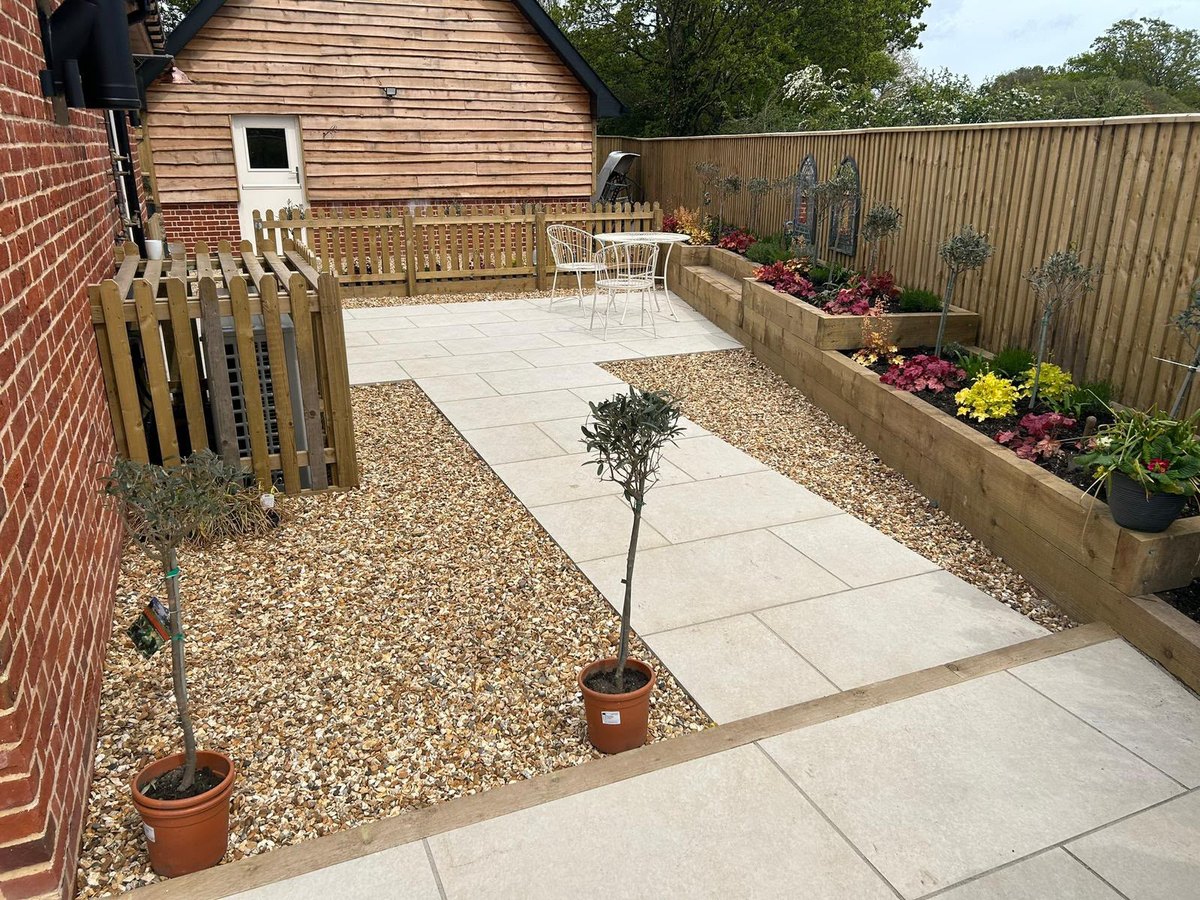
Most frontages here open straight onto the road, which keeps deliveries and disposal simple, and it is one of the few places on our patch where a grab lorry can stand outside the gate. Behind an inter-war side gate it is the opposite and every barrow adds time. The dig depth and how much muck goes away are still the real variables, and where a whole frontage is hard, the drainage design is a cost rather than an afterthought. Ask any quote for the dig depth, the sub base, where the water goes and who takes the spoil.
If it is urgent
A trip hazard, or a drive that floods
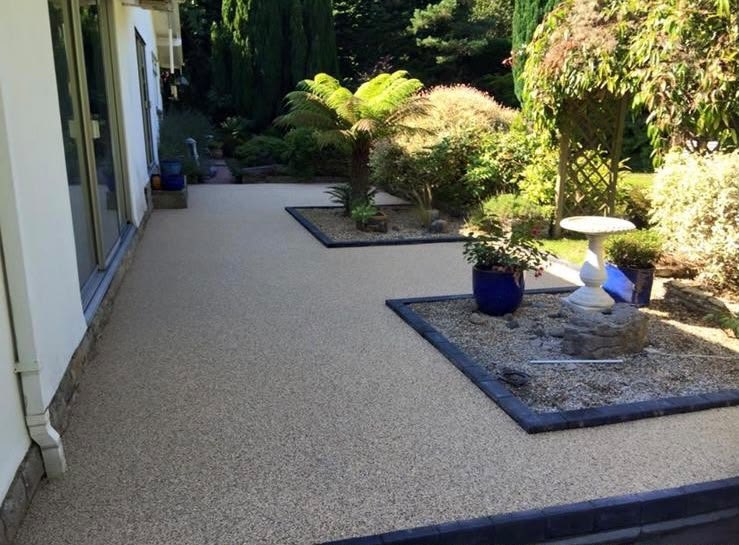
On a shared forecourt, a photograph of where the water stands and which gully has stopped taking it usually tells us more than the address does. A lifted slab or a sunken bay by a doorway is worth ringing about rather than using the form. Making it safe and getting the water away comes first, then the permanent work is priced. We are under two miles away, which is usually the same day.
The one local thing
Half the homes here are flats, so check who owns the ground first
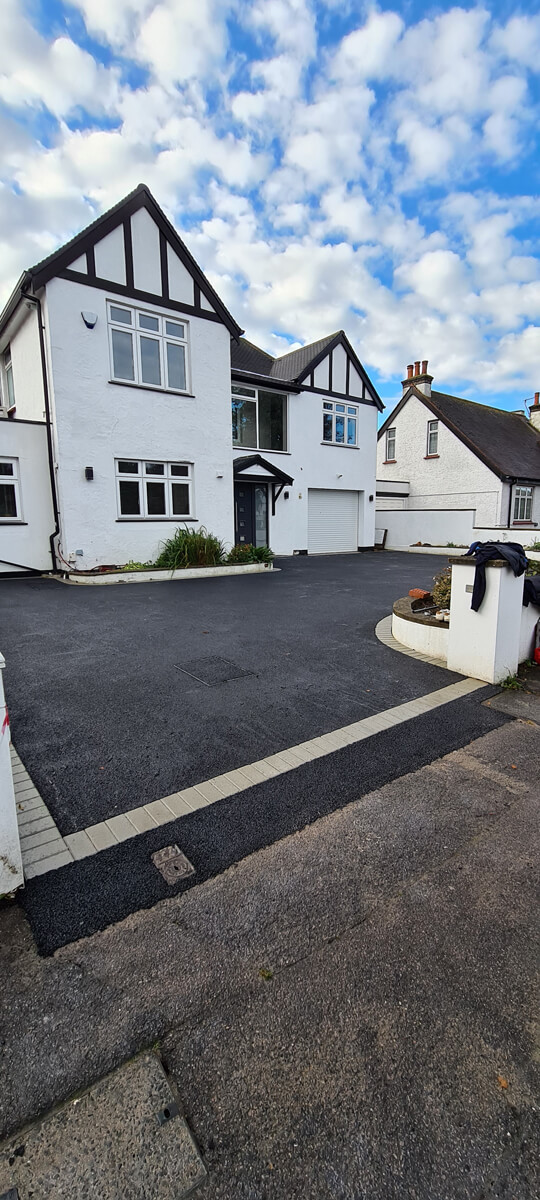
This is a part of Bournemouth where about half the dwellings are flats, most of them conversions of large houses with a shared forecourt out front and often a parking area off the lane behind. That changes the first question from what surface you want to who actually owns the surface.
In most conversions the forecourt belongs to the freeholder or is held by a management company, and no individual flat owner can commission work on it however bad it has got. Your lease will say. It is a ten minute read and it saves a wasted quote.
If you are a leaseholder and the cost is going to come back through the service charge, the landlord has a formal consultation to run first under section 20 of the Landlord and Tenant Act 1985, which gives leaseholders the right to see estimates and comment before major works are placed. That is on the landlord rather than on you or on us, but it is worth knowing because it sets the timetable, and because a written itemised quote is exactly the document that process needs.
We are happy to price work in a form that can be circulated, and to phase it so the forecourt is never entirely out of use: half the bays at a time, residents told which days, and nothing left unusable overnight. If you are one of several flats agreeing to share a cost, tell us that at the visit and we will price it so it can be split and staged rather than as one lump nobody can agree to.
Who you are dealing with
A local firm you can check
We work all of Bournemouth and BH8, out to Charminster, Winton, Christchurch and Poole, and we are under two miles away. Bournemouth Roofing & Building Ltd, registered in England and Wales, company number 15471719, which you can look up in a minute. Thomas Hannen's business, and he is the one who comes out to price the job, not a salesman. A verified customer's 10 out of 10 on Checkatrade. The visit and the written quote are both free.
Questions
Bournemouth questions we get asked
Half the homes in Winton East are flats. Does forecourt parking differ?
It does, because a forecourt gets used far harder than a private drive. Flats are 50.1% of the housing around Winton East, and a front garden serving four or five cars sees constant turning, which grinds a block surface at the pivot points rather than along the wheel tracks. Those get built with a thicker sub base across the whole area, not only where cars stand, and a heavier block laid in herringbone so the turning load spreads.
Bournemouth is two miles from you. How soon can someone look?
Usually within a few days. Winton East is under two miles from where we are based, so getting out to measure is not a special trip and Thomas does it himself. He walks the levels, checks where rainwater currently goes and leaves with enough to write the quote without a second visit. The visit is free and so is the written itemised quote. Being this close also makes a small remedial job worth doing properly.
What makes paving here film over with green so quickly?
Damp that never quite clears. At 2.9km from the coast the air stays humid between showers, and a surface facing away from the sun holds that moisture long enough for algae to take in the pores. It is cosmetic rather than structural, but it turns a slab lethal underfoot by December. Textured porcelain and riven concrete hold less water than smooth sawn stone, and a fall that genuinely clears the surface helps more than any sealer.
Our house is inter war with the original path. Keep it?
Worth looking at before it goes in a skip. Just under a fifth of the housing around Winton East is inter war, and those front paths were often laid in clay pavers or small format tiles that are hard to match today. If the surface has sunk but the units are sound they can be lifted, cleaned and relaid on a new base, which keeps the frontage looking like the house. Cracked through, and the pattern gets rebuilt in modern stock.
What tells me a forecourt needs rebuilding rather than cleaning?
Movement, not colour. A green film washes off and comes back, and that is maintenance. What counts is whether blocks rock underfoot at the turning point, whether the edge course by the pavement has bowed outwards, and whether water stands in a hollow for hours after rain. Any of those three means the base has gone and pressure washing will not hold it, because washing pulls the jointing sand out on the way past.
Nearby, and next door
Driveways and patios near Bournemouth
Driveways and patios nearby
Our other trades in Bournemouth
Everything we do in Christchurch Driveways and patios, all areas Every area we cover
Free quote
Get a written price for the forecourt, the drive or the patio
A free visit anywhere in Bournemouth, the base checked rather than guessed at, and an itemised quote you can circulate or compare.