Roofing in Freshwater and Totland
Slate and tile repairs, dry ridge and verge, re-covering, flat roofs, leadwork and gutters across West Wight. Free site visit and written quote.
The site visit is free and so is the written itemised quote. Thomas Hannen prices every job himself.
Out at Freshwater and Totland the covering is rarely what fails first. Salt air goes after the ironmongery, so a roof can look perfectly sound from the road and be held down by fixings that have already gone. That is why a repair here starts by lifting more than the tile you can see is broken.
West Wight roofs take weather that inland roofs never see, and they take it from the south west, off open water, all winter. The calls follow it: a run of slipped slates after a blow, a ridge that has started to lift, a gutter that has rusted through at a joint, or a leak somebody has chased for two years without finding.
We come over, get on the roof, get into the loft where there is access, and photograph the lot before anyone talks about money. About sixteen miles from us with the Solent in the middle, which we plan around rather than pretend is not there.
The work
Three slipped slates means a dozen on the move
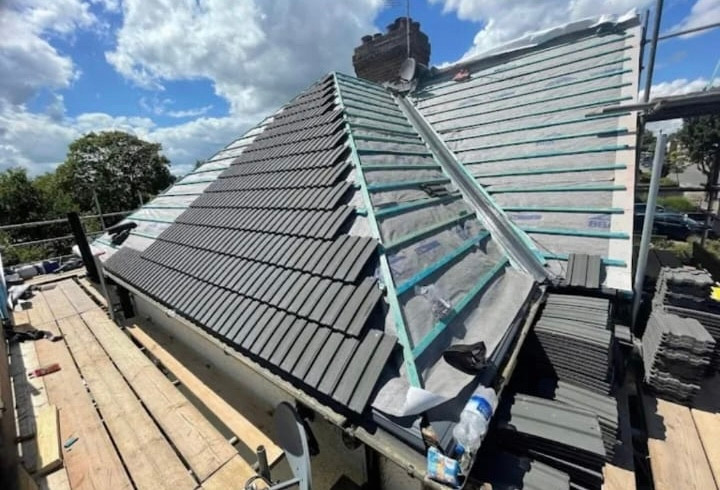
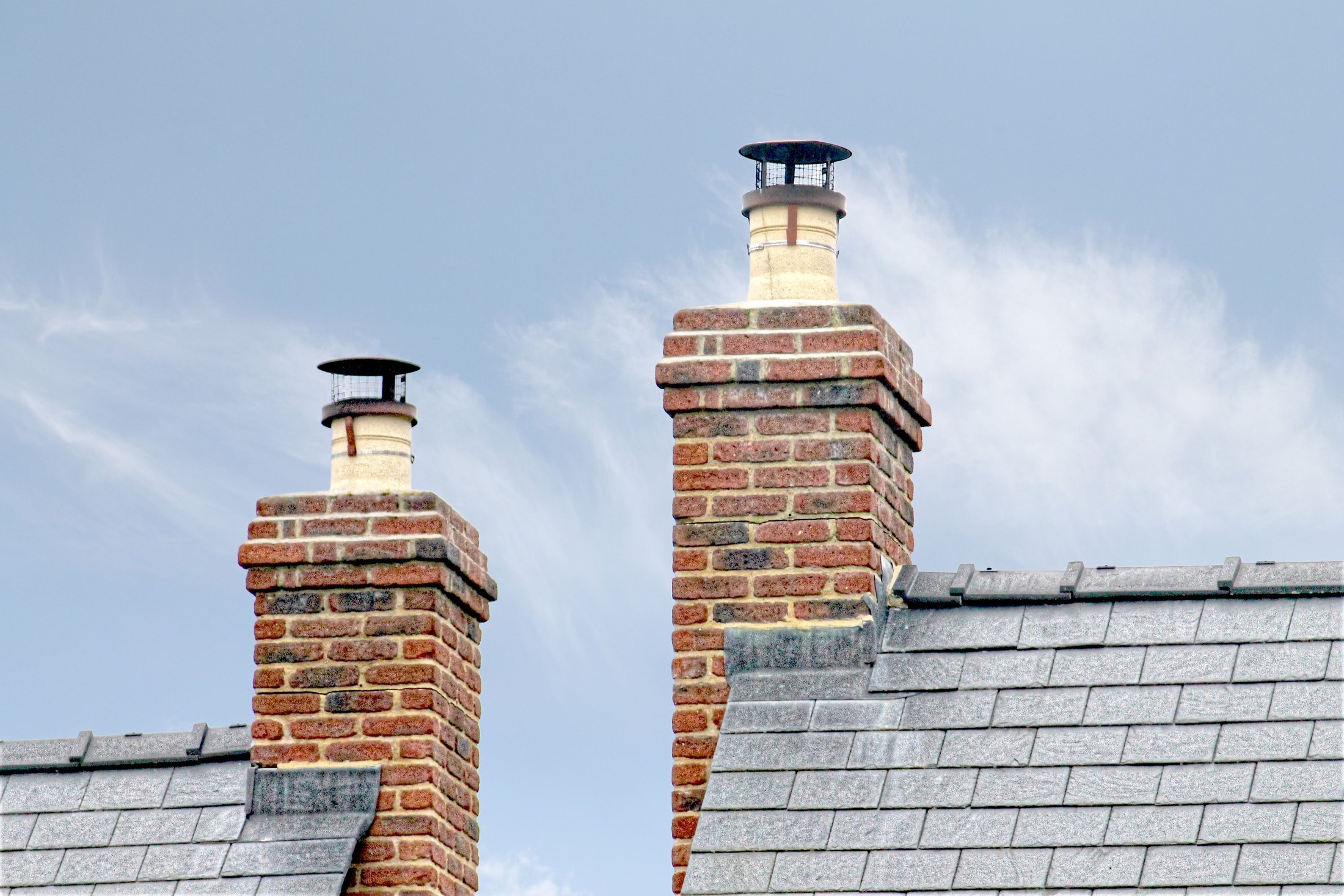
Fixings, because the salt gets them first. Salt does not eat a clay tile or a slate. It eats the nail head, the clip and the galvanised strap, and it does it years earlier here than two miles inland. So when we are called to three slipped slates we lift the courses either side as well, because three that have moved usually means a dozen that are about to. New work on the seaward slopes goes on stainless steel or silicon bronze, and where the exposure justifies it we increase the fixing pattern rather than change the covering. Wind does not lift the middle of a roof, it gets under an edge and works from there, so mortar bedding at the ridge and verge is the detail that fails first on this coast. Converting to a dry ridge screwed onto a ventilated roll and a dry verge clipped along the gable is the mechanical hold BS 5534 sets out, and it vents the roof space while it is at it. On an exposed site that is worth more than anything you could spend on the field of the roof.
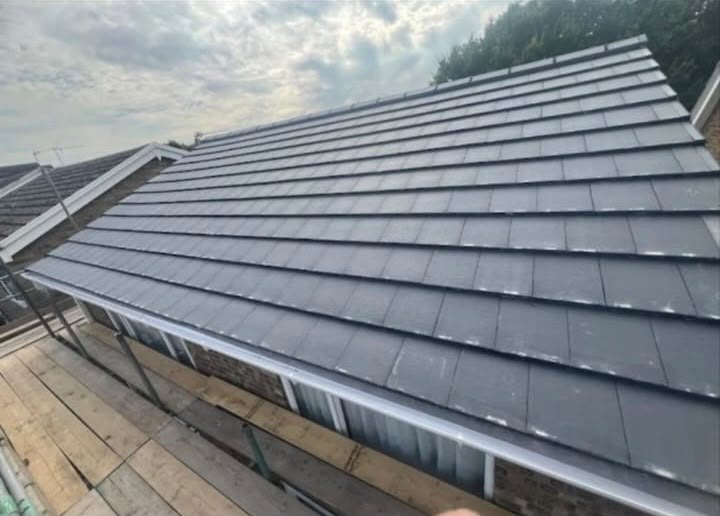
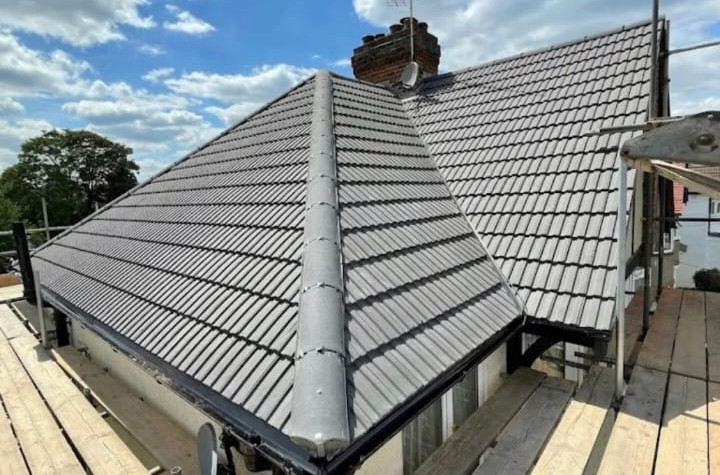
Better than a quarter of the housing here predates 1919, so slate and plain clay tile are what comes off. Again the fault is not the slate but the nail: they corrode, the slates creep, and you get slippage a course at a time. Sound slate is stripped, sorted and re-hung on new fixings and clips with the battens renewed underneath. Tall chimney stacks come with it, since that is where the leadwork is. Close to three in ten dwellings are bungalows, and they behave differently. The slopes are long and often shallow, which puts you into a concrete interlocking tile rather than a plain tile, and there is far more gutter and fascia run per house than on a two storey property, so rainwater goods are a bigger share of the job. Access is the consolation: a lot of this work comes off a tower rather than a full scaffold.
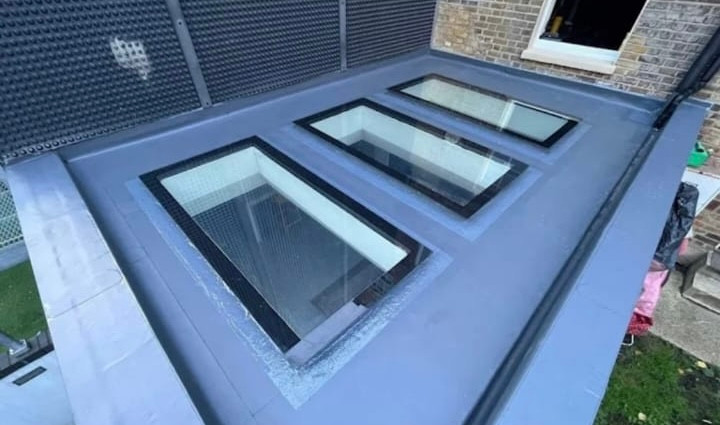
Rear additions, dormers, garages and porches in felt, GRP fibreglass or EPDM rubber. The deck gets looked at before we price a covering, then the falls, the upstands and the outlet, because a flat roof fails at those three long before the membrane wears out. Chimney flashings, soakers, valleys and abutments go in code rated lead, sized and cut so it can move. A fair share of what gets reported as a roof leak here is a gutter overflowing in a gale or a downpipe discharging into nothing, and clearing moss, algae and debris is ordinary maintenance. A fifth of the stock is flats, so on a communal roof it is the freeholder or the managing agent who instructs the work rather than the person who rings. While a covering is off the loft gets sorted at the same time, insulation, eaves ventilation and any condensation problem, to the standard Approved Document L expects of a renovated roof.
How it runs
From your call to a written price
One team from first visit to last, and an itemised quote rather than a figure on the back of a card. For an unlisted house a like for like re-cover, new rainwater goods and a rooflight are permitted development and there is nothing to apply for, within the limits Planning Portal guidance sets out. There are twenty nine listed entries out this way, so if yours is one of them consent applies however minor the work looks. Nothing is left open overnight. Isle of Wight Council for planning and building control. Give us the address and we check it before we price, not after.
Cost
What decides the price of a roof
Nobody can price this off an area. Everything we bring lands off a ferry, so a job here is sequenced so the crossing happens once: scaffold, battens, covering and lead arrive together and the waste goes back the same way. That is a planning line on the quote rather than a mystery. Some roofs come off a tower and most want a scaffold, and how long it stands matters as much as its size, which is why the work at height rules make it a line of its own. Ask whether the scaffold is in the quote and who takes the waste away.
If it is leaking now
Water coming in today
Ring rather than use the form. Anything letting water in goes to the front of the queue, and the first visit makes it safe and watertight. Look at the gable verges and the ridge line from the ground, and check the path, because on this coast the edge is where it starts. Do not walk a wet slate roof. The phone is answered 24 hours for emergencies; scheduled work runs Monday to Friday, 8am to 6pm.
Worth knowing
Solid walls change what a leaking gutter costs you
More than a quarter of the housing here went up before 1919, which means solid walls with no cavity behind them. On a cavity wall a bit of overflow is a nuisance.
On a solid wall it is a direct path to the inside, and with a hard cement pointing or a modern impermeable paint on the outside the water that gets in has nowhere to go back out. That is why a rusted gutter joint or a downpipe that has come off its bracket shows up as damp on a bedroom wall in one winter here rather than three.
So on an older building we treat the rainwater goods as part of the roof rather than as trim, and we say so on the quote. It also changes materials at the top of the wall: a lime based bedding at the ridge and verge stays softer than the tile and gives before the tile does, where a hard cement mix cracks and then holds water in the crack.
Who you are dealing with
A local firm you can check
Covering Freshwater, Totland and the PO40 addresses out to the west of the Island. Isle of Wight Council for planning and building control. Bournemouth Roofing & Building Ltd, registered in England and Wales, company number 15471719. Thomas Hannen's business, and he comes out to price the job himself. A verified customer's 10 out of 10 on Checkatrade. The site visit and the written itemised quote are both free.
Questions
Freshwater and Totland questions we get asked
Do you actually come over to the Island for this?
We do, and it is worth saying how the trip is planned. Freshwater and Totland is 15.7 miles from our base, so a survey and the work itself are booked as blocks of days rather than an hour here and there. That means we want to see everything at once: the roof, the gutters, the verges and anything else you have been meaning to ask about. Thomas measures and prices it himself, and the visit and the written quote cost nothing.
Why does cement mortar cause trouble on an old Freshwater roof?
Because 27.5 per cent of the housing here predates 1919 and that fabric was built to breathe. Hard cement traps water inside soft brick and stone, and the face then spalls off in frost while the joint itself stands proud and undamaged. So on a ridge re-bed or a chimney haunching we use a lime based mix on the older buildings and keep cement for what was designed around it. Getting that wrong shows up two winters later.
Which part of the roof does the weather actually attack?
The edges and the openings, not the middle. The most exposed elevation across Freshwater and Totland faces south west, and driven rain gets under a verge, past a flashing or behind a soffit long before it beats through a sound tile. That is why a survey spends its time at the perimeter: verge, eaves, hips, valleys and every abutment. Money spent on the middle of a slope that is not leaking is money spent in the wrong place.
Rainwater soaks the ground beside my wall. Does that matter?
It matters more here than it would on sand. The ground under this part of the Island is cohesive with a significant shrink and swell rating, which means it takes up water and moves rather than draining. A gutter overflowing in the same spot each winter is not simply a damp patch on the wall, it is repeated wetting and drying right beside a foundation. When we survey a roof we follow the water all the way to wherever it finally discharges.
Does the crossing add days to the job?
It changes how the days are grouped rather than how many of them there are. Scaffold, materials and the crew come over together and then work straight through, instead of the stop start you get travelling in and out daily. What we will not do is open a roof up and leave it part done because of a return trip. Anything stripped gets felted, battened or sheeted and made watertight before the same day ends.
Nearby, and next door
Roofing near Freshwater and Totland
Roofing nearby
Our other trades in Freshwater and Totland
Roofing guides
Concrete vs clay roof tiles: which is right? Planning, building regs or listed building consent Storm damage to a roof: the first 24 hoursEverything we do in Lymington Roofing, all areas Every area we cover
Free quote
A written price for your West Wight roof
Send the postcode and what the roof is doing. We come over, look properly and put it in writing.