Roofing in Norton
Slate and tile repairs, re-covers, leadwork, flat roofs and gutter work at Norton, Yarmouth and across PO41. Same team throughout, itemised in writing.
The site visit is free and so is the written itemised quote. Thomas Hannen prices every job himself.
Around a quarter of the houses at Norton were built before 1919, and those roofs were designed to breathe. Put the wrong underlay on one and you swap a leak for a condensation problem, which is why we ask what is behind the covering before we say anything about the covering itself.
The calls come in three shapes. A slate or a tile has slipped and you can see the gap from the garden. A ceiling has stained under a chimney, a valley or the join between the house and a later extension. Or the roof is old, somebody has priced a full re-cover, and you want an honest view on whether it is really finished.
We come out, survey the roof from a platform and from inside the loft, and photograph what is up there. You get told which of the three you have: a repair that will hold, edge work that buys you years, or a covering that has run out. The site visit and the written itemised quote are both free.
The work
Half the work here is done off a tower
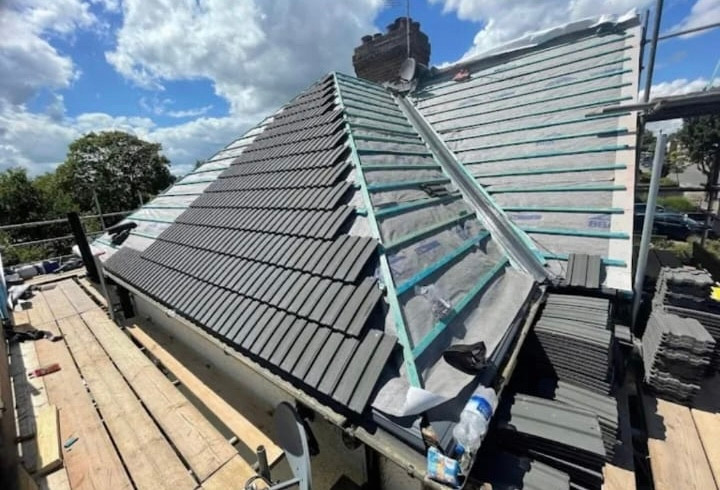
Slate work. Natural slate covers a good share of the older houses here, and a quarter of Norton predates 1919. Slate fails in a particular way. The slate itself lasts far longer than the nails, so a roof that is shedding two or three slates every winter has not worn out, it has run out of fixings. A single slipped slate is re-hung on a lead or copper tingle rather than daubed back with mortar, which is a repair that lasts rather than one that looks tidy for a season.
Half the work here is done off a tower. More than a third of the homes here are bungalows and a lot of the roofs are single storey, which is a real advantage: the slope is low, it is quick to survey, and much of the edge and rainwater work comes off a tower rather than a full scaffold. Low eaves also make rainwater goods cheap to put right, and a fair share of what gets reported as a roof leak turns out to be a gutter running over.
Plain tile and clay tile on the older cottages, and concrete tile, mostly interlocking, on the post-war housing that makes up close to half of everything here. There is no stone slate on the Island. On interlocking concrete the tile outlives the nail or clip holding it, so the fault is a fixing or a junction rather than the covering. Slipped, cracked and missing tile work, storm damage, and a leak traced back to where water genuinely enters rather than patched where the stain shows.
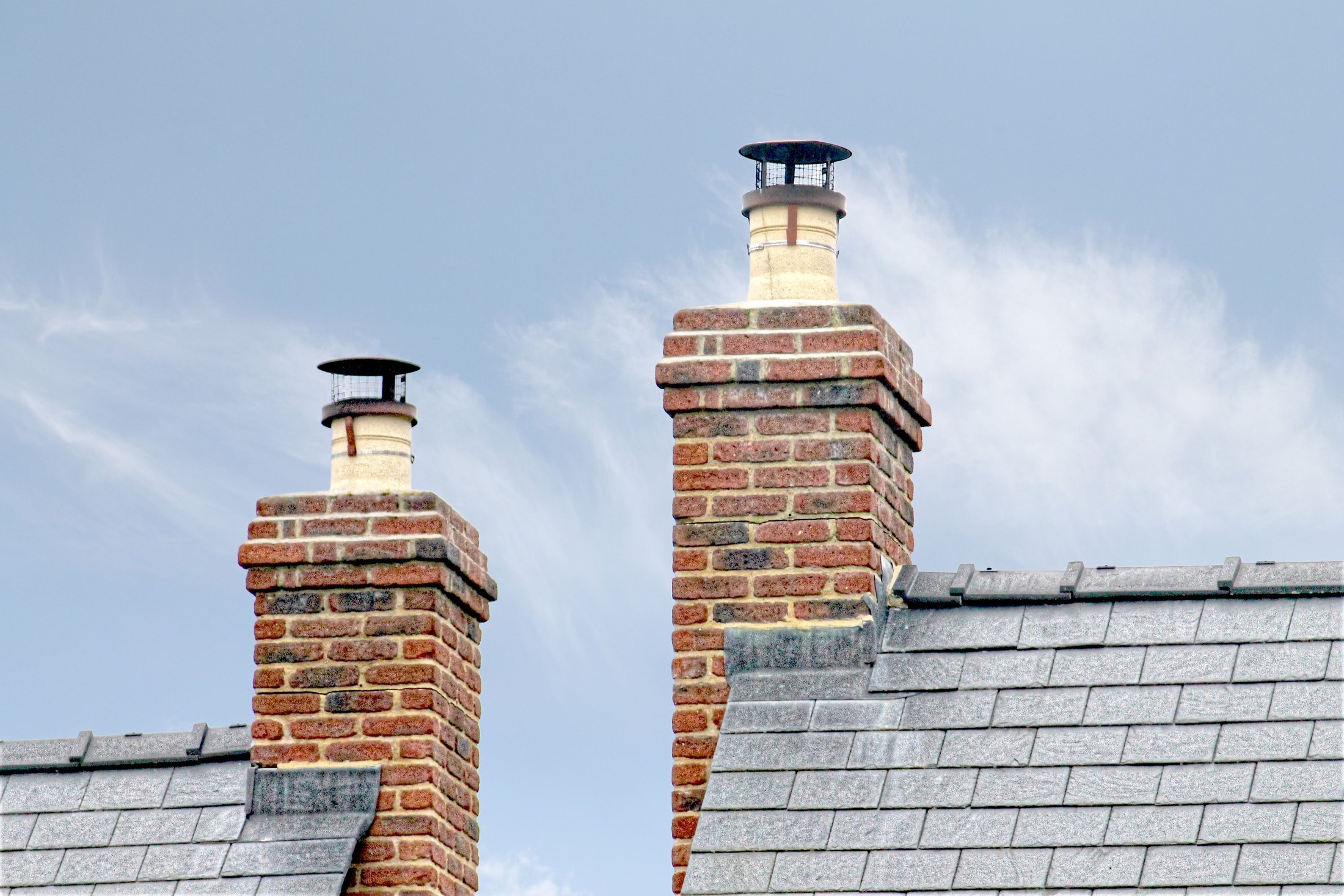
On the oldest roofs there is no membrane at all and no sarking board, just battens over lime torching. On the 1960s and 1970s houses there is bitumen felt that has gone brittle and tears where it laps into the gutter, which is the one place it must be sound. Both are checked from inside before anyone talks about a strip. Mortar bedding cracks, ridge tiles start to rock and a verge loses its bedding, so we take the mortar off and convert to dry ridge and dry verge screwed onto a ventilated roll, the mechanical fixing BS 5534 expects, which ventilates the roof space along the ridge at the same time. Two kilometres from the water, the fixings matter more than the covering does.
When the fixings, battens and underlay have gone together, the covering comes off, soft timber is cut out and the new roof goes back on breathable membrane and treated battens with a matched covering. Sound slate is worth sorting and re-using; old concrete tile rarely is. Chimney flashings, soakers, valleys and abutments in code rated lead, cut so it can move without splitting, and almost every leak we chase here starts at one of those junctions rather than in the middle of a slope. Extensions, garages, dormers and porches in felt, GRP fibreglass or EPDM rubber, all of which last when the deck is sound and the falls, upstands and outlet are right, so the deck is looked at first. With the covering off, insulation, eaves ventilation and any condensation problem cost a fraction to sort, and Approved Document L sets the standard a renovated roof is expected to reach.
How it runs
From your call to a written price
Same team from first visit to last, no sub-contracting, and an itemised quote: scaffold, the strip out, battens and membrane, the covering, each junction and disposal on separate lines. There is no conservation area over Norton itself and twelve listed entries in the area, so on an unlisted house a repair, a like for like re-cover, new rainwater goods and a rooflight sit inside ordinary householder permitted development, within the limits Planning Portal guidance sets out and with nothing standing more than 150mm above the roof plane. If the house is listed the position changes completely, and the Planning Portal covers other permissions you may require. Isle of Wight Council for planning and building control.
Cost
What decides the price of a roof
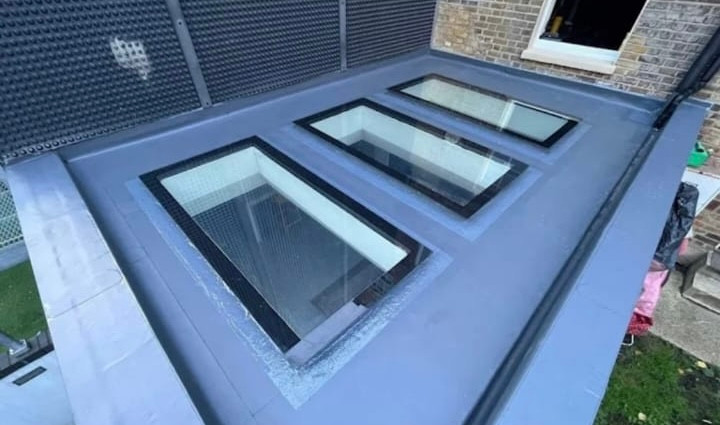
No rate per square metre. Norton is a low place to work. Single storey roofs are common, so the platform is smaller and much of the edge and rainwater work comes off a tower. Island jobs are planned as a block so that the platform, the materials and the team arrive together, and you get the dates in writing before you commit to anything. This is work at height and the work at height rules are why the platform is a priced line. Chimneys, valleys and abutments are priced one at a time.
If it is leaking now
Water coming in today
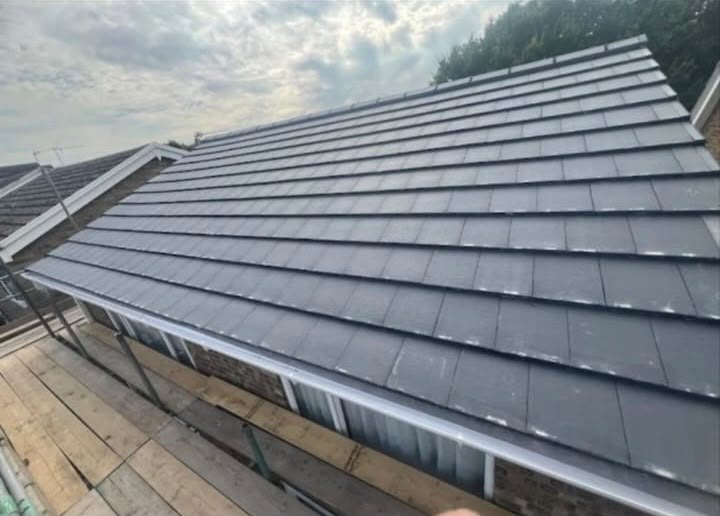
Ring rather than use the form. Anything letting water in goes to the front of the queue and the first visit makes it safe and watertight. While you wait, stand as far back from the house as you can get and photograph the whole slope. On a slated roof a missing slate shows up clearly from the ground and the photograph tells us which course has gone before we arrive.
Worth knowing
A quarter of these roofs were built to breathe
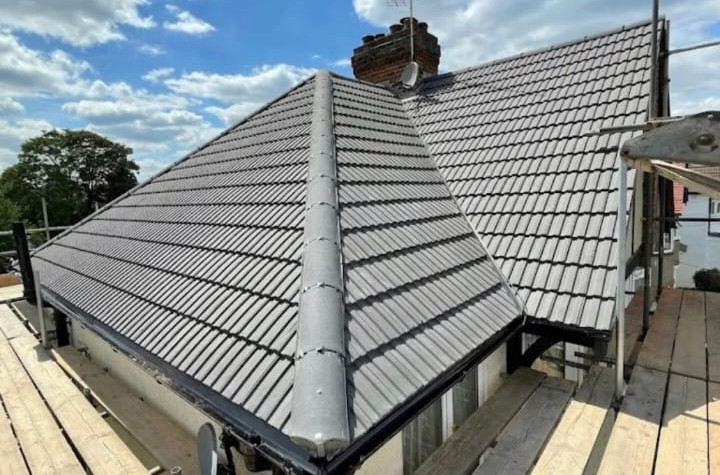
Roughly one house in four here went up before 1919. A roof of that age was built without a membrane, and the roof space got rid of its moisture through the gaps in the covering and the eaves. It was not sealed, and it was never meant to be.
The problem arrives when one of those roofs is re-covered on the cheap with a non-breathable bitumen felt. The rain stops coming in and the moisture from the house stops going out. The first winter you get water dripping off the underside of the felt onto the insulation, wet rafter feet and black mould in the corners of the loft, and it gets reported to us as a leak when nothing is leaking at all.
So on any older roof here we quote a breathable membrane with real ventilation at the eaves and along the ridge, which is what Approved Document F is about, and we point out the same thing on a chimney that has been capped without a vent. If your loft has been wet since a re-cover, that is usually fixable with eaves vents and tile vents rather than by stripping the roof a second time.
Who you are dealing with
A local firm you can check
Sixteen miles from us as the crow flies, covering Norton and the PO41 addresses around Yarmouth and Freshwater, with Isle of Wight Council for planning and building control. Bournemouth Roofing & Building Ltd, registered in England and Wales, company number 15471719, which you can look up in a minute. Thomas Hannen's business, and he is the one who comes out to price the job, not a salesman. A verified customer's 10 out of 10 on Checkatrade. The visit and the written quote are both free.
Questions
Norton questions we get asked
Around a quarter of Norton predates 1900. What does that mean?
It means the roof has to work with a wall that breathes. Twenty six per cent of the stock here predates 1919 and the largest single group is pre 1900, so these are solid walled buildings with no cavity and nothing to stop damp crossing except the ability to dry out again. Sealing a roof up tight over one of those pushes the problem into the wall head. We keep the eaves ventilated and match materials to what is already there.
You are based on the mainland. How does that work?
We run an island job as one continuous stretch rather than a series of day trips. The materials come across in a single load and the crew stays over, so once we start we finish. It also means we would not take on a half hour repair on its own. Planning here goes to the Isle of Wight council, which matters if you have been reading guidance written for Hampshire or Dorset.
Ours is a bungalow. Is that roof easier to sort out?
Easier to reach, not easier to get right. A third of Norton is bungalows, and on a low pitched roof with a wide span the water runs slower and the laps carry more of the load, so a covering that behaves on a steep roof can leak on this one. We check the actual pitch against what the tile or slate is rated for before recommending anything, because the wrong choice there is permanent.
Slates keep sliding off the seaward slope. Why only that one?
The fixings on that side have failed before the slates have. Norton is a little over two kilometres from the water and the wind that carries the salt comes from the south west, so nails on that elevation corrode away while the sheltered slope stays sound. Slates then slide out one at a time on a still day for no obvious reason. We usually price that slope for a strip and re-nail and leave the other.
Do we have to move out while the work is done?
The house stays lived in throughout. Scaffolding goes up first, then the covering comes off in manageable widths and each width is felted, battened and covered before the next is opened, so no large area is ever left exposed overnight. There is noise and there are boots on the drive, but the rooms below stay usable. On an older roof we sheet the loft too, because stripping shakes dust out of the ceilings.
Nearby, and next door
Roofing near Norton
Roofing nearby
Our other trades in Norton
Roofing guides
Concrete vs clay roof tiles: which is right? Planning, building regs or listed building consent Storm damage to a roof: the first 24 hoursEverything we do in Lymington Roofing, all areas Every area we cover
Free quote
Get a price for your Norton roof
A free site visit and a written itemised quote you can compare line by line. Send the postcode and what you have noticed.