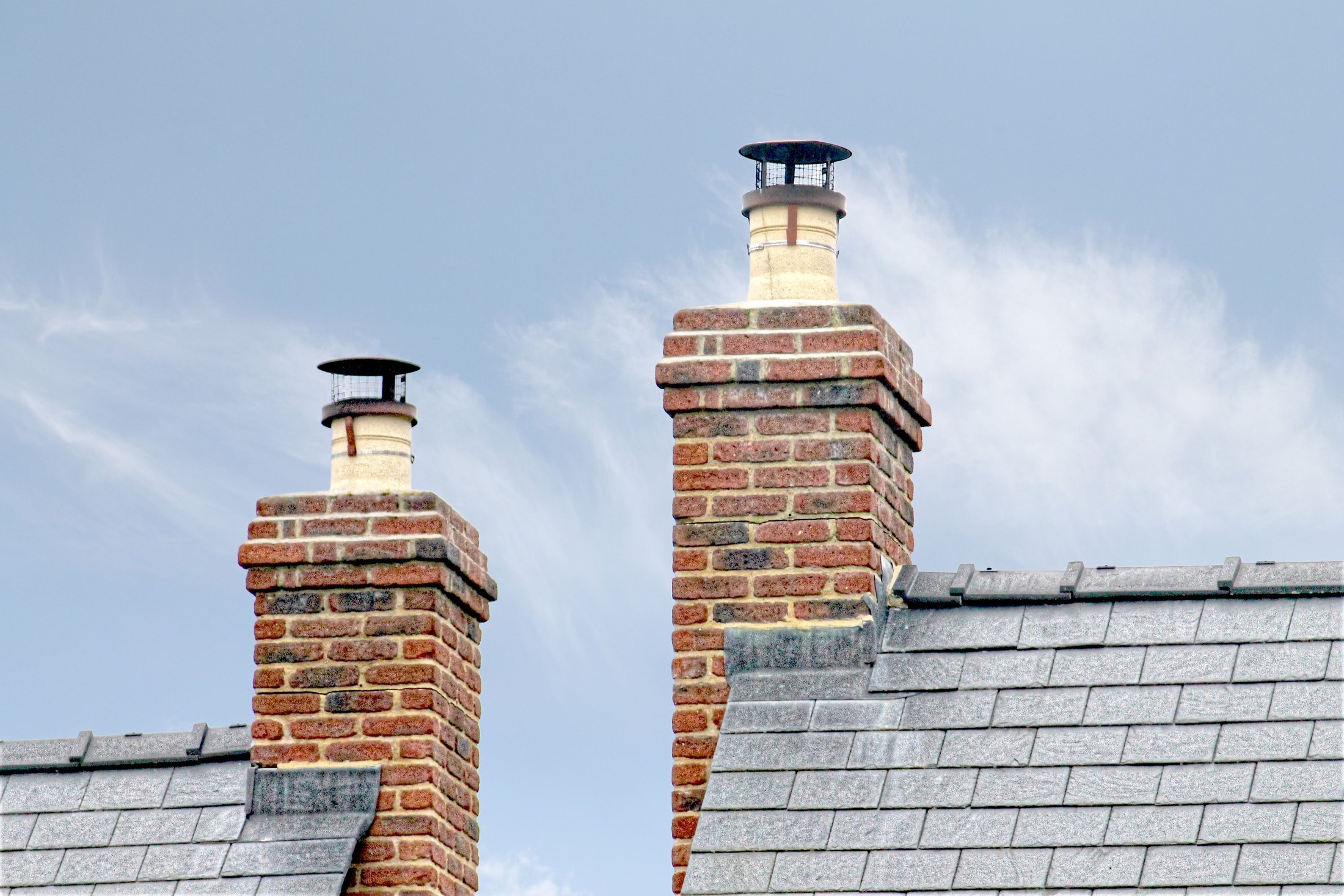
Roofing in Yarmouth
Repairs, edge work, leadwork, flat roofs and full re-covers in Yarmouth and around the harbour, priced in writing after a free visit.
The site visit is free and so is the written itemised quote. Thomas Hannen prices every job himself.
On a Yarmouth roof this close to open water the fixings fail before the covering does. Salt keeps everything damp between showers and eats galvanised nails and clips from the edge inwards, so what looks like a tired roof is usually a sound covering that has lost its grip.
Two things bring most of the calls in. A tile or a slate has come down on the seaward side after a blow, and the owner wants to know whether the rest of that elevation is going the same way. Or a bungalow has started shedding mortar off the ridge and the hips and nobody can say whether that means a repair or a new roof.
We come out, get on the roof, put our head in the loft and photograph what is there. The survey is the point of the visit, because from the ground a salt worn roof and a finished one look identical. Site visit and written itemised quote both free.
The work
Salt thins the nails before it touches the tile
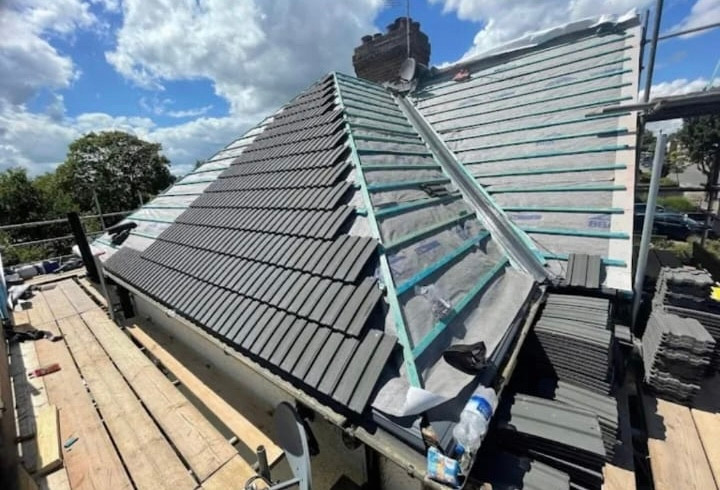
Ridge, hip and verge. The job that comes up most, and at 35.7% bungalows the reason is single storey roofs: a great deal of edge for the size of house, and every hip a run of mortar bedding that has been in salt air since the day it went on. Once it cracks the tiles rock. We strip the edge and convert to a dry fix system screwed onto a ventilated roll, the mechanical fixing BS 5534 expects, which vents the roof space along the ridge at the same time.
Fixings, battens and underlay. The section that matters most on this side of the water. At 2.9km from the coast a nail or a clip that has thinned in salt air lets a tile go in a wind that would not have moved it ten years ago, so on a re-fix or a re-cover we use stainless rather than galvanised on the exposed elevations. Behind the covering sit the battens, the rafter feet and the underlay, and on an old roof there is no sarking board and often no membrane at all. When the fixings have gone across a whole slope the covering comes off and goes back on breathable membrane and treated battens.
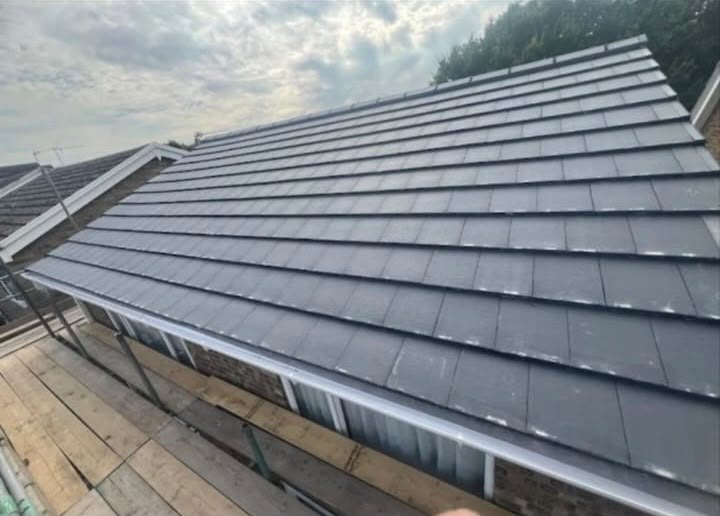
The old town, and 30.7% of the stock predates 1919, carries plain tile, clay tile and natural slate, much of it laid before anyone thought about underlay. The post-war streets and the bungalows carry concrete tile, most of it interlocking. There is thatch here and we decline it, so we say at the visit which part we can take on. Lead is one of the few materials salt air leaves alone, which is why flashings, soakers, valleys and abutments are worth doing in code rated sheet rather than sealing a junction with mastic and hoping.
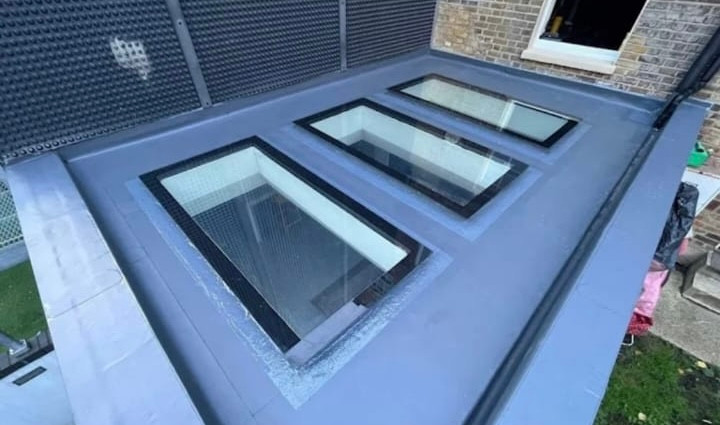
On a flat roof the upstand at the abutment lets go before the field of the roof does on a plot this exposed, so the deck and the falls come first. Metal gutter brackets corrode faster here than anything else on the building, and a run that has dropped at one bracket overflows onto the fascia. Damp air that never quite dries keeps moss in the tile laps, and clearing it is done at low pressure, because a lance takes the face off an old tile. On a bungalow the loft is large relative to the house, so insulation and eaves ventilation are the best money on the job, and Approved Document L sets the standard a renovated roof is expected to reach.
How it runs
From your call to a written price
Same team throughout, one person to ring, and an itemised quote: scaffold, strip out, battens and membrane, the covering and each junction on separate lines. Yarmouth has no conservation area of its own, so on an unlisted house a like for like re-cover, a repair, new rainwater goods and rooflights sit inside ordinary householder permitted development, with no application and nothing standing more than 150mm above the roof plane, and Planning Portal guidance sets out the limits. The catch here is the listed buildings: 48 entries in a small town, and a listed roof needs listed building consent for work an unlisted one would not need permission for at all. We check the address before we price it. Isle of Wight Council for both.
Cost
What decides the price of a roof
No rate per square metre: on a roof that is the least useful number there is. We are on the mainland, so an island job is planned around a crossing and the platform goes up for a booked run of days. The harbour streets are tight and some have no rear access, while the bungalows are low enough to work off a tower. It is work at height, and the work at height rules are why the platform is a priced line rather than an optional extra. Ask anyone else quoting whether the scaffold is in the price and who pays for the skip.
If it is leaking now
Water coming in today
Ring rather than use the form. Anything letting water in goes to the front of the queue, and the first visit makes it safe and watertight while you decide. Be straight with us on the phone about how fast the water is coming in, because we cross the Solent to reach you and cannot always be there within the hour. The phone is answered 24 hours for emergencies; scheduled work runs Monday to Friday, 8am to 6pm.
Worth knowing
Salt changes the specification, not the covering
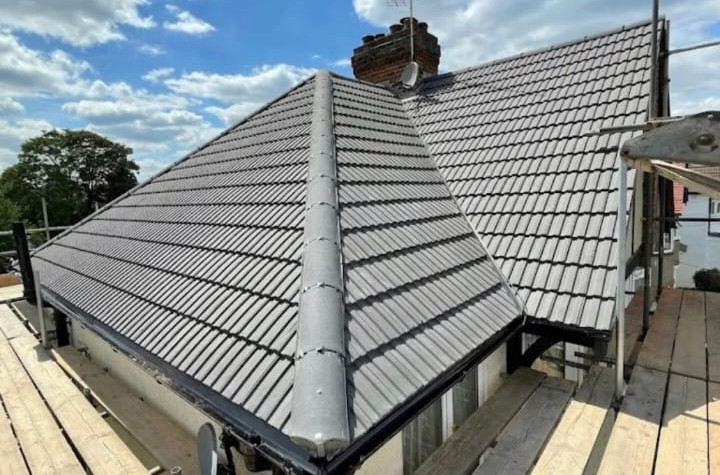
The one thing that genuinely changes a roof here is the air. Salt carries inland on the wind off the Solent, settles on everything, and keeps a surface damp in between showers instead of letting it dry. Tile, slate and lead do not much care. Steel does. Galvanised nails, tile clips, gutter brackets and the screws in a fixing system thin from the edges in, and they do it fastest on the elevation that faces the weather.
So the useful question to ask about a quote here is not what the covering is, it is what is holding it on. Stainless nails and clips on the exposed slopes cost very little more than galvanised at the time and are the difference between a roof that lasts its life and one you patch every year. It also means a roof here is worth a look after a hard winter even when nothing has moved, because the fixings go quietly.
Who you are dealing with
A local firm you can check
We come over from the mainland for island work, covering Yarmouth, Norton, Freshwater and the PO41 addresses around the harbour, with Isle of Wight Council for planning and building control. Bournemouth Roofing & Building Ltd, registered in England and Wales, company number 15471719, which you can look up in a minute. Thomas Hannen's business, and he is the one who comes out to price the job, not a salesman. A verified customer's 10 out of 10 on Checkatrade. The visit and the written quote are both free.
Questions
Yarmouth questions we get asked
How do you get materials over to the island?
On the ferry, which is why the survey has to be right the first time. Yarmouth is across the water from us, so tiles, battens, lead and scaffold are ordered once and brought over together rather than fetched in stages. That means the measure is taken carefully and the written quote lists quantities, because a shortfall is not a ten minute run to the merchant. Working dates get fixed around the crossing.
Most of the old town is pre-1900. What does that mean?
Soft mortar, small nails, and lead that has done its time. Almost a third of Yarmouth, 30.7 per cent, predates 1919 and 27.4 per cent of it went up before 1900. On buildings of that age the mortar is lime and the covering was nailed rather than clipped, so we repair in lime instead of cement, keep original slate where it is sound, and match what comes off before ordering anything new.
We are nearly three kilometres inland. Does salt still bite?
It does, because the air carries it a good deal further than the spray. At 2.9 kilometres from the coast Yarmouth gets salt laden air rather than a soaking, and that is enough to corrode nails, clips and the edges of lead from the outside in, and to hold surfaces damp between showers. You end up with a covering that looks sound while the things fixing it down have gone.
Why do the bungalow verges here need doing so often?
Long low runs of edge standing in a salty wind. Bungalows are 35.7 per cent of Yarmouth, and a single storey house carries more verge and more hip per property than a two storey one, all of it at the height where wind rolls over the roof edge. Mortar bedding across that much exposed edge cracks and drops in sections. A mechanically fixed dry verge holds better, and whether it fits depends on what is already up there.
Which council do I apply to for consent here?
The Isle of Wight Council is the planning authority, not a mainland district. Yarmouth has no conservation area of its own, so for most houses a like for like re-covering is maintenance and needs no application at all. The 48 listed entries here are the exception, the George Hotel and the parish church of St James among them, and on those consent covers the covering material, the mortar, and anything cut into a slope.
Nearby, and next door
Roofing near Yarmouth
Roofing nearby
Our other trades in Yarmouth
Roofing guides
Concrete vs clay roof tiles: which is right? Planning, building regs or listed building consent Storm damage to a roof: the first 24 hoursEverything we do in Lymington Roofing, all areas Every area we cover
Free quote
Get a written price for your Yarmouth roof
Send the postcode and what you have noticed. We come over, get on the roof, look in the loft and put the price in writing.