Plastering in Yarmouth
Plaster inside and render outside, across Yarmouth and the west of the Island. We sound the wall before we price it, and the quote comes in writing.
The site visit is free and so is the written itemised quote. Thomas Hannen prices every job himself.
If a patch of wall in a Yarmouth house feels damp in muggy weather and dries out in a settled week, it is usually salt in the plaster rather than a leak. That plaster has to come off and go back on a backing coat that keeps the salts away from the new surface. Skimming over it will not hold.
People here ring us about three things. A patch on a wall that has been painted over twice and keeps coming back, usually on the side of the house that takes the weather. A ceiling that has cracked, sagged between the joists and started dropping grit. Or a place that is being got ready, whether that is a house sold in the spring or a room that has to be right before the season starts, and wants skimming flat quickly and cleanly.
We come out, sound every wall and ceiling in the rooms concerned rather than the one you rang about, and tell you which of those you have got. Being an island job we plan it as whole days with everything on the van, so we are not disappearing halfway through.
The work
Rooms finished between one booking and the next
Solid walls in the old town. A good third of the housing here predates the First World War, and those walls are solid: no cavity, nothing underneath to stop ground water rising, and a face that has to let moisture out again. Where the plaster has blown it sounds hollow to a knuckle for the first foot off the floor and solid above it. We hack off only what has let go, brush the background back dry, then put on a haired lime backing coat and a breathable finish. Gypsum hardwall on a wall like that seals it, and the same patch is back within two winters.
Overhead in that stock it is riven lath with the plaster pushed through to key on the back, and it is the key and the nails that fail rather than the plaster you see. Once a third of the key has gone the ceiling hangs on very little and bellies down. Down it comes, up goes plasterboard, and it is skimmed, a day for a bedroom. Where it is sound and only tired we secure it from above and skim over instead, which keeps the ceiling line of an old room.
Bungalow ceilings and skimming. Better than a third of the homes here are bungalows, and a bungalow is nearly all ceiling: the same area as the floor, with the loft sitting straight on top of it. That makes a tired ceiling less work than people expect, because it can usually be overboarded and skimmed rather than taken down, and the access is from a hatch rather than a tower. The walls on that stock are gypsum on block, still sound behind the paper, and want a skim rather than a strip. Dust sheets go down and the surface is prepared, with PVA where it is dusty. Where one has blown, the backing coat is floated to a rule, browning where the block pulls and bonding on a dense face.
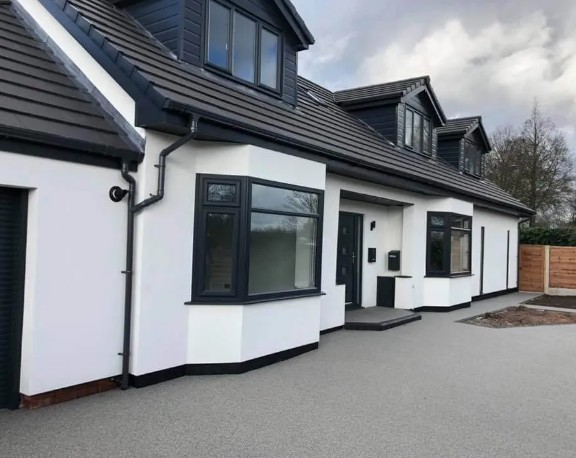
One home in seven in the town is a flat, and a fair number of rooms have to be finished between one booking and the next: patching after a bathroom leak, making good where a kitchen has come out, a corner run in again on a new angle bead and a stop bead at the reveal, a hallway skimmed and left clean. If the outside of a building is involved rather than the inside of your own rooms, the freeholder normally has to instruct it, worth settling before you get quotes. Outside, this close to the water a rigid sand and cement render has a hard life: it cracks, water gets behind it and the face blows off. We cut back to sound material, mesh reinforce the repair and match the topcoat, and on modern blockwork it is a primer, a mesh reinforced basecoat and a silicone thin coat off a bell cast bead clear of the damp course. On old fabric it is lime.
How it runs
From your call to a written price
Permission, plainly. We survey the rooms on a site visit, not from a photograph, and the quote is itemised: protection, hacking off, boarding, the backing coat, beads, finish and disposal on separate lines. Plaster inside an ordinary house is your business and nobody else's, and patching render like for like is repair. The town carries around fifty listed entries, though, the George Hotel and the parish church among them, and on a listed building consent reaches the internal plaster as well as the front elevation, so find out before anyone puts a bolster into a wall. Planning Portal guidance on external walls sets out where rendering stops being permitted development. Re-render most of an elevation and Approved Document L brings building control in. The Isle of Wight Council is the planning authority here.
Cost
What decides the price
There is no useful rate per square metre: the square metres are the easiest thing to measure and the least useful thing to know. A solid wall in the old town under lime that is full of salt, a bungalow with sound gypsum on block, and a flat patched and papered a dozen times are three different prices. Access matters as much: a house on a narrow street in the old town with nowhere to leave a van, a first floor flat up a shared stair, and a bungalow with a drive at the door. Ask what backing coat is going on and why.
If it has just gone
A ceiling down, or plaster off after water got in
Ring rather than use the form. A ceiling that has cracked and dropped, plaster off a wall after a leak, or render that has come away from a gable goes to the front of the queue. We come over on the Lymington ferry, so island work is planned as whole days, and when you ring we will tell you which crossing we can be on rather than promise an hour.
Worth knowing
Salt in the wall, and why the patch comes back
This close to the water, salt gets into masonry and stays there. It arrives in wind blown spray, and in the old town it is often in the wall already, from mortar and sand that came off a beach a long time ago. Salt in plaster behaves in a way that fools people, because it pulls moisture out of the air.
So the patch feels damp in a muggy week and dries out in a settled one, the paint blisters, and there is sometimes a fluffy white crust you can rub off with a thumb. That is not a leak and it is not something a damp course injection will touch, because the salt is in the plaster rather than in the wall behind it. The test costs nothing: watch whether the patch changes with the weather rather than with the rain.
Fixing it means taking the salted plaster off rather than covering it. We hack back well beyond the visible patch, brush the masonry down dry rather than washing it, which only carries the salts deeper, and let the wall stand while we watch it. Then the backing coat does the work: on old fabric a haired lime coat with a sacrificial finish gives the salts somewhere to go, and on newer fabric a salt resistant renovating backing keeps them away from the new surface.
Skim, then a thinned mist coat and a breathable mineral paint rather than vinyl, which seals it all in again. It takes longer than a skim and it costs more, and that is the honest trade-off: anyone offering you a one day skim over a wall like this is quietly selling you the same job again next year.
Who you are dealing with
A local firm you can check
We cover Yarmouth and the PO41 villages, Freshwater, Totland, Norton, Shalfleet and Ningwood, and we come across on the Lymington ferry. Bournemouth Roofing & Building Ltd, registered in England and Wales, company number 15471719, which you can look up in a minute. Thomas Hannen's business, and he is the one who comes out to price the job, not a salesman. A verified customer's 10 out of 10 on Checkatrade. The visit and the written quote are both free.
Questions
Yarmouth questions we get asked
Do you actually cross to the Island for work?
We do, and it changes how a job is planned rather than whether it happens at all. Yarmouth is a ferry crossing away, so we work in longer blocks on the Island instead of dropping in for an hour, and materials come over in one load. That means we would rather look at everything you want doing on a single visit. Thomas comes across to price it himself and that visit costs nothing.
Most of the old town is pre 1900. Does that mean lime?
On the solid walled buildings, it usually does. 30.7% of Yarmouth predates 1919 and the largest single block was put up before 1900, so a lot of the town has walls with no cavity that dry through their own surface. Gypsum on a wall like that seals it, and the damp comes out somewhere else, normally as blown plaster a course higher. Lime backing with a lime finish keeps the wall working as it was built to.
Why does the paint keep lifting off the seaward wall?
Salt, in most cases. Three kilometres in from the water is close enough for salt to be carried onto the wall, where it draws moisture out of the air and holds the surface damp between showers. Paint that cannot breathe lifts away in sheets. Any metal in the render, beads and mesh especially, corrodes from the edge and pushes the coat off in a line. Stainless beads and a breathable coating deal with both.
The George Hotel is listed. Are the cottages nearby too?
A good number are. Forty eight listed entries fall in Yarmouth, including the George Hotel and the parish church of St James, and that is a high count for a town of this size, so an older property near the square is worth checking. Yarmouth has no conservation area of its own, so on unlisted houses appearance control is lighter than it is in the mainland villages. The Isle of Wight council handles both sides of it.
Our bungalow ceiling is stained at the edges. Cause?
Cold, in most cases, rather than a leak. Bungalows are 35.7% of Yarmouth dwellings, and a bungalow ceiling has cold loft on the other side of it across the whole plan. Warm damp air reaches the perimeter, which is the coldest strip in the room, and condenses there, so you get a grey band a few inches wide right round the edge. Setting over it hides that for a season. Insulation and ventilation stop it.
Nearby, and next door
Plastering and rendering near Yarmouth
Plastering and rendering nearby
Our other trades in Yarmouth
Everything we do in Lymington Plastering and rendering, all areas Every area we cover
Free quote
Get a price for plastering in Yarmouth
Tell us the address and what you have noticed. We will come out, sound the walls, and put an itemised price in writing. No charge, and no obligation.