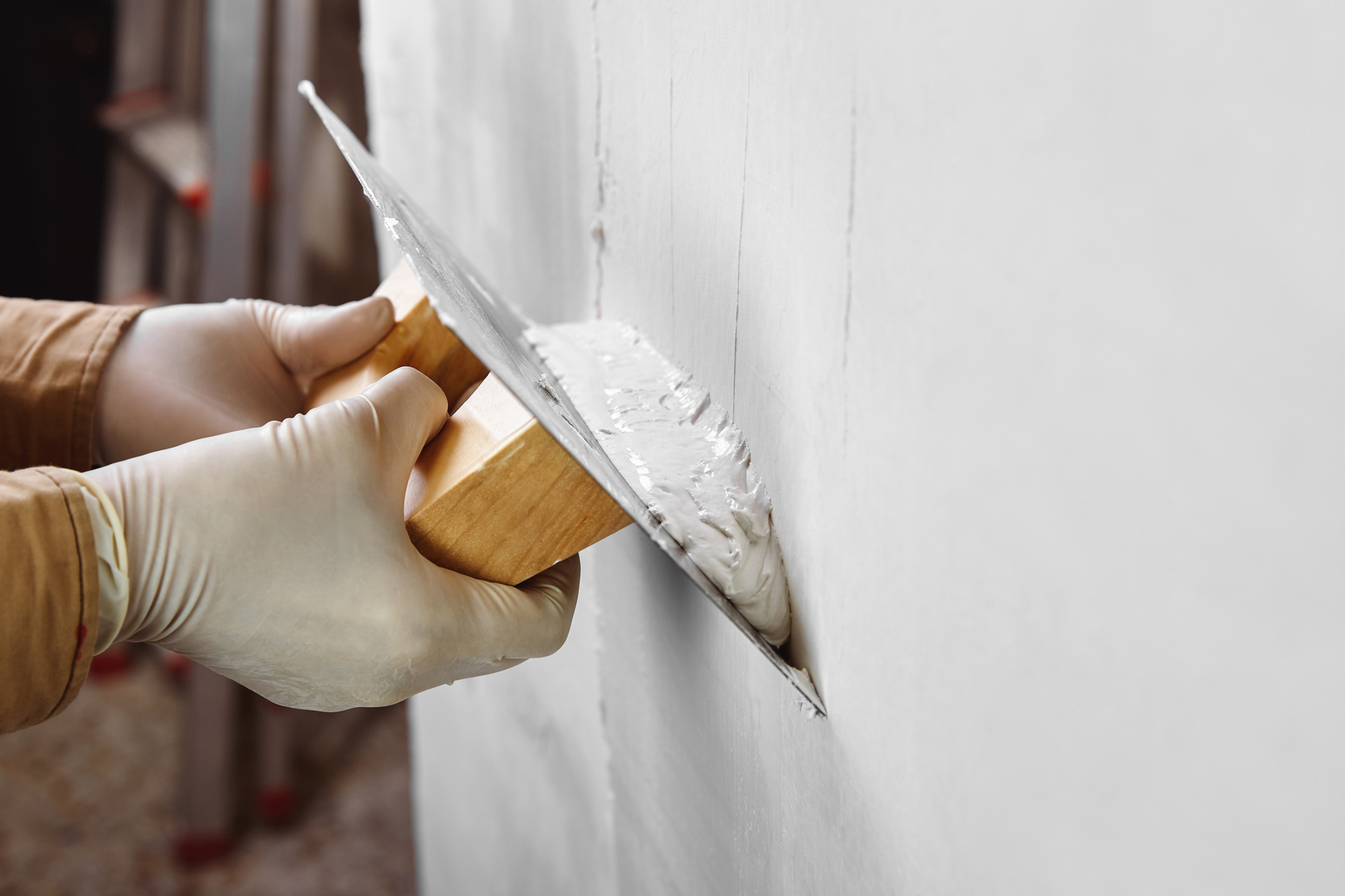
Plastering in Norton
Bungalow ceilings, lime plaster on lath, blown and damp walls put right, dry lining and render around Norton and the West Wight, priced in writing after a free visit.
The site visit is free and so is the written itemised quote. Thomas Hannen prices every job himself.
Plastering in Norton splits neatly in two. Anything built since the war takes a straightforward skim once the boards are screwed tight and the joints are taped. The older cottages have lime plaster on lath, and those need lime putting back rather than a gypsum finish over the top, which is the single most expensive mistake made on this stretch of the West Wight.
Three jobs bring people to the phone here. A bungalow ceiling that has sagged, stained or simply had enough, which is the biggest single surface in the house and the one you look at every evening. Plaster that sounds hollow and feels cold and slightly damp on a solid wall, usually on the side the weather comes from. And a room being brought back into use, a conservatory turned into a proper room or an extension that needs boarding and finishing.
We come over to the Island for the visit, tap the walls and ceilings, and tell you which of those you have got before anybody talks about money. The site visit and the written itemised quote are free, and if the honest answer is that a ceiling only needs decorating, we will say so.
The work
Salt keeps a seaward wall damp long after the rain
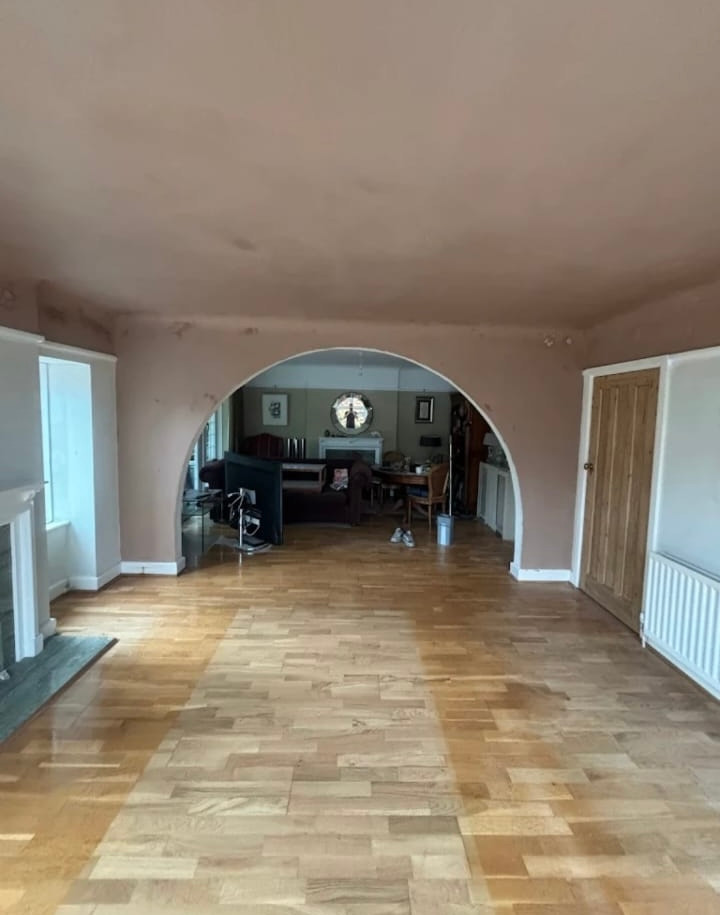
Salt keeps a seaward wall damp long after the rain. A third of the homes around here are bungalows, and that changes the work more than people expect. The ceiling is the largest surface in the building, there is no floor above to work from, and the cold loft sits straight on top of it, so a small roof leak or a bath overflow shows up as a stain and a sag rather than a drip. Where the boards are sound they get screwed back tight, taped and skimmed. Where a board is soft or stained through it comes out, or a fresh layer of plasterboard goes over the lot, which is quicker and far cleaner than dropping a whole ceiling into a furnished room.
A quarter of the stock here predates 1919, and the older cottages between here and Yarmouth were built with a soft lime plaster pushed through timber lath, with thatched and stone properties among them. Those are repaired in coats: loose material off back to a firm edge, broken lath renewed, a haired backing coat worked through to form keys, a float coat ruled flat and a fine finish over it. Slow, because each coat has to set before the next, and worth it on a wall that has to breathe.
Tap along a wall and the sound changes where the plaster has let go of the brick or stone behind it. On the seaward side, and the water is a little over two kilometres away, that is usually driven rain getting through a solid wall or through a cracked render panel, and the salt in it keeps the surface damp long after the weather has passed. We take the blown material off, sort out what is wetting the wall, let it dry, then put a backing coat back, bonding on a mixed background, browning or hardwall on brick and block, floated out and ruled level before the finish coat.
There is plenty of render and pebbledash here. Sand and cement goes rigid and crazes, and once water is behind a panel it rings hollow. Isolated damage is cut out and patched. A whole elevation that has gone comes off and goes back as a thin coat system, primer, a mesh reinforced basecoat and a silicone or monocouche topcoat, with a bell cast bead at the base so water drips clear of the wall. Traditional work is still a scratch coat, a render coat and a float, and on an old solid wall we would use lime rather than cement.
New rooms are extensions, garage conversions and conservatories turned into proper rooms. Plasterboard on dot and dab where there is blockwork, board on stud where there is not, tape and joint or a full skim to suit the finish, angle bead on the external corners and stop bead at the reveals. On a conversion the insulation behind the board is the part building control cares about, so that gets settled before anything is boarded.
How it runs
What to expect from us on site
Same team from the first visit to the last, one number to ring, and none of it sub-contracted out. The quote is itemised: what comes off, how each background is prepared, the beads, the backing coat, the finish coat, the making good and the waste. Anything uncovered that nobody could have seen, a wet wall or rotten lath, stops the job for a photograph and a price. The Isle of Wight Council is the planning authority and building control here. Nothing we do inside an ordinary house needs planning permission, and with no conservation area over Norton an external finish is usually your own choice; the listed cottages nearby are the exception and a different conversation.
Cost
What it costs, and what moves the price
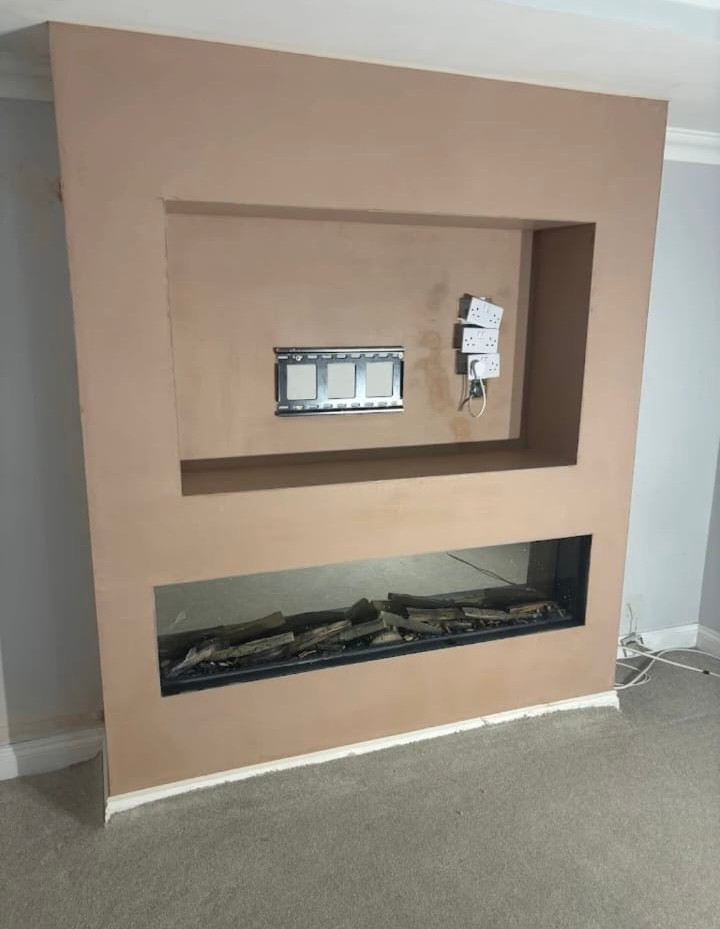
There is no rate per square metre. Old plaster still stuck fast takes a skim; a hollow wall has blown off the brick and has to come off, which brings a backing coat back into the job. A detached bungalow with a drive and a cottage on a narrow lane with the van up the road are different jobs, and on the Island materials come with a crossing attached, which is why they are listed separately. A scaffold is a priced line under the work at height rules, and Approved Document L can ask for the insulation behind a renewed render to be improved.
If it has started to come down
Damp, blown plaster and a ceiling that has moved
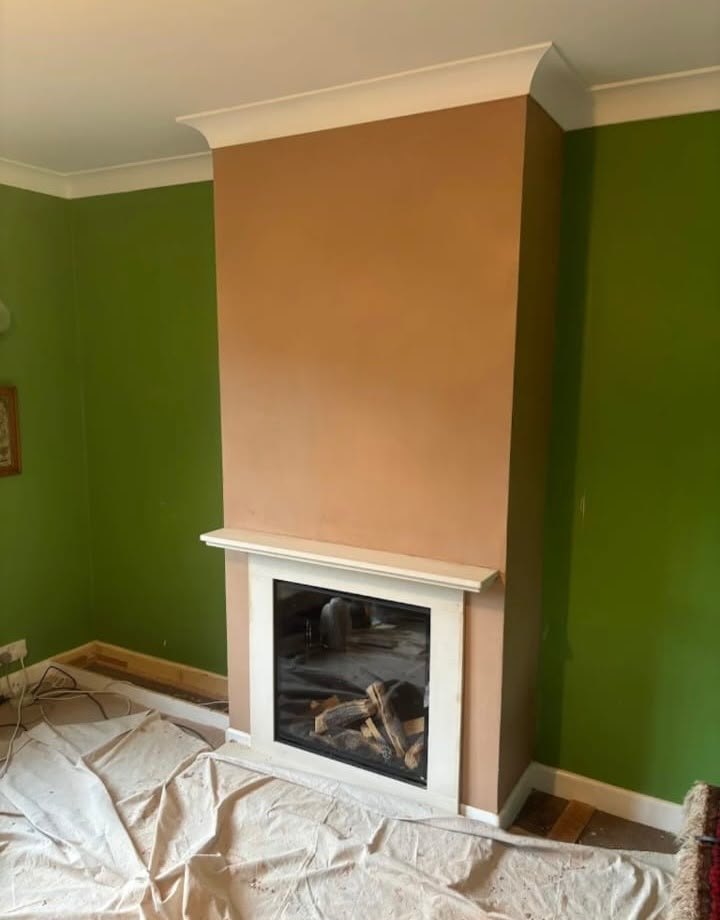
Ring rather than use the form. A ceiling that has begun to bow, a lath ceiling pulling away from the joists, or plaster coming off a wall in sheets goes to the front of the queue. Crossings mean an Island call is usually next day rather than same day, so ring and we will talk you through making it safe in the meantime.
Worth knowing
A quarter of the houses here want lime, not gypsum
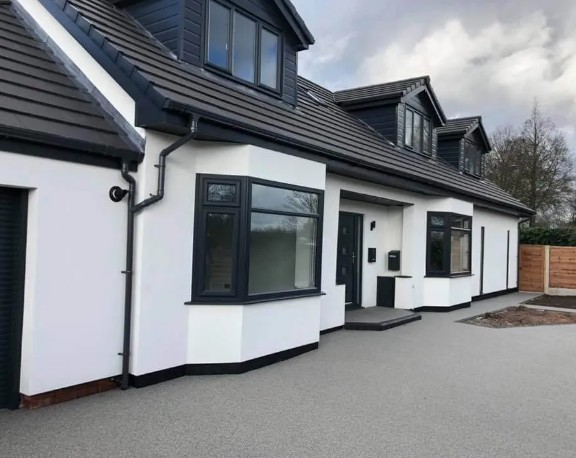
Around a quarter of the housing on this part of the West Wight was built before 1919, and that older fabric behaves differently from everything built since. A solid stone or brick wall with no cavity gets wet in a storm and dries out again through its own surface, and the lime plaster on it was chosen because it lets that happen.
Skim it with gypsum, or seal it with a modern paint, and the water that used to leave through the wall has to go somewhere else. It goes sideways and upwards, and a year or two later the new finish is hollow, stained and salty around the edges of the repair. That is not bad luck. It is the material.
You can usually tell which you have got. Tap a ceiling: lath and plaster sounds dull and slightly springy between the joists, and there will be hair in the back of any loose piece. A solid wall that is cold to the hand at the bottom and dry at the top is another sign. Two decisions follow from that. First, on an old cottage, price the repair as lime and accept it takes longer, because each coat has to go off in its own time and it will not be rushed for anyone.
Second, do not assume the whole house is the same: most of these places have a post-war extension on the back where ordinary board and skim is exactly right, so it is common for one quote to cover both methods in one property. We mark which wall is which on the quote so you can see where the days are going.
Who you are dealing with
The local firm doing the work
We work across Norton, Freshwater, Totland and Yarmouth and the PO41 addresses around the Western Yar, coming over on the Lymington crossing, with the Isle of Wight Council for planning and building control. Send the postcode and we will tell you which day we are on the Island next.
Bournemouth Roofing & Building Ltd, registered in England and Wales, company number 15471719, which you can look up in a minute. Thomas Hannen's business, and he is the one who comes out to price the job, not a salesman. A verified customer's 10 out of 10 on Checkatrade. The site visit and the written itemised quote are both free.
Questions
Norton questions we get asked
You are on the mainland. Do you really cross for this?
We do, and it shapes how a job is run rather than whether it happens. Crossing to the Island means materials go over in one load and we work consecutive days instead of coming and going, so a room is stripped, backed, skimmed and finished inside a single visit. It also means the figure is fixed before anything is loaded. Thomas Hannen comes over to look at it first, and that visit is free.
A quarter of Norton predates 1919. Is lime the answer?
For those walls, usually. Twenty six per cent of the housing here was built before 1919, and a solid wall of that age has to breathe, so a gypsum skim over one still carrying moisture will blow off again within two winters. Lime lets the wall dry out through the finish. The backing coat decides whether it lasts, not what goes on the face, and that is where the money belongs.
Our bungalow ceiling has sagged. Board over or take down?
Take it down where it is lath and plaster, which in the older bungalows here it often is, and a third of the housing in Norton is single storey. A sagging lath ceiling has lost its keys above the laths, and boarding over the top simply hangs more weight from the same failed fixings. Tapping tells you which it is: laths give a dull uneven note, plasterboard is even. The joists get checked before reboarding.
Does being this close to the Solent shorten a render's life?
It shortens the life of every metal component in it. Norton sits a little over two kilometres from the water, and salt carried on the wind keeps a wall damp between showers and corrodes beads, lintel ends and fixings from the exposed edge inwards. The render can look sound while the bead behind a corner has gone entirely. Once that corner breaks off, water is inside the base coat and the repair gets bigger.
Who do we ask about permission over here?
Isle of Wight Council, which is the planning authority for Norton. There is no conservation area over the settlement and twelve listed entries in the area, so most houses can be re-rendered or replastered without asking anybody. Listed status is the thing that changes that, and on a pre 1919 property it is worth checking before old plaster is stripped, because the consent covers the inside of the building too.
Nearby, and next door
Plastering and rendering near Norton
Plastering and rendering nearby
Our other trades in Norton
Everything we do in Lymington Plastering and rendering, all areas Every area we cover
Free quote
Get a written price for plastering in Norton
Send the postcode and tell us which rooms. We come over, tap the walls and ceilings, and put the price in writing with the days it will take.