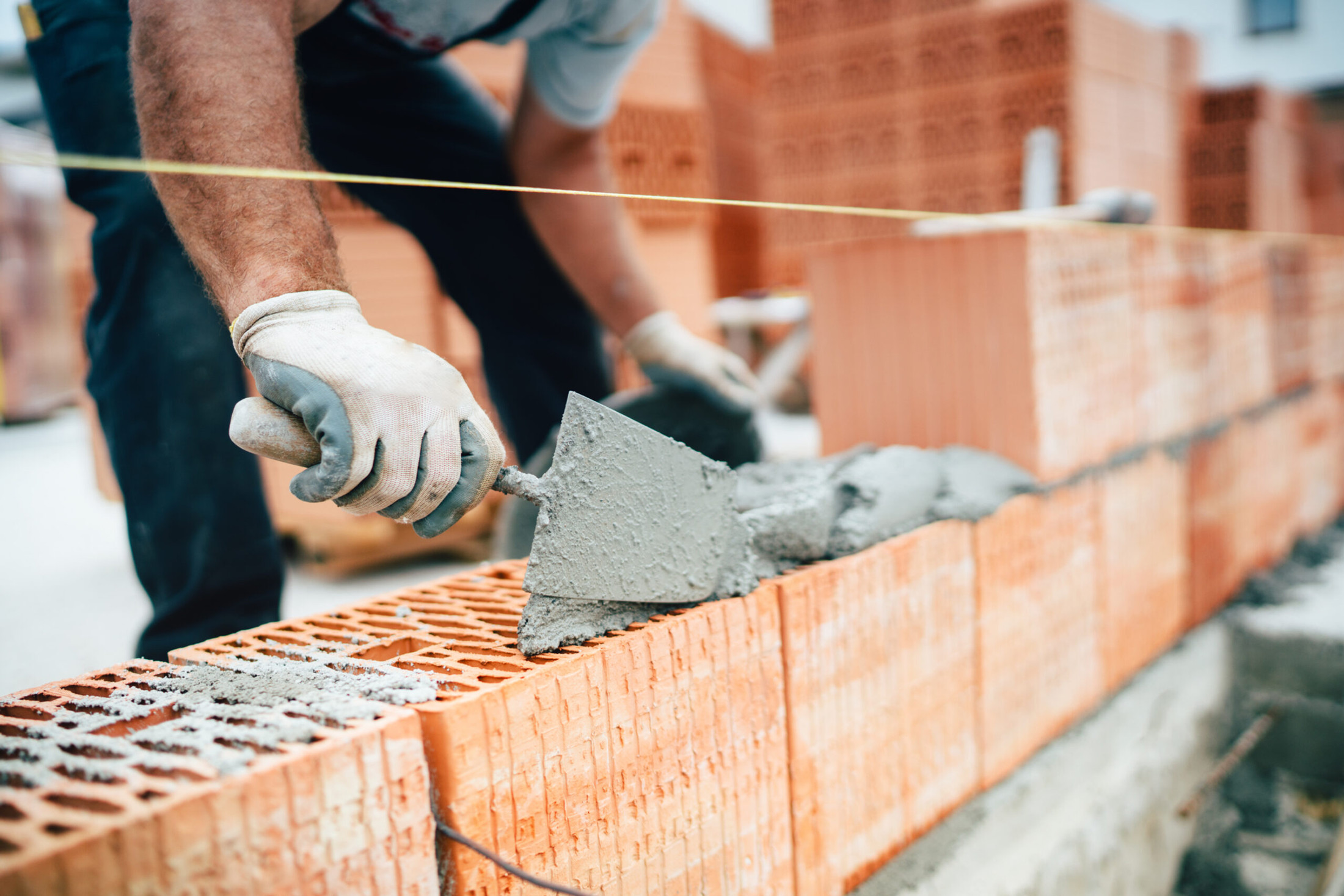
Norton repointing, matched to the wall it goes into
A sample off the wall, a trial panel you look at in daylight, joints raked back by hand, and spalled faces cut out and replaced.
The site visit is free and so is the written itemised quote. Thomas Hannen prices every job himself.
Nearly all of the colour in a mortar comes from the sand, not from the lime or the cement. That is why a repointed panel at Norton can look wrong on a wall matched carefully on everything else, and it is the first thing we settle before anything gets raked.
People here ring us about three things. A wall where the joints have gone friable, crumbling under a key. A patch of pointing that is now an obviously different colour from the rest of the elevation. Brick faces spalling off in thin plates, usually low down or on the side that takes the weather off the estuary. And penetrating damp on an inside wall a day after a blow rather than during it.
None of that needs a wall taken down. It is all mortar. The site visit is a survey rather than a look: every face gets gone over, joints are scraped to see how far back the failure runs, courses are tapped for the hollow note that means the pointing has parted from the brick, and a sample of the sound original comes off somewhere sheltered so there is something real to match to. It comes back as a written itemised quote, elevation by elevation. The visit and the quote are free.
The work
The mortar jobs we come over for
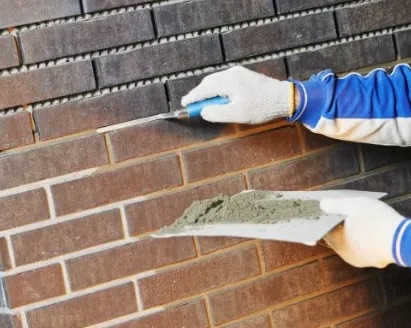
Matching before raking. The first thing off the wall is a sample of sound original mortar from a sheltered spot where the weather has not changed it. That sample decides the sand, the binder, the gauge, the colour and the texture, and it is settled before the platform goes up, because on this side of the water nothing gets fetched back mid week. We make up a trial panel on a discreet part of the wall for you to look at in daylight. The profile is settled with it: a fine flush or slightly recessed joint on the older walls, weather struck or bucket handle on anything postwar.
Solid walls in lime. Around a quarter of the housing here predates 1919 and has no cavity behind the brick. Those walls dry out through the joint, so the mortar has to stay softer and more open than the masonry. Joints are raked by hand to roughly twice their width, with the angle grinder left in the van because a disc cutter takes the arris off. They are damped down and brushed out before filling, then go back in an NHL lime or lime putty gauged to the sample, which keeps the wall breathable, with BS EN 459 the standard the binder is bought to.
Postwar cavity brickwork. Getting on for half the stock here went up between 1945 and 1982, a single outer skin of hard fired brick in cement and sand, and the Victorian and Edwardian walls at the older end of the village behave nothing like it. That joint does not wash out; it pits and erodes back at the arris, and once water stands in the hollow a frost lifts the surface off in flakes. A good deal of mortar from that period had lime in it as well as cement, so matching the gauge matters as much as matching the colour.
Bungalow walls. A third of the dwellings here are single storey, which puts a long run of wall at eye level and most of it inside the reach of a tower. That takes the biggest line out of a quote, and it means every metre of the finished joint gets looked at closely, so the colour match and the profile have to be right rather than nearly right.
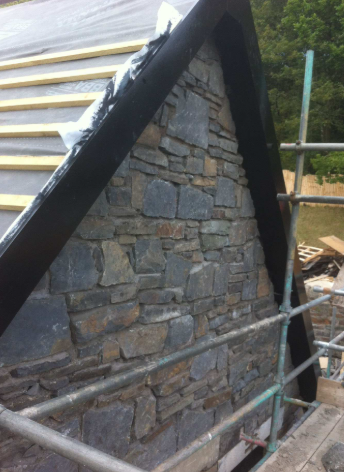
Spalled faces and exposed boundary walls. Where a face has blown we cut the brick out whole and turn or replace it rather than filling the hollow, which never matches and never lasts. Freestanding walls near the water take weather on both faces and have nothing over them, so they fail from the top down: a lifted coping or an open bed joint lets the wall fill from above.
What we will not do is point a wall whose real problem is somewhere else, whether that is movement, a gutter running over or ground built up above the damp proof course. Pointing in front of any of those buys a season and no more.
How it runs
From your call to a written price
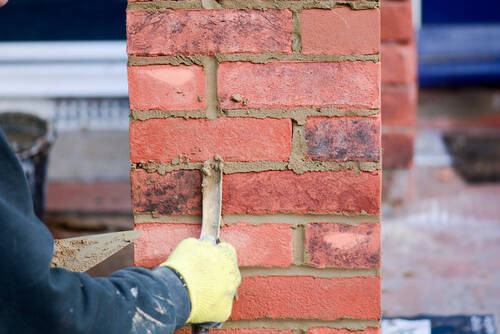
Same team from first visit to last, one person to ring, no sub-contracting. The quote is itemised: access, raking out, the mix, the area of each elevation, brick replacement and disposal on separate lines, so you can compare it against anyone else's.
Nothing is left open overnight and the site is swept at the end of each day. If something turns up that nobody could have seen, you get a photograph and a price first.
Repointing like for like counts as repair rather than development, so at most addresses here there is nothing to apply for and building control does not get involved. Planning Portal guidance on external walls sets out where repair stops and alteration begins. The Isle of Wight Council is the planning authority, there is no conservation area covering Norton, and there are twelve listed entries locally. On a listed wall the mix and the joint finish are part of what consent covers, so it has to be in place before a joint is opened and doing it without consent is a criminal offence. Where a wall is shared with next door, the Party Wall etc. Act 1996 puts a notice period on the work.
Cost
What decides the price of a repointing job
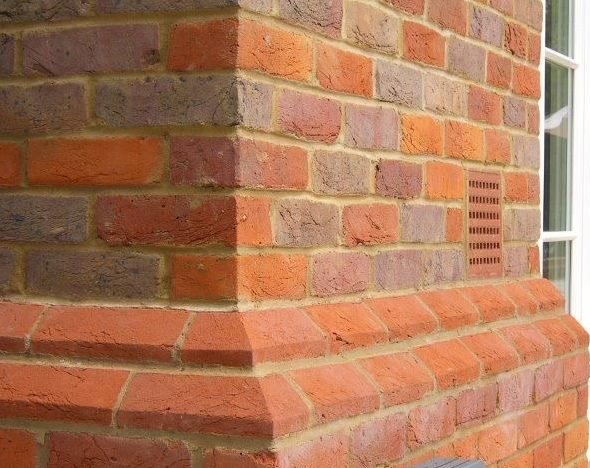
No rate per square metre. The area tells you almost nothing until somebody has looked at the joints.
Getting to it. A bungalow elevation off a tower, a two storey gable facing the water and a boundary wall are three different set ups before a joint is opened. A chimney or a gable wants a scaffold; a boundary wall wants nothing. The work at height rules are why access is a priced line rather than a rate.
The joints decide it, not the wall. How deep they come back, and whether the faces have spalled, sets the hours far more than the area does.
Matching is the part that shows. Lime is slower to work and slower to cure, and right on most pre-1919 walls here.
Comparing quotes? Ask how deep the joints are raked and by hand or by disc, what the mix is and whether it was matched, how many spalled bricks are being replaced, and whether the scaffold is in the price.
If water is getting in
Open joints, and water coming through the wall
Ring rather than use the form. Joints washed out let driven rain through to the inside face, and on a chimney it finds the flashings. We come and look, sheet the worst if the weather is against us, and price the elevation once it has dried enough to see what is sound. Here that is usually the south west face or the top of a freestanding wall, the parts with no shelter at all. The phone is answered 24 hours for emergencies; scheduled work runs Monday to Friday, 8am to 6pm.
Worth knowing
The colour of a mortar is the sand in it
People assume mortar colour comes out of the bag with the binder. Lime is off white and grey cement is grey, and neither is what you see when you look at an old joint from a few feet away. What you see is the sand, which makes up the bulk of the mix, and sands differ enormously in colour and grading depending on where they were dug. That is why an otherwise careful repoint can read as a pale stripe or a yellow patch: the mix was right in strength and wrong in sand.
It matters here because getting the sand wrong is not quick to put right. Matching means taking a sample off the wall, breaking it down to see what size and colour of aggregate is in it, then finding a sand that reads the same once weathered, which usually means blending two. That gets settled and a panel made before the platform goes up, because coming back over the water for the right bag is not a morning's errand. So ask anyone quoting: what sand are you matching to, and when will we see a panel. If the answer is that they will sort the colour on the day, the wall will tell on you for years.
Who you are dealing with
A local firm you can check
We cover Norton, Yarmouth, Freshwater, Totland and the western end of the Island, broadly PO40 and PO41, under the Isle of Wight Council. You are dealing with Bournemouth Roofing & Building, trading name of Bournemouth Roofing & Building Ltd, company number 15471719. Thomas Hannen's business, and he prices every job himself rather than sending a salesman. A verified customer's 10 out of 10 on Checkatrade. The visit and the written quote are free.
Questions
Norton questions we get asked
Why does new pointing look so much paler than the old?
Partly because fresh mortar reads lighter than aged mortar and darkens as it weathers, and partly because the sand is wrong. The first sorts itself out over a couple of years. The second does not, which is why we judge a trial panel on how it will look weathered rather than on the day.
Can a mortar be matched without taking a sample away?
Not properly. You can guess a colour by eye and be close, but not the gauge or the grading of the aggregate, and those decide how the joint weathers and whether it is softer than the brick. We take a small sample of sound original from somewhere sheltered on the visit, which leaves no mark you would notice.
What is a trial panel, and when would we see it?
A square metre or so of finished pointing in the proposed mix on a discreet part of the wall, struck to the profile we intend, so you can look at it in daylight before the elevation is committed. If it is not right we adjust the mix and do it again.
Does the mortar need matching on a modern bungalow as well?
Yes, and the reason is strength as much as colour. A postwar wall was often laid in a cement and lime gauged mortar softer than a modern bagged mix, and putting the harder one in means the joint outlives the brick and the faces spall instead. We sample the modern walls the same way.
How far ahead do you need to know a job is going ahead?
Enough to get the sand and any replacement bricks over before the platform goes up, which is the part of the programme people underestimate on this side of the water. Once the materials and the panel are settled the work runs the same as anywhere, and the sequence is set out in the written quote.
Nearby, and next door
Repointing near Norton
Repointing nearby
Our other trades in Norton
Everything we do in Lymington Repointing, all areas Every area we cover
Free quote
Get the mortar matched before the platform goes up
Thomas comes over, tests the joints, takes a sample and puts the price in writing, itemised, at no cost to you.