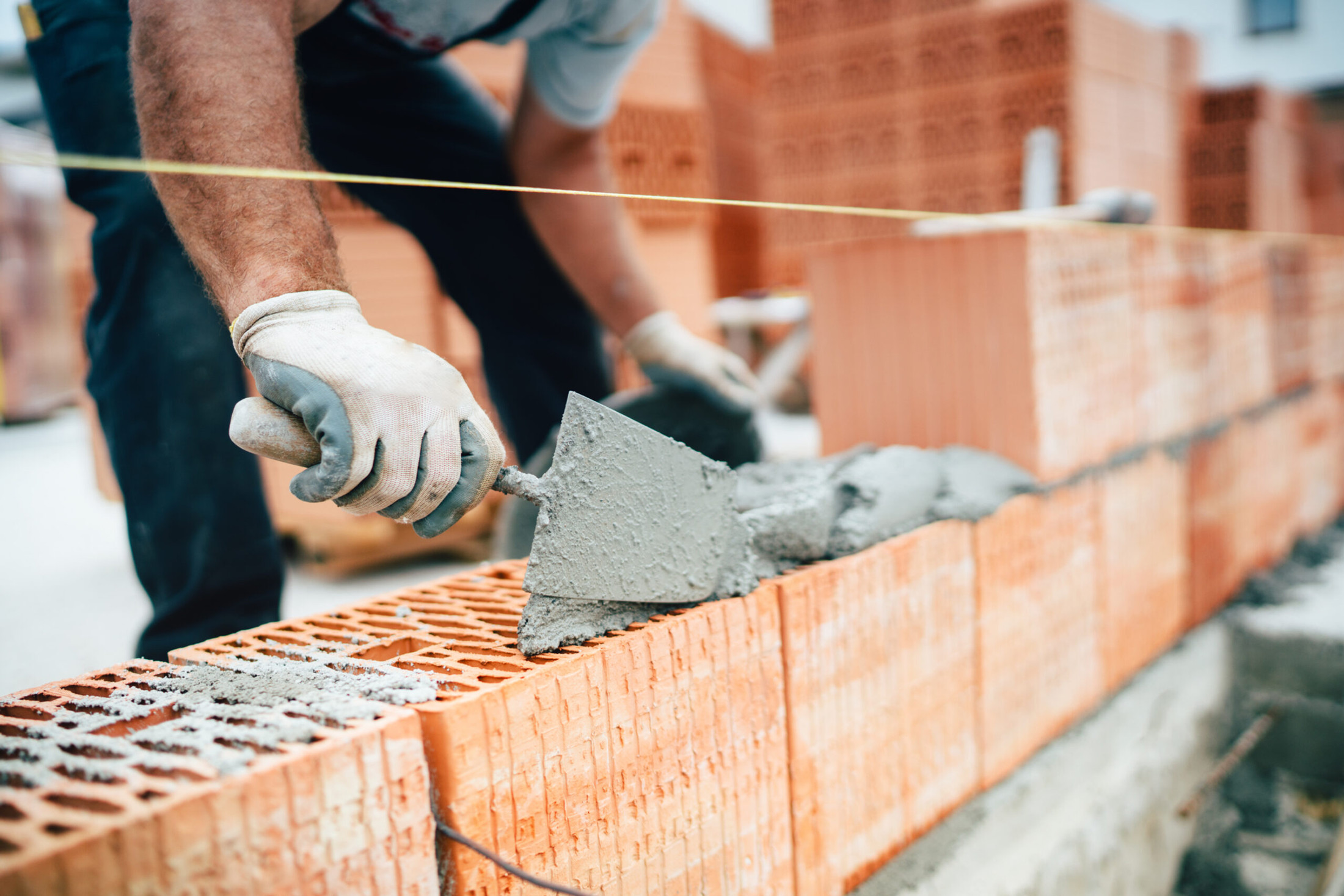
Bricklaying and repointing in Norton
Lime repointing, brick and stone repair, chimney stacks, boundary walls and new brickwork across Norton, Yarmouth and PO41.
The site visit is free and so is the written itemised quote. Thomas Hannen prices every job himself.
Norton has two very different sorts of wall in it, and they want opposite treatment. The older solid walls need a soft lime mortar and nothing harder. The postwar houses and bungalows want a matched cement mix and, often, attention to the exposed elevation only.
The calls we get from this end of the Island fall into a pattern. Joints on a bungalow have washed back and the bottom courses are damp and flaking. A cottage was repointed in a hard grey mortar twenty or thirty years ago and the brick faces have been coming off ever since. Or a garden wall or a coping facing the water has loosened and somebody wants it made safe before the next blow.
All three are readable once you are up against the wall, and none of them are readable from a photograph. We come and look, take the top of the wall and the bottom of it just as seriously as the middle, and put what needs doing in writing, elevation by elevation. The site visit and the written quote are both free.
The work
The brickwork jobs we do around Norton
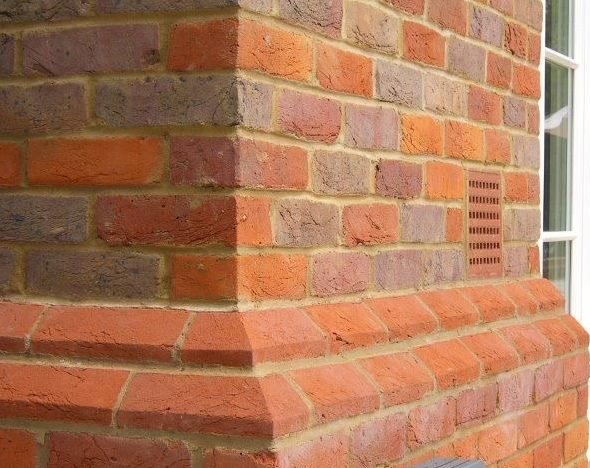
Repointing bungalow elevations. A third of the housing around here is single storey, which changes the job in two useful ways. Most of it can be reached off a tower rather than a full scaffold, so the access line on the quote is small. And a bungalow has a deep eaves overhang shading the top of the wall, so the damage is nearly always concentrated in the bottom three or four courses, where rain splashes back off a path, and on the gable ends where the overhang runs out. We rake out and point back the courses that need it and leave the ones that do not, which is far smaller than repointing an elevation for the sake of it.
Soft brick and stone in lime. A quarter of the housing here predates 1919. Those walls are solid, one unit thick, with no cavity behind them, and a good number are stone or a mix of stone and brick around the openings. On that fabric the mortar is meant to be the sacrificial part. We rake out by hand, never with a disc cutter, and point back in a breathable lime mix, an NHL gauged to the wall or a putty mix on the softest of it, finished flush so the joint sits back from the arris rather than smeared over it. Where a face has spalled off or a stone has shattered along a bed, the failed units come out and go back in a match. On old work that means sourcing a handmade or reclaimed brick, which takes ordering: everything we bring over comes on the ferry, so a matched brick is settled before the scaffold goes up.
Two kilometres from the coast the wind has a long run at anything exposed, and it works on edges. A coping is what keeps the wall below it dry, so a coping that has lifted or lost its bedding is the first thing we look at on a boundary wall, ahead of the joints. Gate piers and the returns at the end of a run take the most weathering and are usually where a rebuild starts and stops. Stacks on the bungalows here are short and squat and get overlooked because you cannot see them from the ground, and they still take the weather on four sides. We repoint them, renew cracked flaunching, reset copings and rebuild the top courses where the mortar has gone to sand, and cap a redundant stack with ventilation rather than sealing damp inside the flue.
A lot of walls at this end of the Island were rendered or painted at some point, and when the render lets go the brickwork behind it has often been sitting wet for years. We take off what is loose, put the brickwork right, replace what cannot be saved and tell you honestly whether the wall wants rendering again or would be better left as a repointed face. New work is extensions, garden rooms and porches in blockwork with a facing skin, laid in stretcher bond with the cavity, the ties, the damp proof course and a lintel sized for the opening, and taking a garden wall down and rebuilding it on a proper footing where its own weight has begun to push it over.
How it runs
From your call to a written price
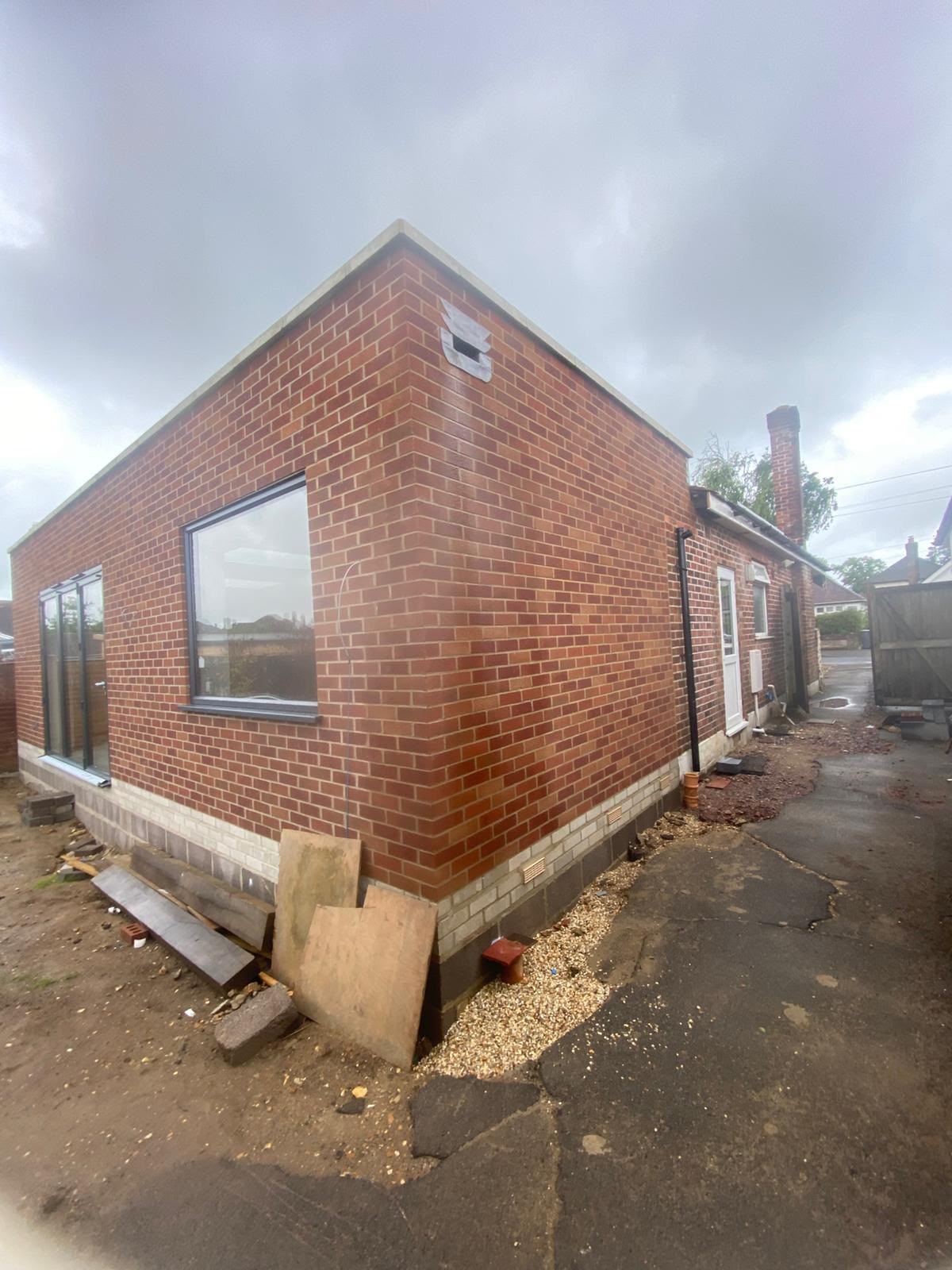
One team from first visit to last, and the price broken out by elevation so you can compare it line by line. On permission: repointing and like for like brick repair count as maintenance, so at most Norton addresses there is nothing to apply for and building control does not get involved. No conservation area covers Norton itself, but the Isle of Wight Council is the planning authority here, there are twelve listed entries in the parish, and on a listed building the mortar mix and the joint finish are part of what consent covers. The Planning Portal lists the other permissions that can apply, and where a wall is shared the Party Wall etc. Act 1996 puts a notice period on the work.
Cost
What decides the price of a brickwork job
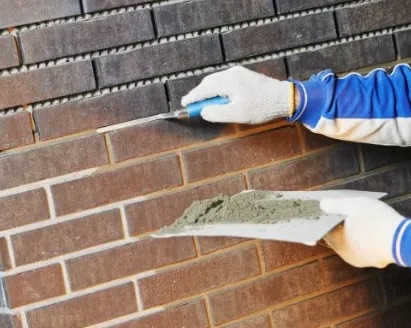
No rate per square metre: the joints decide the job, not the area. A bungalow elevation you can reach off a tower, a cottage gable where the scaffold has to stand on a lane, and a boundary wall taking the weather straight off the water are three different jobs. A stack or a gable wants a scaffold and a garden wall wants nothing, and work at height rules make the platform a priced line. Matching a brick means sourcing it, which out here means ordering ahead. Ask what the mix is and whether it was matched.
If something has moved
Loose brickwork, or a wall that has shifted
Ring rather than use the form. Anything overhead or leaning jumps the queue. The first visit is about making it safe and stable, and we price the permanent repair once we can see how far the movement goes. Out here the wind sets the priority: a coping lifted off a boundary wall, or a stack starting to lean. The phone is answered 24 hours for emergencies; scheduled work runs Monday to Friday, 8am to 6pm.
The local bit
A quarter of the walls here were built before cement
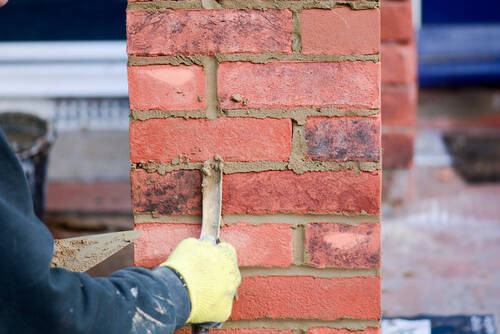
Around a quarter of the housing in and around Norton predates 1919, and that quarter behaves in a way the rest of the street does not. Those are solid walls with no cavity, built in soft brick or stone bedded in lime, and they were designed to take water in on the face and let it back out again through the joint.
The mortar is meant to be weaker than the units, so that when something has to give it is the joint and not the brick. That is why the damage we see most often on period walls here is not age at all. It is a cement repoint done thirty years ago: the joints now stand proud like ribs, the brick faces have gone hollow between them, and the wall holds damp because the water has no easy way out.
If your property is one of the old ones, the questions to ask are short. What mortar are you proposing, and is it lime. A strong ordinary cement mix is the wrong answer whatever else is on the quote. How are the joints coming out, because a disc cutter on soft brick widens the joint and chips the edges permanently, and hand tools are the only safe way.
Will you mix a sample panel and leave it to weather before doing the whole elevation. And expect the wall to take a season or two to dry out properly once it can breathe again, which is normal rather than a sign something has gone wrong.
Who you are dealing with
A local firm you can check
We cover Norton, Yarmouth and Freshwater and the PO41 addresses around them, and we come over for the job rather than squeezing it in around something else. Bournemouth Roofing & Building Ltd, registered in England and Wales, company number 15471719, which you can look up in a minute. Thomas Hannen's business, and he is the one who comes out to price the job, not a salesman. A verified customer's 10 out of 10 on Checkatrade. The visit and the written quote are both free.
Questions
Norton questions we get asked
Can hard cement pointing be taken out of an old wall?
It can, with patience. 26.0% of Norton predates 1919 and those walls are solid, relying on the joint to let moisture back out. A cement joint blocks that route, so the damp leaves through the brick face instead and the faces spall. We cut the cement out by hand or with a fine blade and repoint in lime. Where a face has already gone we cut and turn or replace individual bricks.
How does a job over on the Island get organised?
In blocks, because of the crossing. Norton is 16.1 miles from our base but there is a ferry in between, so we programme Island work as consecutive days with materials brought over at the start rather than running back and forth. That means the specification wants settling first. Thomas Hannen comes across to look at the wall and price it before anything is agreed.
Why is the pointing worst just above the border?
Splash back keeps that band of wall permanently wet. Norton is heavily single storey, with bungalows at 34.6%, which puts a whole elevation within reach of splash off a path or a raised border, and soil heaped above the damp course makes it worse. We drop the border away from the wall, clear the splash zone and point that band in a mix soft enough to keep drying outwards.
Does the sea air really reach us at Norton?
At 2.2km from the coast it does, and it shows in the metal before the mortar. Salt sits in an exposed joint and holds moisture there between showers, so ties, cramps and the end of any steel lintel on the weather side corrode from the outside inwards while the wall still looks sound from the ground. We open a joint on that elevation at the survey to see what the metal is doing.
Does the council control what we point the cottage with?
Not on an ordinary house. Norton has no conservation area of its own and 12 listed entries, so unless yours is one of them the Isle of Wight Council has nothing to approve on a repair. That leaves the mortar choice to the wall rather than to an officer, and on a solid pre 1919 wall the wall wants lime. A listed address needs consent first and the mix is part of it.
Nearby, and next door
Bricklaying and repointing near Norton
Bricklaying and repointing nearby
Our other trades in Norton
Everything we do in Lymington Bricklaying and repointing, all areas Every area we cover
Free quote
Get a price for your Norton brickwork
Tell us what the wall is doing and we will come over and look at it. The visit and the written itemised quote are both free.