Repointing in Southbourne
Hand raked joints, lime or matched mortar and spalled bricks replaced, across Southbourne's Edwardian and inter-war houses and all of BH6.
The site visit is free and so is the written itemised quote. Thomas Hannen prices every job himself.
Last updated
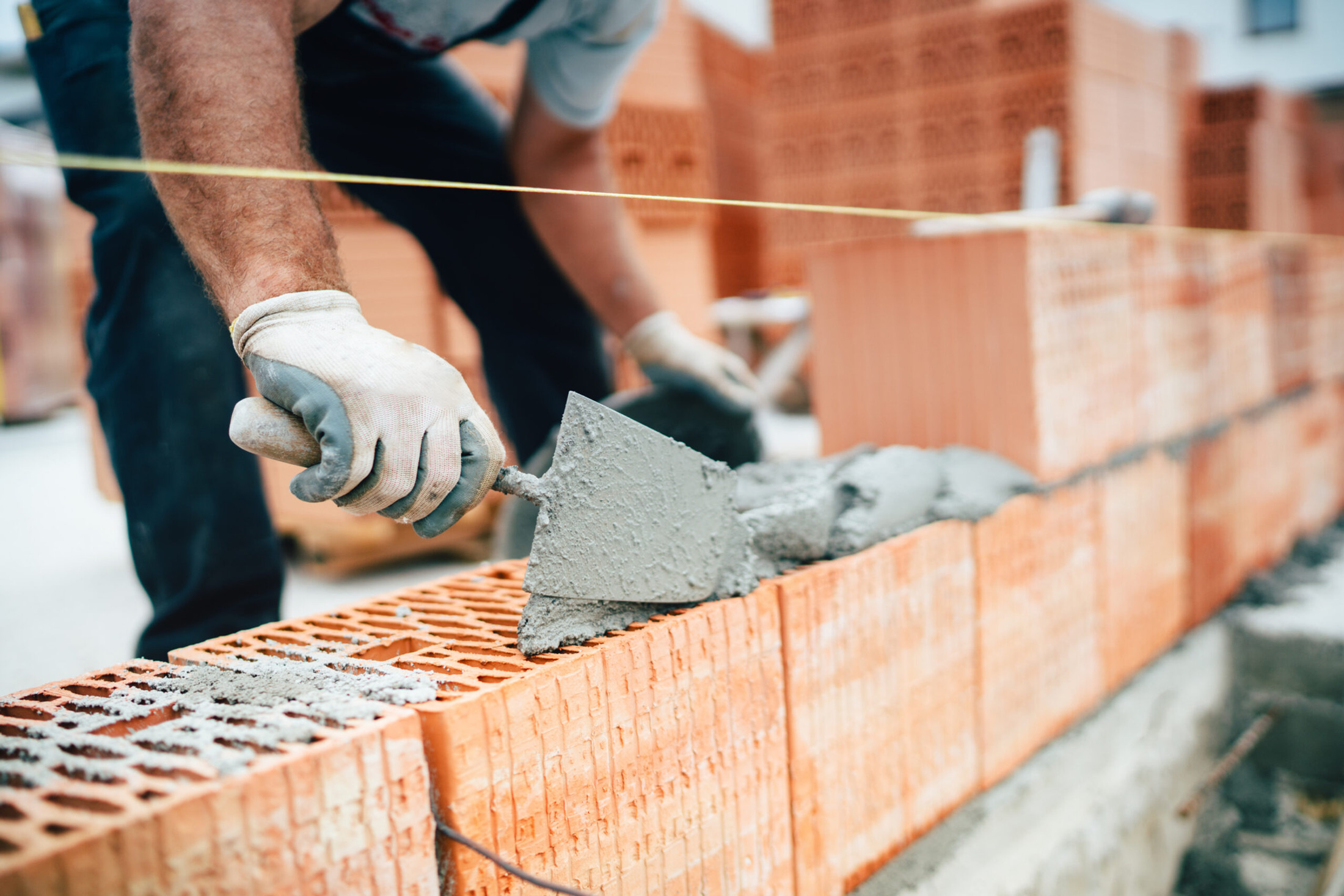
Repointing in Southbourne means raking out the failed joints by hand and refilling them in a mortar that suits the brick, which on the older houses here is usually lime, not cement.
The first signs on a Southbourne wall are plain enough. Mortar trickles out of the joints when you run a finger along them, crumbling and friable, not hard. A patch of penetrating damp appears on an inside wall after a wet, windy spell, because the house is solid wall with no cavity to stop it. Or the brick faces themselves have started to flake around a band of hard grey pointing someone put on in the past.
We come and look at the wall, scratch the joints to see how deep the failure goes, and tell you whether it is a patch, an elevation or the whole house. If a wall or chimney has moved rather than just lost its mortar, that is bricklaying, and our page on bricklaying in Southbourne covers it.
The work
Raking out, mixing and filling on Edwardian brick
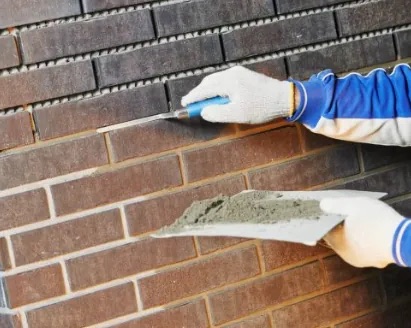
Raking out comes first. The joints come back to sound mortar, normally about twice as deep as they are wide and never less than 15mm or so. On the soft red brick of the older Southbourne houses we rake out by hand with a plugging chisel.
A disc cutter or angle grinder is quicker, but it widens the joint and chips the arris off both bricks, and once that edge has gone the wall never looks right again. On later, harder Southbourne brick a carefully guided disc is sometimes fine for the bed joints, and we tell you when we would use one.
The mortar. On anything built before the 1920s we use a lime mortar, either an NHL natural hydraulic lime or a lime putty mix, gauged with a sand chosen to match the colour and texture of the original. On anything visible we put up a small trial panel and let it dry first, because fresh lime looks nothing like it will after a winter of weathering, and you approve the sample before we start the wall. Lime stays slightly softer and more porous than the brick, so moisture leaves the wall through the joints rather than through the brick face. Later houses and the post war and newer blocks were built in cement mortar, and there a matched cement or cement lime mix is right.
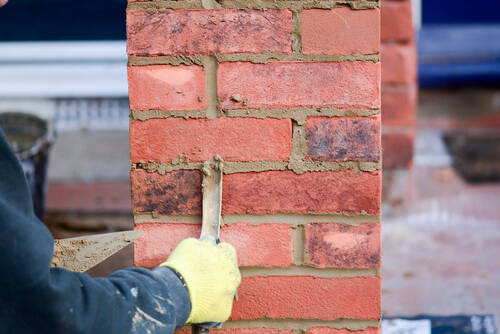
Filling and finishing. The raked joints are brushed out, and we damp down the wall so the old brick does not suck the water out of the new mortar, then filled in layers and finished to the profile the house was built with: flush, weather struck, bucket handle or slightly recessed. Lime pointing is kept damp and protected from sun and frost for several days while it cures, which is why we avoid the coldest weeks.
Spalled bricks. Where a brick face has flaked off or sounds hollow and loose when tapped, usually next to hard cement pointing, it is cut out and replaced with a matched reclaimed brick, or turned round if the back face is sound.
How long it takes. A chimney stack is a day or two from a scaffold. A single elevation of a detached Southbourne house is usually a week or so. A whole house can run to several weeks, and we set that out on the quote.
How it runs
From your call to a written price
One person to ring from the first visit to the last. The quote is itemised, not a figure on the back of a card: access, raking out, the mortar mix, the area of each elevation, any brick replacement and disposal on separate lines, so you can compare it properly against anyone else's.
Nothing is left open or unusable overnight. The site is swept at the end of each day rather than the end of the job, and what comes out leaves with us. If something turns up once we start that nobody could have seen, you get a photograph and a price before we carry on.
Repointing like for like needs no planning. On a listed building it needs listed building consent, and there are several listed buildings in Southbourne, the Purbeck stone Church of St Katharine on Church Road among them. The western stretch of Southbourne Grove is a conservation area, and the council keeps the list.
Cost
What decides the price of a repointing job
No rate per square metre, because the square metres tell you almost nothing until somebody has looked at what the joints are actually like.
Getting to it. A red brick Edwardian detached house in Southbourne, a 1930s detached house and a brick boundary wall on a corner plot want different access and very different hours. A chimney or a gable wants a scaffold, a boundary wall wants nothing at all. How long the platform stands matters as much as how big it is, and the work at height rules are why it is a priced line rather than something absorbed into a rate.
The joints decide it, not the wall. Raking out by hand is slow, and on soft brick it is the only safe way, because a disc widens the joint and takes the arris off either side. How deep the joints have to come back, and whether the faces have already spalled, sets the hours far more than the area does.
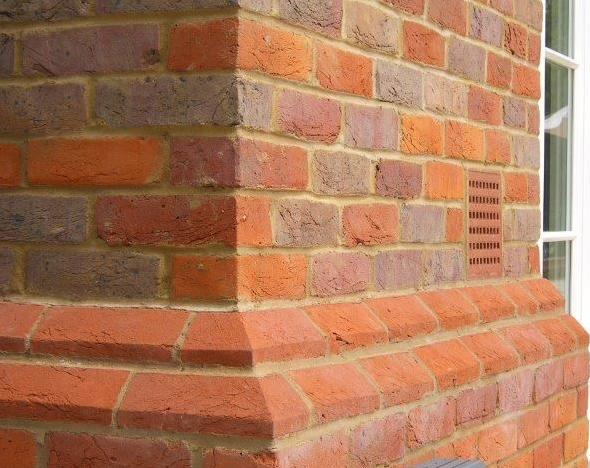
Matching is the part that shows. Too strong a mix is the classic mistake: cement holds water against a soft brick and the face blows off in the first hard frost. Lime is slower to work and slower to cure, and it is the right answer on most pre-1919 walls in Southbourne.
Comparing quotes? Ask how deep the joints are being raked and whether by hand or by disc, what the mortar mix is and whether it has been matched to what is there, how many spalled bricks are being cut out and replaced, and whether the scaffold is in the price. Weigh the answers first and the totals second.
If water is getting in
Open joints, and water coming through the wall
Ring rather than use the form. A wall with the joints washed out lets driven rain straight through to the inside face, and on a chimney it will find the flashings as well.
We come and look, sheet or temporarily point the worst of it if the weather is against us, and price the full elevation once it has dried out enough to see what is sound. On the south facing walls closest to the cliff, driven rain off the sea finds an open joint faster than it would inland. Scheduled work runs Monday to Friday, 8am to 6pm. For anything urgent, ring rather than use the form, and if we cannot pick up we ring you back as soon as we can.
Worth knowing
Cement pointing on soft brick
A lot of Southbourne was built in the Edwardian years and the decade after, in soft, handmade or early machine made brick, lightly fired and laid in lime, a breathable period construction that is closer to the late Victorian house than a modern one.
Over the last century a good deal of it has been repointed in cement, often more than once, and that is behind most of the damage you see on these walls. Cement is harder and less porous than the brick around it. Water that gets into the wall cannot leave through the joints, so it leaves through the brick face instead, and when it freezes it takes the face with it. That is why the flaking is always next to the pointing, never in the middle of a brick.
If your house has hard grey pointing and brick faces coming away, adding more cement over the top will make it worse. The fix is to rake the cement out carefully, which is slow on a soft brick, and repoint in lime. Where the cement is sound and the bricks are not suffering, we leave it alone and tell you so. If you are not sure what your joints are, we can check a few and show you on the day.
Who you are dealing with
A local firm you can check
We cover Southbourne and all of BH6, from the Overcliff to Southbourne Grove and down to Tuckton and the river, with BCP Council for planning and listed building consent.
You are dealing with Bournemouth Roofing & Building, the trading name of Bournemouth Roofing & Building Ltd, registered in England and Wales, company number 15471719, which you can look up in a minute. Thomas Hannen's business, and he is the one who comes out to price the job, not a salesman. A verified customer's 10 out of 10 on Checkatrade. The visit and the written quote are both free. Before you book a visit in Southbourne, you can read our customers' Google reviews, word for word, on our reviews page.
Planning at a glance
Do you need planning permission in Southbourne?
Most repairs in Southbourne need no application at all. What decides whether a change to the outside of your house does is who the council is, whether a conservation area or a listing applies, and whether the place sits in a protected landscape.
| Question | In Southbourne |
|---|---|
| Who decides | BCP Council is the planning authority for Southbourne. BCP Council's heritage pages set out what it controls. |
| Conservation area | Yes: Southbourne Grove Conservation Area. Check whether your street is inside the boundary before changing anything visible. |
| Listed buildings | Yes, there are listed buildings in and around Southbourne. If yours is one, work can need listed building consent. |
| Protected landscape | No National Park or National Landscape covers Southbourne. |
Questions
Questions about repointing in Southbourne
Should my house be repointed in lime or cement?
If it was built before the 1920s, almost certainly lime, because a hard cement mortar pushes the damp out through the soft brick face. Later houses in cement mortar are repointed in a matched mix.
Why are my bricks flaking next to the pointing?
Usually because the joints were repointed in cement, which is harder than the brick. Water leaves through the brick face instead of the joint and frost takes the face off.
How long does it take to repoint a house?
A single elevation of a detached house is usually around a week. The whole house can be several weeks, depending on the depth of the joints and the access.
Can you repoint in winter?
Cement pointing, yes, in reasonable weather. Lime is best kept out of the frosty weeks, because the new mortar needs a few days to start curing before it freezes.
Nearby, and next door
Repointing near Southbourne
Nearby places we also cover for repointing, with straight-line distances from Southbourne, and the other trades we offer in Southbourne itself.
Repointing nearby
Our other trades in Southbourne
Repointing guides
Lime or cement mortar: which do you need? Reading a repointing quote: rake out Listed building consent for repointing and re-renderingEverything we do in Southbourne Repointing, all areas Every area we cover
Free quote
Get the joints looked at
Thomas comes out, checks the joints and the brick faces, and gives you a written itemised quote with the mortar spelled out. The visit and the quote are both free.