A leaking roof: where the water gets in, how to find it and what fixes it
The ceiling tells you there is a leak. The loft tells you where it is, and the joint it came through decides the repair.
Most roof leaks come through joints, not tiles: flashings at walls and chimneys, valleys, the ridge, and flat roof seams. Contain it indoors, trace it in the loft during rain by following the wet track uphill, and stay off the roof, which the Health and Safety Executive says to treat as fragile. The repair is to the joint, not sealant.
The short version
- Look at the junctions first. A tile in the middle of a slope is rarely the cause; the place where the roof stops, turns or meets something else usually is.
- The wet patch on the ceiling is downhill of the hole, often by a metre or more. Find the wet timber in the loft and follow it up the slope.
- Your jobs are the ones done from the ground and from the loft. The Health and Safety Executive lists slates and tiles among the surfaces likely to be fragile, so nobody should stand on them without proper access and fall protection.
- A tube of sealant on the outside is not a repair. It hides where the water got in and usually makes the proper repair bigger.
Where the water gets in
Roofs leak at the joints, not in the middle of a slope
Start at the edges and junctions, because that is where most leaks turn out to be. A pitched roof keeps water out by overlap and pitch, which works well across an open slope. Wherever the slope ends, turns, or meets a wall, chimney, window or pipe, something other than a tile has to carry the water.
The tiles themselves are seldom the weak part. When BRE tested tiles that had been on roofs for decades, every one passed the water impermeability test, and BRE concluded that the durability of a roof is governed by the battens, rafters, underfelt, nails and the quality of the installation. So a tile usually slips because its nail has rusted through or its batten has rotted, and a cracked tile often leaks nothing if the underlay beneath it is sound.
| Where it gets in | What you see inside | What you can see from the ground | What fixes it |
|---|---|---|---|
| Flashing or abutment, where a roof meets a wall | Damp along the top of a wall or down a rafter beside it | Lead lifted or pulled out of the brick joint, or a cracked mortar fillet instead of lead | Re-dressing or replacing the lead, wedged and pointed into the joint |
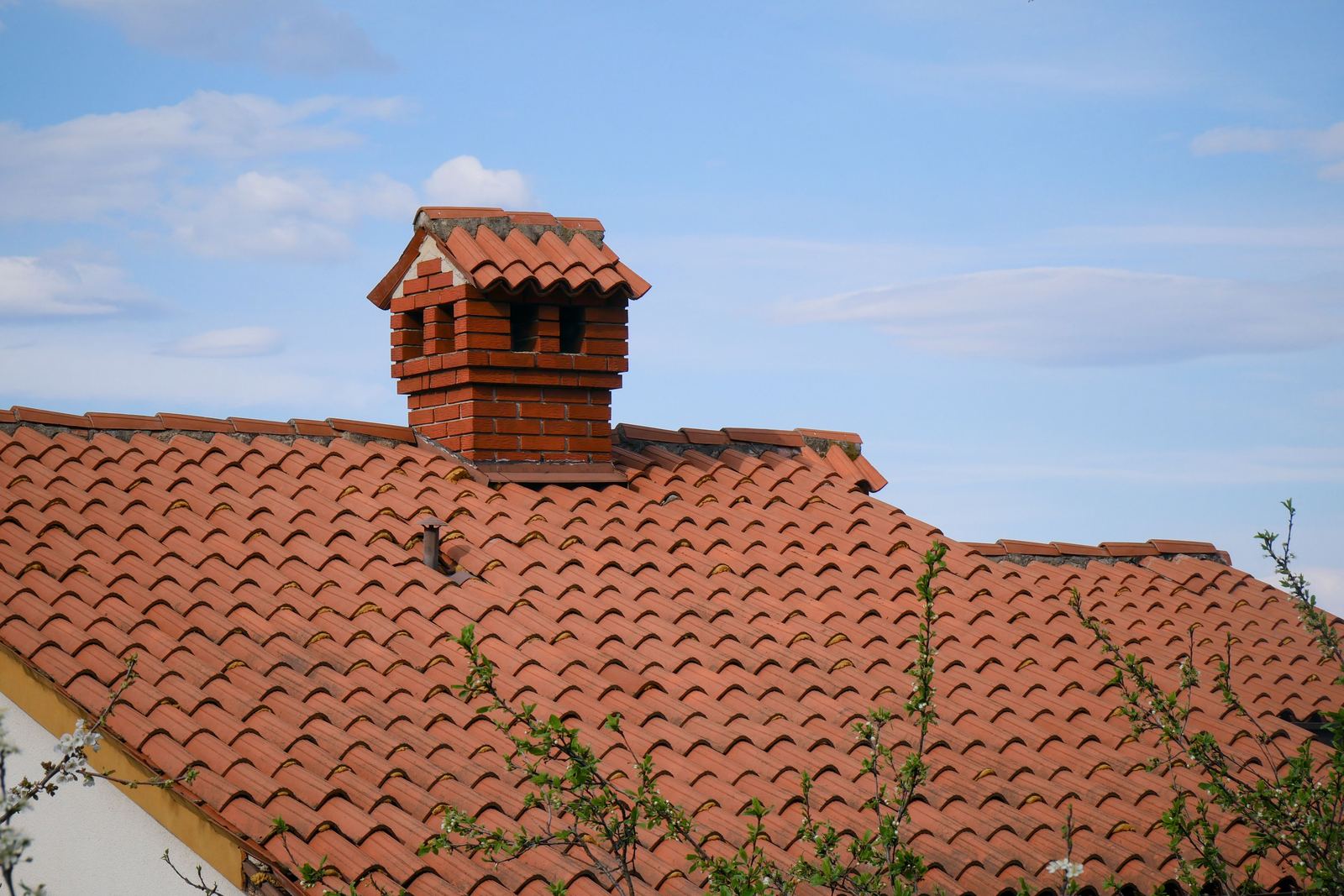
| Chimney | Damp on the chimney breast, often in the room as well as the loft | Cracked flaunching on top of the stack, gaps in the flashing, or open joints in the brickwork | Flashings, flaunching or repointing, depending on which one is open |
| Valley, where two slopes meet in a gutter | A wet line running down from one point in the roof | Leaves or moss in the valley, cracked mortar along its edges, or a split in the lining | Clearing it, or stripping the tiles either side and relining it |
| Ridge and hips | Damp at the top of the loft, near the ridge board | Gaps in the mortar under the ridge tiles, or a ridge tile out of line | Rebedding with mechanical fixings, or a dry ridge |
| Slipped or cracked tile or slate | A wet patch on the underlay in open slope, sometimes daylight | A gap in the courses, or a tile sitting lower than its neighbours | Refixing or replacing the unit, usually from a roof ladder |
| Flat roof | A drip some distance from where you would expect, often after rain has stopped | Ponding, blisters, open seams, or a lifted edge where the roof meets a wall | A patch if the rest is sound, a new covering if it is not |
| Rooflight, vent or soil pipe | Damp around the frame or pipe and nowhere else | A cracked or perished seal, or a collar that has slipped | Reflashing or resealing the unit, or a new collar |
| Gutter backing up | Damp at the eaves end of the ceiling, against the outside wall | Water spilling over the gutter, or green streaks below it | Clearing it, or fixing its fall or outlet |
One more row belongs in that table and it is not a leak at all. BRE, the building research body, says that dripping into the rooms below is often caused by a build-up of condensation in the cold roof voids, rather than by the leak people first suspect. If the loft is damp across both slopes on a cold, dry morning, read how to tell loft condensation from a roof leak before anybody quotes you for roofing work.
Finding it
How to trace a leak from inside the loft
Look in the loft during heavy rain or within an hour of it. Water rarely drops straight down: it runs along the underlay, follows a batten to a nail, tracks down a rafter and soaks into the insulation before reaching the plasterboard. So the stain is downhill of the hole, often well to one side.
- Go up with a good torch and a board. Lay the board across the joists and kneel on it. Put your weight on joists only: the ceiling between them is plasterboard or lath and will not hold you.
- Find the wet spot from above. Over the ceiling stain, pull the insulation back with gloves on and feel the plasterboard.
- Follow the water uphill. From that point, look up the nearest rafters and along the underlay for a dark wet line, a drip hanging from a nail point or batten, or a tide mark on the timber. Keep following it up the slope until it stops. Where it stops is close to where the water is getting in.
- Look for light. With the loft light off, daylight through the underlay is a strong clue. Older roofs with no underlay show some light between tiles anyway, so look for light in an odd place.
- Mark it so it can be found outside. Count the rafters from the nearest gable or party wall and measure down from the ridge. Note whether you are near a chimney, a valley or a wall. Photograph the wet timber with something in the frame for scale.
That last step saves money. “Eleventh rafter from the left gable, a metre below the ridge, beside the chimney” sends a roofer straight to one flashing. “It drips in the back bedroom” means a search.
If the loft is dry and the ceiling below it is wet, the water may not be coming from the roof. A mark that grows during dry weather is usually plumbing, and the meter test in rain leak or plumbing leak rules a supply-pipe leak in or out in half an hour. Damp that only appears when wind drives rain at one side points at walls, windows and chimneys: see water coming in only during driving rain. Working from the ceiling stain instead? Start with what a brown stain on the ceiling means.
Doing it yourself
What is safe to do yourself, and what is not
You can do most of the finding and very little of the fixing. Anything from the ground, a window or the loft is yours; anything that puts you on or over the roof is not.
From the ground and the loft
- Look at the roof with binoculars from the garden, the street or an upstairs window. Check the flashings, ridge and valleys before the open slopes.
- Watch the gutters during the next downpour. Water spilling over at one point means a blockage or a fall problem; see why a gutter overflows in heavy rain.
- Clear a blocked gully or the foot of a downpipe at ground level.
- Patch a garden shed roof you can reach from a stepladder without putting weight on the roof.
Off a ladder or on the roof
This is where the regulator’s position matters. The Health and Safety Executive says all roofs, once fixed, should be treated as fragile until a competent person has confirmed otherwise, and its list of surfaces likely to be fragile ends with “slates and tiles”. Rooflights are on the same list. Falls through fragile surfaces, particularly fibre-cement sheets and rooflights, account for 22% of fall from height deaths in construction, and roof work as a whole is involved in almost one in five deaths in construction work. Those figures are for professionals.
Ladders are not banned. HSE’s guidance is that a ladder is for low risk work, and that if a task would keep you on a leaning ladder for more than 30 minutes at a time, other equipment should be used. It also has to be level, stable and secured. Looking into a gutter from a secured ladder on a dry, still day fits that. Reaching up to push a tile back, or standing on a garage roof or conservatory, does not: a rooflight under leaves gives no warning before it goes.
Before you go up. Do not stand on any roof covering, pitched or flat, and never go up a ladder in wind or rain. If water is coming in now, everything that helps is done indoors.
What the sealant tubes do
Most of what you find under “roof leak fix” is a product: sealant, rubber spray or tape. A compatible patch can hold for a while on a small, clean puncture in a flat roof membrane. On tiles or slates, leave them alone. Tiles shed water by overlap, and any water that gets underneath drains out through the gaps, so filling those gaps traps it, and sealant over a flashing hides the joint a roofer needs to see and has to be cut off before the real repair.
If it is coming in now
Stopping the damage while you wait
Containment, not repair, is the aim on the day it starts: lighting circuit off at the consumer unit if water is near a fitting, a container on a board across the joists under the drip, and soaked insulation pulled off the plasterboard. A bulging ceiling, and whether to sheet the roof, are covered in emergency tarpaulin and temporary repairs. If the leak followed a gale, read storm damage to your roof in the first 24 hours.
The repair
What actually fixes each kind of leak
A proper repair deals with the joint that failed, not the water that came through it. A slipped or broken tile or slate is the smallest repair on a roof.
HSE gives replacing a few broken tiles on a roof as its own example of short duration work, measured in minutes rather than hours, and on a sloping roof it accepts secured ladders and proper roof ladders for that kind of short task, where longer work needs scaffold. So one slipped tile does not automatically mean scaffolding. If a quote includes it, ask why; height or access may justify it, but you should hear the reason. Several slates sliding on one slope usually means the nails are failing across the roof, and refixing them one at a time does not cure it.
Flashings and abutments are where a great many leaks start. Lead should be tucked into a raked-out mortar joint, wedged and pointed, and dressed down over the tiles. A cracked sand and cement fillet in its place, or lead that has been “repaired” with mastic, is a common finding. The fix is to rake out and redo the joint properly, which is a modest job when the brickwork above is sound.
Chimneys can leak through the flashing, through cracked flaunching on top, or through the brickwork of the stack itself, so the damp patch has to be read before anything is replaced. A damp patch on a chimney breast goes through how to tell those apart, and our chimney repairs page covers the work.
A mortar-bedded ridge cracks with age; cracking alone is not the test, movement is. A loose ridge can be rebedded with mechanical fixings or converted to a dry ridge; dry ridge or mortar bedded sets out what the British Standard requires.
Flat roofs are the honest exception to “repair the joint”. Water travels a long way under the covering, so the drip can be metres from the defect. A patch suits a sound covering. On one blistered, cracked or ponding across a wide area, a patch moves the leak rather than ending it. Read GRP, EPDM or felt next, and our flat roofing page.
When a repair is the wrong answer. Leaks in more than one place, or underlay brittle and torn across the loft, mean the roof’s components are at the end of their life rather than one defect. Ask whoever looks at it whether a repair will last or only buy time.
On insurance, policies often exclude damage that happened gradually, and the Financial Ombudsman Service says insurers sometimes reject storm claims because they think the damage was caused by bad weather over time. A worn flashing is likely to be treated as gradual; tiles torn off in a storm are a different claim, covered in what evidence to gather for a roof claim.
What to do next
What to do next, in order
- Contain it from inside: power off near the drip, catch the water in the loft, pull wet insulation clear.
- In the next rain, trace it in the loft and mark the spot by rafter count and distance from the ridge. Photograph it.
- Rule out plumbing and condensation if the loft is dry or damp all over.
- Show your photographs and mark to somebody who will tell you which joint failed and why, not just that the roof “needs work”.
Finding and fixing leaks is the core of our roof repairs work, part of the wider roofing services we offer across Bournemouth, Poole and Christchurch. If water is coming in now, our emergency roof repairs page explains what to do while you wait and how a leak call-out works.
Otherwise Thomas Hannen comes out to look at the roof and the loft himself, and you get a free written itemised quote that sets out what he found and the repair he recommends, or tells you if he thinks the problem is not the roof at all.
Questions
Common questions
How do I stop a leaking roof during heavy rain?
From inside. Turn off the lighting circuit near the drip, catch the water in a container on a board across the loft joists, and pull wet insulation off the ceiling. Do not go on the roof or up a ladder in wind or rain. The Health and Safety Executive says to treat all roofs as fragile until a competent person confirms otherwise.
Can I fix a roof leak myself?
You can find it yourself from the loft and the ground, and clear gullies at ground level. The repair usually means working on the roof, and The Health and Safety Executive lists slates and tiles among surfaces likely to be fragile, so leave that to somebody equipped for it.
My roof flashing is leaking. What can I do to fix it?
Safely, only look. From the ground, check with binoculars whether the lead has lifted or pulled out of the brick joint, or whether a cracked mortar fillet sits where lead should be, and photograph it. The fix is lead re-dressed or replaced and pointed into a raked-out joint. Mastic is not a repair.
Does home insurance cover a roof leak?
It depends on the cause. Policies often exclude damage that happened gradually. The Financial Ombudsman Service says insurers sometimes reject storm claims because they think the damage built up over time. Leaks from worn flashings or rusted nails are likely to be treated as gradual.
Read next
Related advice
The guides below pick up where this one leaves off, and the roofing page covers the work itself and the places we cover, if you would rather have the job looked at.
Who wrote this
Thomas Hannen
Thomas owns Bournemouth Roofing & Building and prices every job himself instead of sending somebody else. The company is Bournemouth Roofing & Building Ltd, number 15471719, registered in England and Wales. If you want to talk something through before you commit to anything, the site visit and the written itemised quote are both free.

Free quote
Found the leak and want it looked at properly?
Thomas comes out, looks at the roof and the loft himself, and puts what he found in a free written itemised quote: where he thinks the water is getting in, and what the repair involves.