A damp patch on a chimney breast: leak, condensation or salts?
You have painted over it twice and it has come back twice. That behaviour is a diagnosis in itself.
A damp patch on a chimney breast is nearly always one of three things, and the weather tells you which. Darker after rain means water is getting in at the stack or the flashing. Darker in cold still weather means condensation in a disused flue. Darker on muggy days, and back through fresh paint within weeks, means salts.
The short version
- The chimney stands above the roof with weather on four faces and a hole down the middle, so it produces damp patterns no other wall does.
- Pencil round the patch and keep a fortnight of dated notes. Rain, cold still weather or humidity: the correlation names the cause.
- A stain that bleeds back through fresh paint is salts out of the old soot, and no repair on the roof will stop it.
- Never seal a flue at both ends, and anything still burning on it is a Gas Safe or HETAS matter rather than a job to poke at.
Why chimneys
A chimney takes more weather than anything else on the house
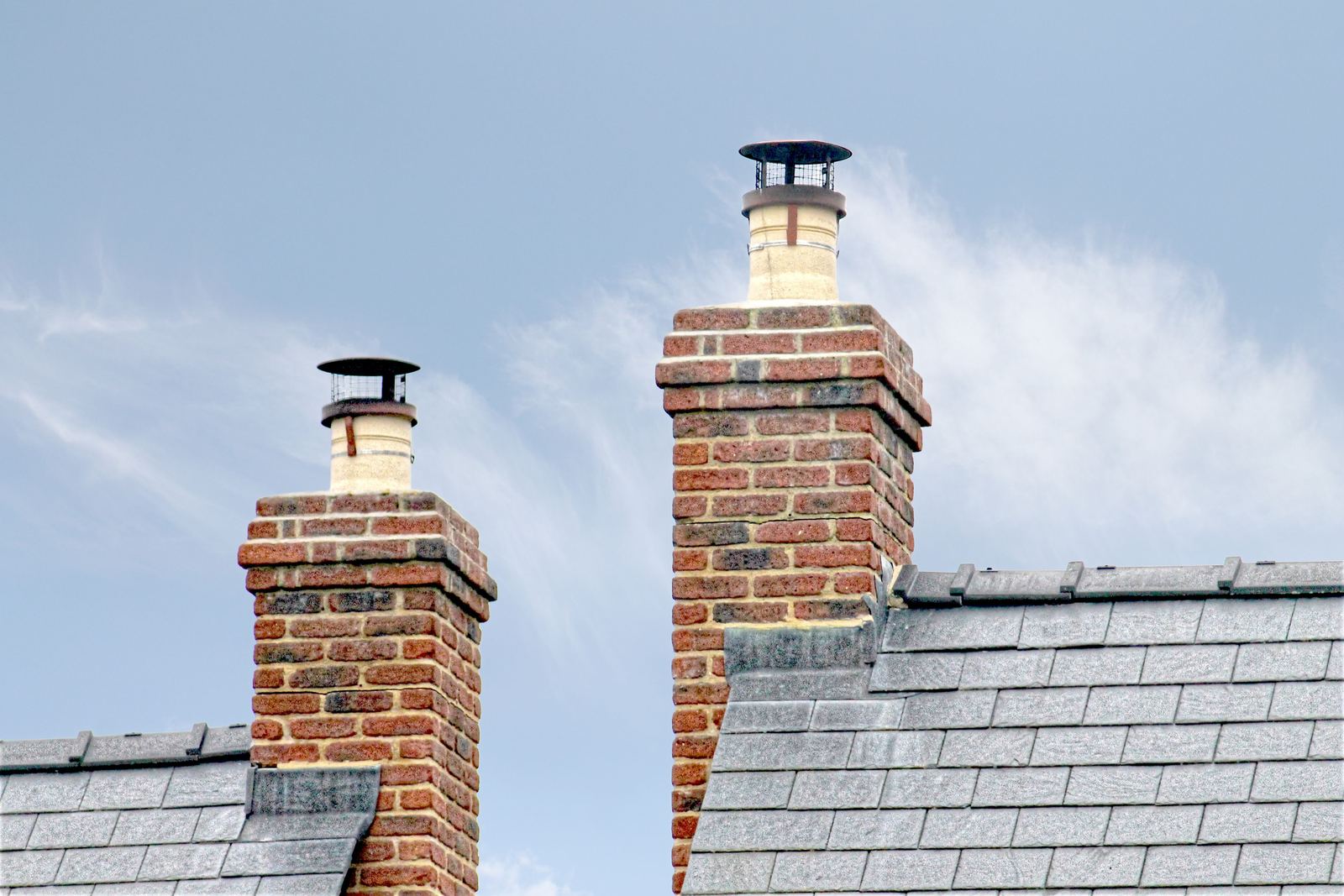
Every other wall on your house has a roof over it. The chimney does not. It stands proud of the ridge, catches wind that has just accelerated over the slope, and takes rain on four faces instead of one. Exposure to driving rain is measurable, which is why BS 8104 exists to work it out.
The second difference is the void. A shaft runs from the pot down to the fireplace, lined with a century of soot, passing through the roof and every floor on the way. Water getting in at the top does not show at the top of the wall. It shows wherever it soaks through, which can be two storeys down.
The third is that these chimneys were built to work hot. A fire lit most days kept the flue warm. Block the fireplace and the drying stops, but the water keeps arriving.
The test sequence
Start with what the weather does to the patch
Draw round the patch in pencil, date it, and watch it for a fortnight. Three correlations matter. Rain points at the stack or the roof line. Cold, still, dry weather points at condensation inside the flue. Humidity, a muggy day with no rain at all, points at salts. Government guidance splits damp four ways, into condensation, penetrating, rising and traumatic, and a chimney can hand you three of them in one wall.
Then three questions, answerable standing in the room. How high is it? High on the breast points up at the flashing or the stack; down at skirting level it is usually the same problem as damp at the base of any wall. Which room is worse? The one with the hearth, or the bedroom above it? Water coming in at the top gets worse the higher you go. Does it smell of soot? A sour bonfire smell, stronger in warm damp weather, comes out of the flue, not off the roof.
| Could be | The test | What it means |
|---|---|---|
| Water in at the top | Binoculars. Cracked flaunching, a missing pot, an open cap. | Worse within a day of heavy rain, and worse higher up. |
| Flashing or cement fillet | Where the stack meets the tiles: lead, or a strip of mortar? | Damp high on the breast, with driving rain from one direction. |
| Spalled brick, open joints | Look at the face that takes the prevailing wind. | Rain correlated, usually on one elevation. |
| Salts from the soot | Does it darken on a muggy day with no rain? | Salts. No external repair stops it and the next coat of paint will fail. |
| Condensation in the flue | Is the pot capped, and is there a vent low in the breast? | Trapped cold damp air. Worst in cold weather. |
| A breast removed below | Fireplace gone downstairs, stack still on the roof? | An open flue with no bottom, or a poor support. |
At the top
Rain getting in at the top of the stack
The top of a chimney is a mortar detail doing a roof’s job. The flaunching, the sloping bed of mortar that holds the pots, is thin and exposed and freezes and thaws all winter, so it cracks. Rain then runs down the outside of the pot and into the flue. A missing pot, a cracked one or a concrete cap with a gap under it does the same.
An unlined flue turns that into a damp patch in a bedroom. Most older flues are bare brick and lime parging, kept dry only by the fire underneath. Wet them from the top and the water soaks the shaft over its full height.
The brickwork and the pointing above the roof
The masonry above the tiles is the most weathered on the building, so that is where you find spalled brick faces and joints washed back to a finger’s depth. A stack that goes damp only when the rain comes from one direction is behaving like a solid wall taking driving rain. Hard cement pointing makes that worse on soft old brick: water that gets in cannot get back out through the joint, and the brick face takes the frost instead. That is the argument for lime rather than cement on an old stack, and rebuilding above the roof line is bricklaying and repointing work, not a roofing job.
At the roof line
Flashings, soakers and the cement fillet that should not be there
Where the stack passes through the roof there should be lead, in several pieces: soakers interleaved with each course of slates or tiles at the sides, a stepped flashing dressed over them into the raked-out joints, an apron at the front and a back gutter behind. Lead moves when the roof moves.
The classic failure is a fillet of sand and cement trowelled into that junction. It looks tidy on the day. Then the brick, the timber and the tiles move at different rates, the mortar cannot, and it cracks along its length. The crack faces the sky, so it is invisible from the ground, and the fillet holds water against the brickwork instead of throwing it off. Look for a grey strip where there should be dull grey lead.
The giveaway is direction. Wind drives water uphill past a lap that works perfectly in vertical rain, the same mechanism that lifts tiles off a roof in a gale. A breast that goes damp in a south-westerly storm and stays dry on a still wet day has a flashing problem, and that is roofing work rather than plastering.
The distinctive one
Salts out of sixty years of soot
Salts left in the brickwork by decades of fires are the cause that gets missed, and the one that has already beaten you twice. A flue that burnt coal, coke or wood for decades did not only carry smoke away. The combustion products condensed on the cold brickwork and were driven into it, leaving soluble salts behind: sulphates, chlorides and nitrates, still in the masonry long after the last fire went out.
Those salts are hygroscopic, which means they pull water out of the air. So the patch does not follow the rain. It follows the humidity in the room. It darkens on a muggy afternoon under a clear sky, and when washing is dried on the radiator in front of it, and fades in a dry cold snap when other damp is at its worst. That inversion is the diagnosis, and it costs nothing to establish.
The look is distinctive too. Salt-contaminated plaster stains brown, orange or yellow rather than the grey of a fresh leak, often with a fine white bloom at the edge. The bloom is the same efflorescence you get on any wall water has moved through, but the brown is tar and soot, and that is specific to a flue.
Then the behaviour that brings people here: it comes back through the paint. Emulsion, stain block, emulsion again, and the mark shows within weeks each time. Salts migrate through anything porous and a coating will not hold them. BRE names soluble salt analysis on drilled samples as the way to settle it.
No work on the roof stops this. Paying somebody to redo a sound flashing because the paint keeps failing is money burnt. Once the flue is dry and ventilated, the fix is to hack off the contaminated plaster and rebuild it in a salt-resistant renovating system, which is plastering work. Do that before the source is dealt with and you will do it twice.
Inside the flue
A cold flue that cannot breathe
Cap a disused chimney with a solid slab and board up the fireplace, and you have a sealed shaft of still air running the height of the house, cold at the top and lined with damp soot.
Warm moist air from the rooms gets in through gaps in the breast, meets the cold brickwork and condenses. The flue never dries and the salts in it get the water they need. It is the same physics as condensation on the underside of the felt in a loft, in a narrower box.
It is worst in cold weather rather than after rain, often worse in the bedroom above the fireplace than in the room with the hearth, and it smells.
Never block a flue at both ends. A chimney taken out of use has to be ventilated top and bottom: a vented cowl or capping pot that still passes air, and an air brick or vent low in the breast. Seal both ends and it condenses inside, and you will not see the result for a year or two. And if anything still burns on that flue, gas, oil or solid fuel, stop there. A damaged or blocked flue serving a live appliance is a carbon monoxide risk, and HSE lists increased condensation on the windows as one of the signs of incomplete combustion. That is a Gas Safe or HETAS registered engineer’s job, and Approved Document J requires a carbon monoxide alarm where a fixed appliance is installed. If you suspect a gas leak or fumes, ring the National Gas Emergency Service on 0800 111 999.
The one nobody checks
When the breast downstairs has already been taken out
If the fireplace has gone from the room below but the stack is still up there, look harder. Removing a chimney breast is fine when it is done properly, with gallows brackets or a beam picking up what is left above. Without that, the first signs are cracking on the breast upstairs, a step in the plaster line, or a door starting to catch.
The damp angle is separate and easy to miss. A flue that used to end at a fireplace now ends at whatever was built across it, often a board in a ceiling void, so it opens into a space with no ventilation and no way out.
There is a paperwork check too. On a terrace or a semi the breast usually sits in the party wall, so taking it out is notifiable under the Party Wall etc. Act 1996. If you bought the house with it already done, ask for the award and the building control paperwork.
Next
What to do next, in order
- Pencil round the patch, date it, and start a fortnight of notes: the weather, and whether it was darker, lighter or the same.
- Put your hand on it and smell it. Cold and clammy with a sooty smell is the flue.
- Look at the stack with binoculars from the garden and from an upstairs window, never off a ladder and never from the roof: flaunching, pots, pointing, and whether the roof junction is lead or mortar.
- Go into the loft on a dry day with a torch held low, so wet brickwork glints, and look at the stack where it passes through.
- Check whether the pot is capped and whether there is a vent in the breast. Capped at the top with nothing at the bottom is the answer on its own.
- Only then decide what work is needed. Nothing goes on the plaster until the flue is dry.
For many readers the honest answer is a pair of vents and a morning’s work, not a lining and not a re-plaster. For others it is a lead flashing and repointing above the roof line, which is bricklaying and repointing work. Thomas looks at the stack, the junction and the inside of the breast before he says what it is. You can ask for a written itemised quote or send him a photograph first.
Questions
Common questions
Why does the damp patch on my chimney breast keep coming back through paint?
Because it is almost certainly salts, not a leak. A flue that burnt solid fuel for decades left sulphates, chlorides and nitrates in the brickwork, and those salts draw moisture out of the air and migrate through any porous coating. Emulsion and stain block will not hold them. The plaster has to come off and be replaced with a salt-resistant system once the flue is dry.
How do I tell a chimney leak from condensation in the flue?
By the weather: a leak darkens the patch within a day or two of heavy rain, especially driving rain from one direction, and it gets worse the higher up the house you look. Condensation in a disused flue is worst in cold, still, dry weather, is often worse in the room above the fireplace than in the room with the hearth, and smells of soot.
Can I just cap a chimney I no longer use?
Only if you ventilate it: a flue sealed at the top and blocked at the bottom becomes a cold shaft of still air lined with damp soot, and it condenses on the inside. Use a vented cowl or a capping pot that still passes air, and fit an air brick or vent low in the breast. If any appliance still uses the flue, that is a Gas Safe or HETAS registered engineer's job.
Should I go up and look at the chimney myself?
No, everything you need can be seen from the ground with binoculars, from an upstairs window on the far side of the house, and from inside the loft with a torch. That covers the flaunching, the pots, the pointing and whether the roof junction is lead or mortar. Anyone inspecting the stack close up should be working off a scaffold or a tower.
The chimney breast was removed downstairs. Does that matter?
It can, in two ways. Structurally, the masonry left above has to be picked up on gallows brackets or a beam, and cracking on the breast upstairs or doors starting to catch are signs it was not. For damp, the flue now ends in a void with no ventilation and no route out. On a terrace or a semi the breast is usually in the party wall, so the work was notifiable under the Party Wall etc. Act 1996.
Read next
Related advice
The guides below pick up where this one leaves off, and the bricklaying and repointing page covers the work itself and the places we cover, if you would rather have the job looked at.
- Damp at the bottom of a wall: rising damp, penetrating damp or a bridged DPC
- Condensation in the loft or a roof leak: how to tell them apart
- Water coming in only during driving rain
- Lime mortar or cement mortar for repointing
Bricklaying and repointing, and where we cover All advice articles
Who wrote this
Thomas Hannen
Thomas owns Bournemouth Roofing & Building and prices every job himself instead of sending somebody else. The company is Bournemouth Roofing & Building Ltd, number 15471719, registered in England and Wales. If you want to talk something through before you commit to anything, the site visit and the written itemised quote are both free.
Free quote
Chimney breast gone damp and nobody has told you why?
Thomas looks at the stack, the flashing and the inside of the breast before he says a word about the plaster. If the answer is a vented cowl and an air brick, he will tell you that.