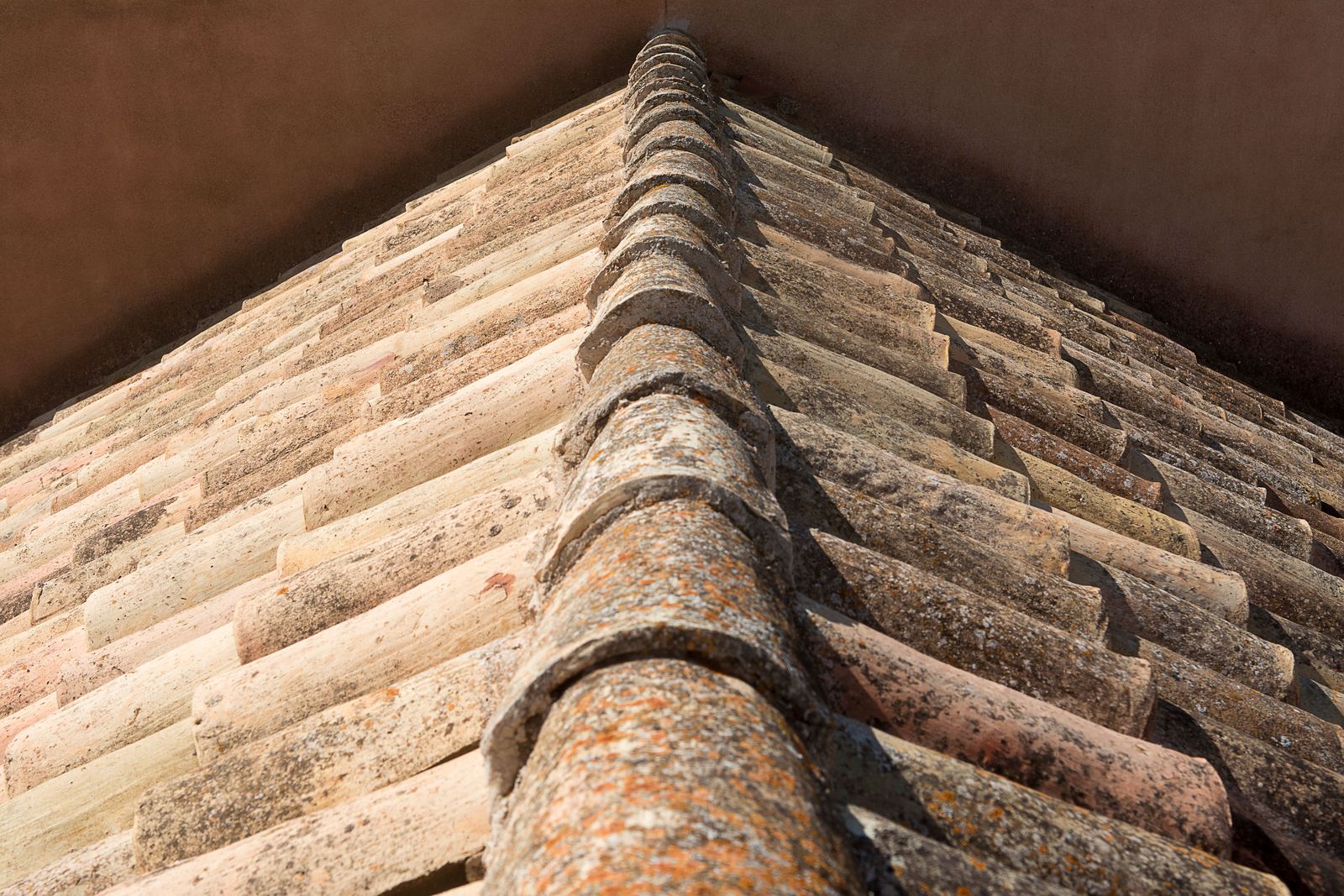
Dry ridge or mortar bedded: what BS 5534 actually requires
Mortar was never banned, and the standard is not law. Here is what it does require, and the one thing to ask to be shown.
BS 5534 did not ban mortar. Since the 2014 revision, mortar can no longer be the only thing holding a ridge tile down, so ridge and hip tiles have to be mechanically fixed as well. A mortar bedded ridge that is also screwed or clipped down is fully compliant, and the standard is not law.
The short version
- You are not obliged to have a proprietary dry ridge system. You are obliged to have a ridge that is mechanically restrained, and mortar bedding on top of that fixing is still allowed.
- BS 5534 is a British Standard and a code of practice. It is not named in the Building Regulations as a mandatory requirement. It reaches you through warranty conditions, through building control and through negligence.
- Ask to be shown the mechanical fixing before the mortar goes on. Once the fillet is pointed up, nobody can see whether anything is holding the ridge tile down.
- A mortar only ridge laid before 2014 is not retrospectively unlawful. “It does not comply, so it must be replaced” is an argument the standard does not support.
- Cracked mortar on its own is not an emergency. Movement is the test, not cracking.
The myth
Mortar was never banned. It stopped counting on its own
Mortar bedding is still allowed on ridges and hips, and it is still a normal way to fit them. What changed in the 2014 revision of BS 5534, the code of practice for slating and tiling, is narrower than the sales line suggests: mortar stopped counting as a fixing on its own. It cannot be the only thing holding the tile down.
The clearest statement of it sits in a manufacturer’s own technical data sheet on the fixing requirements, and the second half of the sentence is the half that gets left off the sales version: all ridge and hip tiles must be mechanically fixed, even if they are mortar-bedded. The same sheet puts the general rule this way: it is no longer acceptable to have un-fixed tiles on any roof.
So there are three states a ridge can be in, not two. Dry fixed. Mortar bedded and mechanically fixed. Mortar bedded with nothing else, which is the one the standard rules out on new work. Most pages telling you that you must have dry ridge have collapsed the middle option into the third, and the middle one is what matters on a period house.
Which means the right question is not “dry or mortar”. It is how the ridge is mechanically restrained, and whether you can see the fixing. A screw or a clip landing in the ridge batten or ridge board is a fixing. Mortar packed into the joint is bedding. Ask to be shown the fixing before the fillet is pointed up and photograph it, because afterwards there is no way to tell from the ground or from the loft.
This matters most where appearance is controlled. On a listed building or in a conservation area, a run of white plastic unions along the top of a clay roof can attract an objection you did not need. A mortar bedded ridge that is properly fixed underneath is compliant and looks like the roof it sits on.
Not the law
BS 5534 is a code of practice, not legislation
Nobody is going to prosecute you over your ridge. BS 5534 is a British Standard published by BSI. It is a code of practice, bought rather than enacted, and it is not named in the Building Regulations as a mandatory requirement. “It is the law now” is wrong, and it is usually said by somebody selling a system.
What the Building Regulations say about this kind of work is far more general. Building work has to be carried out with adequate and proper materials, applied, used or fixed so as adequately to perform the functions for which they are designed, and in a workmanlike manner. That is regulation 7, near enough in full, and it names no standard at all. BS 5534 is the recognised way of showing a tiled roof meets it.
So the standard has no direct legal force, and it still has teeth. Three of them:
- Warranties. Structural warranty providers write BS 5534 compliance into their technical requirements, so where a warranty covers the roof the standard is a contractual condition of it. That is sharper than any regulator.
- Building control. Re-covering a pitched roof is usually notifiable work, and a building control body deciding whether it was done in a workmanlike manner will reach for the published standard, because there is nothing else to reach for. The alternative route is self-certification, and Schedule 3 to the Building Regulations names the bodies whose members may self-certify roof re-covering. Ask which route a quote assumes: it changes who signs the work off.
- Negligence. If a ridge comes off in a gale and hurts somebody, the question will be whether the work met the standard of the reasonably competent roofer, and the published code of practice is the yardstick used.
None of that gets you off doing the job properly. It changes the conversation from “you have no choice” to “here is what the standard asks for and why it is worth having”, which is the conversation to have with anybody quoting for roofing work.
Side by side
The three options, compared honestly
The third column is not a recommendation. It is here because it is what is already on a great many roofs, and you need to tell it apart from the second column.
| Dimension | Dry fixed ridge | Mortar bedded and mechanically fixed | Mortar bedded only, no mechanical fixing |
|---|---|---|---|
| Standards position | BS 8612:2018 specifies dry fixed ridge, hip and verge systems | Permitted. BS 5534 requires mechanical fixing; mortar may still be bedding | Not compliant with BS 5534 on work carried out since 2014 |
| The actual rule | The system is the fixing | Mechanically fixed even if mortar bedded. A nail, screw or clip into the ridge batten or board satisfies it | It is no longer acceptable to have un-fixed tiles on any roof |
| Ventilation | Most systems build in high level ridge ventilation | None unless separate ridge vents are specified | None |
| Movement | Takes seasonal movement in the roof structure | Rigid. Mortar cracks where the structure moves, but the fixing still holds the tile | Rigid, and once the mortar lets go nothing holds the tile |
| Appearance | A visible plastic or aluminium line along the ridge. Modern | Traditional. Often the only acceptable option on period and listed roofs | Traditional |
| Repair and re-work | Unclip and refit. No wet trades | Rake out and re-bed. Weather dependent | As mortar bedded |
| Weather window | Any dry day | Frost restricted, and must cure before rain | As mortar bedded |
| Relative cost | Higher material, lower labour | Lower material, higher labour, more return visits | Not a specification anybody should be pricing today |
If you are offered a dry system, ask about BS 8612:2018, which specifies dry fixed ridge, hip and verge systems. A product tested to it is a different proposition from a bag of clips.
One correction while we are here. Dry ridge is low maintenance, not maintenance free. Unions, end caps and filler pieces are components, and components fail: plastic on a south facing ridge takes years of ultraviolet and goes brittle. Still the better bet over thirty years on most roofs, but not a thing you fit and never look at again.
Where the cost is
The perimeter rule and the underlay cost more than the ridge
On an older roof, the perimeter rule is the expensive part of BS 5534, not the ridge rule. Every tile or slate at the eaves, verges, ridges, hips and abutments has to be mechanically fixed, because the edges are where wind uplift concentrates.
Wind does not push evenly on a roof: it accelerates over the ridge and curls around the verge, and the suction at a corner is several times what it is mid slope. That is why roofs lose tiles from the edges first, which is the subject of why roof tiles blow off.
For double lapped plain tiles it runs further than most people expect: every tile in every fifth course twice nailed, and all tiles at the perimeters twice nailed, including the first two courses at the eaves and the last two at the ridge. That is real work, and one honest reason a compliant quote comes in above a cheap one.
Then there is the underlay change, which gets far less attention and which is the one that moves money. The standard removed reliance on the underlay to resist wind uplift on the covering, and brought in classification of underlays by air permeability. So the tiles have to be fixed to hold themselves down rather than being partly held by felt ballooning underneath, and the underlay you are quoted carries a class that governs how it can be used and how the roof is ventilated. A quote saying “new breathable membrane” and nothing else has not told you which one.
This is why so many re-roofs turn out to be about the layers underneath rather than the tiles on top, which is the argument in concrete against clay roof tiles. If the ridge is being re-fixed because the roof is coming off anyway, the marginal cost of doing it properly is small. If the ridge is the only thing being touched, price it as its own job, and what a roofing quote should include lists the lines to look for either way.
The upsell
An old mortar ridge is not retrospectively unlawful
“Your ridge is not compliant, so it has to be replaced” is not, by itself, true of an older roof. BS 5534 applies to work being carried out. A mortar only ridge bedded in 1985 was laid to the standard of its day, and it does not become unlawful because the standard was revised in 2014.
Re-fixing may well be worth doing. On an exposed site, on a bungalow catching the full run of the wind, on a roof where the mortar has let go in sections, it is often the right call and cheaper than the damage. But the argument has to be made on wind load and on the condition of what is up there, not on a compliance claim that does not apply. If somebody makes the compliance argument, ask why it applies to work carried out forty years ago. A roofer who knows the standard will explain the difference without being embarrassed by the question.
The condition test is not the one people use. Mortar fillets crack, and they have cracked on every ridge in the country at some point, because a rigid strip of sand and cement sits on a roof that moves with the seasons. What matters is whether the ridge tile is still held.
Movement is the test, not cracking. A ridge tile that rocks, lifts at one end or slides when pushed by hand has lost its hold and needs dealing with before the next gale. One that is firm behind a cracked fillet can be repointed when the roof is next worked on. Nobody should be climbing a ladder onto a roof to find this out: it is a test for whoever is already up there with the right access.
Three other things worth acting on, none of them a compliance argument: a ridge tile out of line with its neighbours, whole sections of fillet missing rather than cracked, and daylight along the ridge from inside the loft.
Next steps
What to do next
With a dry ridge on the quote, find out what is up there now, ask whether the ridge tiles actually move, and check the system is tested to BS 8612. Mortar bedding with mechanical fixing is still allowed if you want the traditional look. In order:
- Find out what is up there now: mortar bedded or dry fixed, and whether the fillet is sound, cracked or missing. A phone photograph from the ground at full zoom usually shows it.
- Ask whether the ridge tiles move, not whether the mortar is cracked. That separates a job needing doing now from one that can wait.
- If dry ridge has been specified, ask whether the system is tested to BS 8612, and what happens at the ends and intersections, because that is where the components sit.
- If you want the traditional look, ask for mortar bedding with mechanical fixing rather than accepting that it is not allowed. It is allowed, and on a listed building it may be the only thing that gets past the planning officer.
- Ask to be shown the fixing before the mortar goes on, and photograph it.
- If the ridge is part of a full strip and re-lay, check the underlay and perimeter fixing are itemised too. They are the larger part of the compliance cost.
If you would rather somebody looked at it first, that is what a free written itemised quote is for. Thomas Hannen comes out and prices the job himself, and if the ridge is firm and the fillet only needs repointing, that is what the quote will say. You can also send a photograph over if you just want a view on whether it is urgent.
Questions
Common questions
Is a mortar bedded ridge still allowed?
Yes. BS 5534 requires ridge and hip tiles to be mechanically fixed even where they are bedded in mortar, so mortar bedding was never banned. What is no longer acceptable is mortar as the only means of fixing, with nothing mechanical holding the tile down.
Is BS 5534 the law?
No, it is a British Standard and a code of practice published by BSI, and it is not named in the Building Regulations as a mandatory requirement. It reaches you through warranty conditions, through building control's view of workmanship, and through what a court would treat as reasonably competent work.
My ridge was bedded before 2014. Do I have to replace it?
Not because of the standard: BS 5534 applies to work being carried out, so a mortar only ridge laid before the 2014 revision is not retrospectively unlawful. Re-fixing can still be worth doing on an exposed site, but that argument should be made on wind load and condition.
The mortar on my ridge is cracked. Is that urgent?
Not on its own. Mortar fillets crack because a rigid strip sits on a roof that moves. The test is whether the ridge tiles move when pushed by hand. A tile that rocks or lifts needs dealing with; a firm tile behind a cracked fillet can be repointed when the roof is next worked on.
Do I have to use a proprietary dry ridge system to comply?
No, the requirement is an effective mechanical fixing, not a particular product. A nail, screw or clip taken through into the ridge batten or ridge board satisfies it, with mortar bedding on top if you want the traditional appearance.
Read next
Related advice
The guides below pick up where this one leaves off, and the roofing page covers the work itself and the places we cover, if you would rather have the job looked at.
Who wrote this
Thomas Hannen
Thomas owns Bournemouth Roofing & Building and prices every job himself instead of sending somebody else. The company is Bournemouth Roofing & Building Ltd, number 15471719, registered in England and Wales. If you want to talk something through before you commit to anything, the site visit and the written itemised quote are both free.
Free quote
Not sure whether your ridge needs re-fixing?
Thomas comes out, checks whether the ridge tiles actually move, and puts what he found in writing. If it is repointing rather than replacing, that is what he will price.