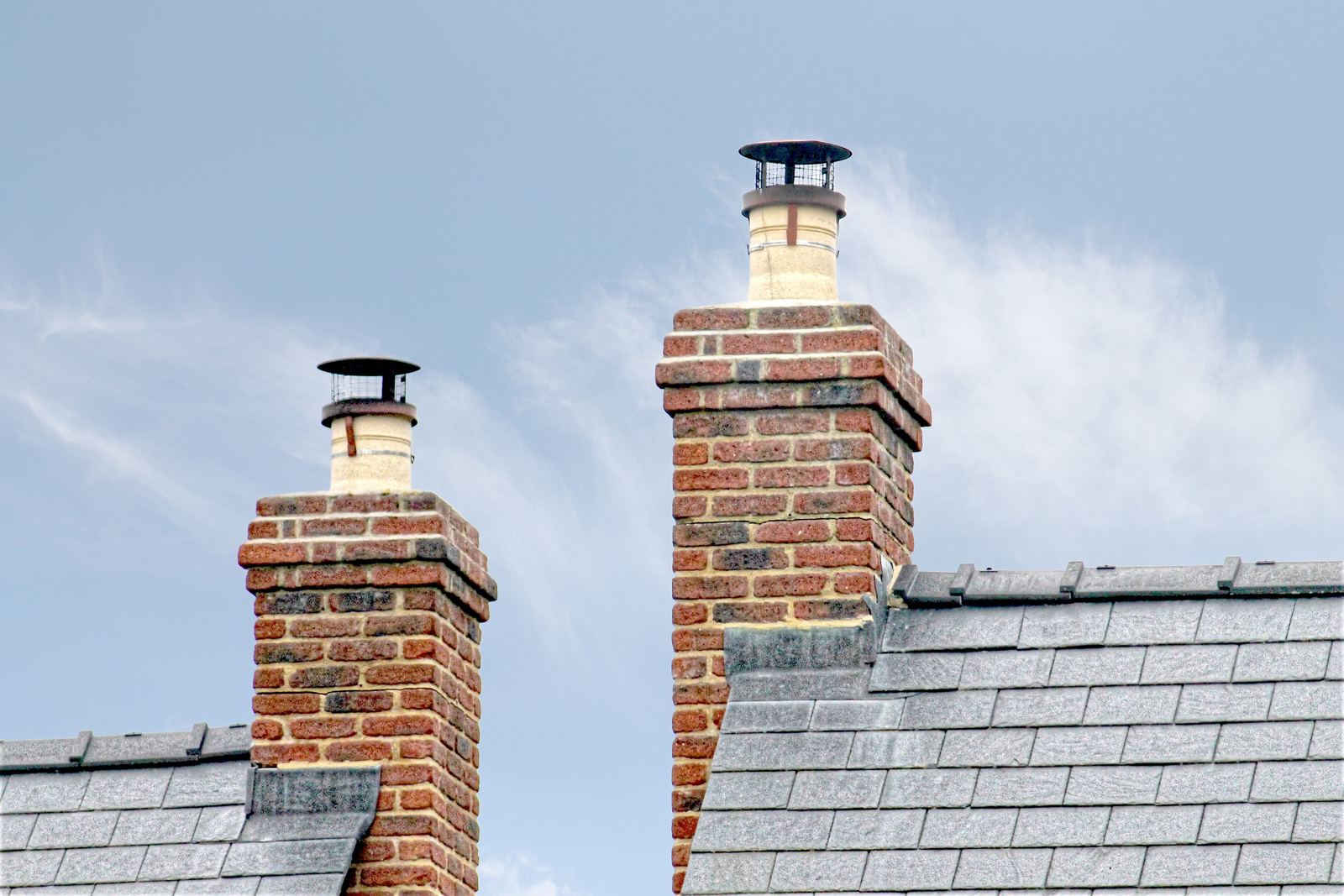
Capping a disused chimney without causing damp
Sealing a chimney you no longer use can make it damp. The fix is a cap that lets air through, and a vent at the bottom.
Cap a disused chimney with a vented cap that keeps rain out and lets air through, and put a vent low down in the room where the fireplace was. Northern Ireland’s Department for Communities says flues should not be closed off, because moisture building up in a closed flue can lead to damp in the walls it passes through.
The short version
- A chimney needs air moving through it even when nothing is burning. Capping the top solid and boarding the fireplace shut can leave you with a damp chimney breast.
- Before anything goes on the pot, make sure no boiler, gas fire or stove still uses that flue. If anything does, it is not a capping job.
- Taking the stack down below the roof and tiling over it is the permanent answer, but it is a bigger job, the flue below still needs venting, and on a shared or listed chimney it needs permission or notice first.
- Jackdaws and other birds nest in chimney pots. Capping over a nest that is in use is an offence under the Wildlife and Countryside Act 1981, so look first and time the work outside the nesting season.
- A pot sits at the top of the roof, often above a ridge. Fitting a cap is a short job, but anything that involves the flaunching or the brickwork is scaffold work.
Why it matters
A chimney you no longer use still has a job to do
An old chimney was built to have air moving up it all the time, fire or no fire. That rising air pulled moisture out of the brickwork, the plaster and the timbers that run into the stack.
Northern Ireland’s Department for Communities, in its guidance on domestic chimneys and flues, puts it plainly: moisture building up in a flue can cause damp in the walls on every floor the flue passes through, and in the floor and roof timbers that go into those walls. Its instruction is short: flues should not be closed off.
So capping a chimney is about the right kind of cap, not about stopping air getting in. You want rain out and birds out, with air still free to move. Stop the air and the flue becomes a cold, still shaft lined with old soot, and damp can start to show on the chimney breast.
If you already have a damp patch, our guide to a damp patch on a chimney breast tells a leak from flue condensation and from salts left by old fires. This post is about what to do with the chimney itself.
Before anything else
Make sure the flue really is disused
Capping a flue that still serves an appliance is dangerous. Older houses often have more than one flue in a stack, and one of them may still serve a gas fire, a back boiler, an oil boiler or a stove that somebody forgot about. Cap the wrong pot and the fumes have nowhere to go.
Count the pots and count the fireplaces, room by room, upstairs and down. Look for a flue liner or a metal flue terminal on top of any pot. If anything in the house burns gas, oil or solid fuel and you cannot say for certain which flue it uses, stop there and get it checked by a Gas Safe registered engineer, or a HETAS registered installer for solid fuel.
On a semi or a terrace, the stack on the party wall usually carries your neighbour’s flues too, and their pots are not yours to cap.
The rule
Air in at the bottom, air out at the top
A disused chimney stays dry when it is vented at both ends. At the top, that means a cap that keeps rain out and lets air through. At the bottom, it means an opening into the room where the fireplace used to be. The Department for Communities guidance says that where there is no longer an open hearth at the bottom of a disused flue, a vent set in the wall allows air to flow and avoids damp.
At the top
There are three common ways to cap a pot, and they are not equal. A ventilated capping cowl or cap, of the kind sold for disused chimneys, clamps onto the pot, covers the opening, and leaves gaps under its rim for air. A mushroom cowl does the same job on a traditional pot. The third is a half-round or conical cover, sometimes called an elephant’s foot, or a slab bedded across the top. The guidance warns that ceramic or conical covers limit ventilation somewhat and should not be used where the chimney already shows signs of damp.
At the bottom
If the fireplace is open, leave it open, or fit a register plate or board with a ventilator grille in it. If it has been bricked or boarded up, the vent goes in that infill, low down in the room. A plain louvred grille is enough, and it is the cheapest part of the whole job. If the room is draughty, a removable chimney balloon in the throat is fine for winter, as long as it comes out again. The guidance treats any closing off of the flue as temporary only.
| Option | Air through the flue | Where it fits | Watch for |
|---|---|---|---|
| Ventilated cap on the pot | Yes, under the rim | Most disused flues, with a sound pot and flaunching | Needs a vent at the bottom too, or the air has nowhere to come from |
| Mushroom cowl | Yes | Traditional pots, and where the stack is part of the look of the street | Same bottom vent needed. Fit bird mesh if birds are a problem |
| Half-round or conical cover (elephant’s foot) | Limited | Only where the flue is dry and stays dry | Not for a chimney that already shows damp |
| Slab or mortar sealed across the top | None | Nowhere on a flue that runs into the house | Traps moisture in the flue, which the guidance links to damp in the walls |
| Stack taken down below the roof | Only if the flue is vented into the loft | A stack in poor repair that nobody wants to keep | Permission and party wall questions, and new roofing over the gap |
The permanent option
Capping the pot or taking the stack down
Capping is the right answer when the stack is in good order. If the brickwork, pointing, flaunching and lead are sound, a ventilated cap and a bottom vent are a small job next to rebuilding or removing the stack, and they leave the chimney able to come back into use later.
Taking the stack down makes sense when the stack is the problem. A stack with spalled brick, washed-out joints, a leaning top or failing lead will need chimney repairs until it is rebuilt or taken down. Take it down to below the roof line and the most exposed brickwork on the house, and its leak points, go with it.
What the roofing work involves
The stack is dismantled from the top down to a level inside the roof space. The lead goes with it: the soakers or stepped flashings at the sides, the apron at the front and the back gutter behind. Then the hole in the roof is closed. New rafters or trimming go in where the stack used to sit, then underlay and battens, and tiles or slates to match the rest of the slope. The underlay has to lap properly into what is already there, because this is a patch in the middle of an old roof and water runs down the slope over it. Matching the old tiles or slates is often the hardest part.
Inside the loft, the top of the cut-down flue still needs to breathe. It is capped with a ventilated cover rather than sealed, so the flue can vent into the roof space, as long as the loft itself is ventilated, and the bottom vent in the room still applies. Taking the stack off does not make the flue inside the walls go away.
Removing the chimney breast inside the house is a separate and bigger job with structural and building regulations questions of its own, and the Party Wall Act guide covers the notice side.
Permission
Planning, listed buildings and the neighbour
Fitting a cap to a pot is not normally treated as needing planning permission, but on a listed building ask the council first. Taking a stack down can need permission, and the rules are not as clear as people expect, so ask before the scaffold goes up.
The householder permitted development rights for roofs, in Class C of the General Permitted Development Order, specifically leave out work that includes the installation, alteration or replacement of a chimney. Removal of a stack changes the outline of the house, which is not the same thing as like-for-like re-roofing. Whether your council wants an application is its answer to give, not the contractor’s, so get it in writing before the work is booked.
In a conservation area
In a conservation area, ask first. Chimneys are part of what makes a street look the way it does, and the BCP Council’s conservation area guidance notes that the minor work you can do without planning permission is more limited there than elsewhere. Some conservation areas also have an Article 4 direction, which under article 4 of the General Permitted Development Order lets the council require a planning application for work that would otherwise be allowed, and some directions name chimneys. Our guides to Article 4 directions and re-roofing in a conservation area explain how to find out what applies to your house. In this patch, three councils answer the question, and each has its own list of directions.
Listed buildings
On a listed building, taking a stack down will almost always affect its character, and under section 7 of the Planning (Listed Buildings and Conservation Areas) Act 1990 that needs listed building consent first. Ask the council before anybody prices the job.
A shared stack
If the stack sits on the party wall, the government’s party wall guidance lists removing chimneys from a party wall as work you must tell your neighbour about. With their flues in the same stack, a stack shared with a neighbour usually cannot just come down on your side. That conversation comes before any quote is worth having.
Before anyone goes up
Nests in the pot, and getting to it safely
Chimney pots are a favourite nesting place, jackdaws especially, and a nest in use is protected. Under section 1 of the Wildlife and Countryside Act 1981 it is an offence to intentionally take, damage or destroy the nest of any wild bird while that nest is in use or being built.
Capping a pot over a nest with eggs or chicks in it would destroy the nest and kill what is in it, and section 1 makes killing a wild bird or destroying its eggs an offence too.
The government’s guidance on protecting wild birds names renovating a building as an activity that can harm birds, particularly in the breeding season. It also says there is no licence that allows building work to go ahead regardless. So the answer is timing. Watch the pot for birds going in and out in spring and summer, and plan the cap for autumn or winter once any nest is empty. An old, empty nest from a previous year is not covered by that offence and should be cleared out before capping, because a flue packed with sticks cannot breathe however good the cap is.
Fitting a cap is quick; getting to the pot is not
A disused chimney cap is a light thing that clamps on. The hard part is reaching the pot. HSE says the main causes of death and injury in roof work are falls from roof edges and openings, and a pot sits at the top of the roof, often above a ridge, with a slope falling away on both sides.
HSE allows properly secured ladders and roof ladders only for short-duration work measured in minutes. Clamping a cap onto a sound pot can fall within that. Anything more, such as re-bedding the pot, renewing cracked flaunching, repointing the stack or taking it down, means scaffold, because HSE expects scaffolding on sloping roofs to stop people and materials falling from the edge. Check whether scaffolding is in the quote.
Do not go up yourself. Do not climb onto the roof to look at or cap a chimney. You can see the pots, the flaunching and any nesting activity with binoculars from the garden or from the far side of the street, and that is enough to decide what needs doing.
Next
What to do next, in order
- Count the pots and the fireplaces, and confirm no appliance uses the flue you want to retire. If you are not sure, get it checked before anything else.
- Look at the stack from the ground with binoculars: the pots, the flaunching, the pointing and the lead. Watch for birds going in and out.
- If the stack is sound, fit a ventilated cap at the top and a vent at the bottom. That is the whole job for most disused chimneys.
- If the stack is in poor condition, compare repairing it with taking it down. Ask the council about permission first if the house is listed or in a conservation area, and talk to your neighbour if the stack is shared.
- If the breast is already damp, deal with the ventilation first and let it dry before anybody replasters it.
Capping and taking down chimney stacks is part of our roofing work, and the brickwork side, from repointing to rebuilding a stack top, is bricklaying and repointing.
Thomas Hannen comes out to look at the stack himself, tells you whether a cap and a vent will do or whether the stack should come down, and you get a free written itemised quote that covers access as well as the work. If you would rather start with a photograph of the stack, send it to us.
Questions
Common questions
Does capping a chimney cause damp?
It can, if the cap seals the flue. A disused flue that is closed at the top and blocked at the bottom traps moist air, which can make the chimney breast damp. Use a ventilated cap or cowl that keeps rain out and lets air through, and put a vent low down in the room where the fireplace was.
Do I need a vent in the chimney breast if the chimney is capped?
Yes, if the fireplace has been blocked up. Air has to come in at the bottom for a ventilated cap to work. Fit a grille in the board or brickwork across the old fireplace, low down. An open fireplace already does that job.
Can I cap a chimney myself?
Fitting a disused chimney cap is simple, but reaching the pot is the hard part. HSE allows secured ladders and roof ladders only for tasks that take minutes, and falls from roof edges are the main cause of death and injury in roof work. Anything involving the flaunching or the brickwork needs scaffold.
Is it better to cap a chimney or remove the stack?
If the stack is in good repair, cap it with a ventilated cap and vent the bottom. Taking it down below the roof line makes sense when the brickwork or lead keeps failing, but it is a bigger roofing job and the flue still needs venting into the loft. A listed stack needs listed building consent, a shared stack means telling your neighbour first, and in a conservation area ask the council before anything is booked.
Can I cap a chimney with birds nesting in it?
No. Under section 1 of the Wildlife and Countryside Act 1981 it is an offence to intentionally take, damage or destroy a wild bird's nest while it is in use or being built. Wait until the nest is empty, usually in autumn or winter, then clear the old material before fitting the cap.
Read next
Related advice
The guides below pick up where this one leaves off, and the roofing page covers the work itself and the places we cover, if you would rather have the job looked at.
Who wrote this
Thomas Hannen
Thomas owns Bournemouth Roofing & Building and prices every job himself instead of sending somebody else. The company is Bournemouth Roofing & Building Ltd, number 15471719, registered in England and Wales. If you want to talk something through before you commit to anything, the site visit and the written itemised quote are both free.
Free quote
Not sure whether to cap the chimney or take it down?
Thomas comes out, looks at the stack, the lead and the breast inside, and puts in writing whether a cap and a vent will do or whether the stack should come down, with access itemised.