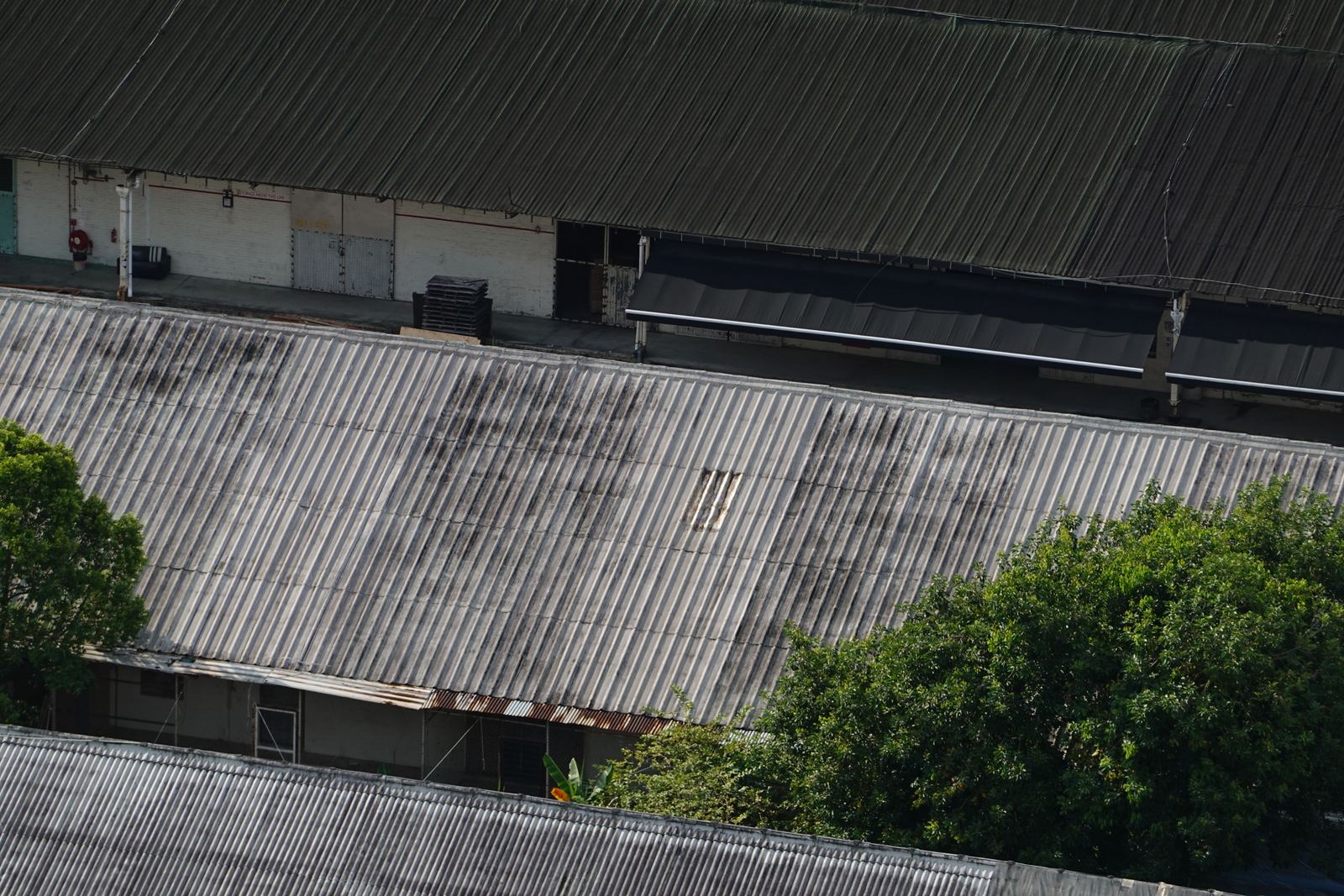
Replacing a garage roof, including old asbestos cement sheets
An old asbestos cement garage roof can usually be replaced without a licensed contractor, but how the sheets come off decides the rules.
A grey corrugated garage roof put up before 2000 may be asbestos cement, so treat it as asbestos until a test says otherwise. HSE treats careful removal of sheets that are intact or weathered as non-licensed work for trained people. It becomes notifiable if the sheets are already substantially damaged or will be broken up, and the waste is hazardous.
The short version
- If the sheets are in good condition and you are not replacing the roof, HSE’s advice to householders is that it is often best to leave asbestos where it is and check it from time to time.
- Never break, drill, cut or jet-wash the sheets. Breaking them up is what turns an ordinary removal into notifiable work, and HSE says high-pressure jetting is appropriate only in exceptional circumstances, by a specialist.
- HSE advises householders not to remove asbestos without training for non-licensed asbestos work. A trained remover follows HSE’s method: sheets lowered whole, double-wrapped and labelled, never dropped or thrown loose into a skip.
- Asbestos is hazardous waste. It cannot go in your bin or an ordinary skip, and it has to reach a site that is allowed to take it.
- A detached single-storey garage of no more than 30 m² with no sleeping accommodation, that is at least 1 m from the boundary or built substantially of non-combustible material, is usually exempt from building regulations, and re-roofing it keeps it exempt as long as it still fits that description.
Is it asbestos?
How to tell whether your garage roof might be asbestos cement
You cannot tell for certain by looking, so the safe default is to assume it is. HSE describes asbestos cement as a hard, grey material, moulded and compressed into products such as large profiled roof sheets, gutters and downpipes, and it lists cement roofs first among the places it turns up. That describes the grey corrugated sheets bolted to rails on top of many prefabricated concrete and brick garages.
Age is the best clue you have. HSE’s introduction to its asbestos task sheets says the manufacture and supply of all asbestos was banned by the end of 1999, and that existing asbestos articles can stay in use until the end of their service life. So a garage built or re-roofed before 2000 with cement sheets is a candidate. One built since then with sheets that look the same is probably asbestos-free fibre cement, but “probably” is not good enough if someone is about to take it apart.
Two other things are worth knowing. First, a felt garage roof is not automatically in the clear. HSE lists asbestos-containing bitumen roof felt among the materials it covers, and has a separate task sheet for removing asbestos-containing roofing felt, which warns never to burn the debris. Second, the only way to know is a sample. HSE says bulk identification can confirm whether a material is asbestos cement, and its task sheet introduction talks about a sample taken by a competent person and analysed, not a corner snapped off by you.
The HSE rules
Licensed, non-licensed and notifiable work: where a garage roof sits
Removing an asbestos cement garage roof is normally non-licensed work. HSE splits asbestos work into three categories, and the category depends on the material, the job and the condition the material is in. The table sets out how each one applies to cement sheets.
| Category | When it applies to cement roof sheets | What it adds |
|---|---|---|
| Non-licensed work | Removing cement roof sheeting and rainwater goods carefully, without breaking them up. This includes sheets that are weathered but not otherwise substantially damaged. | A risk assessment, the right controls, and workers who have had the right information, instruction and training. |
| Notifiable non-licensed work (NNLW) | Removing sheets that are already substantially damaged or broken up, for example by fire or flood, or removing them in a way that breaks them up and creates significant dust and debris, such as dropping the roof. | The employer notifies the enforcing authority online before work starts (HSE, for domestic premises), marks out the work area, makes sure the workers have medical examinations, and keeps a register of the work as a health record. |
| Licensed work | Exceptional. HSE says cement so badly damaged that there is a significant risk of exposure may need a licensed contractor, decided by risk assessment. | Work by a contractor holding an HSE licence. |
The source for all three rows is HSE’s page on notifiable non-licensed work, which uses “dropping” an asbestos cement roof as its example of notifiable removal, and its page on where asbestos is found for the licensed exception. The point for you is that the method decides the category.
Non-licensed does not mean untrained. HSE’s own advice to householders is not to try to repair or remove asbestos materials yourself if you have not had training for non-licensed asbestos work, and it strongly encourages using trained professionals. Whoever removes the sheets should be able to tell you which category they have put the job in and why.
How it is done
What a proper removal looks like, and what you should never do
HSE’s task sheet a14, removing asbestos cement sheets and dismantling a small structure is written for exactly this job: it names a shed or garage. It applies only while the cement stays intact. If the sheets start to break up and create significant dust, the sheet says the work becomes notifiable. It is also not for large-scale work or mechanical demolition. Its method lets you check what you are being offered.
- Check what else is there. The sheet is not appropriate if other asbestos materials such as lagging or insulating board are present. HSE says to use a licensed contractor for those.
- Protect and restrict. Cover nearby surfaces with polythene sheeting, keep people away, and put up tape and warning notices.
- Dress for it. Disposable overalls with a hood, boots without laces and respiratory protective equipment.
- Release, do not break. Dampen the fixings and remove them, or cut the bolts while avoiding contact with the cement. Lower large pieces to the ground. The sheet says not to drop them or use rubble chutes.
- Wrap and label. Double-wrap large pieces in heavy polythene, seal with tape and attach asbestos warning stickers. Small pieces and fixings go in an asbestos waste bag.
- Clean up damp. Clean the area with damp rags, check the bolt holes for debris, and bag everything used. HSE says clearance air sampling is not normally required, and the owner is asked to check the job off at the end.
The same sheet asks a question first that every homeowner should hear: can you overlay the sheets with non-asbestos material instead of removing them? If so, the new roof is fixed to the existing rails and drilling through the cement is avoided. That leaves the asbestos in place, so you should keep a note of it and tell anyone who works on the garage later, or anyone buying the house.
Do not break, drill or jet-wash the sheets. HSE’s list of activities that release significant fibres includes power tools used to drill or cut asbestos materials, and breaking or smashing asbestos cement. On cleaning, its task sheet a12 on weathered asbestos cement roofing says high-pressure jetting is appropriate only in exceptional circumstances and needs a specialist contractor.
Disposal
Where the old sheets have to go
Asbestos is hazardous waste, and the government’s hazardous waste guidance names it first in its list of examples. HSE’s disposal sheet em9 puts the threshold at more than 0.1% asbestos in England and Wales, says the Hazardous Waste Regulations 2005 apply, and warns against mixing asbestos with other waste to get below that figure.
It also says not to break up large pieces, and that whoever carries it should use a sealed skip or a lockable, segregated compartment in a vehicle. Throwing sheeting over a standard skip is not good enough.
Who is responsible depends on who produced the waste. Under the government’s waste duty of care code of practice, if a tradesperson does the work, they are responsible for the waste they produce, including its transport and disposal, and the cost should be in what they charge. If you took the roof off and someone else takes the waste away, your duty is to check they are authorised, which for a private business means an upper tier waste carrier registration with a number starting CBDU.
If the waste is yours, your council decides what it will accept. The government’s asbestos in your home page sends you to your local council for information on asbestos and its disposal, and HSE says asbestos should not be mixed with normal household waste. Arrangements vary from council to council, so ask before you load the car.
The new roof
What to replace it with
Choose the new roof by the structure underneath, not by the brochure. A corrugated sheet roof sits on a few rails and needs very little. A flat membrane roof needs a solid timber deck, joists to carry it and a fall to shed water, which can mean new timber throughout.
| Option | What goes on | What it needs underneath | Worth knowing |
|---|---|---|---|
| EPDM on a new deck | A single sheet of synthetic rubber membrane, bonded down. | A new timber deck on joists or firrings laid to a fall. | Few or no joins on a single garage. Fussy details at the edges and the wall, so check how those are trimmed. |
| GRP on a new deck | Glass-reinforced plastic laid wet over the deck and cured hard. | A new timber deck laid to a fall, kept dry while the resin cures. | A hard, walkable finish with moulded trims. Workmanship and weather on the day matter a great deal. |
| Box-profile steel sheet | Coated steel sheets fixed to the rails. | Rails at the spacing the sheet maker sets, at or above their minimum pitch. | Closest to the old roof and often the quickest. Bare steel drips condensation inside, so ask for an anti-condensation backing if you store anything below it. |
| Asbestos-free fibre cement sheet | Modern corrugated sheets that look like the old ones. | Much the same rails as the old roof. | Like for like. Still fragile, so the same no-climbing rule applies. |
| Overclad the old sheets | A new sheet roof fixed over the existing one. | Fixings into the existing rails, not through the cement. | No asbestos waste now, but the asbestos stays. Record it and tell future workers and buyers. |
Our comparison of GRP, EPDM and felt goes through the flat roof options in detail, and flat roofing covers the work itself. If the garage is going to be heated, used as a workshop or converted, the insulation question comes first, and warm roof or cold roof explains why. Rows of garages, workshops and farm buildings with large cement roofs are a bigger job with the same rules, and sit closer to commercial roofing.
Building regulations
Does re-roofing a garage need building regulations approval?
For a typical detached garage, no. Class 6 of Schedule 2 to the Building Regulations 2010 exempts a detached single-storey building with a floor area of no more than 30 m² and no sleeping accommodation, provided either no part of it is less than one metre from the boundary or it is built substantially of non-combustible material.
A single concrete or brick garage usually fits. Under regulation 9, work on an exempt building stays exempt if, once it is finished, the building still fits that description. A new roof on the same garage normally does.
Three things change that. A garage attached to the house, or built into it, is not a detached building, so the Class 6 exemption does not cover it. Adding sleeping accommodation takes it out of Class 6, and a conversion into living space is a different job altogether. And regulation 9 keeps the electrical safety rules in Part P for an exempt garage that gets its electricity from the house, so new wiring is still controlled. If any of these apply, ask your building control body before work starts, and our guide to building notices, full plans and competent person schemes explains the routes. Raising the height or changing the shape can also raise planning questions, which our planning post covers.
Do not climb onto the roof. HSE says falls through fragile surfaces, particularly fibre-cement roofs and rooflights, account for 22% of all fatal falls from height in construction, and that non-reinforced fibre-cement sheets are likely to be fragile whatever their profile. Its asbestos task sheet puts it more plainly: asbestos cement roofs are always fragile and cannot bear weight.
What to do next
What to do, in order
- Work out whether you need to do anything. If the roof keeps the rain out and the sheets are not cracked or crumbling, leaving it alone is a legitimate choice, and HSE says so.
- If it leaks, look from inside the garage first. A single cracked sheet or a failed fixing can sometimes be repaired, and HSE has a task sheet for repairing damaged asbestos cement, but that is still work for someone trained.
- If it is going, get a sample tested so everyone prices the same job. Ask how the sheets will come off, which HSE category the remover has put the job in, and where the waste is going.
- Get the quote in writing, with the removal, the waste, any new timber, the gutters and the edge trims listed separately. What a roofing quote should include has the full checklist.
Garage roofs are part of our roofing work across Bournemouth, Poole and Christchurch, and a sound sheet roof with one bad fixing is a roof repair, not a replacement. The old sheets should come off following HSE’s method, by someone trained for that work.
Thomas Hannen comes out, looks at the garage, the rails and the walls, and you get a free written itemised quote for the new roof that sets out what has to happen to the old sheets first.
Questions
Common questions
Can I remove an asbestos garage roof myself?
HSE's advice to householders is not to try to repair or remove asbestos materials yourself unless you have had training for non-licensed asbestos work, and it strongly encourages using trained professionals. Removal of intact or weathered cement sheets is normally non-licensed work, but it should still follow the precautions in HSE's task sheet a14, and the waste is hazardous.
Do you need a licensed contractor to remove an asbestos garage roof?
Not normally. HSE treats careful removal of asbestos cement roof sheets that are intact or just weathered as non-licensed work. It becomes notifiable non-licensed work if the sheets are substantially damaged or will be broken up, for example by dropping the roof. Only in exceptional cases, where the cement is so badly damaged that there is a significant risk of exposure, may a licensed contractor be needed.
What should I do if my asbestos garage roof is leaking?
Do not climb on it, because HSE says asbestos cement roofs are always fragile. Look from inside the garage to find where the water gets in. A cracked sheet or failed fixing can sometimes be repaired following HSE's task sheet for damaged asbestos cement, by someone trained for it. If the roof is failing generally, replacing it is usually the better answer.
Is an asbestos garage roof dangerous?
Asbestos is a risk when fibres get into the air and are breathed in. HSE says it is often best to leave asbestos in good condition where it is and check it from time to time. Breaking, drilling, cutting or pressure washing the sheets is what releases significant amounts of fibre.
Do I need building regulations approval to replace a garage roof?
Not for a typical detached garage. Schedule 2 to the Building Regulations 2010 exempts a detached single-storey building of no more than 30 square metres with no sleeping accommodation, if it is at least one metre from the boundary or built substantially of non-combustible material. An attached or integral garage, or a conversion, is different, so ask building control.
Read next
Related advice
The guides below pick up where this one leaves off, and the roofing page covers the work itself and the places we cover, if you would rather have the job looked at.
Who wrote this
Thomas Hannen
Thomas owns Bournemouth Roofing & Building and prices every job himself instead of sending somebody else. The company is Bournemouth Roofing & Building Ltd, number 15471719, registered in England and Wales. If you want to talk something through before you commit to anything, the site visit and the written itemised quote are both free.
Free quote
Garage roof past saving?
Thomas comes out, looks at the garage, the rails and the walls, and puts the new roof in a written, itemised quote, including what has to happen to the old sheets first and whether a repair would do instead.