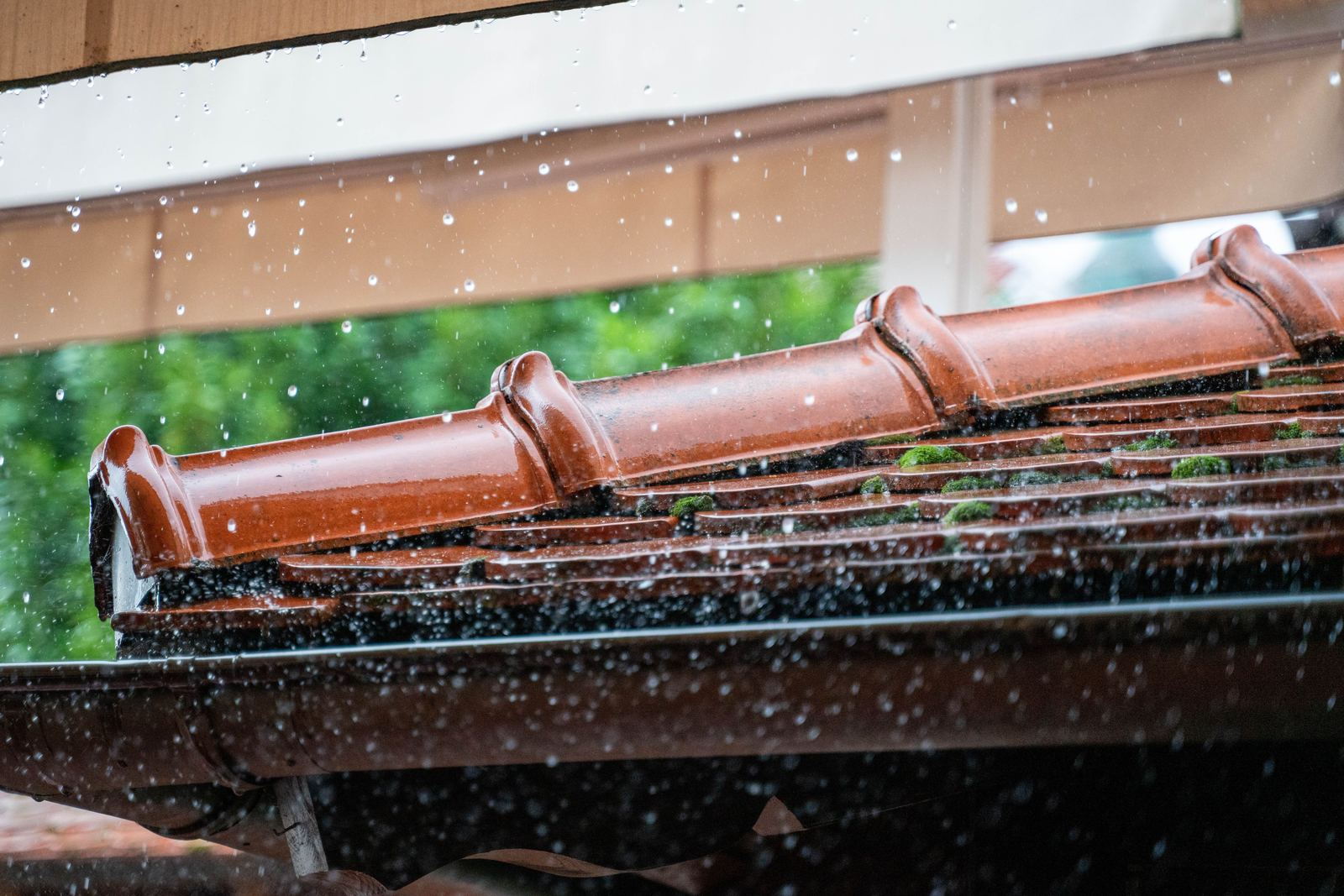
Leaking gutter joints, sagging gutters and downpipes: a fault-by-fault repair guide
Where the water escapes tells you which fault it is, and whether it is a simple fix or a job for somebody with proper access.
Most leaking gutters have one of six faults: a perished joint seal, a dropped bracket, a fall running away from the outlet, cracked cast iron, a blocked or disconnected downpipe, or a gutter too small for its roof. Clear any blockage first, because it imitates the rest. Approved Document H expects watertight joints and any fall towards the nearest outlet.
The short version
- Look at where the drip is before anything else. A drip at a joint, a drip mid-length and water at the foot of the downpipe are three different faults with three different fixes.
- A leaking plastic joint usually needs a clean and a new seal or union, not a tube of sealant smeared over the outside.
- If water still lies in a gutter on a dry day once the outlet is clear, a bracket has dropped or the fall is wrong. Clearing it again will not stop it coming back.
- Water reaching the bottom of a wall matters more than water dripping off a joint, because that is where penetrating damp starts.
- The ground end, the shoe and the gully are the parts anybody can safely check. Ladder work belongs on a dry, still day, on level ground, for minutes rather than hours.
Before you fix anything
Find where the water is actually leaving the gutter
Most gutter faults show themselves in a particular place, so in steady rain, or straight after it, note exactly where water is escaping.
A drip that falls from the same spot every time, under a joint between two lengths, is a seal. A drip or a sheet of water from the middle of a length, away from any joint, is a fall or a bracket problem. Water bursting out of the downpipe partway down, or pooling at the foot of the wall, is the downpipe or the drain. A gutter brimming along its whole length only in a downpour is covered in why a gutter overflows in heavy rain.
Rule out a blockage first, because it imitates almost every other fault: leaves at an outlet back the water up until it finds the weakest joint. Start there: autumn gutter clearing explains when to do it so it stays clear, and gutter cleaning is there if you would rather not go up.
Requirement H3 of the Building Regulations says adequate provision shall be made for rainwater to be carried from the roof, and Approved Document H sets out how that is normally met: gutters laid with any fall towards the nearest outlet, joints that remain watertight under working conditions, and gutters and pipes firmly supported without restricting thermal movement.
Fault by fault
The six faults, what you can do, and what needs a repair
Match what you saw to a cause. The sections underneath explain each one.
| Fault | What you see | What you can safely do | When it needs a repair or replacement |
|---|---|---|---|
| Leaking joint seal | A steady drip under one joint, in light rain as well as heavy | On a single-storey run, clean the union and fit a new seal or union of the same make | Two-storey work, a brittle or unidentifiable system, or several joints going at once |
| Dropped bracket or sagging run | A visible dip along the front edge, water lying in it on a dry day | Sight along the run from the ground and note where it dips | Re-fixing or adding brackets, and any rotten fascia behind them |
| Wrong fall | Water lying at the stop end or mid-run, outlet end nearly dry | Note which way it ponds; a level gutter that drains is not a fault | Re-setting the brackets to a fall, sometimes moving the outlet |
| Cracked cast iron | Rust streaks, a weep from the body of a length, water at a bolted joint | Keep it painted and clear; do not lean a ladder on it | Resealing joints, replacing cracked lengths in matching cast iron |
| Blocked or disconnected downpipe | Water spilling from a pipe joint, or splashing onto the ground at the foot | Clear the shoe and the gully at ground level and check the pipe still reaches the drain | A blockage high in the pipe or the swan neck, a broken pipe or a cracked gully |
| Gutter too small for the roof | Brims along its whole length in a downpour even when clean | Watch it in heavy rain and check what drains into it | A bigger profile, an extra outlet or a moved outlet, decided by calculation |
Plastic gutters
Leaking joints, sagging runs and the wrong fall
Leaking joint seals
Each length of a plastic gutter sits in a union, a clip with a rubber seal inside, because plastic grows and shrinks with the temperature and the joint has to let it slide. That is why Approved Document H asks for gutters supported without restricting thermal movement.
When a joint leaks, the seal has usually perished, grit has worked under it, or the gutter has crept past the marks moulded inside the union so the end no longer sits on the seal.
The proper repair is to unclip the union, clean both gutter ends and the seal, check each end sits within the insertion marks, and fit a new seal or a new union from the same maker. Systems that look identical differ in profile, so photograph the union and any name moulded on it before you buy. A bead of sealant over the outside of a leaking union is the common shortcut, and it tends to fail for the same reason the seal did: the joint keeps moving.
Sagging runs and bracket spacing
A sag is almost always a bracket that has dropped, snapped or pulled its screws out of the fascia. Gutter makers print a maximum bracket spacing in their fitting instructions, and most want a bracket close to every union and stop end as well. Brackets spread wider than that let the run bow, and the bow holds water, which adds weight and makes it worse.
Look behind the bracket. If the screws pulled out of soft timber, new brackets will pull out again, and the job is really fascia, soffit and guttering work rather than a gutter repair.
The wrong fall
Approved Document H says gutters should be laid with any fall towards the nearest outlet. It does not demand a steep slope: the sizes in its own table assume a gutter laid level. What it rules out is a fall the wrong way. A gutter that ponds at the stop end while the outlet end stays dry has been hung, or has settled, falling away from its outlet, and the water sits there until it overflows or finds a joint.
Water lying in a gutter on a dry day, with the outlet clear, is the sign, often with a line of silt you can see from an upstairs window. The fix is to reset the brackets so the run falls the right way.
Older houses
Cracked cast iron: repair it, and be careful what you mix it with
Cast iron gutters fail from the inside out. Paint protects the outside, but the inside of the trough is rarely repainted, so rust works through the metal until a length cracks or a joint lets go. Cast iron joints are lapped and bolted with a sealing compound between them, which dries out long before the iron is finished. A weep at a bolted joint is often a reseal rather than a replacement.
Your part is to keep the outside painted and the inside clear, and never lean a ladder on it. Cast iron is brittle and heavy, and taking a length down is a job for two people with proper access.
A cracked length should be replaced in matching cast iron where the rest of the run is sound. Approved Document H asks for different metals to be separated by non-metallic material to prevent corrosion, so patching iron with aluminium needs care, and a mixed run rarely behaves like one system. If the house is listed, swapping iron for plastic may need consent: under section 7 of the Planning (Listed Buildings and Conservation Areas) Act 1990, alterations that would affect a listed building’s character need authorisation, so ask the council before ordering anything. On older streets, see re-roofing in a conservation area.
Downpipes
Blocked or disconnected downpipes, and why water at the wall base matters
A downpipe that leaks at a joint is usually blocked further down. On most plastic systems the pipe joints are push-fit sockets without a seal, so they usually only leak when water is backing up inside the pipe. Reseal the joint without clearing the pipe and the leak moves to the next one.
This is the one fault most people can check without leaving the ground. Look at the foot of every downpipe. Lift the grating on the gully and clear the leaves and silt. If the pipe ends in a shoe, clear that too. Check the pipe still reaches the drain: Approved Document H says rainwater pipes should discharge into a drain or gully, or onto another gutter or surface that is itself drained, and a pipe that stops short or has been knocked out of its connector just empties onto the ground beside the wall. A blockage you cannot reach from the bottom, usually in the swan neck under the eaves, is a job for somebody working at height.
Water at the wall base matters because it causes damp. Water from a broken or disconnected pipe soaks the brickwork and the ground at the bottom of the wall, and splash off a path wets the wall above the damp proof course, which is there to stop moisture rising from the ground, not to keep out water thrown at the wall from outside. Inside, it shows up as a damp band along the skirting that is easily mistaken for rising damp. Our post on damp at the bottom of a wall explains how to tell rising damp, penetrating damp and a bridged damp proof course apart.
Government guidance on damp agrees about where to look first. The guidance on the health risks of damp and mould defines penetrating damp as water that gets into the building from outside due to defects in the walls, roofs, windows or floors, and its first external check is damaged or blocked pipes, gutters or downpipes. It also says simply removing surface mould will not prevent it coming back. Months of water down one strip of wall can also need repointing work on top of the gutter.
Capacity
A gutter that is too small for the roof
If a clean gutter with sound joints and the right fall still brims along its length in heavy rain, it may be too small for its roof. That can justify replacement, but it should be decided by calculation, not by eye.
Approved Document H has a table of the largest effective roof area each common half round size should drain. A 100 mm gutter is listed for up to 37 square metres, a 115 mm gutter for 53, and a 125 mm gutter for 65. Those figures assume a gutter laid level, half round, with a sharp edged outlet at one end only, and the effective area is larger than the plan area of a pitched roof. The Approved Document also accepts BS EN 12056-3, on roof drainage layout and calculation.
Before agreeing to new gutters, ask whether a second outlet would do. Where the outlet is not at the end, Approved Document H sizes the gutter for the larger of the two areas draining into it. The overflow post explains how to tell capacity from overshoot.
What to do next
What to do, in order
- In or just after steady rain, note exactly where the water leaves the gutter or the pipe, and photograph it.
- From the ground, clear the gully and the shoe at the foot of each downpipe and check the pipe still reaches the drain.
- On a dry day, look along the gutter from an upstairs window for standing water, a dip or a line of silt.
- If it is one leaking union on a single storey and you are comfortable on a ladder, replace the seal or the union. Otherwise, get it looked at.
- Check the wall below the problem, inside and out. A damp strip or crumbling mortar means the wall needs attention as well as the gutter.
If you go up a ladder
Most of the checks above happen from the ground, and the HSE's own first step for work at height is to avoid it where possible, for example by working from ground level with extending equipment.
When you do need a ladder, HSE’s guidance on when and how to use a ladder safely says it should be level and stable and secured where reasonably practicable, the user should be competent, and as a guide a task needing more than 30 minutes at a time on a leaning ladder calls for different equipment.
HSE also says to keep three points of contact, a hand and two feet, when climbing and wherever possible at the work position, and not to work on a roof in rain, ice, frost or strong winds; it notes that winds over 23 mph affect your balance. A union on a single-storey extension, on a still, dry day, is within many people’s reach. A two-storey gutter, cast iron or anything needing both hands off the ladder is not.
Do not lean the ladder on the gutter. A plastic gutter will crack or tip its brackets, and cast iron can snap. Use a stand-off against the wall, and move the ladder rather than reaching sideways.
Most of these faults are a repair to one part of the run, not a new system. If yours needs more than a new seal, see our gutter repairs page or the wider roofing services. Thomas Hannen comes out to look at the gutter, the fascia and the wall below, and you get a free written itemised quote that says which of these faults he found.
Questions
Common questions
How do I fix a leaking gutter joint?
On a plastic gutter, unclip the union, clean both gutter ends and the seal, check the ends sit within the marks moulded inside the union, and fit a new seal or union from the same maker. Sealant over the outside of the joint tends to fail because the joint keeps moving with the temperature.
Why do my gutters leak?
Usually one of six faults: a perished joint seal, a dropped bracket, a fall running away from the outlet, a cracked cast iron length, a blocked or disconnected downpipe, or a gutter too small for the roof. Check for a blockage first, because it backs water up until it finds the weakest joint.
Why is there standing water in my gutter?
First check the outlet is clear, because a blockage there holds water too. If water still lies in it on a dry day, a bracket has dropped or the gutter falls the wrong way. Approved Document H says gutters should be laid with any fall towards the nearest outlet. If it comes back after clearing, the brackets need resetting.
Is a leaking downpipe serious?
It can be, because the water ends up at the bottom of the wall. Government guidance on damp lists damaged or blocked pipes, gutters or downpipes as the first external check for penetrating damp. Clear the gully and shoe at the foot of the pipe and check it still reaches the drain.
Do roofers do gutter repairs?
Many do, because gutters, fascias and the roof edge are worked on together and need the same access. For a perished seal on a single-storey run you may not need anybody. For two-storey work, cast iron or a rotten fascia, get the gutter and the timber behind it looked at together.
Read next
Related advice
The guides below pick up where this one leaves off, and the roofing page covers the work itself and the places we cover, if you would rather have the job looked at.
Who wrote this
Thomas Hannen
Thomas owns Bournemouth Roofing & Building and prices every job himself instead of sending somebody else. The company is Bournemouth Roofing & Building Ltd, number 15471719, registered in England and Wales. If you want to talk something through before you commit to anything, the site visit and the written itemised quote are both free.

Free quote
Gutter leaking at a joint or sagging along the run?
Thomas comes out himself, looks at the gutter, the brackets, the fascia and the wall below, and puts in a written, itemised quote what he found and whether it is a repair or a replacement.