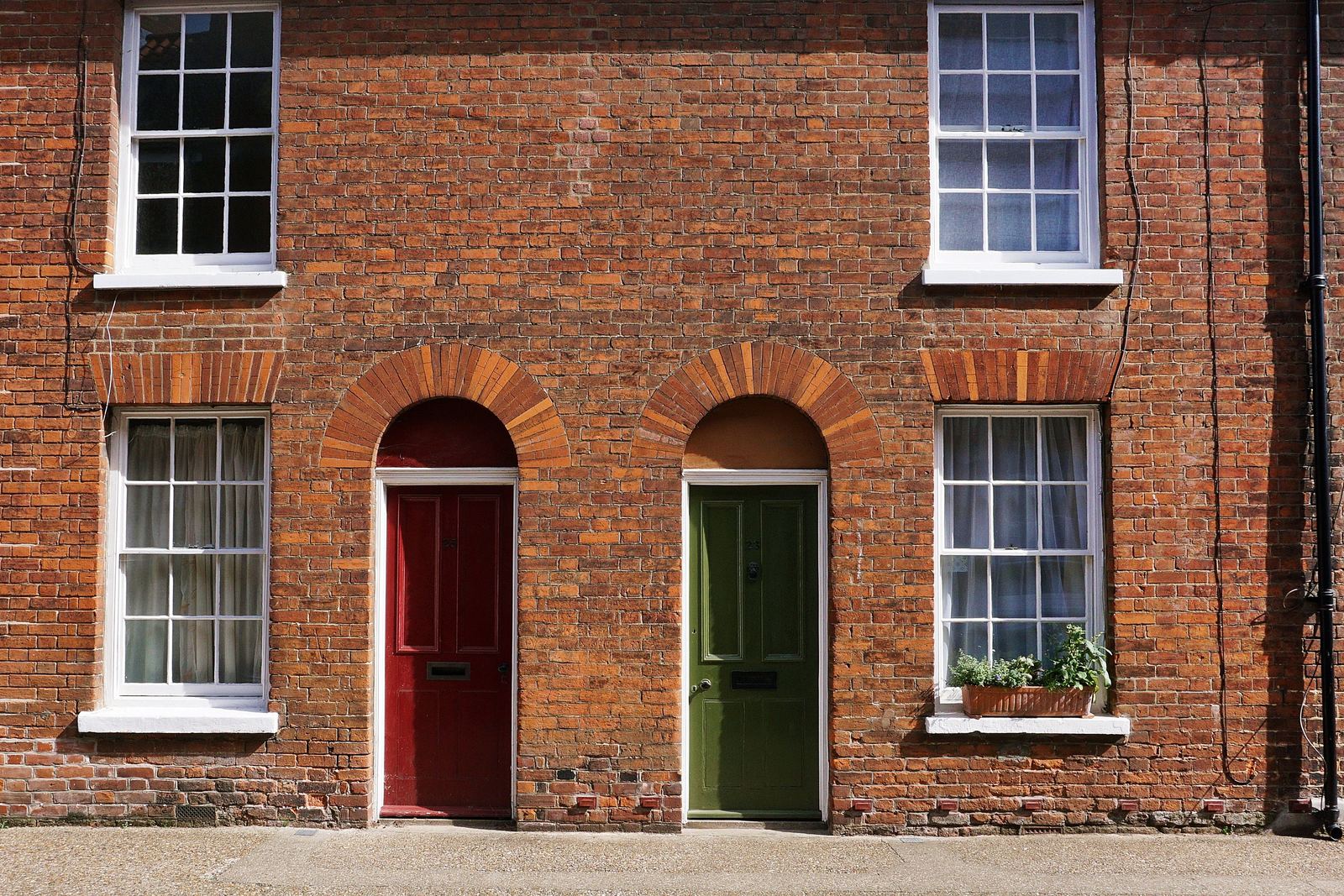
Someone knocked and said your roof is dangerous: what your rights actually are
We do not knock on doors. Here is exactly what the law says, and how to send away somebody who does.
Do not let them on the roof, and do not agree to anything on the doorstep. If you did sign, you have 14 days to cancel work agreed at your door, and the trader commits an offence if they did not tell you so in writing. The trap: if you rang them out for an urgent repair, that right is largely gone.
The short version
- Nobody goes up. Once a stranger is on your roof you cannot see what they are doing, and you cannot check the photographs they bring back down.
- If they knocked uninvited, you get the full 14 day cancellation right, and they have to give you that in writing on paper or by email.
- If you rang them out yourself for an urgent repair, regulation 28 strips most of that right away. Every page telling you flatly that you have 14 days is wrong for you.
- A trader who does not hand over the cancellation notice has committed a criminal offence, and if they never give it the cancellation period runs on for another 12 months.
- You cannot report them to Trading Standards yourself. Ring the Citizens Advice consumer helpline on 0808 223 1133 and they pass it on.
Where we stand
We do not knock on doors
We do not knock on doors and we do not send anyone else to do it. Work arrives here because somebody searched for a roofer, or a neighbour passed the number on, or a customer rang back. That is a fact about how this firm finds work, not something to treat as a credential. The reason for saying it up front is that nothing on this page costs us a job.
Knocking on doors is lawful. Some people who do it are competent and will do you a decent repair. The difficulty is not that a stranger knocked. It is that the doorstep is the one place where you cannot compare anything, cannot check anything and cannot go away and think, and the method depends entirely on that.
The opening lines vary very little. Your ridge is loose and we could see it from the road. We are working two streets away and we have materials left on the lorry. Both are built to get one word out of you, and the word is yes. Yes, have a look.
The law
The 14 day right, and the trap inside it
Work agreed at your front door is an off-premises contract, and off-premises contracts carry a 14 day cancellation right under the Consumer Contracts (Information, Cancellation and Additional Charges) Regulations 2013. Citizens Advice puts the start of the clock at the day after you give the go-ahead, and you do not need a reason to use it.
Now the part missing from almost every page written about this. Regulation 28 disapplies those cancellation rights where the consumer has specifically requested a visit from the trader for the purpose of carrying out urgent repairs or maintenance. Read that against what actually happens in a February gale. You have water coming through the landing ceiling, you ring the first number you find, and you ask somebody to come out today. You have just specifically requested a visit for an urgent repair. The 14 days you have been reading about are not there.
The exclusion is narrow, though, and the narrowness is the useful bit. It does not extend to additional services supplied during that visit, nor to goods that are not replacement parts. So the emergency repair itself sits outside the cancellation right. The full re-roof they priced while they were up there does not. That is one job you cannot cancel and one you can, out of the same visit, and it is worth knowing before you sign anything on the bonnet of their van.
| How it began | Do you get the 14 days? | What that means in practice |
|---|---|---|
| They knocked on your door uninvited | Yes, in full | You can cancel within 14 days without giving a reason, and they have to tell you so in writing. Not telling you is an offence |
| You rang them and asked them to come out urgently | Largely excluded by regulation 28 | No cancellation right over the urgent repair you asked for. It still applies to extra services and to goods that are not replacement parts sold to you on the same visit |
That is also why a doorstep caller works so hard to get you to invite them to look. Getting you to say come and see is worth a great deal, and not only because it puts them on your property.
The strongest fact on this page
No cancellation notice means they committed an offence
Most consumer guidance frames this as something you have. It is better understood as something they did. Regulation 19 makes it a criminal offence for a trader who enters an off-premises contract to fail to give the consumer the required cancellation information. The penalty on conviction is a fine not exceeding level 5 on the standard scale.
So if somebody signed you up on your doorstep and drove off without handing you anything about cancelling, that is not sloppy paperwork. They committed an offence when they did not hand you that notice. Say that on the phone and listen to what happens to the conversation.
Two consequences follow, and both matter more to you than the offence does. The first is time. Regulation 31 extends the cancellation period where the information was not given. If they supply it late, you get 14 days from the day you receive it. If they never supply it at all, the period ends 12 months after the day it would otherwise have ended. A doorstep contract signed last spring may still be live.
The second is money. Regulation 36 governs work started inside the cancellation period. It must not begin unless you expressly asked for it to, and for an off-premises contract that request has to be on a durable medium, meaning something you can keep, such as an email or a signed sheet of paper. If work was properly started on that basis and you then cancel, you pay a proportionate amount for what was done. But if the trader failed to give you the cancellation information, you pay nothing for it. Not a reduced sum. Nothing.
Before you ring anybody about the money. Photograph the work as it stands, from the ground and from an upstairs window, and write down the dates. If it turns into their word against yours, those photographs are the only part of this you control.
On the doorstep
Seven things to do while they are standing there
In this order, and the first one carries most of the weight.
- Do not let them up. Not onto the roof, not up a ladder, not for a look, not for free, not for a minute. Once they are up there you cannot see what they are doing, and a photograph of broken mortar handed to you at ground level proves nothing about whose roof it came off.
- Do not say yes to anything on the doorstep. Not a price, not a survey, not a deposit, not a start date. There is no offer that gets worse for being considered indoors with the door shut.
- Ask for the company name and the company number, then look it up while they are standing there. The Companies House register is free to search and it takes about thirty seconds on a phone. You are checking that the company exists, that the name matches, that it is not dissolved and that it was not set up last month. Somebody genuine will wait while you do it.
- Ask for it in writing, posted or emailed. Anything they will only say out loud is something they do not want to be held to later.
- If you have already signed, count the days. Fourteen days from the day after you gave the go-ahead. Send the cancellation in writing, keep a copy and keep proof of when you sent it. A text message or an email is fine and is easier to prove than a phone call.
- If they never mentioned the 14 days, say so. That is regulation 19, the period extends under regulation 31, and it changes what you owe under regulation 36. Report it on 0808 223 1133.
- If they say the roof is dangerous and you cannot see it from the ground, get a second opinion from somebody you approached yourself. Not somebody they recommend, and not the number on the card they left. If it really does look dangerous, the council has powers of its own, which is the next section.
None of that requires you to be rude, or to work out whether the person in front of you is honest. You are not being asked to judge them, only to do everything indoors, in daylight, at your own speed.
The free second opinion
If a roof really is dangerous, the council has powers
There is a route almost nobody tells homeowners about, and a doorstep caller has every reason not to. Section 78 of the Building Act 1984 lets a local authority take immediate steps to remove a danger where a building or structure is dangerous and immediate action is needed. Councils use it for leaning chimney stacks, loose parapets and masonry over a pavement.
Point that at the situation on your doorstep. If your roof really is dangerous enough to need work today, the council can be told, and telling them costs you nothing. If it is not, it is not an emergency and it can wait until you have two written quotes. Either way the urgency argument stops working, which is why you will not hear about section 78 from the person making it.
Be honest about the other half of this, though. Roofs do fail, and after a gale material does come off. A slipped ridge tile over a front path is a real hazard and ignoring it is not clever either. The question is not whether the problem is real, it is who is telling you and what they get out of it. To check your own roof first, the ground level checks are all here, and what wind actually does to a roof explains why damage is nearly always at the edges, not the middle of the slope. If something has just come off in a storm, work through the first 24 hours before you agree to anything with anyone.
Reporting it
You cannot go to Trading Standards yourself
This is the thing readers most often get wrong. Consumers cannot report a trader to Trading Standards directly. The route runs through the Citizens Advice consumer service, which takes the report and passes it on. Ringing your council and asking for Trading Standards will get you sent back to the same helpline.
The number is 0808 223 1133, Monday to Friday, nine to five, free from landlines and mobiles, with a Welsh language line on 0808 223 1144. Have the company name, the vehicle registration, the date and what was said. A photograph of the van beats a description.
Report it even if you got rid of them and lost nothing. Trading Standards act on patterns across a street rather than on single incidents, so the report that feels pointless is often the one that corroborates somebody else. The neighbour it matters most for is usually the one least likely to ring.
If somebody will not leave your property, or you feel threatened, that is a police matter rather than a consumer one. Ring 999.
Next steps
What to do now
If somebody is outside right now, the answer is the doorstep list above. Door shut, nothing agreed, name and company number written down.
- If you have signed something in the last 14 days, cancel it in writing today. You do not have to explain yourself and you do not have to argue about it first.
- If nobody gave you a cancellation notice, ring 0808 223 1133 before you ring the trader. Knowing where you stand changes how that call goes.
- If work has already started, photograph and date it before anybody comes back.
- Get two written quotes from firms you approached yourself. Our note on what a roofing quote should include lists the line items worth checking, and what is reasonable to be asked for up front covers the deposit question that doorstep work always turns on.
- Only then decide whether the work needs doing at all. Often it does not, or not yet.
If you want somebody to look at the roof properly, that is what our roofing work covers, and you can ask for a visit or send a message when it suits you rather than when somebody is on your path. Thomas comes out himself and puts in writing what he found and what it would take to put right. If it can wait, that is what the report says.
Questions
Questions we get asked about this
Can I cancel roofing work I agreed at my front door?
Usually yes. Work agreed at your door is an off-premises contract and carries a 14 day cancellation right, counted from the day after you gave the go-ahead. You do not need to give a reason.
What if I rang the roofer out myself and now want to cancel?
Regulation 28 of the Consumer Contracts Regulations 2013 removes the cancellation right where you specifically requested a visit for urgent repairs or maintenance. It still applies to any additional services, or goods that are not replacement parts, sold to you during that same visit.
Nobody told me about a cooling off period. Does that change anything?
Yes, considerably. Failing to give the required cancellation information is a criminal offence under regulation 19. The cancellation period then runs on for 12 months beyond its normal end under regulation 31, and under regulation 36 you pay nothing for work already carried out.
Can I report a doorstep caller to Trading Standards myself?
No. Consumers cannot contact Trading Standards directly. Ring the Citizens Advice consumer helpline on 0808 223 1133 and they pass the report to Trading Standards.
Someone says my roof is dangerous and I cannot see it from the ground. What do I do?
Get a second opinion from a firm you approached yourself, never from a number the caller gave you. If a structure really is dangerous, section 78 of the Building Act 1984 lets the council take immediate steps, so telling them costs you nothing.
Read next
Related advice
Who wrote this
Thomas Hannen
Thomas owns Bournemouth Roofing & Building and prices every job himself rather than sending somebody else. The company is Bournemouth Roofing & Building Ltd, number 15471719, registered in England and Wales. If you want to talk something through before you commit to anything, the site visit and the written itemised quote are both free.

Free quote
Want a roof looked at by somebody you chose?
Thomas comes out himself, goes over the roof properly and puts in writing what he found. If it can wait, he will tell you it can wait.